Vallis Clausa — The Last Medieval Paper Mill Still Running in Provence
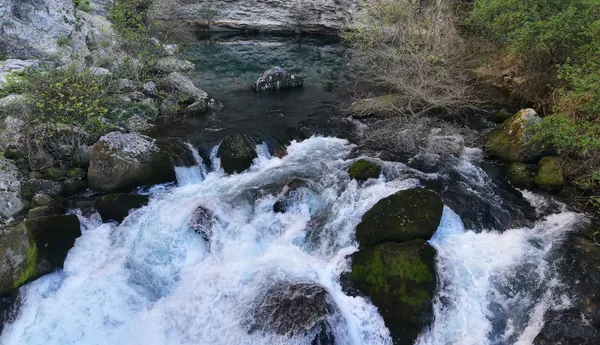
I came to Fontaine-de-Vaucluse for the spring — the mysterious source of the Sorgue River that nobody fully understands. On the way, I noticed a sign pointing to an old paper mill. I walked in for fifteen minutes. I walked out an hour and a half later.
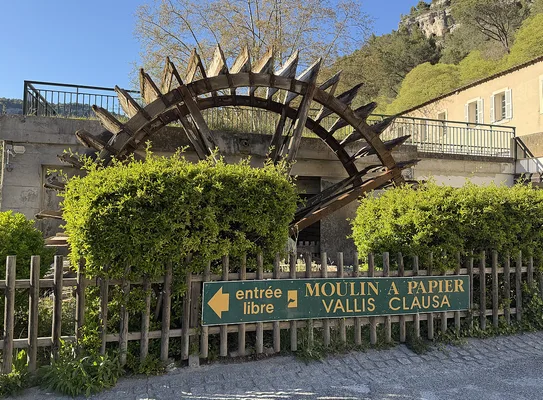
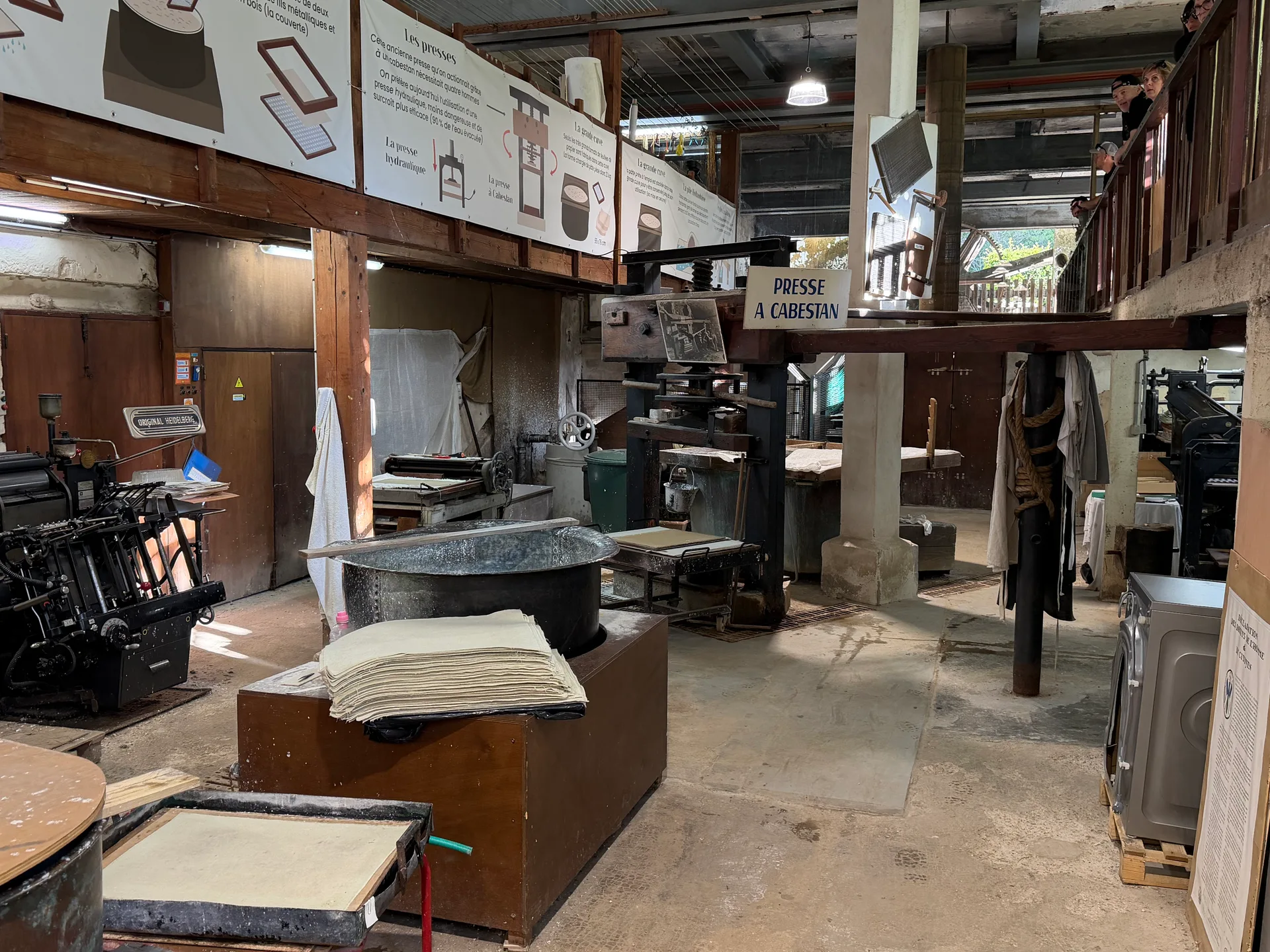
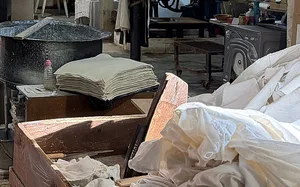
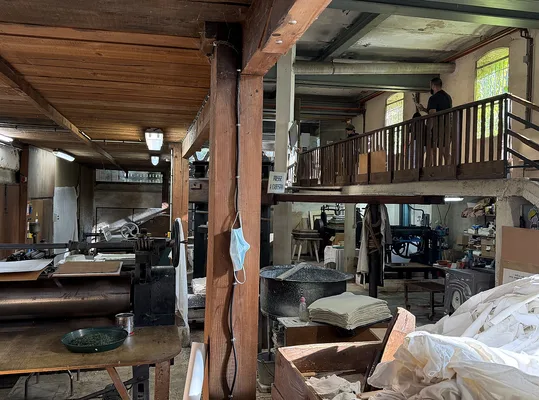
Inside — a massive water wheel covered in moss, a craftsman shaping paper by hand exactly the way it was done five hundred years ago, and the kind of quiet where all you hear is water. Moulin à papier Vallis Clausa is the last working paper mill in a village that once had seven. And the process hasn't changed since the 15th century.
Why This Place Is Special
This isn't a museum with old machines behind glass. The mill is running. The wheel is turning. Someone is making paper in front of you — right now, with their hands, using techniques from the Middle Ages.
It's one of the rarest things you can see in Europe: a medieval craft that was never lost, never reconstructed from books, but passed down and kept alive. A working time machine, powered by water.
How They Make Paper — Step by Step
The process looks simple. It isn't. Every step is a craft, and every detail affects the final sheet.
Step 1 — The raw material: old cloth, not wood
Forget everything you know about modern paper. Here, they use linen, cotton, and sometimes hemp — old rags, worn-out textiles. This is called papier chiffon (rag paper). The fibers are longer and stronger than wood pulp, which is why this paper can survive for centuries without yellowing.
Step 2 — Turning cloth into pulp
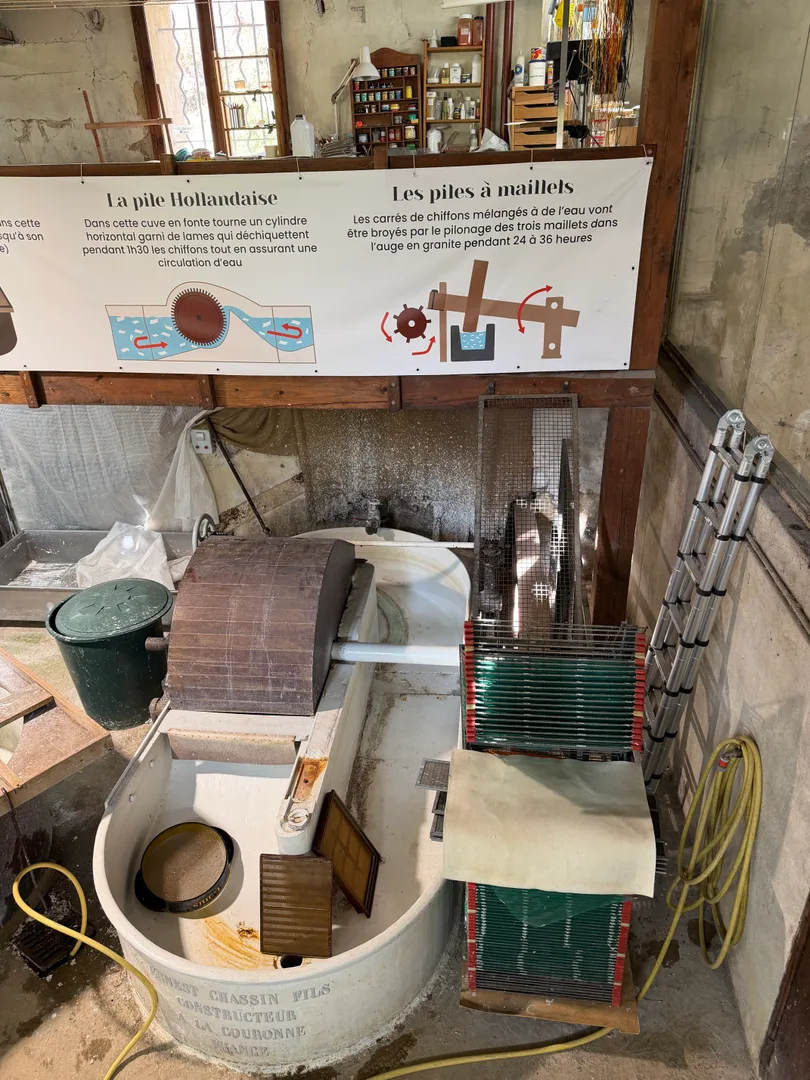
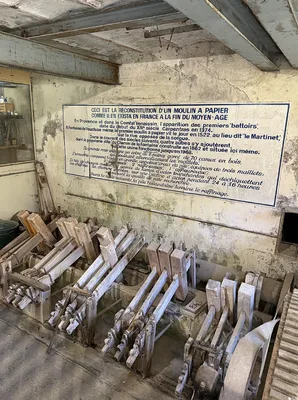
The cloth is shredded and soaked in water, then pounded by heavy wooden hammers driven by the water wheel. This process runs for 24 to 36 hours straight. The result is a thick white paste — like liquid porridge. The quality of the water matters: the Sorgue is one of the cleanest rivers in Europe, which is why paper mills appeared here in the first place.
Step 3 — Forming the sheet
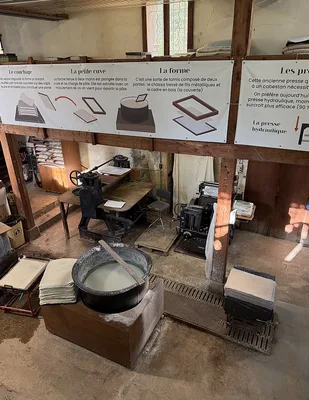
This is the magical moment. The craftsman takes a wooden frame with a fine mesh screen (called a mould and deckle), dips it into the vat of pulp, lifts it out, and gently shakes it. The fibers settle evenly across the screen. In those few seconds, the thickness and texture of the sheet are decided. No two sheets come out exactly the same.
Step 4 — Couching
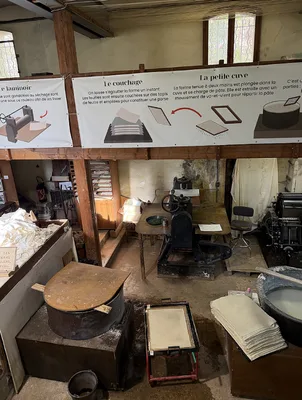
The fresh sheet is still fragile and wet. The craftsman carefully flips it onto a piece of felt, then stacks another felt on top, then another sheet, then another felt — building a sandwich of paper and fabric, layer by layer.
Step 5 — Pressing
The entire stack goes under a heavy press. Water is squeezed out, and the sheets begin to hold their shape. After pressing, the paper is firm but still damp.
Step 6 — Drying
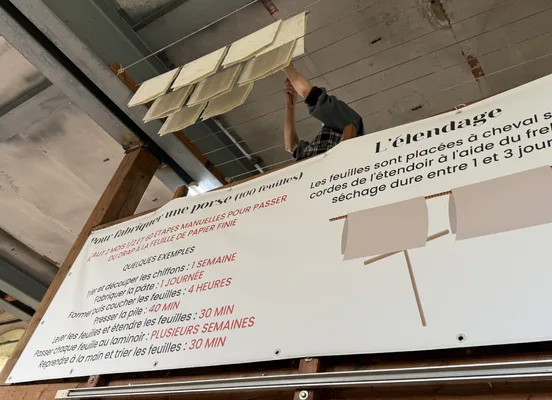
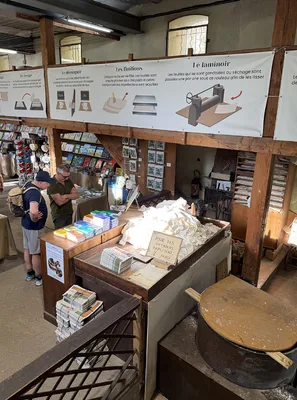
Each sheet is carefully separated and hung to dry. This can take several days, depending on the weather and the thickness of the paper.
Step 7 — Finishing
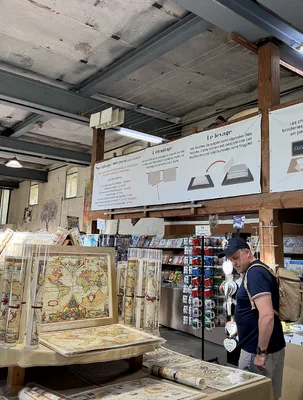
Some sheets are sized (treated with a coating so ink doesn't bleed), then smoothed or decorated. The result is a unique sheet of paper — with its own texture, its own slight imperfections, and its own character. No two are identical.
What Makes Handmade Paper Different
Handmade (Vallis Clausa) | Modern office paper | |
|---|---|---|
Raw material | Linen, cotton, hemp | Wood pulp with chemicals |
Lifespan | Centuries without yellowing | Yellows and becomes brittle within years |
Texture | Slightly rough, alive, organic | Perfectly smooth, uniform |
Edges | Torn, irregular (deckle edge) | Machine-cut, straight |
Production speed | A few sheets per hour | Kilometers per hour |
Uniqueness | Every sheet is different | Every sheet is identical |
Use | Art, calligraphy, restoration, diplomas | Printing, everyday tasks |
Cost | Expensive | Cheap |
The simplest way to think about it: handmade paper is a material with character and history. Office paper is a consumable.
If you hold a sheet of Vallis Clausa paper up to the light, you can see the individual fibers — and sometimes even a watermark, like a fingerprint of the process that created it.
A Short History of Paper in Fontaine-de-Vaucluse
Paper-making came to France from northern Italy in the 14th and 15th centuries. Italian craftsmen brought the technique to Provence, and Fontaine-de-Vaucluse was an obvious choice: the Sorgue River provided clean water (essential for paper quality) and constant energy for water wheels. The nearby city of Avignon — seat of the papal court in the 14th century — created enormous demand for paper for official documents.
The first paper mill in Fontaine-de-Vaucluse appeared around 1522. At its peak, between the 16th and 18th centuries, four to seven mills operated simultaneously along the river. It was a small paper-making village — like the glass-blowing villages of Murano or the textile towns of England.
By the 19th century, industrial methods made small water-powered mills obsolete. A larger factory opened in 1862 and ran until 1968. After that, the tradition nearly disappeared.
Today's Vallis Clausa is a reconstruction of the original 15th-century process — the last living link to this 500-year-old craft. Not a display. Not a replica. A working mill.
What You Can Buy
The mill has a shop where you can buy paper made on site — sheets, notebooks, envelopes, and books printed on handmade rag paper. Prices range from a few euros for a single sheet to more expensive bound notebooks and art prints. It's one of the most authentic souvenirs you can bring home from Provence — a piece of paper made the same way it was made when Leonardo da Vinci was alive.
Practical Information
Detail | Info |
|---|---|
Full name | Moulin à papier Vallis Clausa |
Address | Chemin de la Fontaine, 84800 Fontaine-de-Vaucluse |
Spring–Summer (Apr–Sep) | Daily, 10:00 AM – 6:30/7:00 PM |
Autumn (Oct) | 10:00 AM – 6:00 PM |
Winter (Nov–Mar) | 10:00 AM – 5:30 PM, lunch break 12:30–2:00 PM, may close on some weekdays |
Entry | Free |
Time needed | 30 min (quick visit), 1 hour (watch the full process), 1.5 hours (read everything, photograph details) |
Best time | Morning, right at opening — fewer people, you can watch the craftsman work up close |
Location | On the main path between the village and the spring — you'll pass it on the way |
Note: paper-making demonstrations happen throughout the day, but not on a fixed schedule. If you want to see the full process from pulp to sheet, arrive early and be patient. Hours may vary depending on the season and visitor flow — check the mill's website or ask at the village tourist office before your visit.

Don't choose between the spring and the mill — do both, and in this order. Start at the mill in the morning when it's quiet and you can watch the craftsman work without a crowd behind you. Then walk up the path to the source of the Sorgue. On the way back, stop at the mill shop and pick up a notebook made of paper that will outlive you.
The whole route — mill, spring, and back — takes about two to three hours. Add the ruined castle above the village and Petrarch's house if you want the full Fontaine-de-Vaucluse experience.
And one more thing: when you hold that handmade sheet up to the light and see the fibers — remember that someone made this one sheet, by hand, the same way it was done half a millennium ago. In a world of mass production, that feels like a small miracle.
Read more: Fontaine-de-Vaucluse — the mysterious source of the Sorgue River
Tags

Jojo is Joyful Journeys!