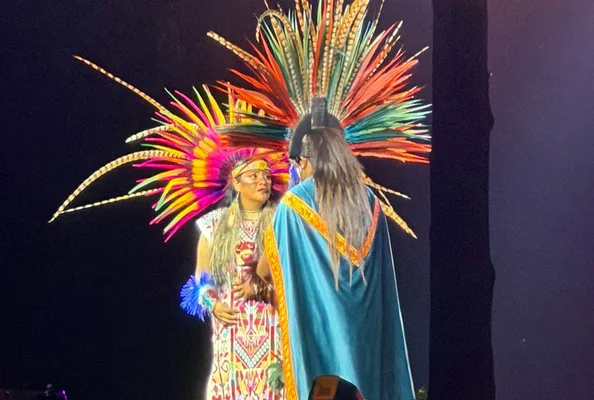
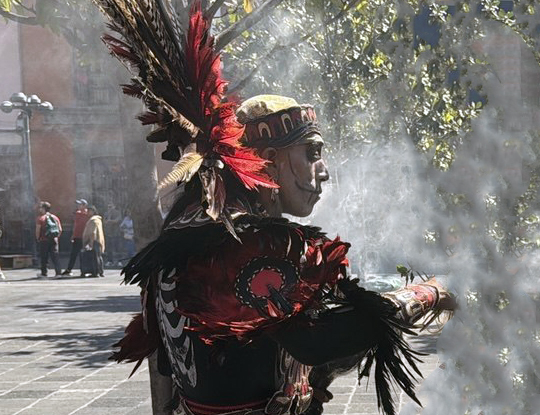
Do you know who these people are and what they do?
In Mexico City, in tourist areas (for example, at Zócalo or near museums), you can often see people in traditional feathered costumes who “smudge” passersby with smoke. This is not just a street performance — it has cultural and, of course, commercial meaning.
It is a kind of cleansing ritual rooted in the ancient traditions of Mesoamerican peoples, particularly the Aztecs. They use copal resin smoke, which is similar to incense.
The ritual carries a deep meaning. During the process, a person is “cleansed” of negative energy and blessed before a journey or an important event. It is believed to bring good luck. In Mexico, this practice exists simultaneously as a cultural tradition, a street performance, and a way to earn money.
Of course, in most cases it is an imitation or an adaptation for tourists. Today it is largely a performance, where the actions are simplified and shorter, but the costumes are styled after Aztec ones and are accompanied by traditional music and dances. In other words, it is a mix of tradition and street performance.
For many locals, this is a good source of income. They may not state the price in advance and start asking for a significant amount after the ritual, sometimes quite insistently. Since this is their main income, it’s worth being cautious and remembering a few basic things: they often begin the “ritual” without clear consent; it’s better to ask the price beforehand, as it can be unexpectedly high; you can politely refuse — just say “No, gracias” and walk away.
It’s not dangerous, but it’s better to understand in advance that this is not a free ritual, but a tourist service.
Traditionally, such rituals were performed by “chamanes” (shamans). This is how tourists and even the performers themselves often refer to them. However, it’s important to understand that they are not always real shamans, but more often a simplified version of a spiritual practitioner.
Sometimes the show is performed by “danzantes.” This is the most common term and means “dancers,” usually participants in Aztec or pre-Columbian dances. They are sometimes called danzantes aztecas (“Aztec dancers”) or concheros, one of the traditional dance groups — a more culturally accurate term.
They may also be “curanderos.” This word refers to traditional healers who perform rituals for locals for healing and blessings. This is a more authentic term, but in the streets of Mexico City it is used less often, and real curanderos usually do not work in tourist squares.

If you don’t want to participate in the ritual, just say “No, gracias,” keep walking, and don’t engage in conversation. It’s important to understand that any hesitation is almost the same as agreeing. Never start the ritual without agreeing on the price. Ask: “¿Cuánto cuesta?” and clarify whether that is the full price or a “donation.” 50–200 pesos is normal; 300+ pesos is already a tourist price. After the ritual, they may ask for more and apply psychological pressure. Pay exactly the agreed amount and calmly repeat: “Eso fue lo acordado” (That’s what we agreed on). Treat it as a cultural experience and a street performance.
Tags

Jojo is Joyful Journeys!