Pont d'Avignon — The Bridge That Stops Halfway and the Song Everyone Gets Wrong
You've heard the song. Even if you don't speak French, you've probably hummed it without knowing: Sur le pont d'Avignon, l'on y danse, l'on y danse. It's one of the most famous children's songs in the world — taught in schools from Tokyo to Toronto. It's about dancing on a bridge in the south of France.
But here's the thing: almost everything you think you know about this song — and this bridge — is wrong. People didn't dance on the bridge. The bridge doesn't go anywhere. And the boy who supposedly built it was twelve years old.
I came to Avignon for the Papal Palace. I ended up standing on four broken arches in the middle of the Rhône, looking at a chapel built into the bridge itself, trying to understand how a medieval ruin became one of the most recognized landmarks in Europe — mostly because of a children's song that doesn't even describe what actually happened.
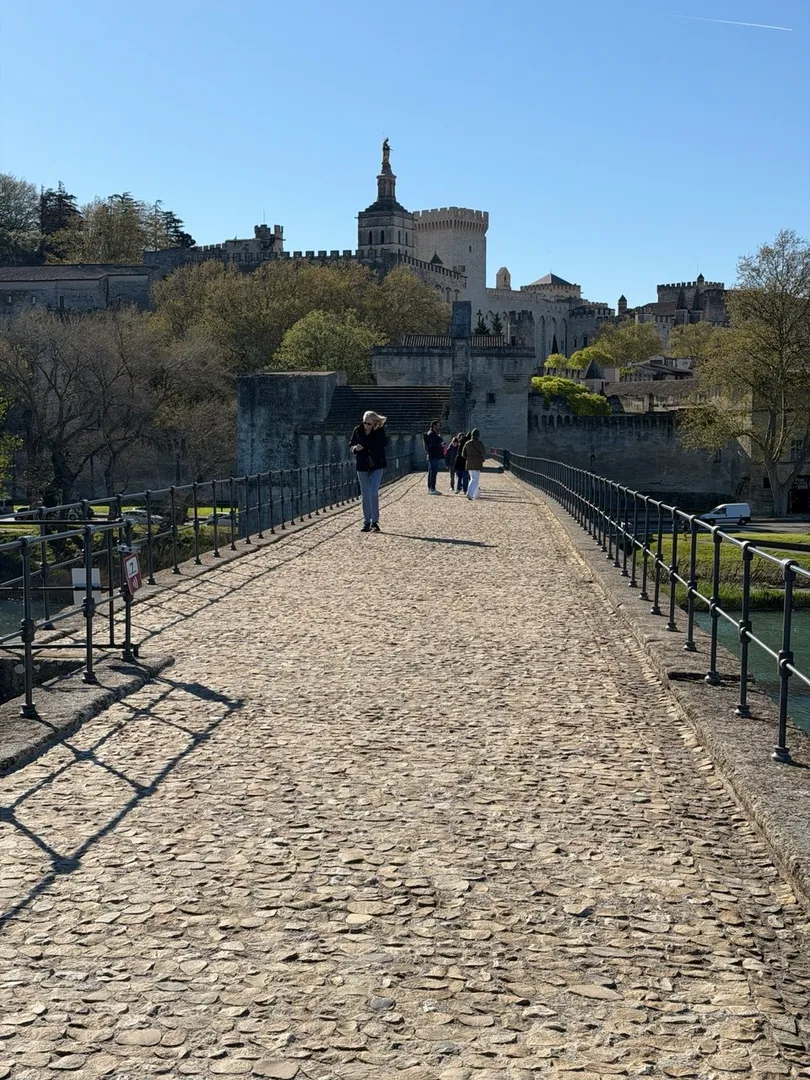
What You See Today
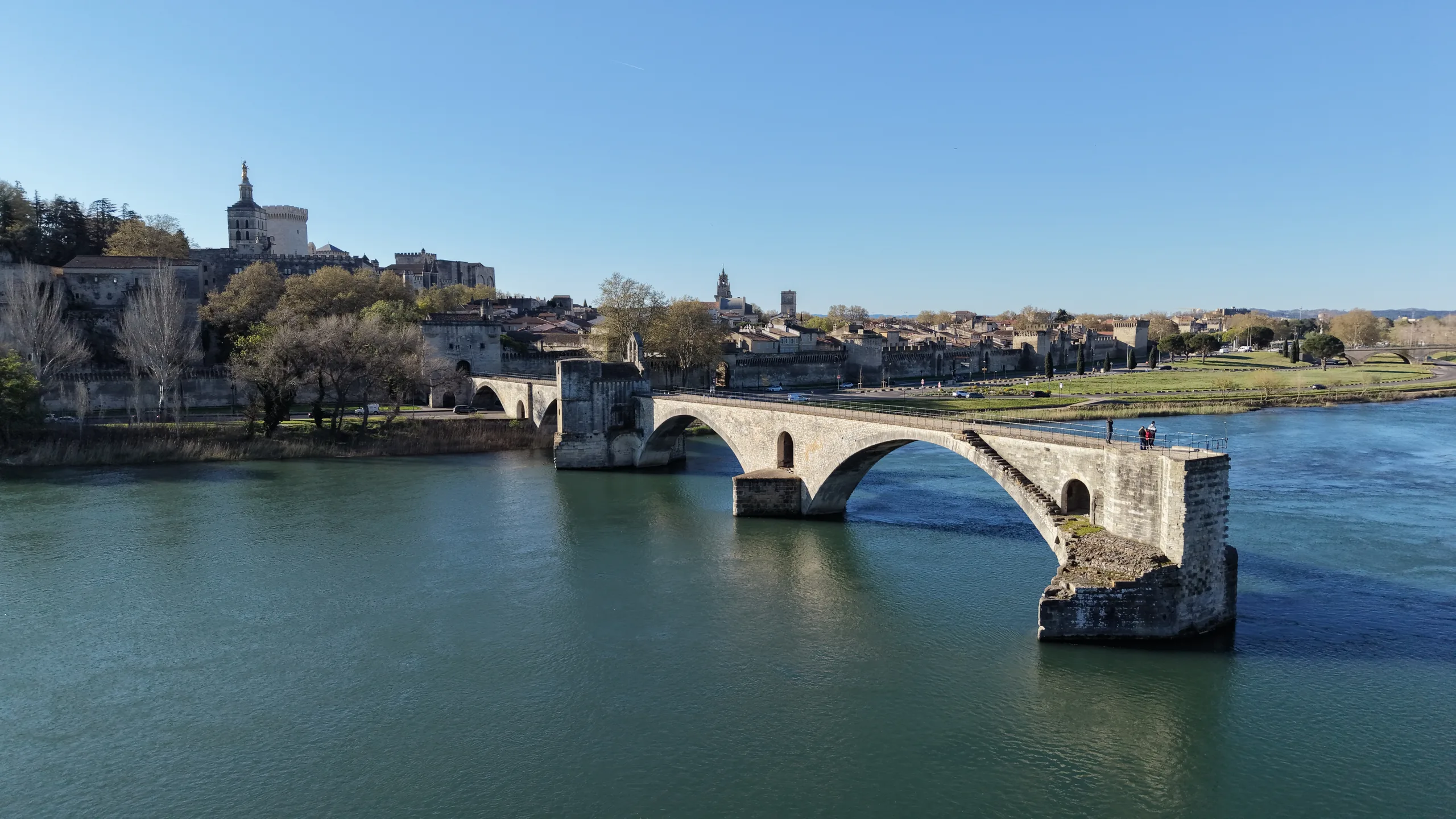
The Pont d'Avignon — officially called Pont Saint-Bénézet — is a medieval bridge in Avignon, Provence, in the south of France. Or rather, what's left of one.
Originally, the bridge was about 900 meters long with 22 stone arches, stretching across the full width of the Rhône River. It connected Avignon to the Tour Philippe le Bel on the opposite bank and was one of only two river crossings between Lyon and the Mediterranean Sea. In the 12th century, that made it one of the most strategically important bridges in Europe.
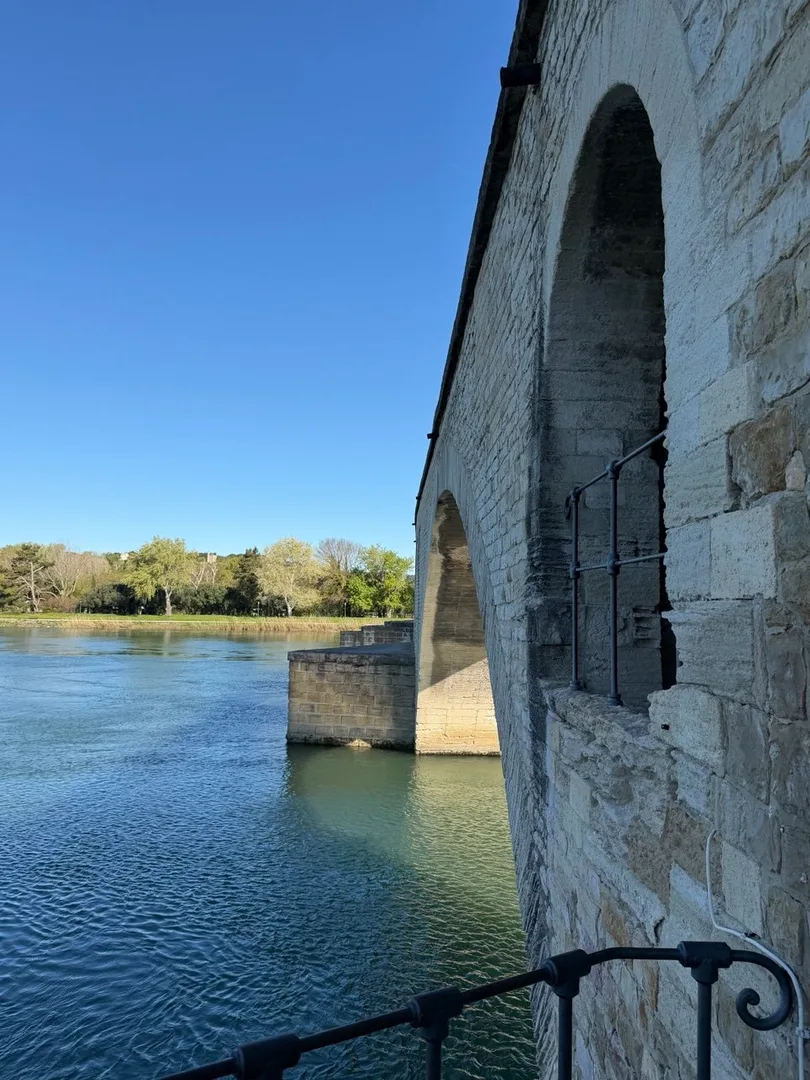
Today, only four arches remain. The bridge stretches out from the city walls, carries you over the water past a tiny chapel — and then simply ends. Mid-river. No other bank. Just the Rhône below and the sky ahead. It's one of the most unusual sights in France: a bridge to nowhere.
The bridge and the historic center of Avignon — including the Papal Palace — were inscribed as a UNESCO World Heritage Site in 1995.
The Legend — A Twelve-Year-Old Boy and a Stone Nobody Could Lift
The bridge is named after Saint Bénézet, and his story is one of the great legends of medieval France.
Bénézet was a young shepherd, about twelve years old. According to the legend, an angel appeared to him and commanded: "Go and build a bridge across the Rhône." The boy went to Avignon and told the bishop. Nobody believed him — a child, claiming God told him to build a bridge across one of the most dangerous rivers in Europe.
So Bénézet did something to prove it. He walked to the river, picked up a massive stone that no group of grown men had been able to move, and carried it to the water's edge. The crowd took this as a divine sign. People believed. Money and labor followed. Construction began around 1177 and was completed by roughly 1185.
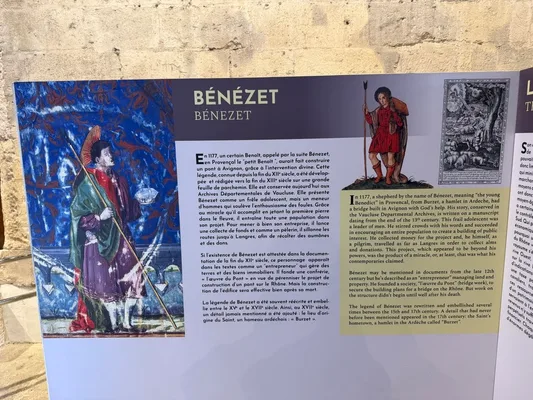
What's real, what's legend?
Bénézet was almost certainly a real person — likely the inspirational figure who rallied the community behind the project. A religious organization called the Brotherhood of the Bridge of Avignon (Frères Pontifes) was established to collect donations, manage construction, and maintain the bridge. This was a real, documented institution.
The miracle with the stone? Historians consider it a legendary embellishment — a medieval "marketing campaign." In an era before crowdfunding platforms, a miracle was the most effective way to convince people to donate money to an enormous and expensive project. "God wants this bridge built" was the 12th-century equivalent of a viral campaign.
The idea that ordinary people "each brought their stone" is more symbolic than literal. Building a 900-meter bridge required precisely cut blocks, engineering calculations, and skilled masons — not random rocks carried by villagers. But the symbolism was powerful: this was everyone's bridge, a shared achievement.
After Bénézet's death, he was venerated as a saint. A chapel — Chapelle Saint-Bénézet — was built directly into the bridge structure, sitting on one of the stone piers above the water. It's still there today, and you can step inside it when you visit.
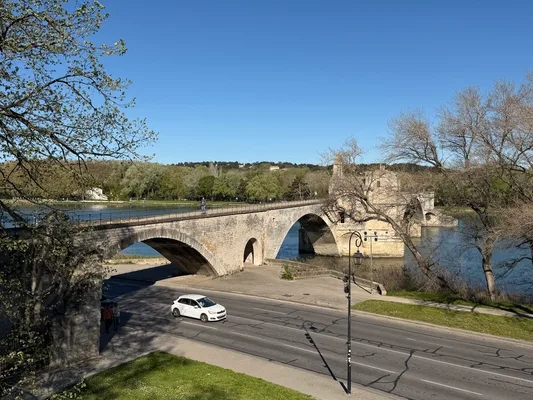
Why the Bridge Broke — and Why Nobody Fixed It
The Rhône is one of the most unpredictable rivers in Europe. Strong currents, frequent floods, shifting riverbeds, spring surges from Alpine snowmelt, and heavy sediment deposits. In the Middle Ages, there was no way to reinforce banks or calculate structural loads with modern precision.
The bridge was damaged and repaired repeatedly over the centuries. Every major flood took out arches. Every repair was expensive and slow. By the 17th century, the cycle became unsustainable — the river was destroying the bridge faster than anyone could fix it. Alternative crossings by boat and ferry became more practical. The city simply stopped rebuilding.
What remains today — four arches out of twenty-two — is a frozen moment: the point where medieval engineering met the limits of nature and nature won.
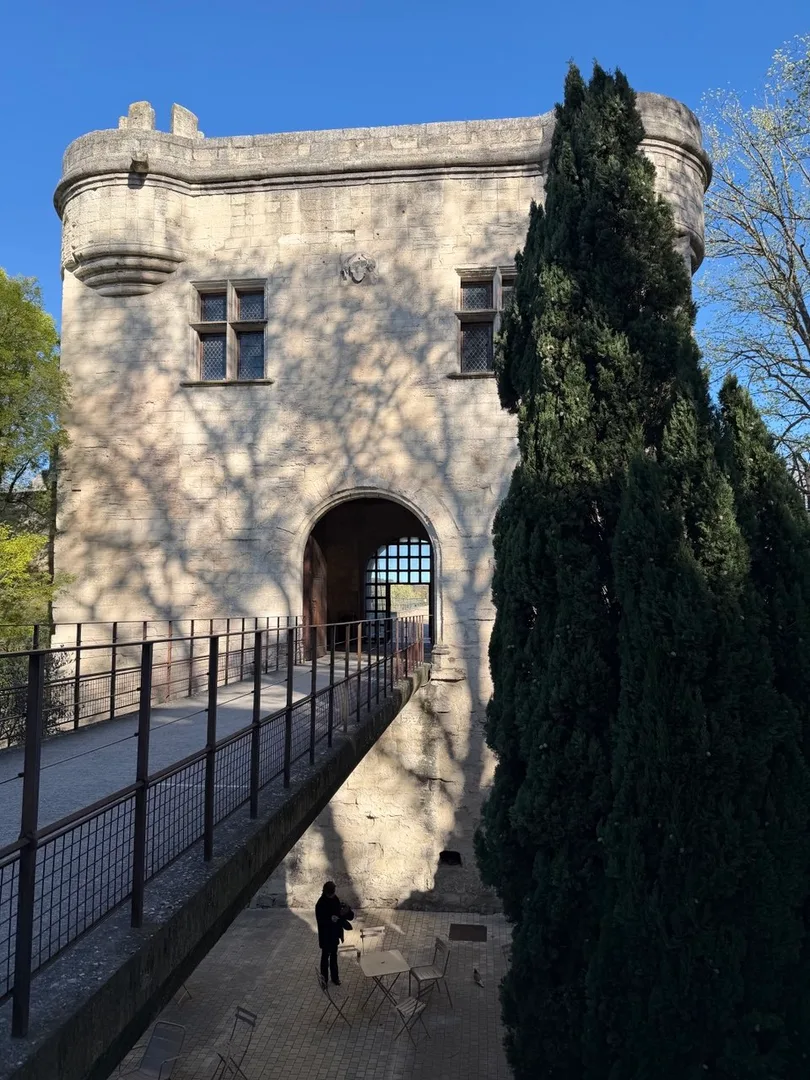
The Song Everyone Gets Wrong
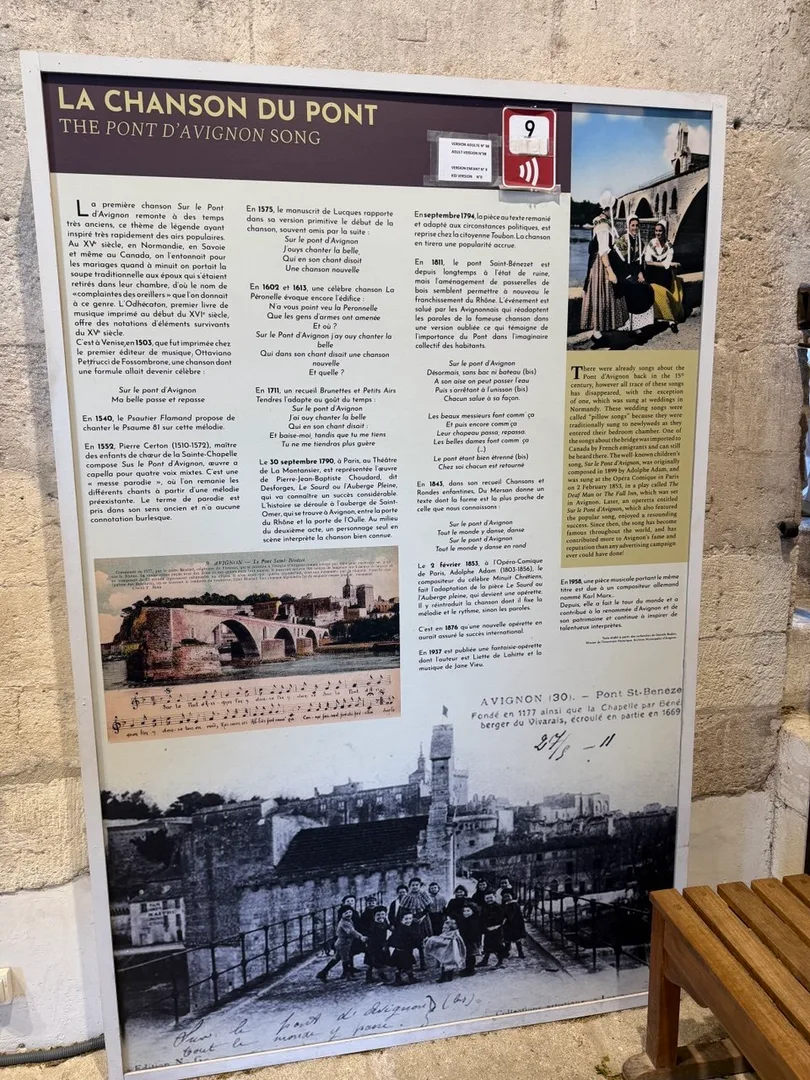
Sur le pont d'Avignon, l'on y danse, l'on y danse...
The song translates to: "On the bridge of Avignon, they dance, they dance; on the bridge of Avignon, they all dance in a circle."
But here's the paradox that makes historians smile: they almost certainly didn't dance on the bridge. The original version was likely "sous le pont" — under the bridge, not on it.
Why? The bridge was narrow. Far too narrow for circle dances, folk processions, or any kind of group celebration. The actual festivities happened on the banks of the Rhône and on the Île de la Barthelasse — the large island beneath the bridge — where there was open space for markets, fairs, and dancing.
Over time, "sous le pont" became "sur le pont" — because it sounds better, it's easier for children to picture, and rhythm won over accuracy. By the 19th century, when the song became widely popular through operettas and theater performances, the "on" version had completely replaced the "under" version. The earliest printed trace of the phrase dates back to Venice in 1503, but the modern children's version took shape in the 1800s.
How the dance actually works
The song is more than a melody — it's a dance-game, and understanding it reveals something deeper about French folk culture.
Everyone stands in a circle, holds hands, and walks together (usually to the right) while singing the chorus. Then the verses introduce characters — les belles dames (beautiful ladies), les beaux messieurs (fine gentlemen), soldiers, cobblers, washerwoman — and everyone mimics what that character would do. Ladies curtsy. Soldiers march. Cobblers hammer. Each verse brings a new role, new gestures, and new laughter.
The structure is simple enough for small children, but the deeper meaning is surprisingly rich: in the circle dance, everyone is equal. The lady and the cobbler do the same dance, take the same steps, stand in the same circle. It's a miniature model of a society where, for the duration of a song, social differences dissolve.
This is why the song is still used in French kindergartens, at festivals, and as an icebreaker — it brings people together, removes self-consciousness, and turns strangers into a group in under a minute.

The bridge is best seen from outside before you walk on it. Three spots that give you the iconic view:
The riverside promenade along the city walls — the classic angle. You see the four arches stretching into the river, the chapel perched on the bridge, and the old town of Avignon behind it. Best at sunset, when the stone turns warm gold.
The opposite bank of the Rhône — cross the river for a wider perspective. From here you see the bridge, the Papal Palace, and the city walls in one frame.
Île de la Barthelasse — the island beneath the bridge. This is where people actually danced. Walk here for a panoramic view of the bridge and the Avignon skyline together. It's also the quietest of the three spots.
Practical Information
Detail | Info |
|---|---|
Official name | Pont Saint-Bénézet |
Address | Boulevard du Rhône, 84000 Avignon, France |
Website | |
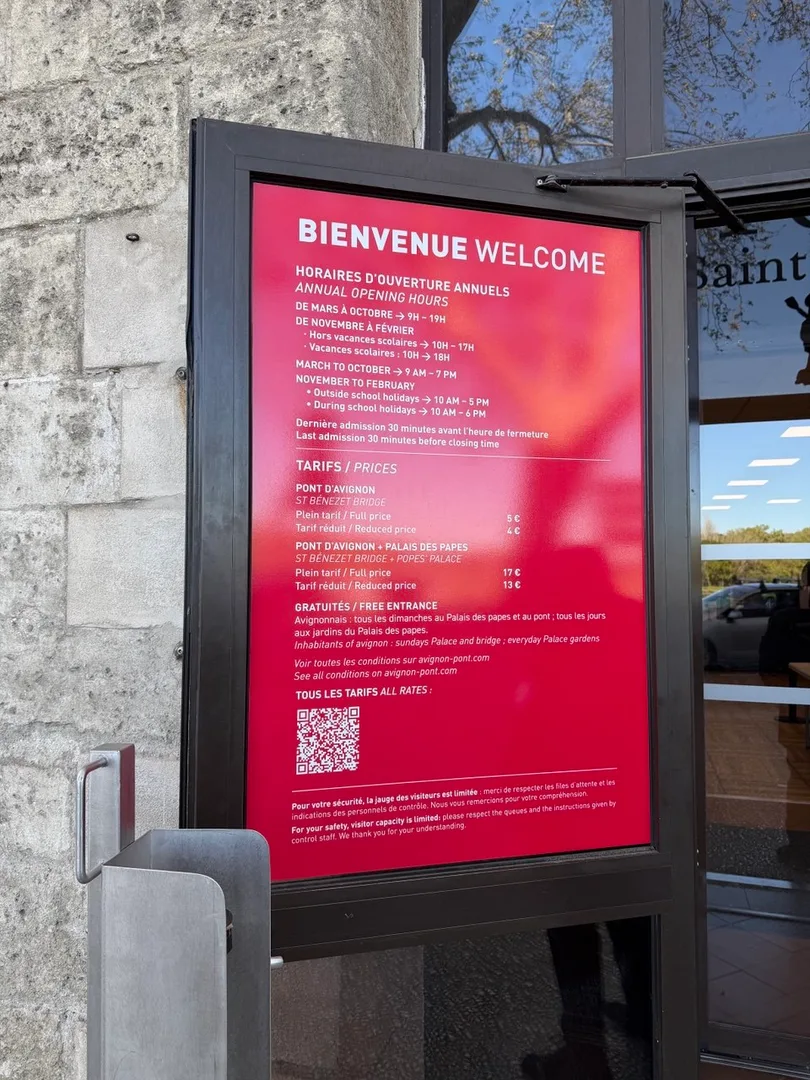
Bridge ticket | €5 (full), €4 (reduced) |
Combo ticket | Palace + Bridge — €14.50; Palace + Bridge + Gardens — €17 |
Audio guide | Included with entry |
Time needed | 30–45 min (bridge), 1 hour if deeply interested |
UNESCO | Part of the Historic Centre of Avignon, inscribed 1995 |
Built | ~1177–1185 |
Original length | ~900 m, 22 arches |
Remaining | 4 arches + chapel |
Opening hours (vary by season)
Period | Hours |
|---|---|
1 March – 1 November | 9:00 AM – 7:00 PM |
January 1–4 | 10:00 AM – 6:00 PM |
January 5 – February 6 | 10:00 AM – 5:00 PM |
February 7–28 | 10:00 AM – 6:00 PM |
November 2 – December 18 | 10:00 AM – 5:00 PM |
December 19–31 | 10:00 AM – 6:00 PM |
Last entry is always 30 minutes before closing. The bridge may close in severe weather — check the website on the day of your visit.
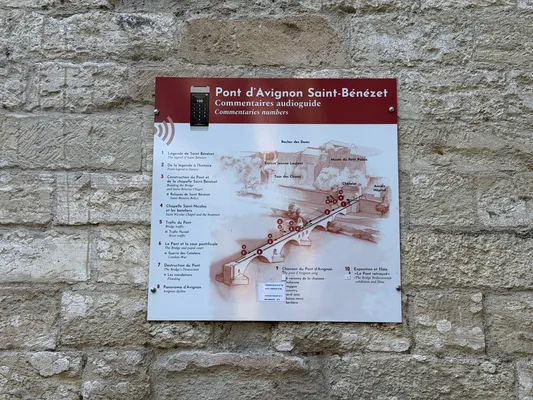

Here's the best way to do Avignon in half a day. Start at the Papal Palace in the morning — it's the most impressive building in the city and deserves at least an hour. Then walk through the palace gardens. From there, it's a short stroll along the city walls to Pont d'Avignon. Walk the bridge, visit the chapel, take your photos from the bridge itself.
Then do something most tourists skip: walk down to the riverside promenade and photograph the bridge from outside. The view from below — the broken arches against the sky — is more powerful than any view from the bridge itself.
If you have time, cross to the Île de la Barthelasse for the panoramic view. This is the island where people actually danced, despite what the song says. Stand there, look at the bridge, and hum the tune. You'll finally understand why the song says "on" — but the truth was always "under."
Buy the combo ticket (Palace + Bridge + Gardens, €17) — it saves money and covers the three essential stops. And come early: in July, during Avignon's famous theater festival, the city is packed and the bridge gets crowded by midday.

Tags

Jojo is Joyful Journeys!