Thun Panorama — The World's Oldest 360° Painting That Surrounds You
The moment you step inside, you forget you're in a museum. You climb onto a platform, look up — and suddenly you're standing in the middle of a city that no longer exists. Streets, houses, people, mountains — all around you, in every direction. Painted on a single canvas over two hundred years ago.
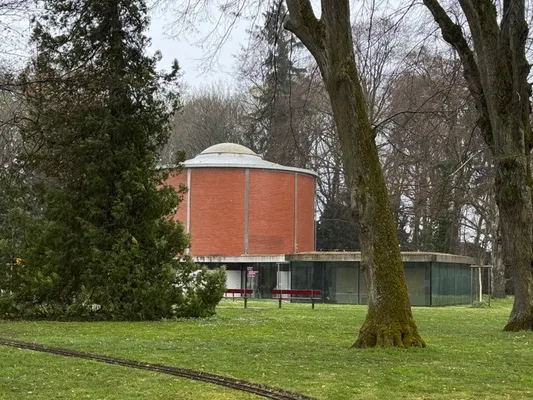
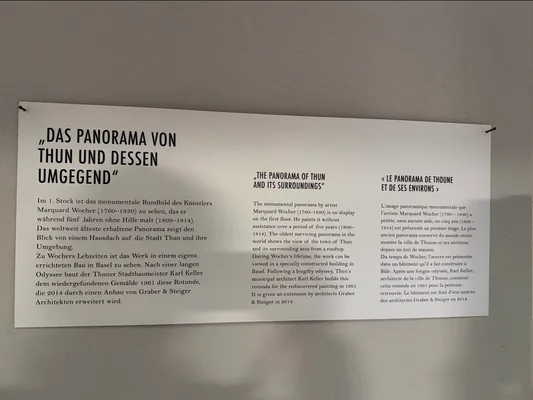
Thun Panorama is the oldest surviving panoramic painting in the world. Not a fragment. Not a replica. The actual painting, created between 1809 and 1814, hanging in the round building in the small Swiss town of Thun. And most tourists in Switzerland have never heard of it.
What You'll See Inside
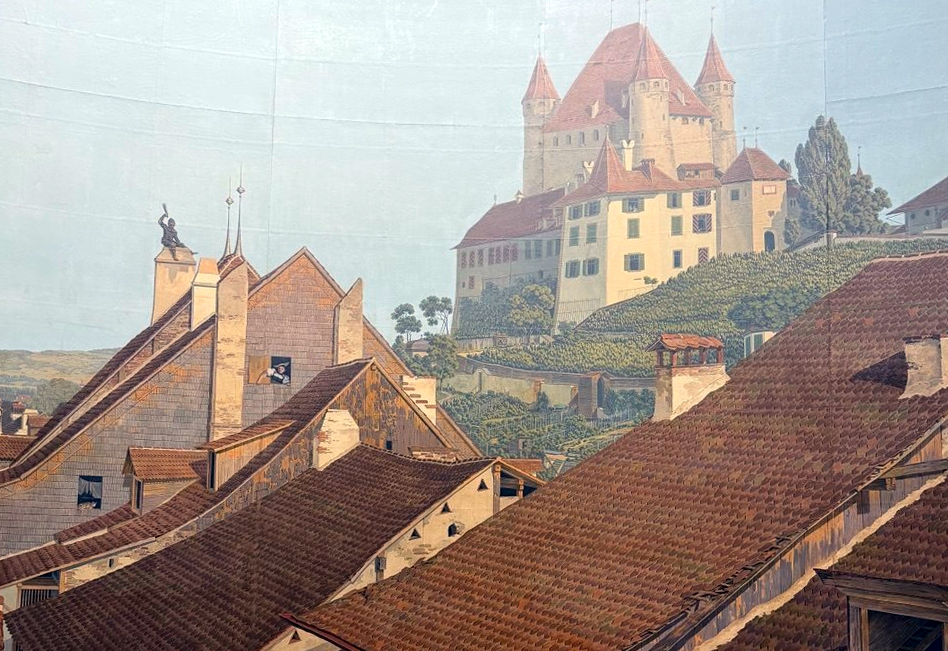
The painting is massive — roughly 7.5 meters tall and 38 meters long, wrapping around you in a full 360-degree circle. It shows the town of Thun and its surroundings as they looked around 1810: the streets, the squares, the river Aare, Lake Thun, and the Alps — Niesen, Blümlisalp, Stockhorn — all rendered in extraordinary detail.
But this isn't just a landscape. There are about 300 people in the painting, going about their daily lives. Children playing, merchants arguing, soldiers standing around, dogs chasing each other. You can even peek into windows of houses and see what's happening inside.
It's essentially a visual time machine. One painting that preserves an entire town, frozen in a single moment two centuries ago.
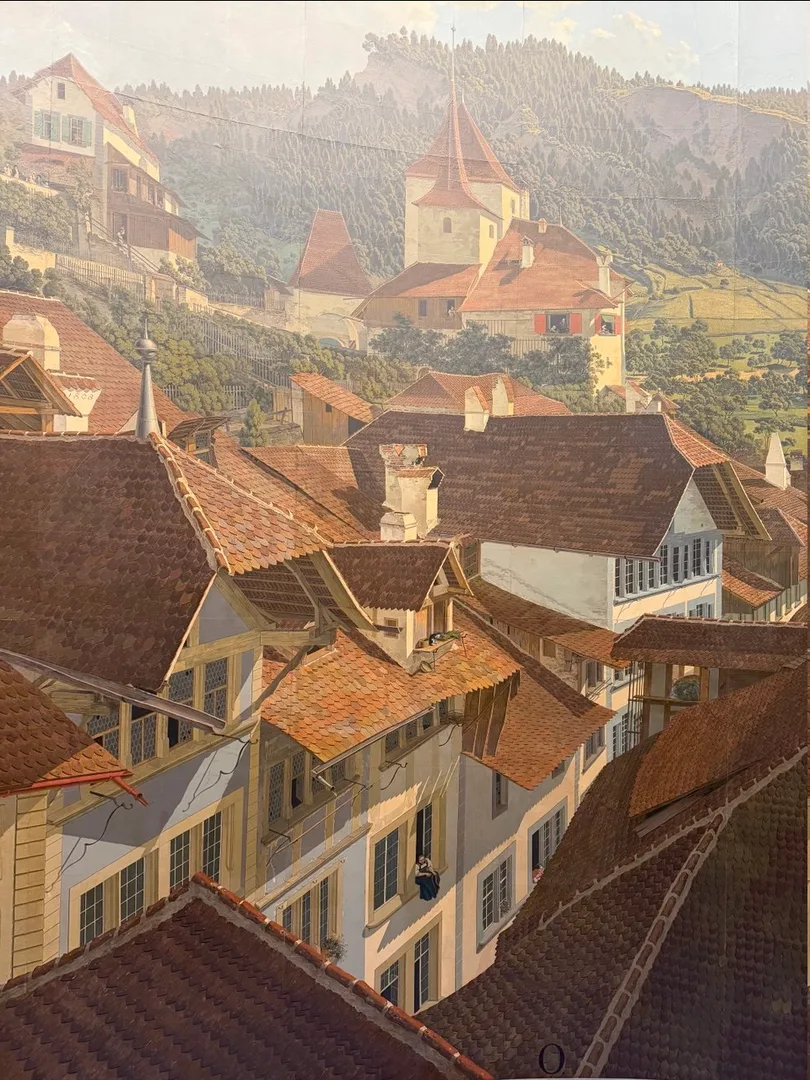
How to Actually Look at This Painting
Most visitors walk in, spin around once, say "wow," and leave after five minutes. Don't be that person. There's an entire world hidden in this canvas — you just need to know how to look.
Don't try to see everything at once
The painting wraps 360 degrees around you. Your brain will try to take it all in — and fail. Instead, imagine the painting as a clock face. Pick one or two "hours" and study just that section.
Read it in layers
Divide what you see into three levels. The foreground is where the people, animals, and action are. The middle ground shows the buildings, streets, and bridges. The background is mountains, sky, and horizon. Almost all the hidden stories are in the foreground.
Follow a theme, not geography
Instead of moving left to right, try watching the entire painting through one lens: only the soldiers, only the animals, only the children, only the funny scenes. This makes the experience ten times more interesting than a casual walkthrough.
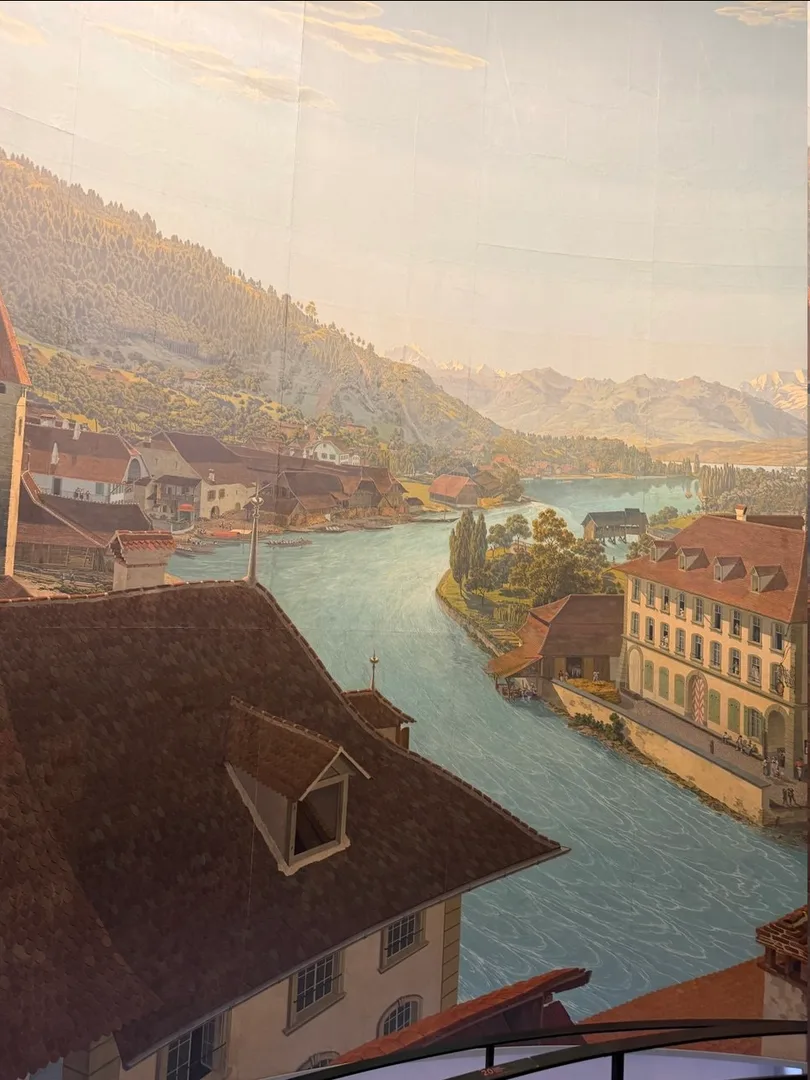
The Hidden Scenes You'll Miss If You Rush
This is my favorite part. The artist, Marquard Wocher, filled this painting with tiny stories, jokes, and moments of chaos that most visitors never notice.
Animals behaving badly
Dogs chase people. Horses refuse to cooperate. Animals constantly interrupt the "serious" scenes around them. It's almost like the artist's hidden sense of humor — invisible at first glance, impossible to unsee once you spot it.
People in awkward moments
Someone is tripping. Someone is arguing at the market. Someone is looking in entirely the wrong direction. These aren't mistakes — Wocher deliberately made the painting feel alive and imperfect, not idealized.
Soldiers who aren't exactly heroic
They stand around too casually, get distracted, chat with civilians. In some spots it almost reads as gentle satire on the military. Not what you'd expect from an early 19th-century painting.
Market chaos
The market area is one of the densest sections of the painting. Merchants arguing, goods being dropped, buyers behaving strangely. You could spend fifteen minutes just on this part.
Children — a separate level of chaos
They run, play, and get in everyone's way. Some of the funniest micro-scenes in the entire painting involve kids doing what kids do — ignoring every adult around them.
The watchers
Some figures in the painting are looking directly at you. Others are watching other people in the scene. It creates an unsettling feeling — as if you're not just observing this world, but standing inside it, being observed yourself.

Before you leave the museum, find at least three funny situations, one conflict or argument, and one figure who is staring directly at you.
If you found all of them — you looked at this painting the right way. Most visitors don't.
The Artist — Marquard Wocher
Marquard Wocher was born in Basel in 1760. He was a painter specializing in miniatures — detailed, small-scale work that required extraordinary patience and precision. Exactly the kind of skills needed to fill 38 meters of canvas with three hundred people and their stories.
In 1809, he traveled to Thun and sketched the town from a rooftop to capture the full 360-degree view. Then he returned to Basel and spent five years — from 1809 to 1814 — painting the panorama almost entirely alone.
The painting was originally exhibited in Basel, but after Wocher's death in 1830, it was forgotten. Completely. For over a century, no one knew it existed. It was rediscovered in the 1950s, restored, and brought to Thun — where it has been on display ever since.
Why this matters
Panoramas were the first "mass media" — the movies and virtual reality of the 19th century. Before photography, before cinema, people paid to step inside a round building and feel like they were somewhere else. Thun Panorama is the oldest surviving example of this art form. Not just in Switzerland — in the world.
Practical Information
Detail | Info |
|---|---|
Address | Schadaupark, 3602 Thun, Switzerland |
Hours | Tuesday–Sunday, 11:00 AM – 5:00 PM |
Closed | Mondays |
Season | March – November (closed in winter) |
Time needed | 40–60 minutes (to really see the details) |
Website |
Important: the museum is not heated. This is why it closes for winter. Even in autumn, it can be chilly inside — bring a layer.
Best time to visit: weekday mornings, right at opening. The museum is small, and with fewer people inside, you can stand close to the painting and study the details without anyone blocking your view.

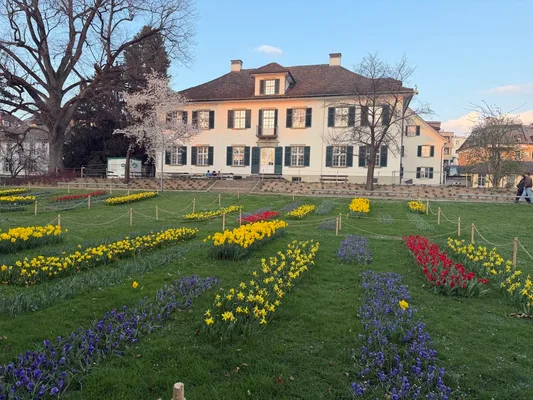
Don't come just for the panorama — make it part of a Thun day trip. The museum sits in Schadaupark, right on Lake Thun. Walk along the lake, visit Thun Castle (the view from the top is spectacular), explore the old town with its covered wooden bridges and elevated sidewalks. Then finish at the panorama.
After seeing the real Thun, stepping into a 200-year-old version of the same town hits completely differently. And give yourself at least 40 minutes inside. Not five. The painting rewards patience. The longer you look, the more stories you find.
Tags

Jojo is Joyful Journeys!