Mexico City Cathedral — The Church Built on Top of a Civilization
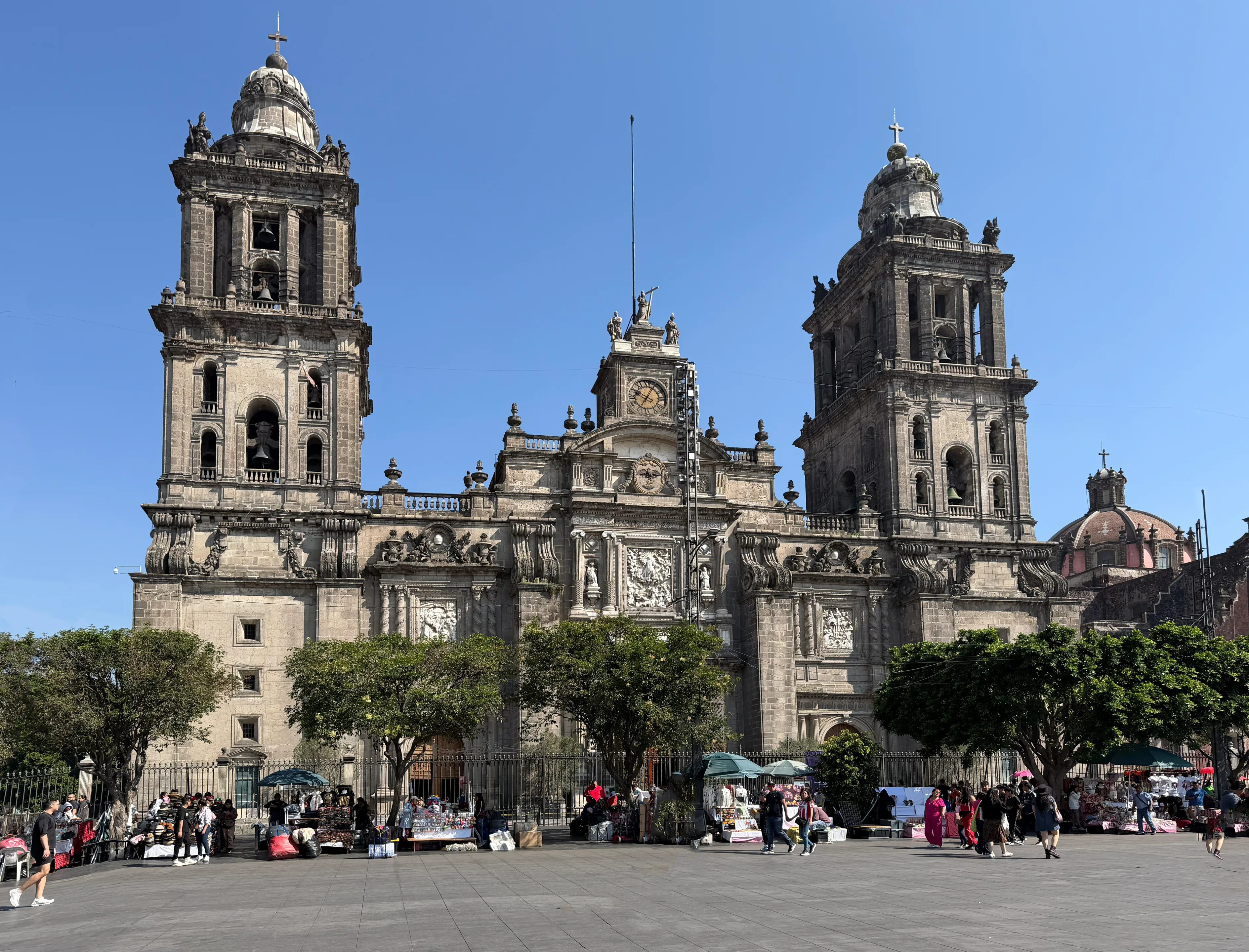
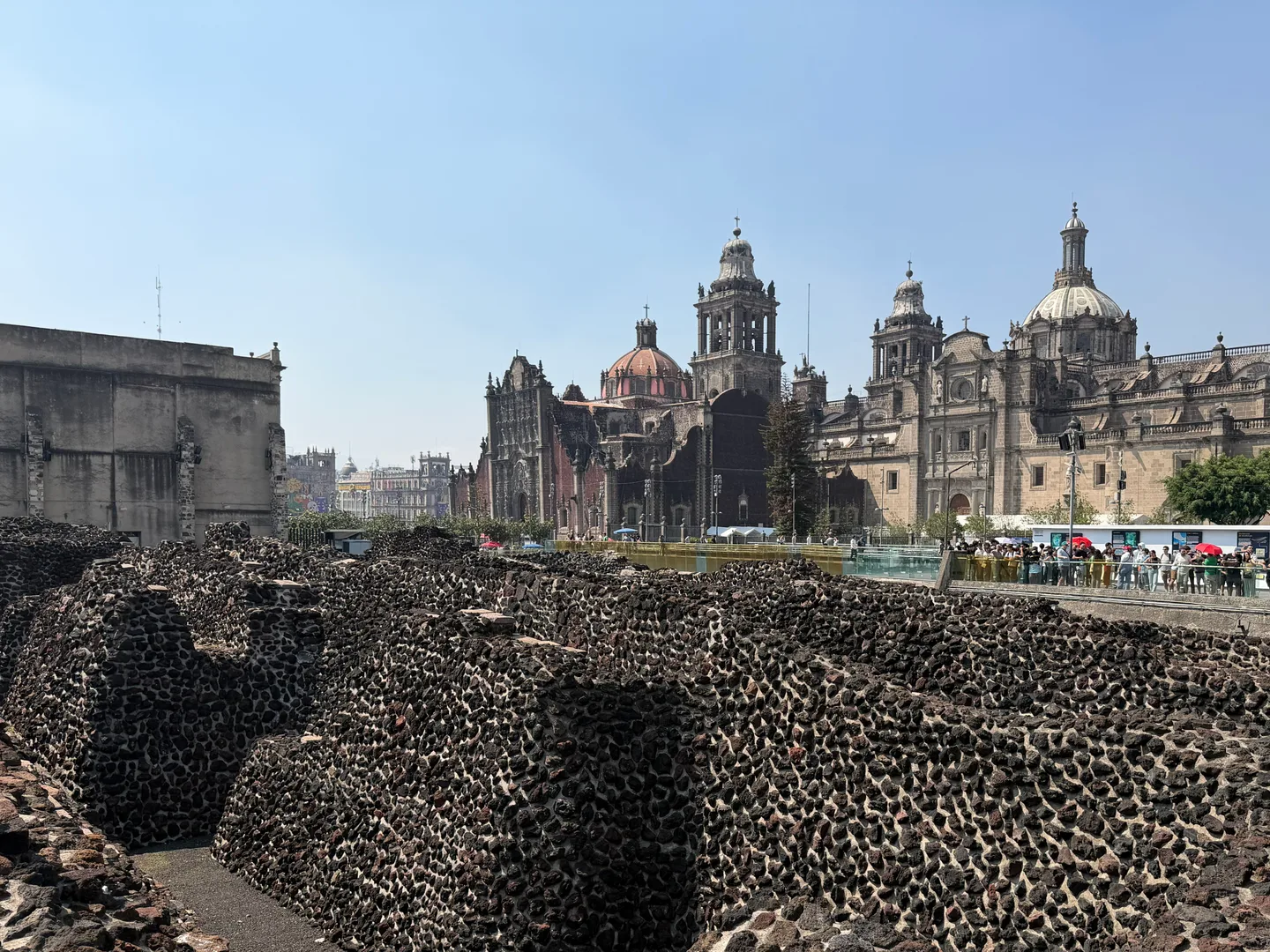
You're standing in the Zócalo, one of the largest public squares in the world. To your left, the ruins of Templo Mayor — the sacred heart of the Aztec empire, where priests performed rituals at the top of a pyramid. To your right, the Metropolitan Cathedral — the largest cathedral in Latin America, built by the Spanish who destroyed that pyramid. Some of the stones in its walls came from the temples they tore down.
In one glance, you see three layers of Mexico City: the Aztec city that was here first, the colonial capital that was built on top of it, and the modern metropolis that surrounds both. No other place in Mexico makes this history so visible, so physical, so impossible to ignore.
That's why the cathedral is worth your time — not because it's beautiful (though it is), but because it's the place where you feel the full weight of this city's story.
A Building That Took 240 Years to Finish
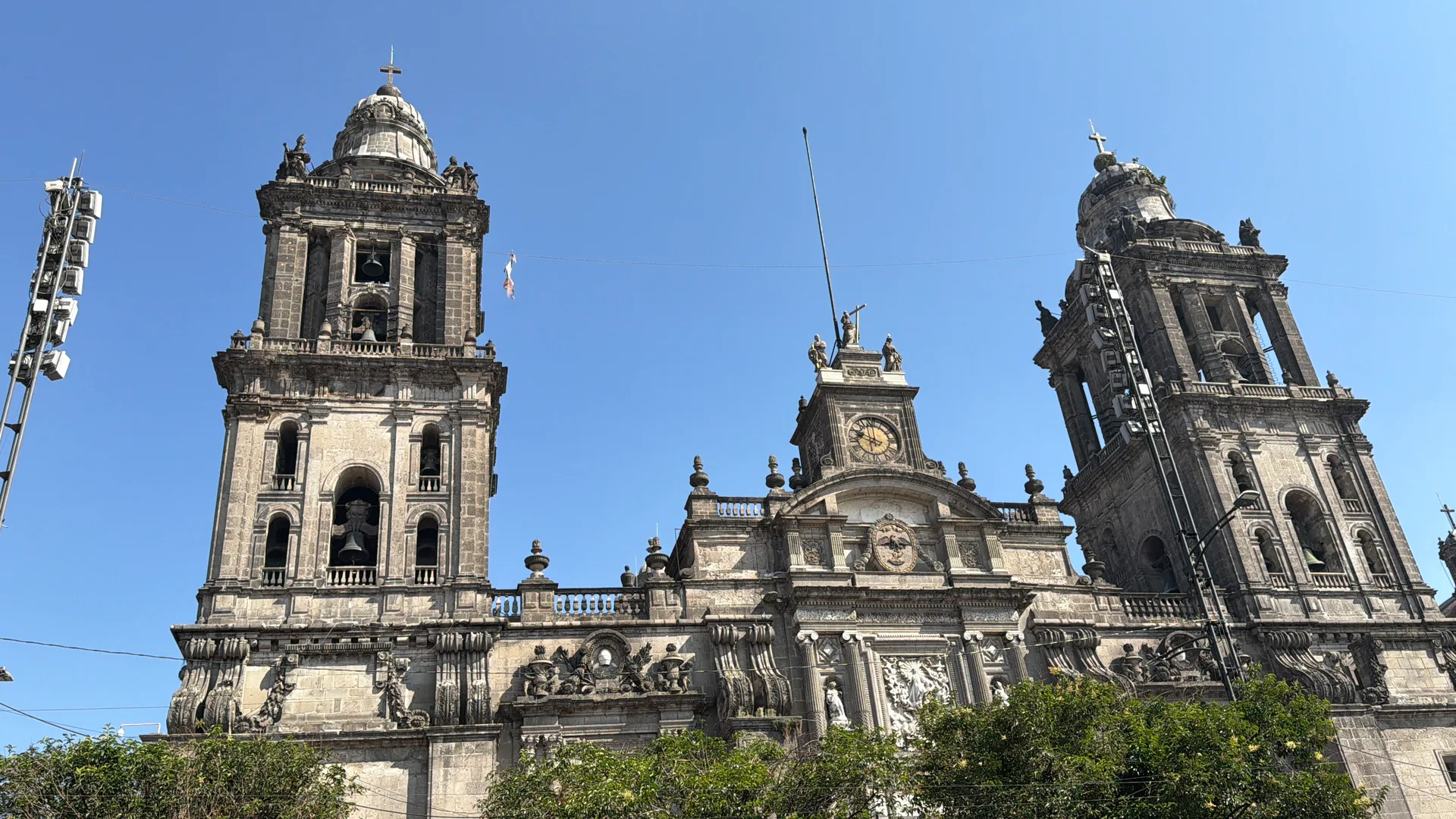
Construction started in 1573 and wasn't completed until 1813. Two and a half centuries. The first architect was the Spanish Claudio de Arciniega; after him, generations of architects and craftsmen of New Spain worked on the building, including Juan Gómez de Trasmonte, José Damián Ortiz de Castro, and Manuel Tolsá.
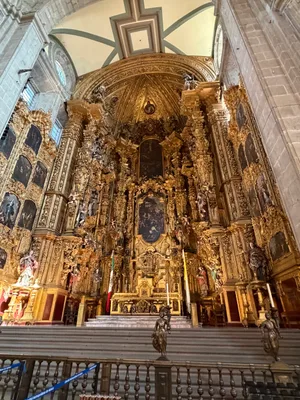
Because it took so long, the cathedral isn't one style — it's an architectural timeline. The Renaissance is in the bones. Baroque crept in as decades passed. Churrigueresque — the extravagant, heavily ornamented Spanish Baroque — arrived in the altars. Neoclassicism finished the towers and dome. Walking through the cathedral is like walking through 240 years of changing taste, belief, and power.
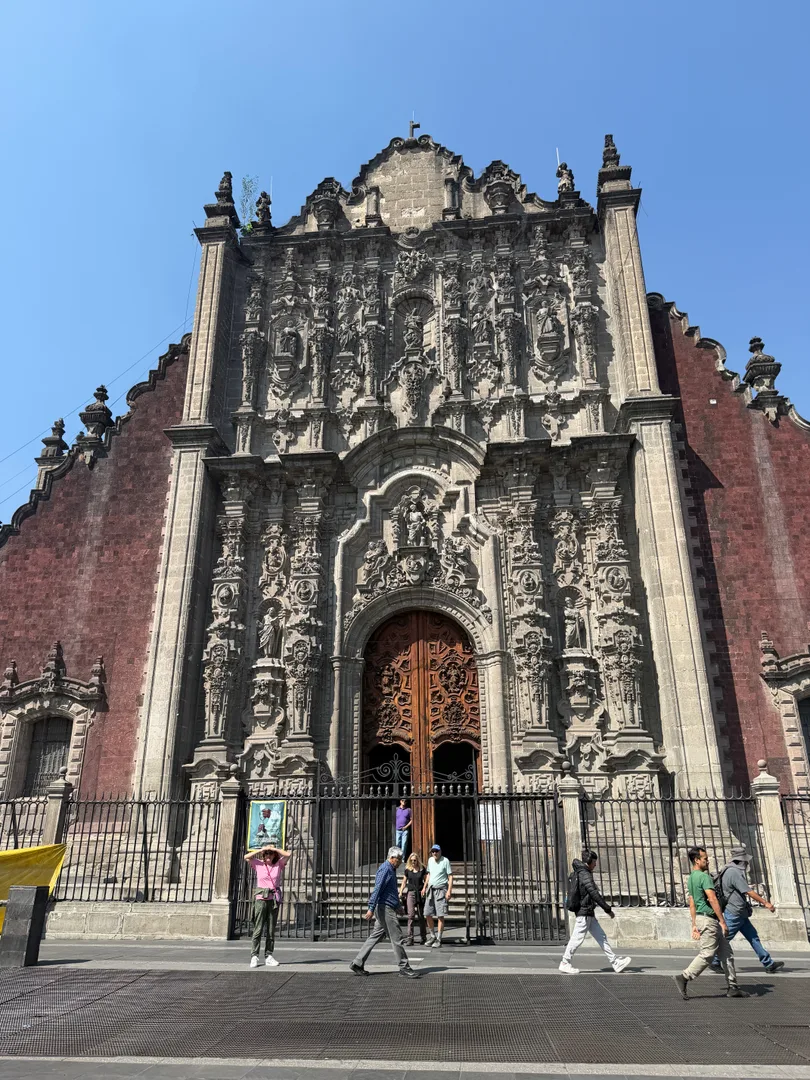
And it was built on the most symbolically loaded ground in the Western Hemisphere: directly next to where the Aztec Templo Mayor once stood, at the center of Tenochtitlán. The Spanish didn't just conquer a city — they built their cathedral on top of its gods, using the stones of the very temples they destroyed.
During restorations, workers found time capsules and lead boxes hidden inside the structure — containing religious objects placed there centuries ago, probably as symbolic protection for the building. The cathedral keeps revealing its secrets.
The Cathedral Is Sinking
Mexico City is built on the bed of a former lake — Lake Texcoco. The ground beneath the city is soft, waterlogged clay. And a massive stone cathedral on soft clay does what physics demands: it sinks.
Over the centuries, the cathedral has settled unevenly, tilting and shifting. You can see it with your own eyes: look at the floor, the columns, the walls — subtle angles, slight leans, surfaces that aren't quite level. These aren't defects. They're the cathedral's ongoing conversation with the geology beneath it.
Inside the cathedral, a pendulum hangs from the dome — originally placed to measure the building's tilt and help engineers understand how the structure was moving. It's a quiet, almost hidden detail, but once you know it's there, it changes how you see the whole building.
Major stabilization projects over the decades have slowed the sinking, but the cathedral remains a building in motion — a monument that is both ancient and still actively being saved.
What to See Inside
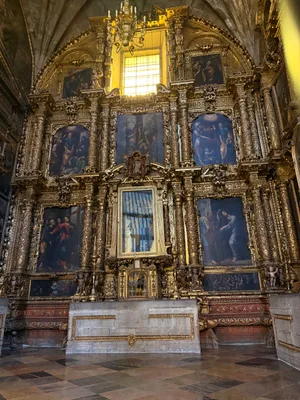
Altar del Perdón (Altar of Forgiveness)
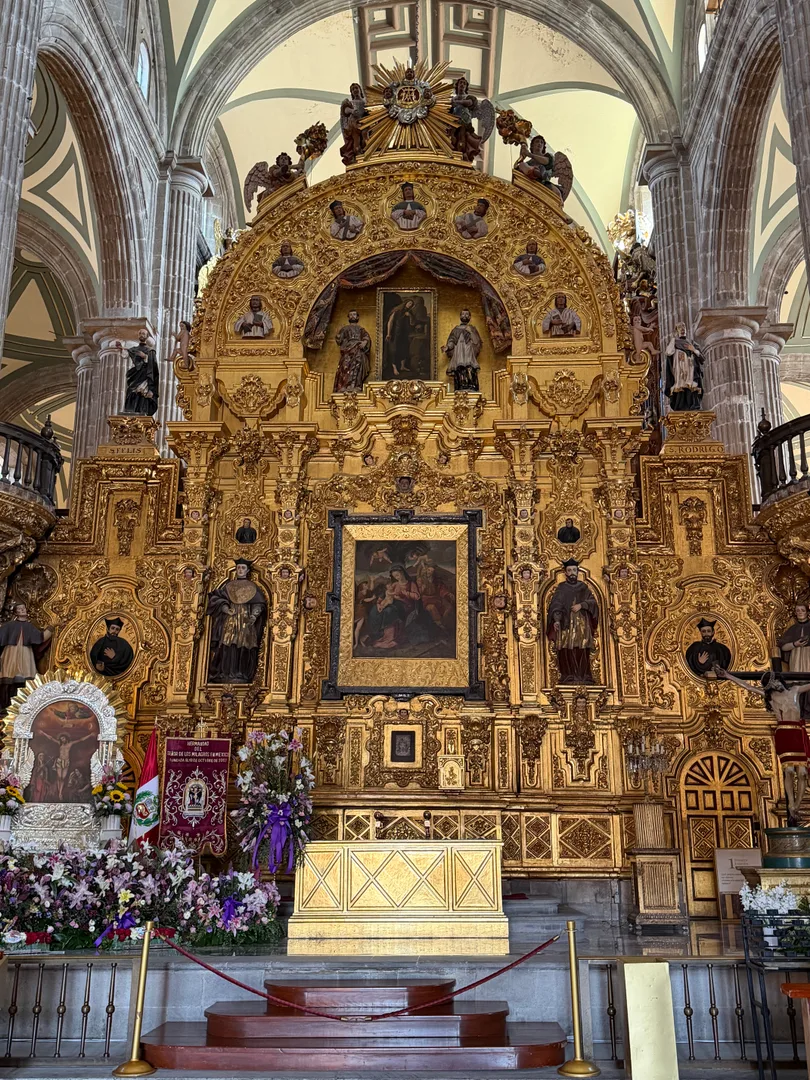
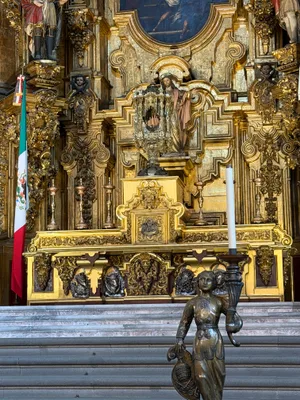
One of the most famous altars in the cathedral, attributed to the master Jerónimo de Balbás. Part of its decoration was severely damaged in a fire in 1967, which adds a layer of drama to an already dramatic space. Look for the contrast between restored and original sections.
The Central Nave and Dome
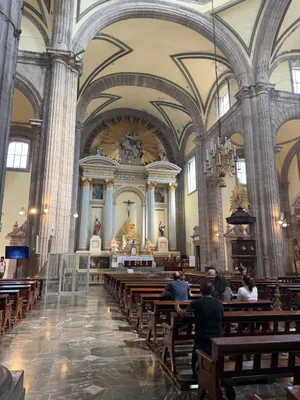
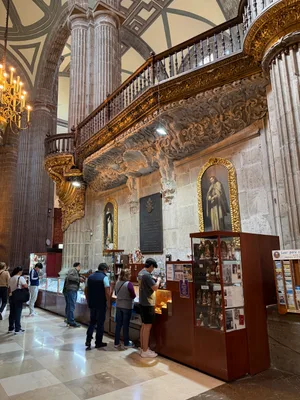
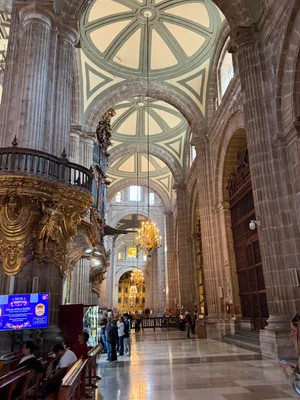
Walk in and don't rush. Before looking at anything specific, just look up. The height of the columns, the vaulted ceiling, the dome, the way light falls through the space — the scale of the interior is more impressive than the facade. Give yourself a full minute of just standing and looking up.
The Choir and Organs
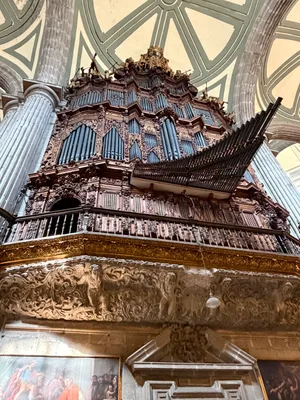
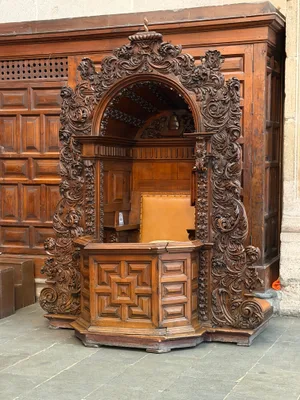
The cathedral houses large historic organs and an elaborately decorated choir area. Even if you know nothing about church music, the craftsmanship of the carved wood, the scale of the pipes, and the ornamental detail make this one of the most beautiful spots inside.
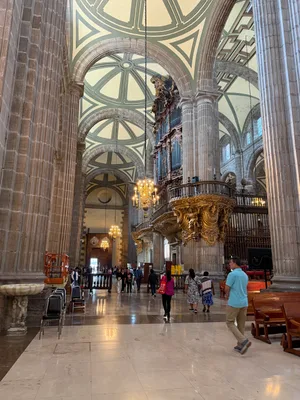
The Sacristy
Especially interesting if you appreciate painting. The sacristy contains works by major colonial-era artists, including Cristóbal de Villalpando and Juan Correa — large-scale religious paintings that are masterpieces of New Spanish art.
The Side Chapels
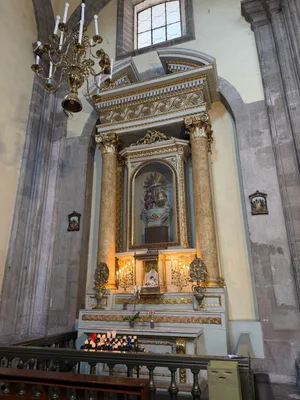
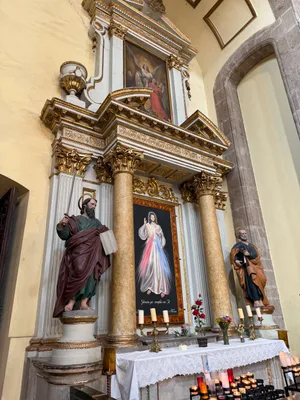
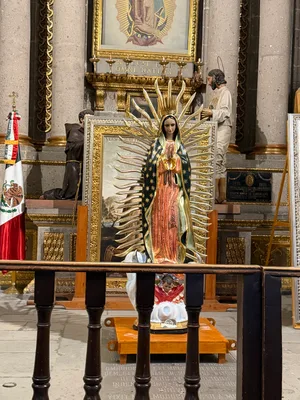
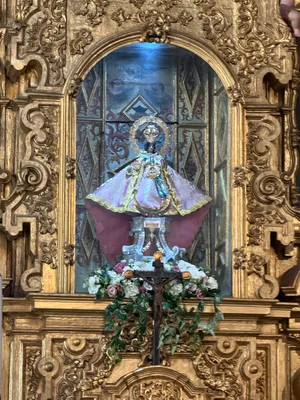
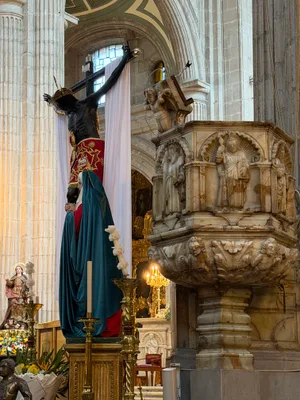
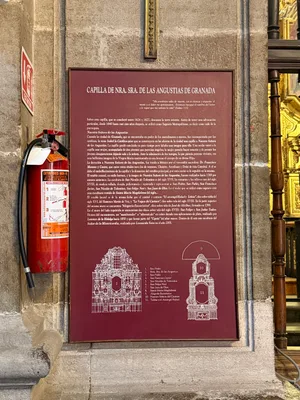
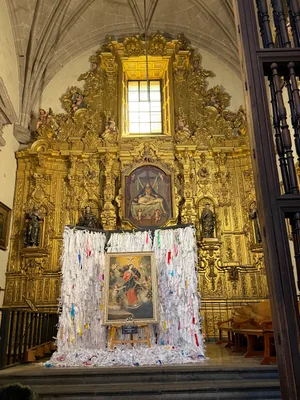
Don't walk through the cathedral in a straight line. The real depth is in the side chapels — each one is a separate world with its own altar, sculptures, paintings, and story. There are 14 of them. Take your time.
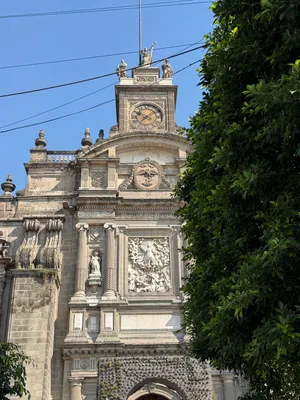

BEST PHOTO SPOTS
Outside: stand at the center of the Zócalo and frame the full facade with the Mexican flag in the foreground. Walk around to see the Sagrario Metropolitano (the attached parish church) and the contrast with Templo Mayor ruins next door.
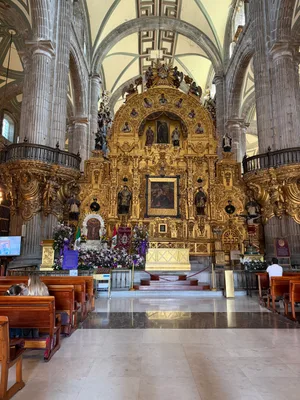
Inside: the central nave looking toward the main altar. The Altar del Perdón with candlelight. The floor and columns showing the tilt — shoot at a low angle to make it visible.
From above: if bell tower tours are available the day you visit (check on site — schedules change), the view from the top is one of the best in the historic center. The entire Zócalo, Templo Mayor, and the city stretching to the mountains.
Practical Information
Detail | Info |
|---|---|
Full name | Catedral Metropolitana de la Asunción de la Santísima Virgen María a los Cielos |
Location | Plaza de la Constitución (Zócalo), Centro Histórico, Mexico City |
Metro | Zócalo station (Line 2, blue) — exit and the cathedral is right there |
Entry | Free |
Time needed | 45–60 min (cathedral only). 2–3 hours for cathedral + Templo Mayor + Zócalo |
Website | |
Built | 1573–1813 (240 years) |
Style | Renaissance, Baroque, Churrigueresque, Neoclassical |
Status | Active church — services held daily |
Mass Schedule (as of 2026)
Weekdays: 9:30 AM and 6:00 PM
Sundays: 8:00, 9:30, 10:30, 12:00, 1:30 PM, 4:00, 5:00, 6:00 PM
For sightseeing, visit between masses on weekdays. During services, you can enter but walking around, photographing, and exploring chapels is inappropriate.
Avoid: Sunday around noon — the cathedral is busiest, and much of the space is occupied by the service.
Bell Tower Tours
Sometimes available — check at the entrance on the day of your visit. Schedules vary and tours can be suspended without notice. If they're running, go — the view is worth it.

Come in the morning on a weekday. The light is softer, the Zócalo is calmer, and you'll have space to actually stand inside the cathedral and look up without being pushed through by a crowd.
Start outside. Walk around the full perimeter of the cathedral. Look at the facade, the towers, the Sagrario next door, and the sheer scale of the building against the square. Then go inside and give yourself at least 45 minutes. Don't skip the side chapels — they're where the cathedral reveals its layers.
After the cathedral, walk next door to Templo Mayor. This is essential. The archaeological site and museum show you what was here before the Spanish arrived — the pyramid, the offerings, the gods. After seeing Templo Mayor, the cathedral hits differently. You understand that this building isn't just standing on land — it's standing on history. On someone else's sacred ground. On stones that were once part of a different world.
That tension — between what was destroyed and what was built in its place — is what makes this corner of Mexico City unlike anywhere else on earth.
One practical note: the Zócalo area is safe during the day, but like any major tourist zone, watch your pockets and bags. Keep valuables close, especially in crowds and on the metro.

Events

Tags

Jojo is Joyful Journeys!