Fontaine-de-Vaucluse — the mysterious source of the Sorgue River
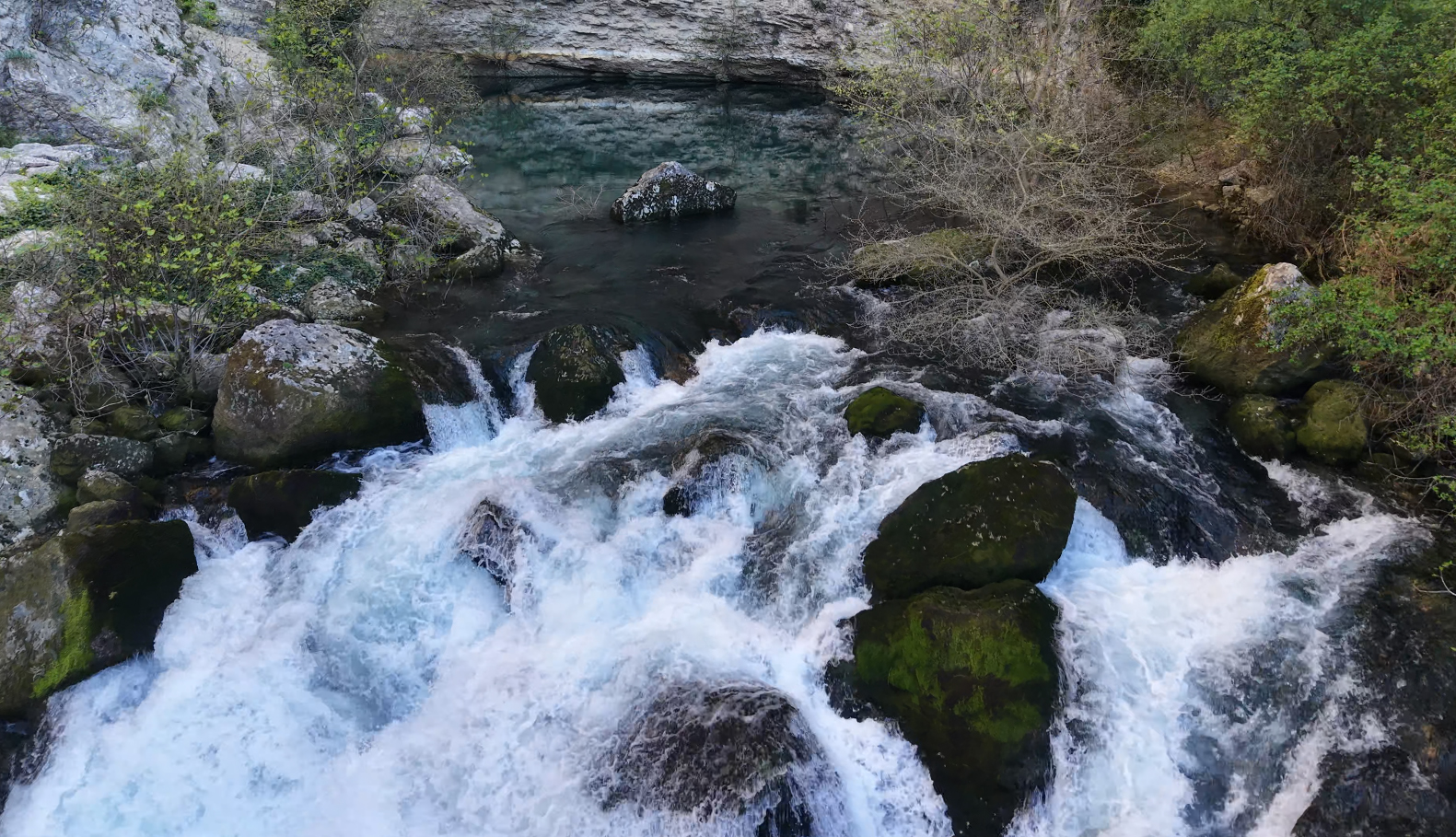
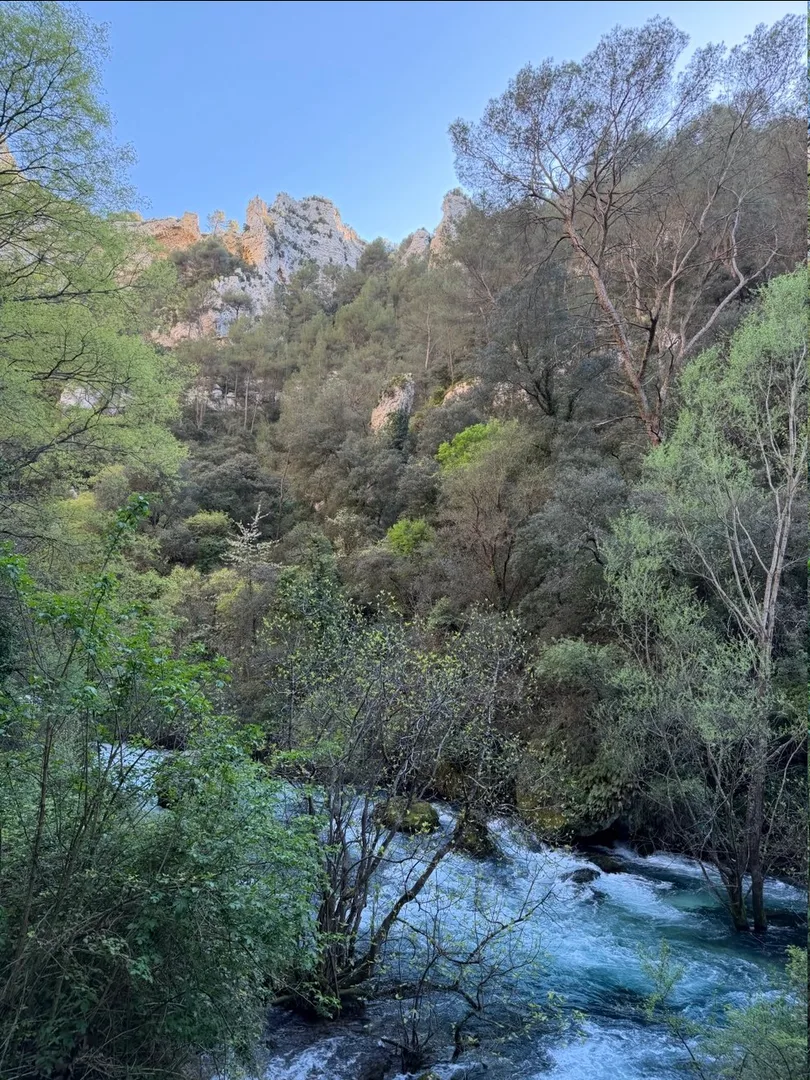
The source of the Sorgue River is one of the most mysterious and impressive natural sites in France. It is located in the village of Fontaine-de-Vaucluse, at the foot of steep limestone cliffs.
This powerful karst spring emerges directly from a deep cave in the rock. It gives rise to the Sorgue River, which then flows through the picturesque valleys of Provence.
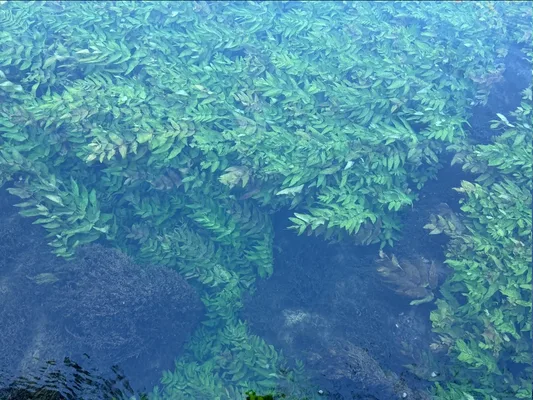
The water in the spring, as well as throughout the river, is incredibly clear, with a rich emerald-blue color. Even in the heat of summer, the water remains cold (around 12–14°C / 54–57°F).
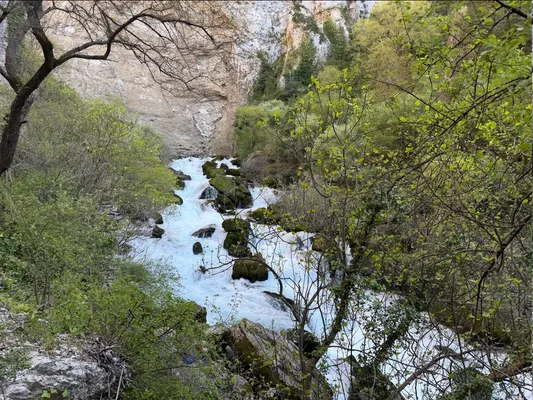
The spring lies in a narrow gorge, giving the place a dramatic appearance. If you cannot see the basin of the spring (access to it is often closed), it creates the impression that the water is bursting straight out of the rock.

The best view of the spring can be seen from the upper viewpoint near the basin.
Why is the source of the Sorgue River called “mysterious”?
The main mystery lies in its depth and the origin of its waters. For a long time, the spring was believed to be bottomless. It was only in the 20th century that researchers began to study it. The explored depth reaches about 308 meters, but modern dives have shown that the cave system extends even further, and its underground pathways are still not fully understood.
One thing is certain: after heavy rainfall, the water flow increases dramatically, turning into a powerful, swirling surge. The discharge can reach up to 90 m³/s, making it one of the most powerful karst springs in Europe.
Interesting facts about the source of the Sorgue River
The spring inspired the poet Francesco Petrarch, who lived here in the 14th century
The water comes from a vast underground system of the Vaucluse plateau
The color of the water changes throughout the year, from turquoise to deep blue
During floods, the water level can rise by several meters
The Fontaine-de-Vaucluse Spring and Francesco Petrarch
The spring at Fontaine-de-Vaucluse became for Petrarch not just a beautiful place, but a space for reflection, solitude, and poetry. He lived here in the 14th century and often sought seclusion by the Sorgue River.
Petrarch devoted much of his poetry to a woman named Laura. The quiet waters of the Sorgue and the solitude of the surrounding landscape deepened his feelings of longing and love, and helped inspire his famous sonnets. Many poems from his collection Canzoniere were written here.
A sonnet of quiet waters (from the Canzoniere)
(a free poetic interpretation in the spirit of Petrarch)
I wandered alone through silent valleys,
Where the gentle Sorgue flows among the stones,
And the wind whispers through the shadows
My hidden sighs, my solitary grief.
Petrarch often reflected on life and time. The nature of the spring—deep, mysterious, and eternal—led him to think about the fleeting nature of human life, the permanence of nature, and humanity’s place in the world. The rushing water became for him an image of human existence.
The landscape around the spring was a place of solitude and inner discovery. Petrarch deliberately sought retreat away from cities. Here, he could think and write. The spring became a symbol of inner depth and a refuge from the world.
At the same time, the spring at Fontaine-de-Vaucluse symbolized mystery and depth. Descending into unknown depths, it became a metaphor for the human soul, hidden emotions, and unresolved mysteries. A striking image emerges: water as a mirror of the soul—perfectly reflecting what the Sorgue represents.
On depth and the inner world
(a free poetic interpretation in the spirit of Petrarch)
In these clear waters I see reflected
My silent, restless soul…
Atmosphere and Personal Impressions
The walk to the spring is a short uphill path along a rocky trail that follows the river.
You can only drive as far as the entrance to the village of Fontaine-de-Vaucluse. There are many parking areas both at the entrance and within the village, but parking inside the village is usually difficult. It’s easier to leave your car at the beginning and enjoy a short walk. The village itself is very picturesque, with plenty of shops, restaurants, and small museums. The Sorgue River is visible along most of the route.
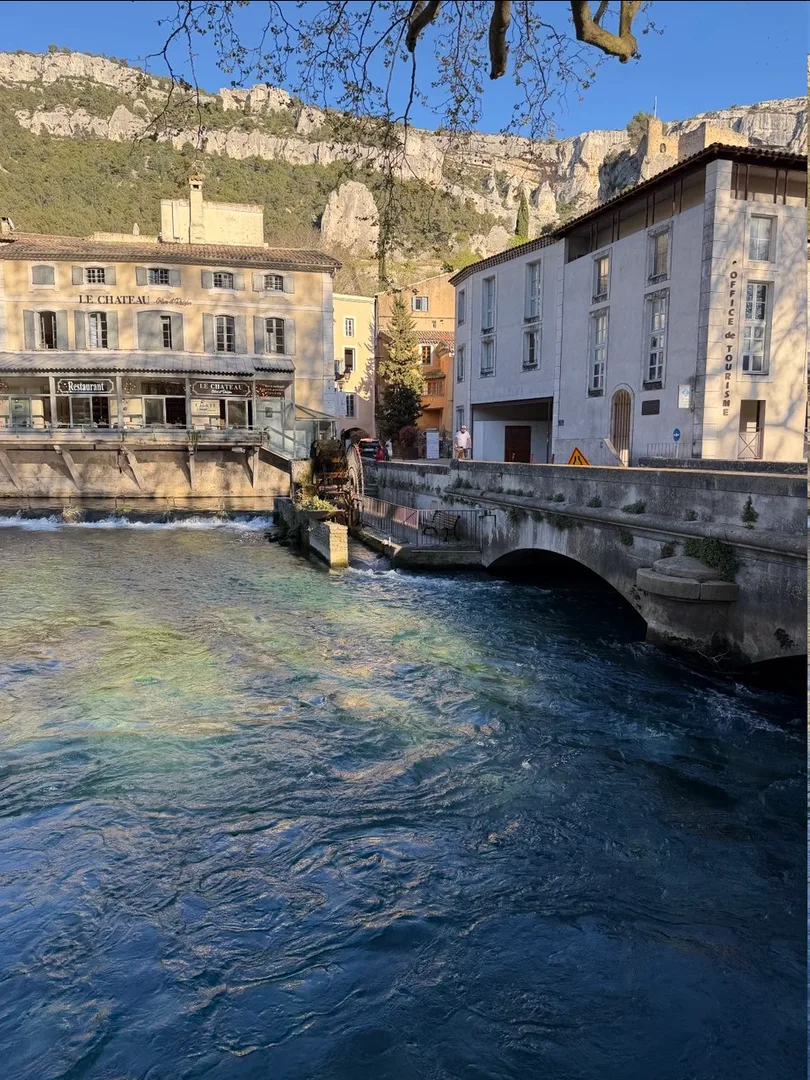
As you get closer to the spring, the sound of rushing water grows louder, the cliffs rise higher, and suddenly a view opens up onto a large, deep basin filled with water of an incredible color.
The walk is easy and very scenic, mostly shaded by large trees. The air feels fresh and slightly humid, and the landscapes are stunning.
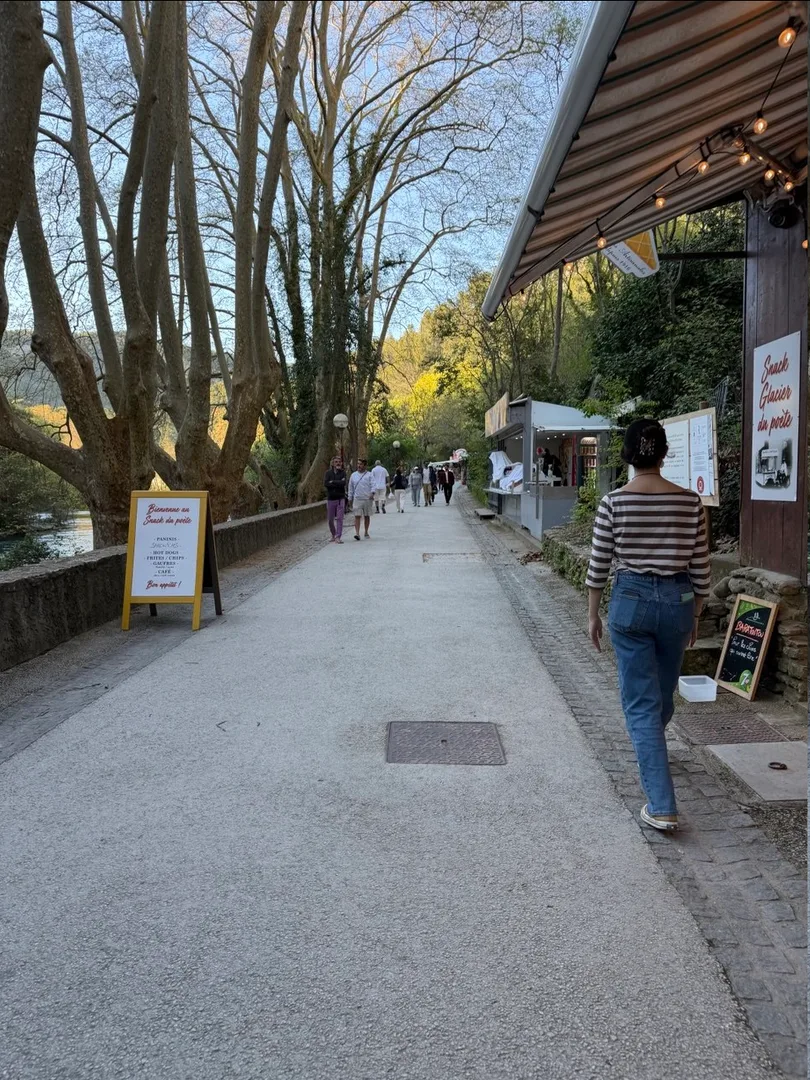
It’s a place that feels both peaceful and slightly mysterious — as if you are looking into the “eye” of the earth.
The Sorgue River — from source to mouth
The Sorgue River is about 30 kilometers long. As mentioned earlier, it originates from a powerful karst spring in a small French village.
After emerging to the surface, the Sorgue flows through the picturesque valleys of Provence, splits into several branches, and passes through the town of L’Isle-sur-la-Sorgue, known for its canals and watermills. Because of its many channels, it is sometimes referred to as the “Sorgues” (in the plural).
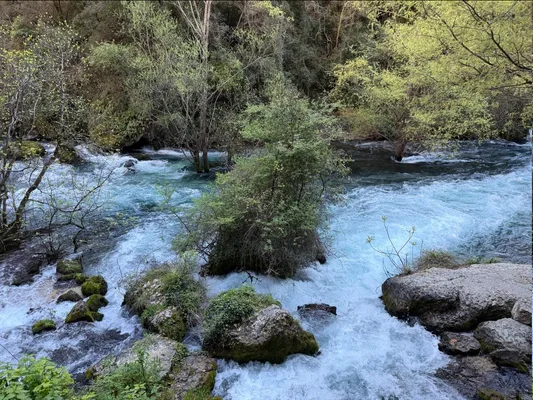
At the end of its course, the Sorgue flows into the Ouvèze River. From there, its waters continue through the river system into the Rhône, which eventually carries them to the Mediterranean Sea.
Safety and Temporary Closure of Access to the Sorgue Spring
Access to the spring at Fontaine-de-Vaucluse may be temporarily closed — and this is quite common. The reasons are almost always related to safety.
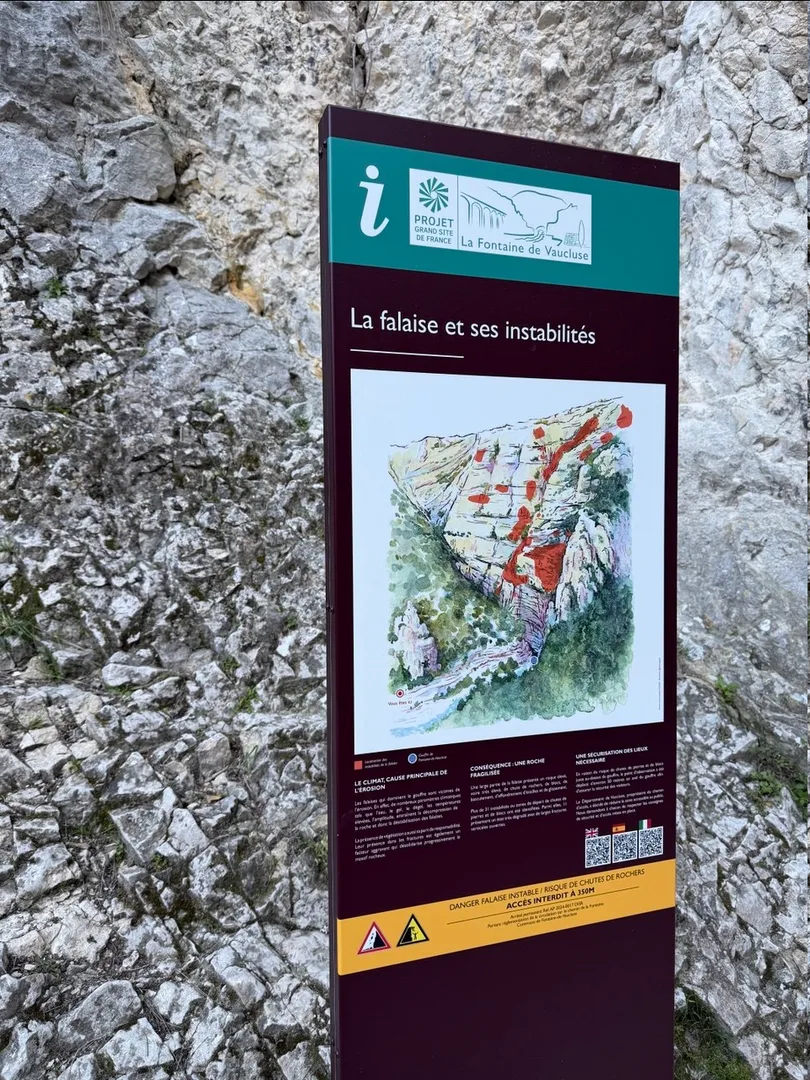
The main cause of closure is heavy rain and flooding. The karst spring reacts very quickly to weather conditions. After rainfall, the water flow increases резко, the level can rise by several meters, and the current becomes fast and dangerous. On such days, approaching the water is simply unsafe.
There is also a risk of rockfalls. The gorge is surrounded by steep cliffs, and the path to the spring runs directly beneath them. After rain or sudden temperature changes, rocks can loosen and fall. Even a small stone can be dangerous, so access to the spring may also be restricted for this reason.
Sometimes closures are due to maintenance work, such as repairing paths, reinforcing slopes, or installing safety barriers.
Local authorities may also limit access during periods of high tourist traffic or unstable weather conditions.
This does not mean the path is closed permanently — it is usually a temporary measure. Once conditions become safe again, access is reopened.
However, this can be disappointing for those who want to see the spring at its most impressive, right at its source. That’s why it’s important to consider weather conditions and timing when planning your visit.
When is the Best Time to Visit the Sorgue Spring
Spring (March–May):
The spring is at its most powerful after rainfall and snowmelt, making it especially impressive. The water takes on a bright turquoise color. However, access to the basin may sometimes be closed due to flooding. If you want to see the “mysterious spring at its full strength,” this is the best time to visit.
Summer (June–August):
Access to the basin is almost always open, but the water level is much lower and the spring appears calmer. The weather is pleasant and ideal for walking, but there are many tourists. This is a good time if comfort and accessibility are your priorities.
Autumn (September–October):
In autumn, the area becomes noticeably quieter — there are fewer visitors, and the place takes on a special sense of calm. At the same time, rainfall can restore the spring’s power: the flow increases, and access to the basin may occasionally be restricted for safety reasons. Provence is especially beautiful at this time, with soft light, warm colors, and a feeling of seclusion. It’s the perfect balance: scenic, atmospheric, and not overcrowded.
Winter (November–February):
In winter, there are almost no tourists, and the atmosphere is peaceful and quiet. However, the water level is often low, and closures due to weather are more frequent.
What is a karst spring?
A karst spring is like a giant stone sponge underground: water fills it and then flows out through a single opening.
It is a place where underground water emerges to the surface from cracks or caves in soluble rocks, most often limestone.
Rainwater seeps into the ground and постепенно dissolves limestone and other soft rocks, forming underground cavities, caves, and even entire subterranean rivers. The point where this water finds its way back to the surface is the spring.
Water in karst springs is very clear because it is naturally filtered. Its temperature remains relatively constant and is usually cool throughout the year. However, the flow is unstable and strongly depends on rainfall. The depth and mystery of these springs are often linked to vast underground systems.
That is why karst springs are often called “windows into the underground world.”

The spring is a must-visit for those who love unusual natural phenomena, mountain gorges, karst landscapes, and atmospheric, “mysterious” places.
The water reaches its maximum power from March to May, but the site is often closed during this period. More reliable access is usually available from June to September. However, the best time to visit is September to October, when the surroundings are still beautiful, but there are far fewer tourists.
Tags
Aussi disponible en

Jojo is Joyful Journeys!