Papal Palace Avignon — The Largest Gothic Palace in the World (And How to Actually See It)
The Papal Palace is extraordinary, but timing matters. Visit at the wrong hour, especially on a July afternoon, and the experience can turn into a slow shuffle through crowded rooms, staircases, and doorways. Even the HistoPad — the tablet that recreates the palace as it looked in the 14th century — becomes hard to use when there is no space to stop, look around, and explore.
To see the history rather than the crowds, it helps to know when to go, how to plan the visit, and what details are worth looking for inside.
What Makes This Place Special
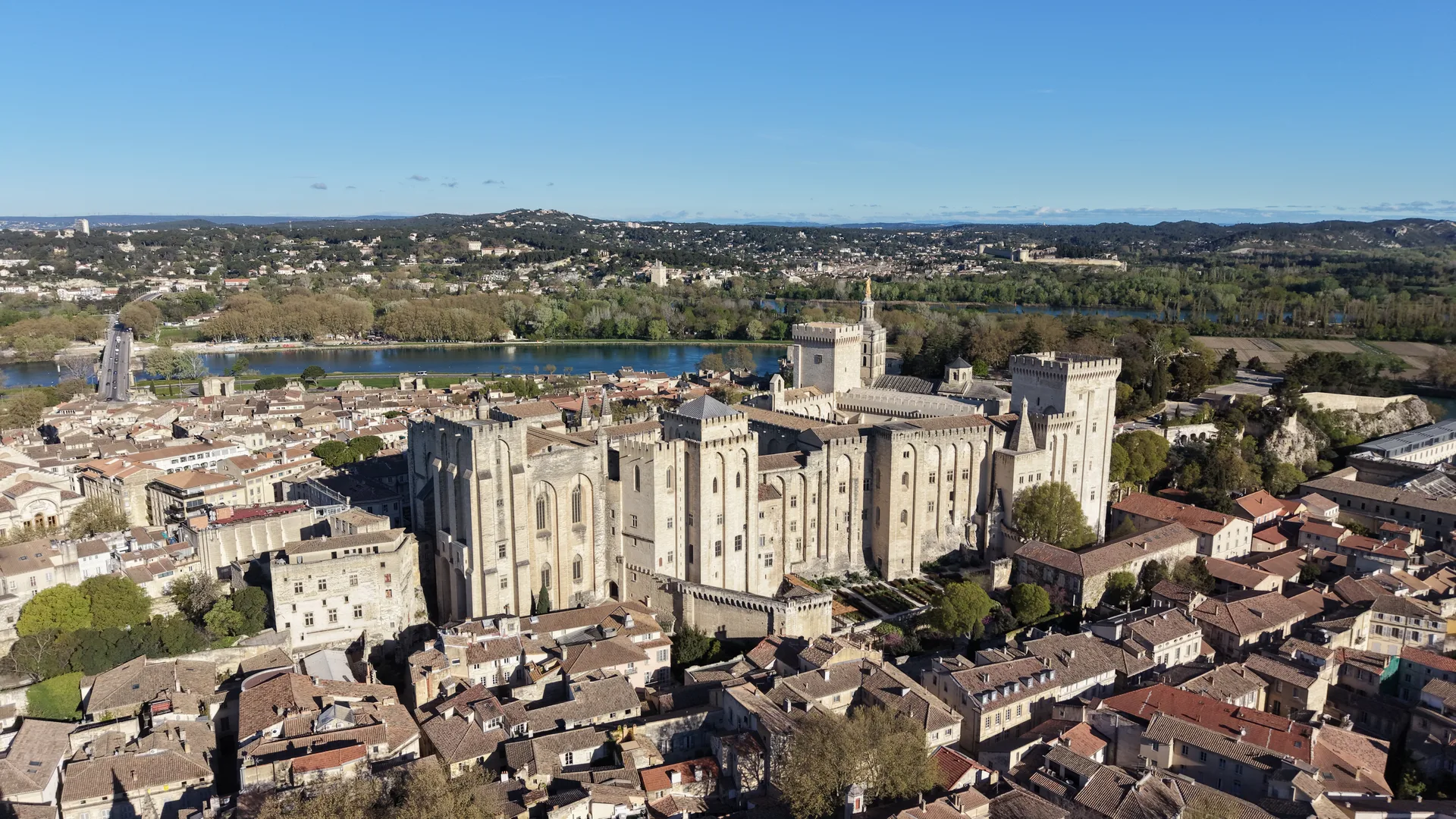
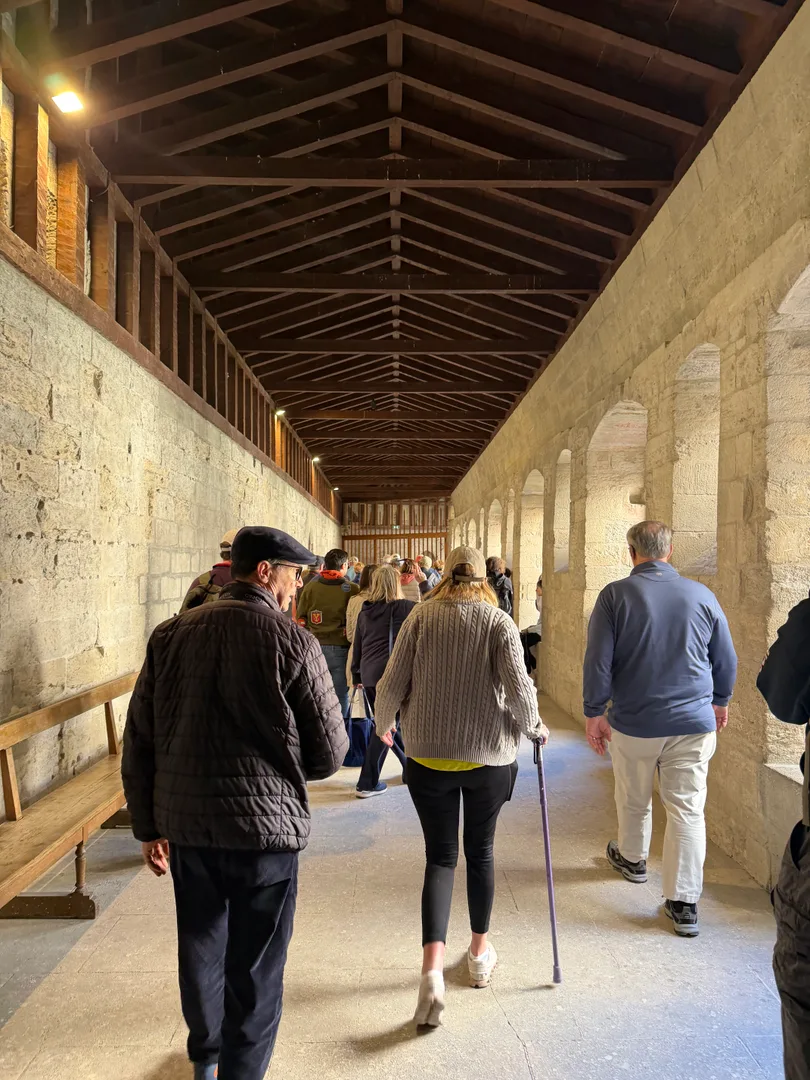
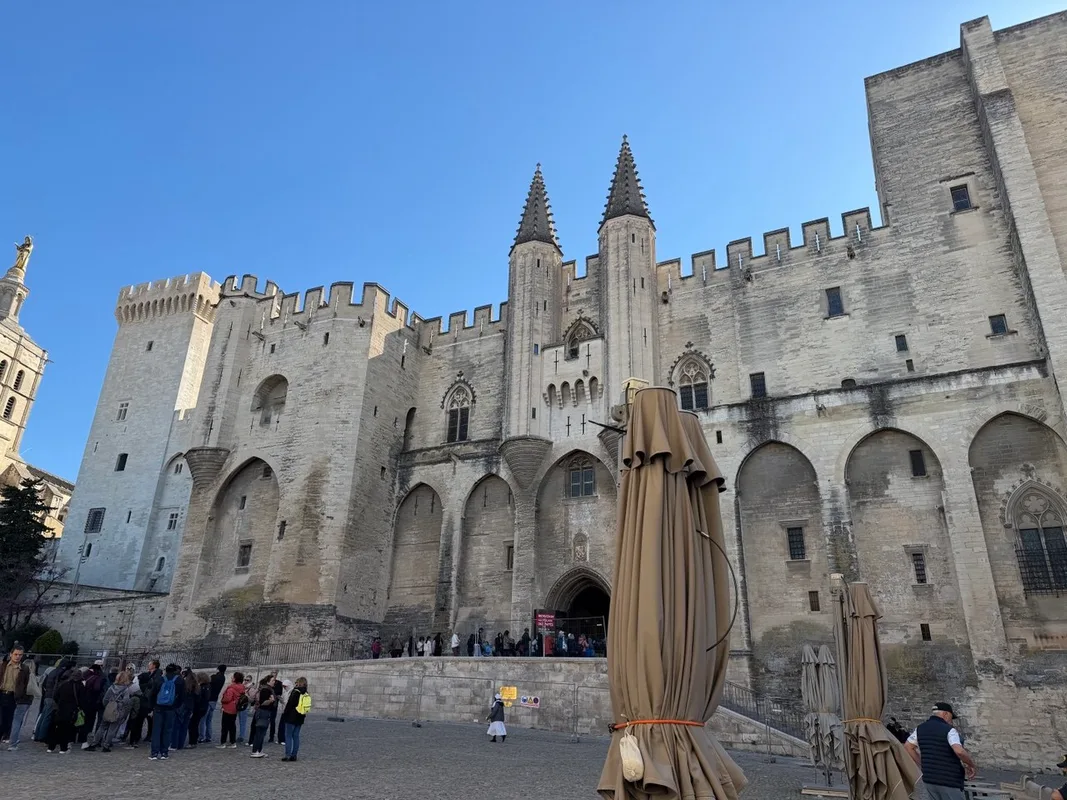
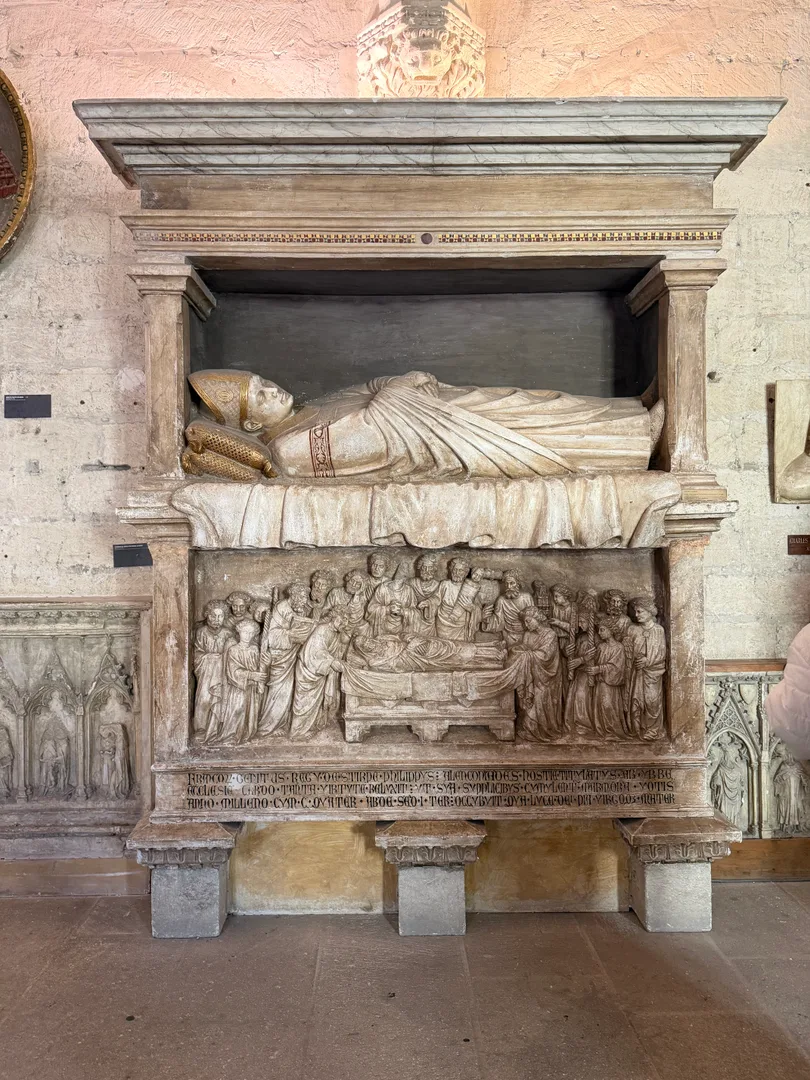
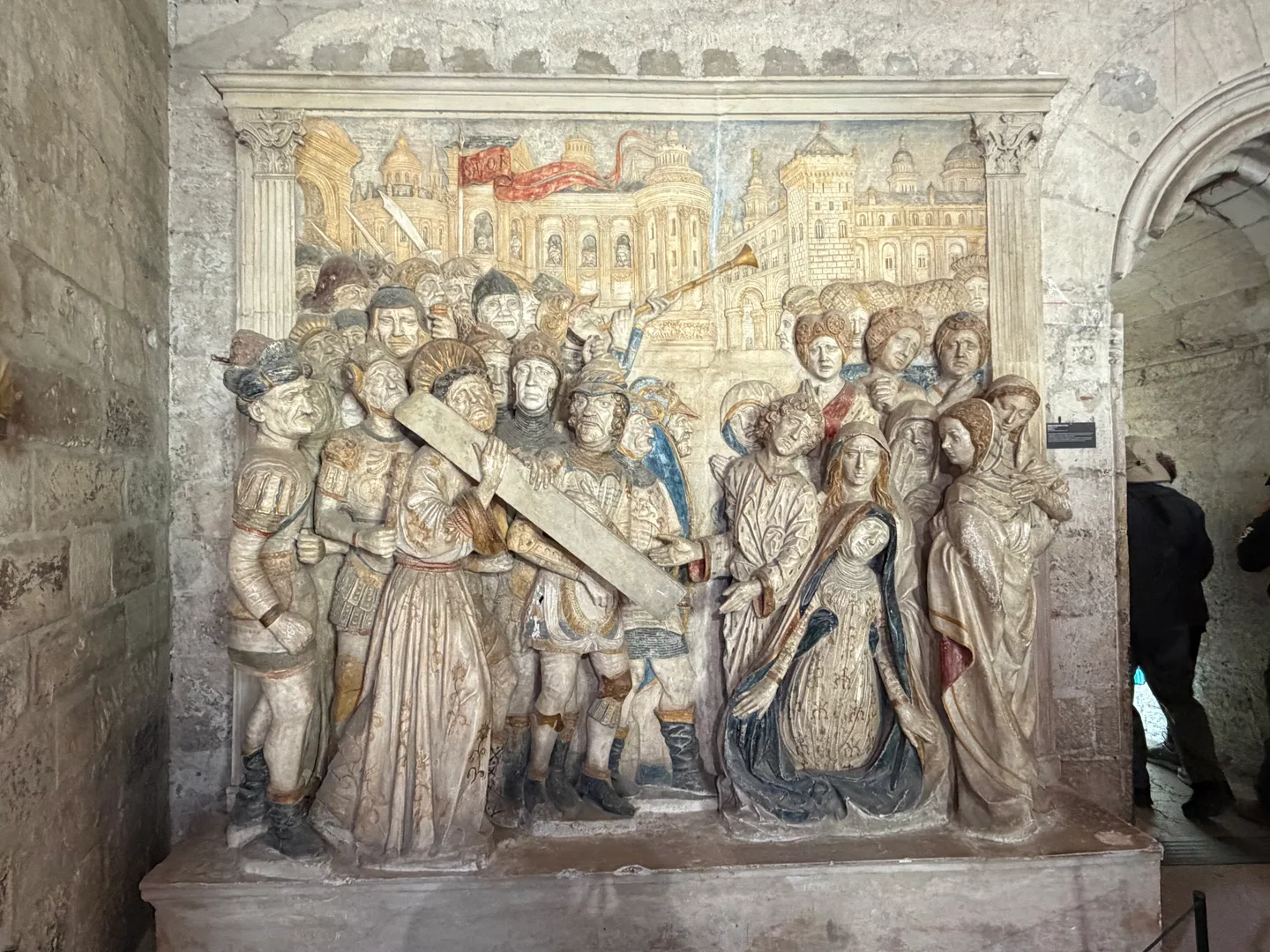
The Palais des Papes is not a palace in the way you might imagine — no gilded furniture, no chandeliers, no Versailles-style luxury. It's a fortress. Massive stone walls, watchtowers, battlements, and a scale that makes you feel small. Inside, the rooms are mostly bare — stripped over centuries of war, revolution, and neglect.
But that emptiness is part of the story. And with the right tools and timing, you can see past the bare stone to what this place once was.
A few numbers to grasp the scale:
Largest Gothic palace ever built — not just in France, in the world
15,000 m² of floor space — roughly the size of four football fields
Over 25 rooms open to visitors across two connected buildings (the Old Palace and the New Palace)
Built in under 20 years — construction began in 1335 under Pope Benedict XII and was largely complete by 1352 under Pope Clement VI
Home to seven popes over nearly 70 years (1309–1377)
UNESCO World Heritage Site since 1995, along with the historic center of Avignon and the Pont d'Avignon
~700,000 visitors per year — one of the most visited monuments in France
Why Are There Popes in France?
This is the first question everyone asks — and the answer is one of the strangest chapters in the history of Christianity.
In the late 13th century, Pope Boniface VIII was locked in a power struggle with King Philip IV of France over a fundamental question: who holds ultimate authority — the pope or the king? The conflict escalated to the point where Philip's agents physically assaulted and arrested the pope in Anagni, Italy, in 1303. The papacy's authority was shattered.
Two years later, in 1305, a French archbishop from Bordeaux was elected pope as Clement V. He had no intention of going to Rome — the city was dangerous, torn apart by feuding noble families and political chaos. In 1309, he moved the papal court to Avignon.
Technically, Avignon wasn't part of the French kingdom at the time. But it sat firmly within France's sphere of influence, and the French king could shape papal politics far more easily from Avignon than from Rome. This arrangement lasted from 1309 to 1377 — a period known as the Avignon Papacy, sometimes called the "Babylonian Captivity" of the Church.
The term "captivity" is slightly misleading. The popes weren't prisoners. They chose Avignon as a safer, more practical base. But critics — especially Italians — argued that the papacy had become a puppet of the French crown. The poet Petrarch called Avignon "the Babylon of the West."
When Pope Gregory XI finally returned to Rome in 1377, the drama didn't end — it got worse. A disputed election in 1378 led to the Great Western Schism: two rival popes (and later three) each claiming to be the legitimate head of the Church. One in Rome, one in Avignon, one in Pisa. The schism lasted nearly 40 years, until 1417. It remains one of the most bizarre episodes in European history.
What to See Inside
The Scale Itself
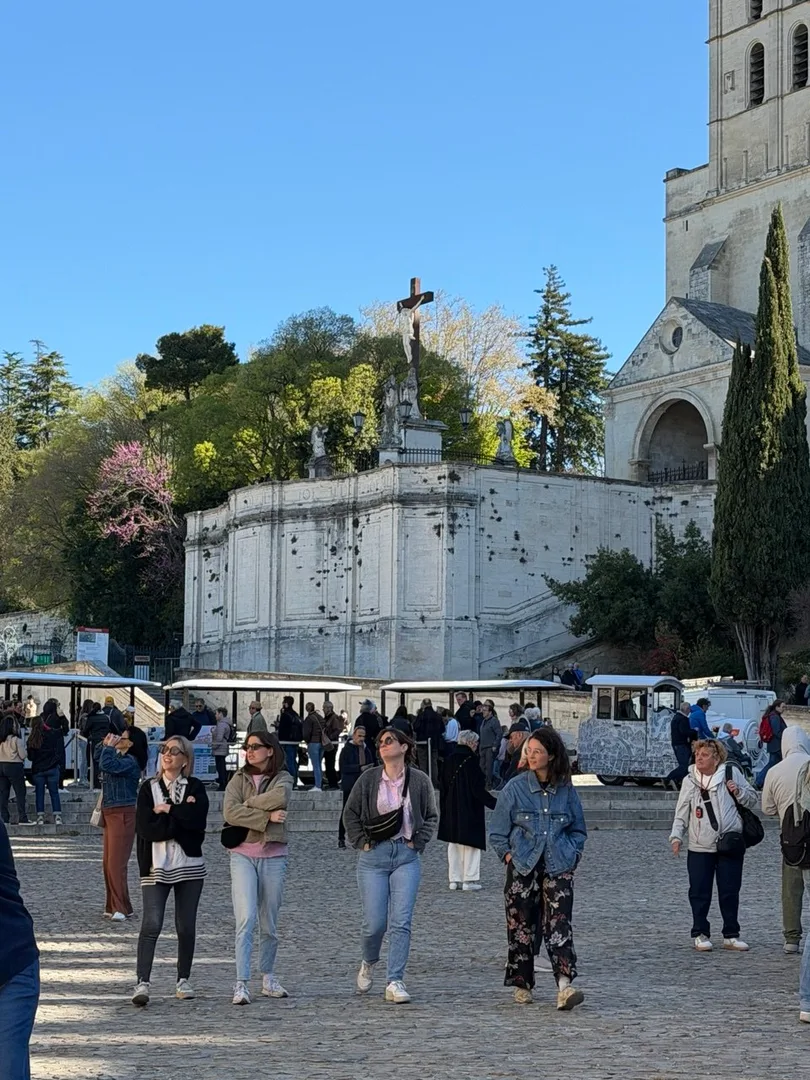
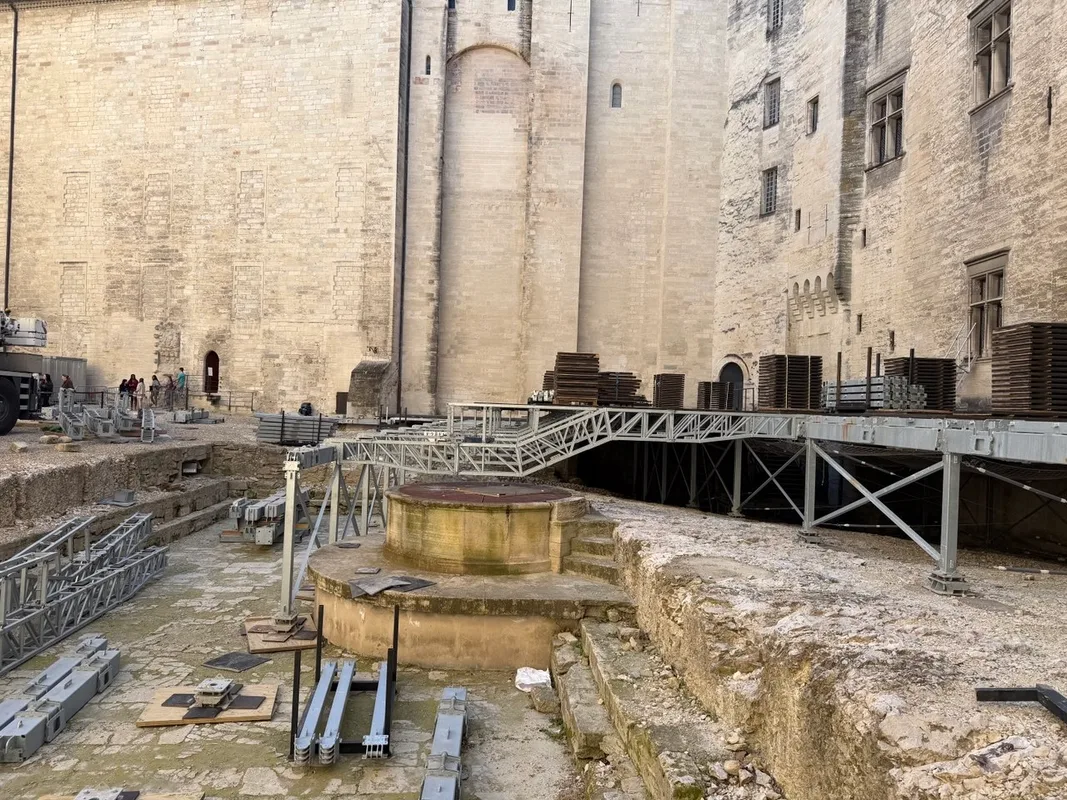
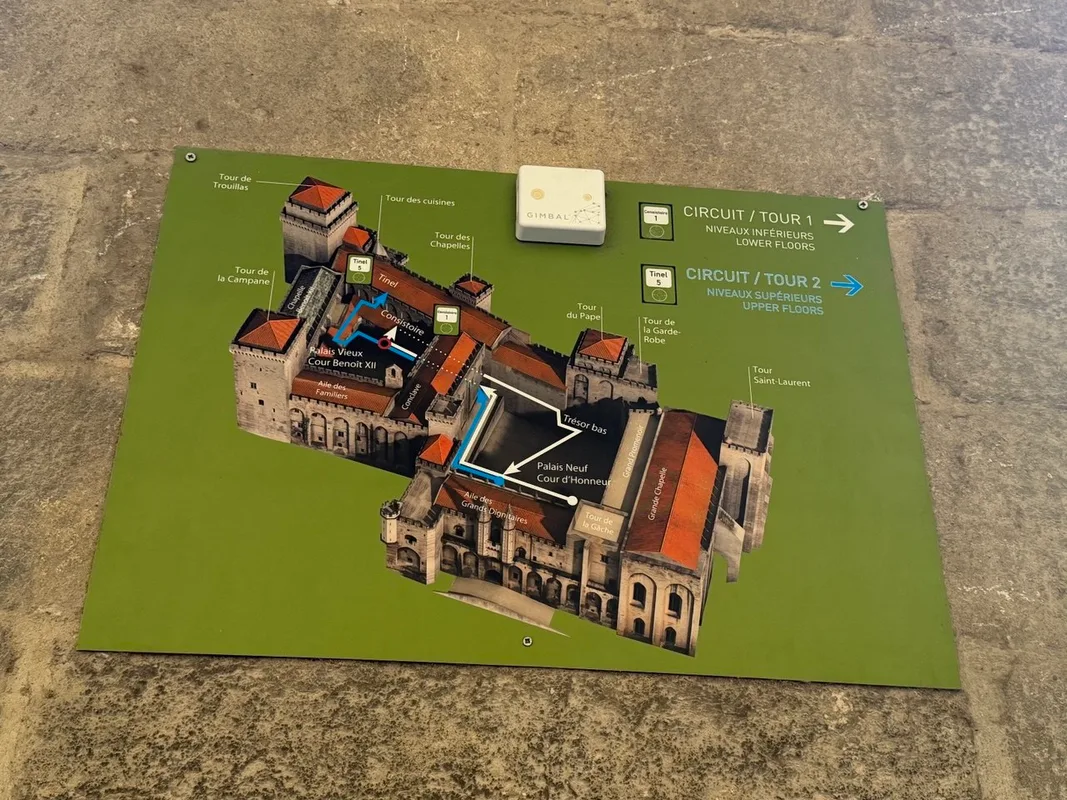
Before you even enter, stand in the courtyard and look up. The sheer mass of stone — the height of the walls, the thickness of the towers — tells you everything about what this building was: not just a home for popes, but a statement of power. A city within a city, containing ceremonial halls, chapels, kitchens, a treasury, archives, and quarters for an enormous papal court.
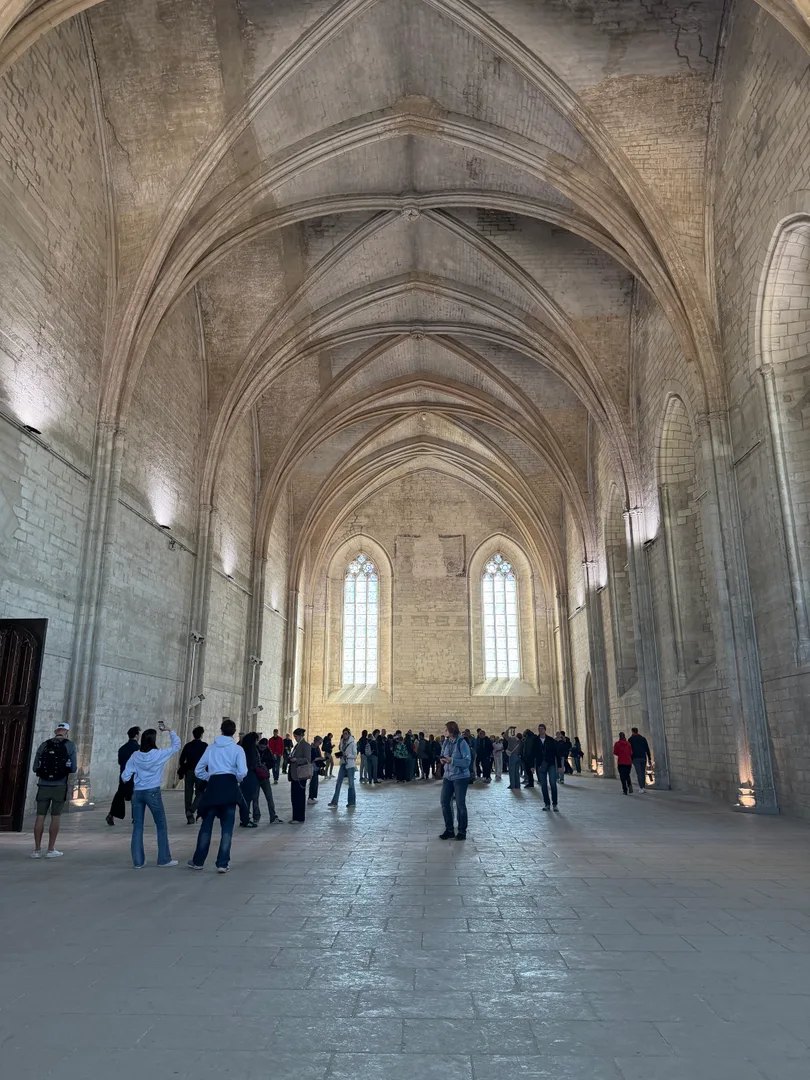
The Great Chapel (Grande Chapelle)
The tallest room in the palace — 20 meters high. This is where the most important papal ceremonies took place. Standing inside, even empty, the proportions are staggering.
The Papal Apartments and Frescoes
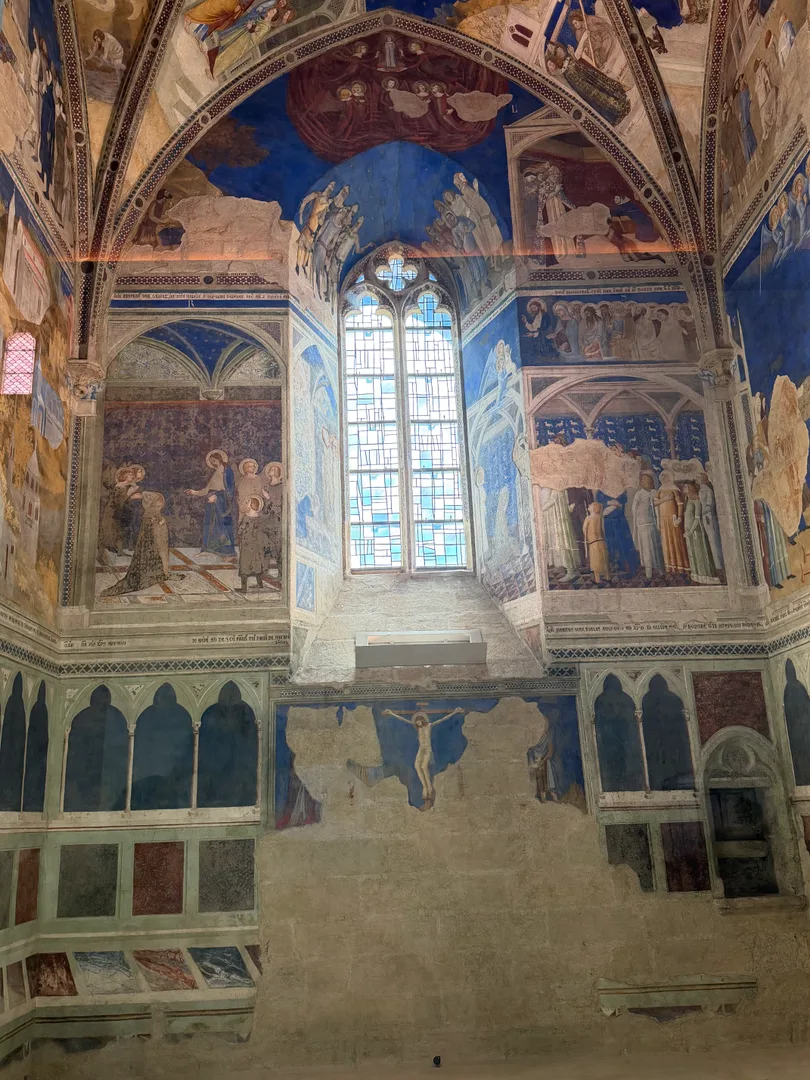
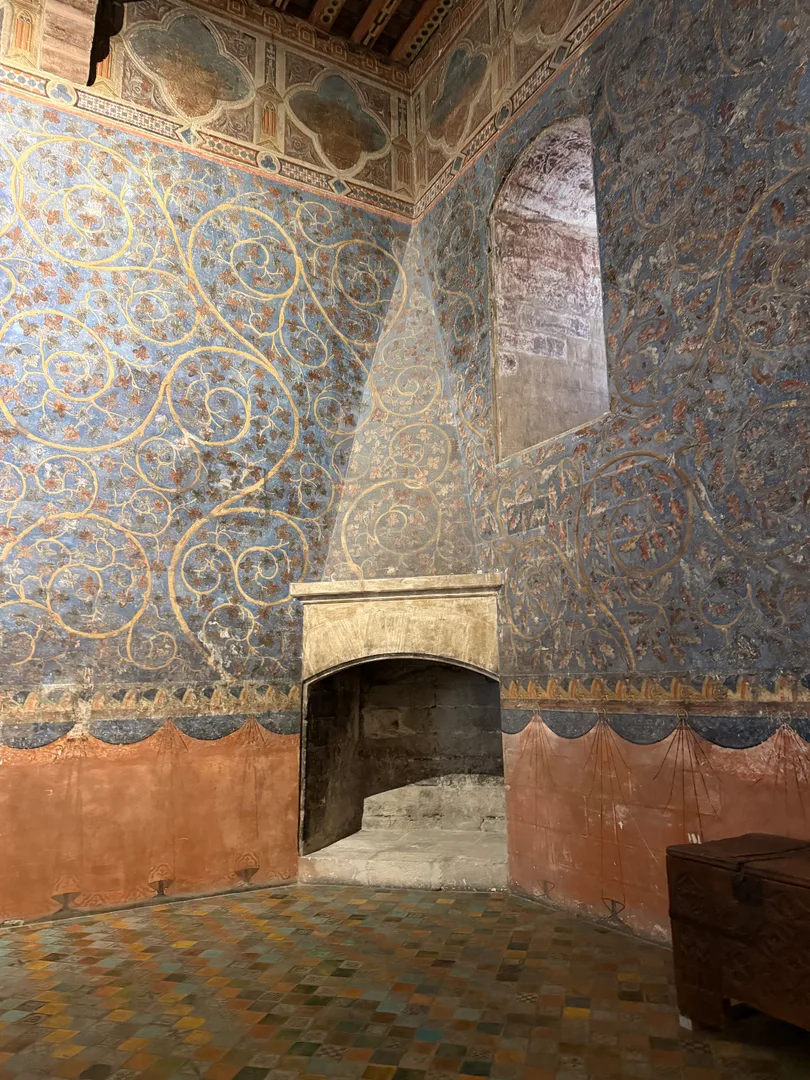
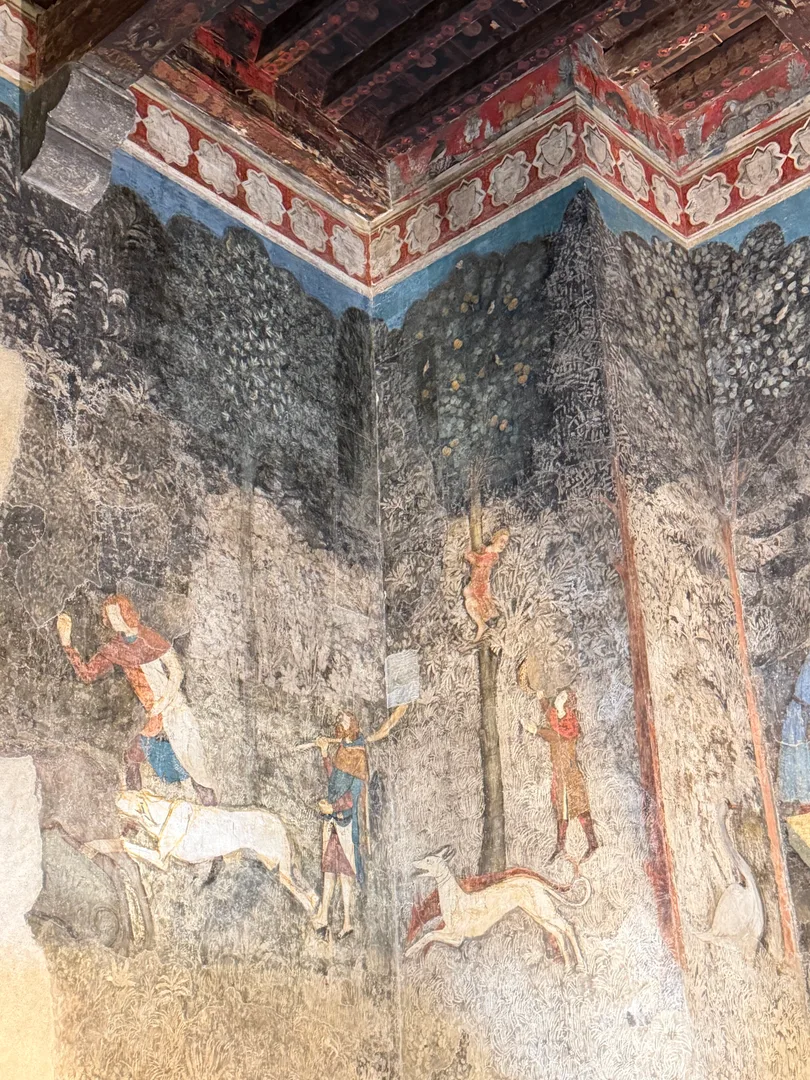
The private rooms of the popes — smaller, more intimate, and some still bearing original frescoes by the Italian artists Simone Martini and Matteo Giovanetti. These fragments of painted walls are among the most important medieval artworks in France. Look for hunting scenes, birds, and vine motifs — remarkably vivid for 700-year-old paint.
The Consistory and Ceremonial Halls
The rooms where the pope received ambassadors, held councils, and managed the affairs of the Catholic world. Imagine these spaces filled with cardinals, diplomats, and petitioners — the political nerve center of medieval Christianity.
The Papal Gardens
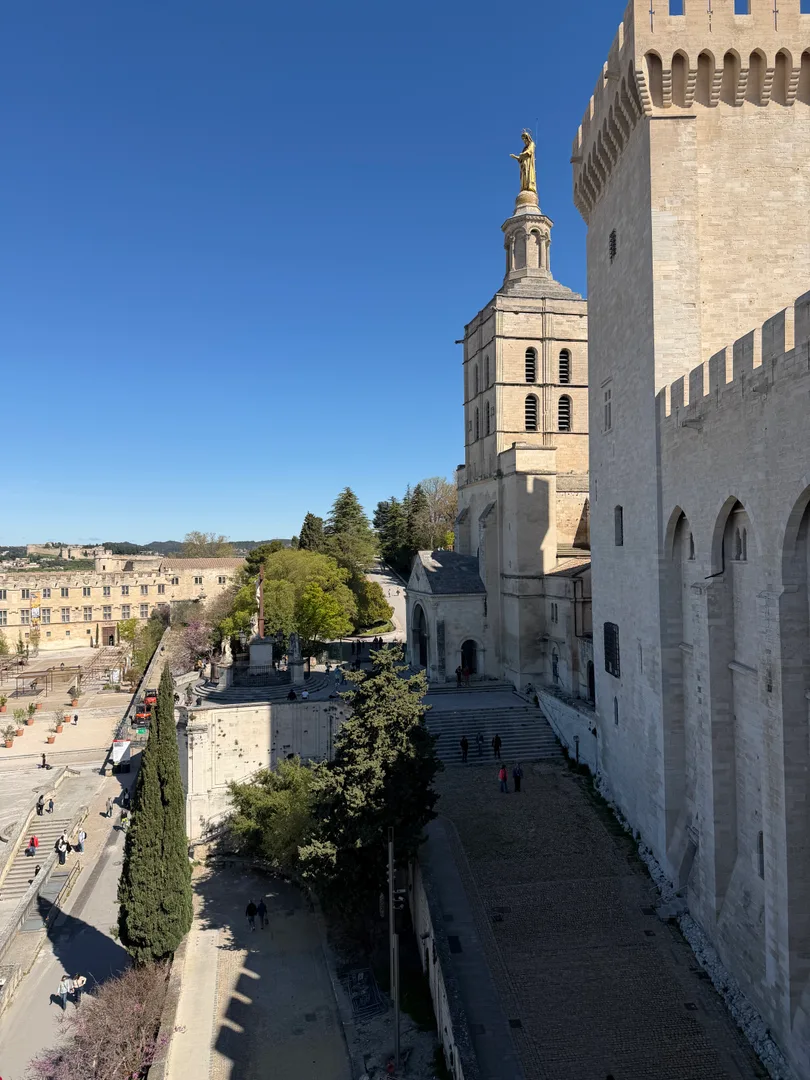
Recently restored. Not just a place to walk — the gardens offer beautiful views of the palace exterior, the city, and the surrounding landscape. A good place to rest between the intense interior rooms.
The HistoPad — A Window Into the 14th Century
Most of the palace's rooms are empty today — bare stone walls, vaulted ceilings, no furniture. This is where the HistoPad changes everything.
The HistoPad is an interactive tablet included with your entry ticket. When you enter a room, you point the tablet at a marked spot, and the screen fills with a 3D reconstruction of what the room looked like when popes lived here. Furniture, tapestries, wall paintings, people, objects — layered over the real space in augmented reality.
As you move and turn the tablet, the image shifts with you, as if you're looking through a window into the past. Each room has explanations, visual details, and interactive elements you can tap. It's available in French, English, German, Spanish, Italian, Chinese, and Japanese.
Without the HistoPad, the palace can feel austere and empty. With it, you understand what these rooms once were. It's the difference between seeing walls and seeing a world.
The catch: you need time and space to use it properly. In crowded conditions, you'll be pushed through rooms before the tablet can load. This is why timing your visit matters so much.
What's New: 2026–2027 Renovation
The palace is currently undergoing a major update to its visitor experience. Starting May 2026, new visit scenarios, interactive scale models, films, improved navigation, and previously closed rooms are being opened to the public. If you visit in late 2026 or 2027, you may see a significantly enhanced experience compared to earlier years.
Practical Information
Detail | Info |
|---|---|
Official name | Palais des Papes |
Address | Place du Palais, 84000 Avignon, France |
Website | |
UNESCO | World Heritage Site since 1995 |
Built | 1335–1352 |
Size | 15,000 m², largest Gothic palace in the world |
Annual visitors | ~700,000 |
Tickets
Ticket | Price |
|---|---|
Palace only | €14.50 |
Reduced | €11.50 |
Children (8–17) | €8 |
Palace + Bridge | €17 |
Palace + Bridge (reduced) | €13 |
Palace + Bridge (children) | €9.50 |
Family: 2 adults + 1 child | €43.50 |
Family: 2 adults + 2 children | €53 |
HistoPad is included with all tickets.
Opening Hours
Period | Hours |
|---|---|
1 March – 1 November | 9:00 AM – 7:00 PM |
7–28 February | 10:00 AM – 6:00 PM |
1–4 January, 19–31 December | 10:00 AM – 6:00 PM |
5 January – 6 February | 10:00 AM – 5:00 PM |
2 November – 18 December | 10:00 AM – 5:00 PM |
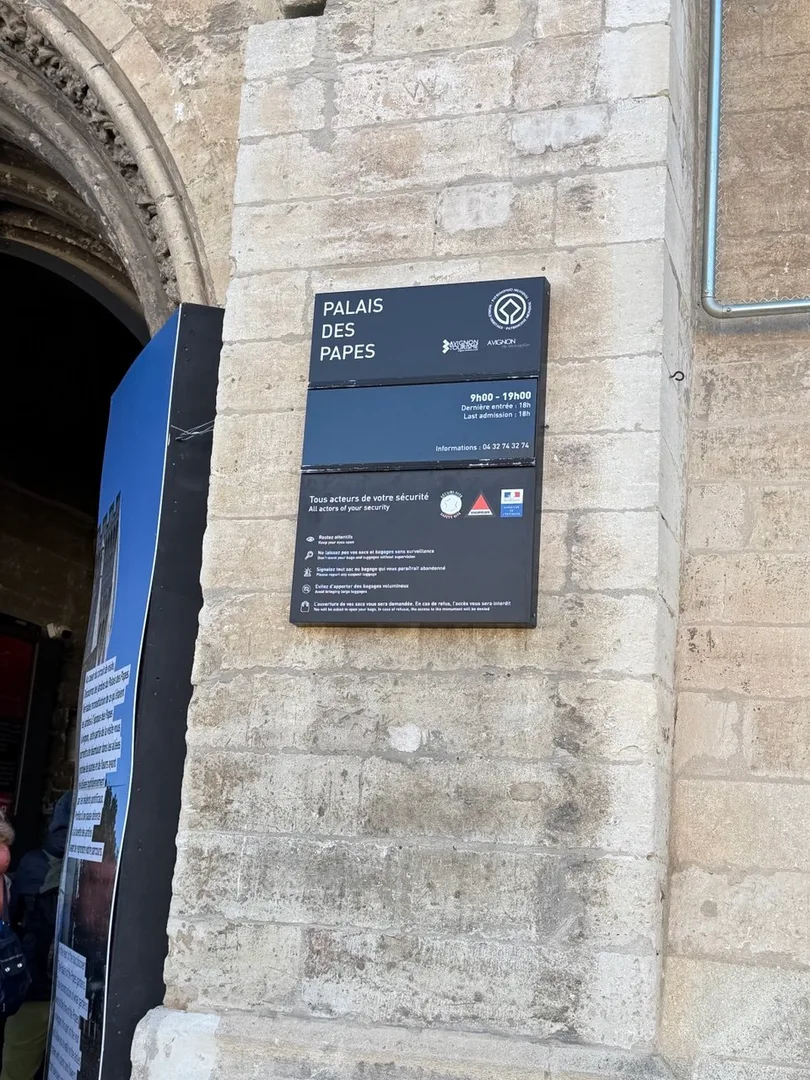
Last entry is 30 minutes before closing. The monument may close in severe weather.

Book tickets online in advance. Entry is timed, and if you buy at the door, the next available slot might be hours later — or the next day. Don't gamble on walk-in tickets, especially in summer.
Best months: April–June and September–October. Pleasant weather, fewer crowds, and enough daylight for the gardens.
Best time of day: First thing in the morning or the last entry slot. Midday is the worst — tour groups flood the halls and the HistoPad becomes almost unusable.
July warning: The Avignon Theatre Festival transforms the city into a vibrant stage — but prices spike, crowds triple, and the palace is at peak capacity. If you come in July, arrive at 9:00 AM sharp.
Plan 2–2.5 hours for the palace itself. Add 30 minutes for the gardens. If you have the combo ticket, walk to Pont d'Avignon afterward — it's a 10-minute stroll along the city walls.
The optimal Avignon half-day: Papal Palace (morning, 2 hours) → Gardens (30 min) → Walk along city walls → Pont d'Avignon (45 min) → Lunch in the old town → Photos of the bridge from the riverside promenade
And use the HistoPad properly. Don't rush through rooms. Find the AR markers, let the reconstruction load, turn slowly. The empty rooms come alive — but only if you give them time.

Tags

Jojo is Joyful Journeys!