The Clay City in the Woods: Inside the Grande Citadelle de Monthoux
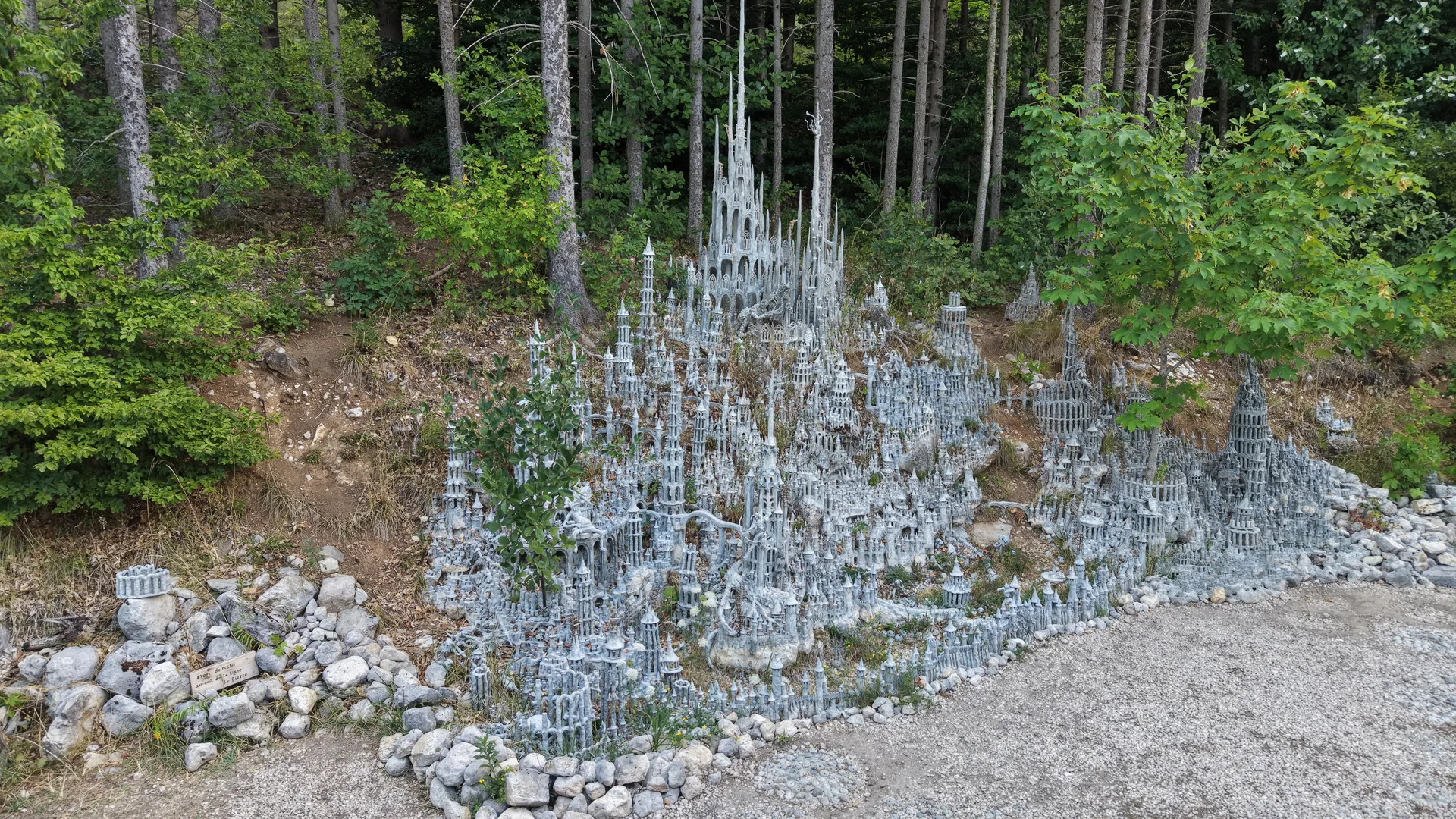
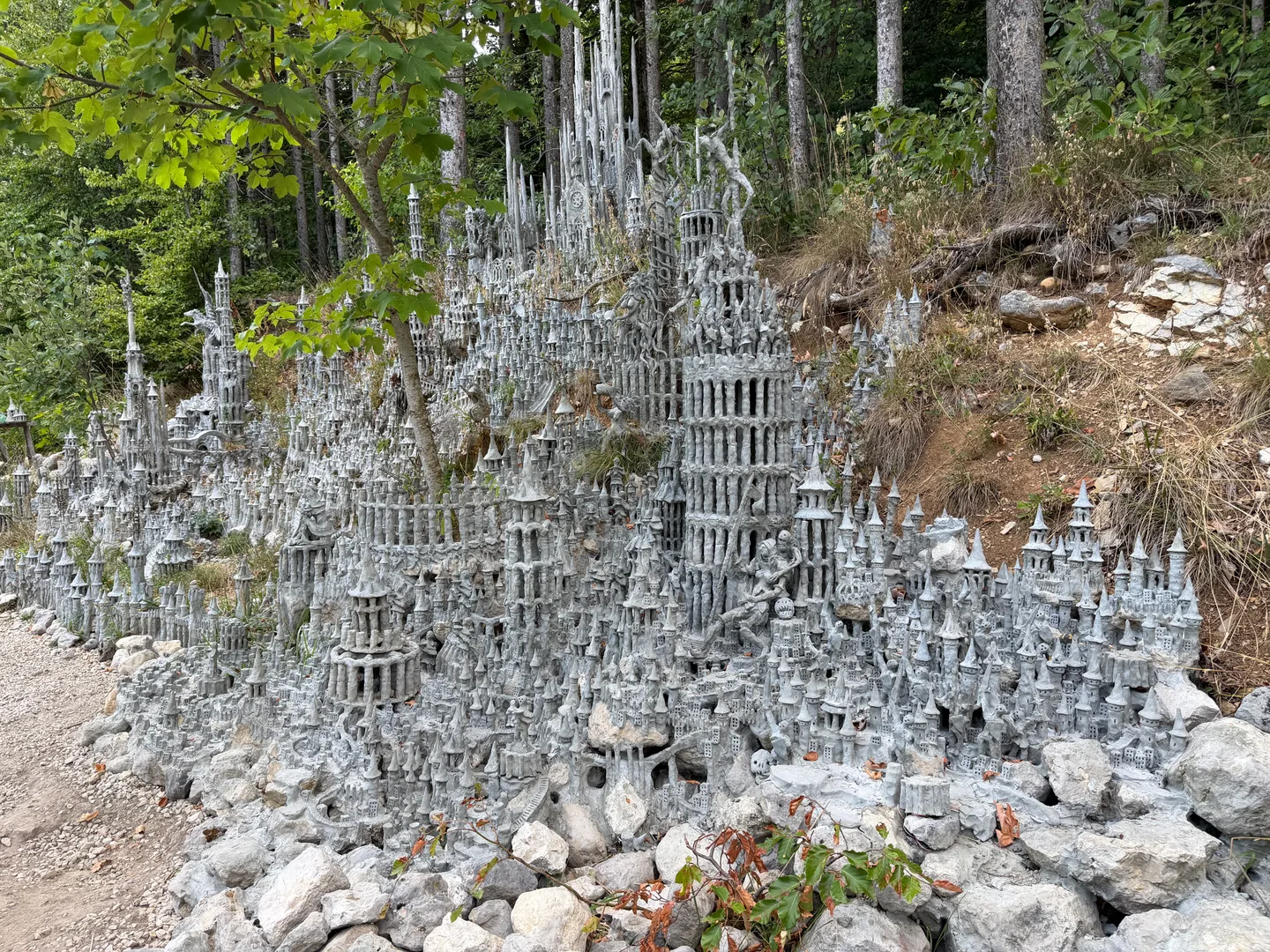
The first time this fortress turns up in an online feed, it is easy to mistake for a piece of fantasy concept art generated by AI. The intricate towers, the sheer density of detail, the dozens of tiny narratives tucked into the stonework — none of it looks quite plausible. The impression is of an enormous fantasy castle, something suspended between gothic cathedral and the architectural dreams of Gaudí.
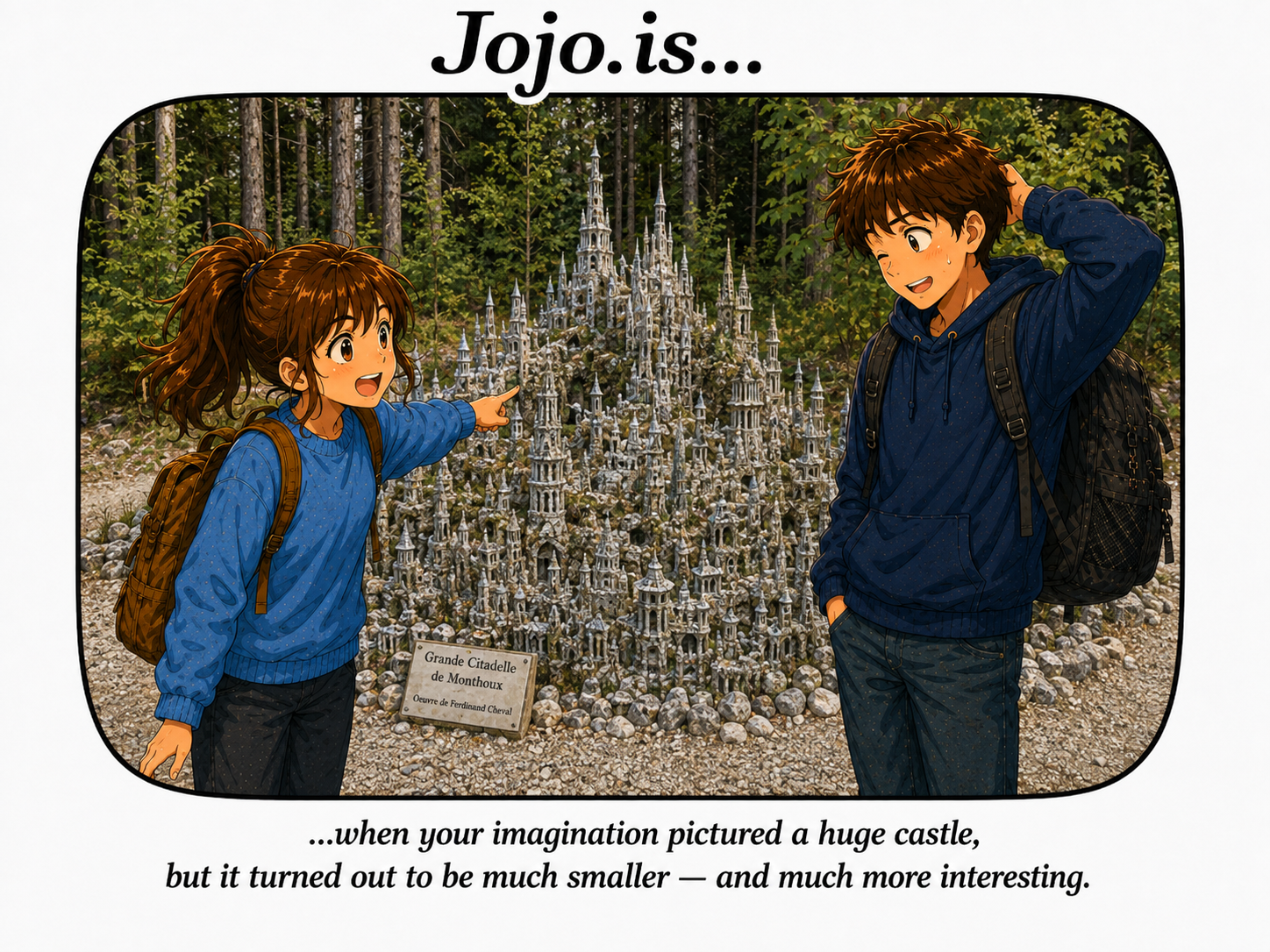
The reality is stranger than that. The citadel genuinely exists, it is easy to find, and it is considerably smaller than photographs suggest. It also sits roughly half an hour by car from Morges, or about an hour and a half by public transport.
Which makes the decision to go and see it in person more or less automatic. And the real thing turns out to be more interesting than the photographs: only on site does it become clear how many small details, characters and self-contained scenes have been packed into it.
Here is the full picture — what the citadel is, how it came to exist, and what is worth knowing before visiting.
What the Grande Citadelle de Monthoux actually is
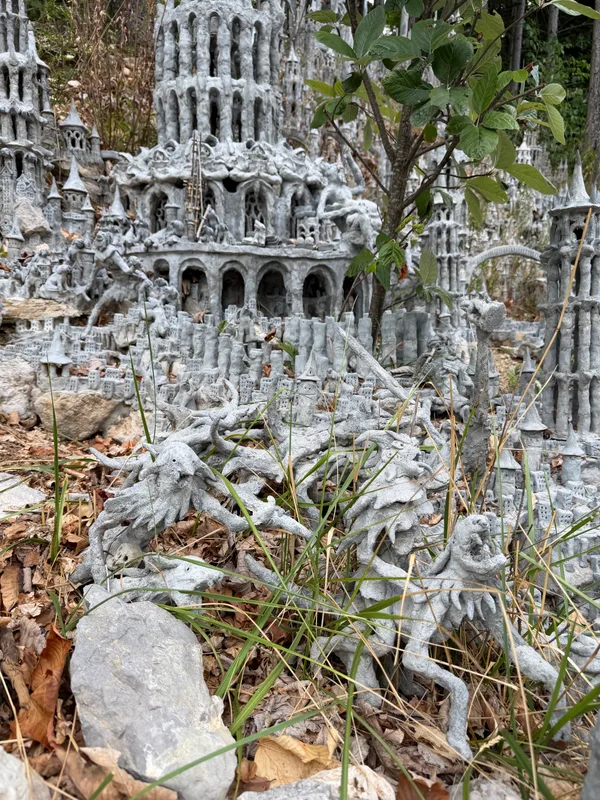
The Grande Citadelle de Monthoux is not an ancient fortress but a contemporary fantasy sculpture-city, built by the Swiss artist François Monthoux in a patch of forest near the village of Bière, in the canton of Vaud, just off the road to the Marchairuz pass. The name translates as "Monthoux's Great Citadel" — Monthoux being the artist's surname, not a place.
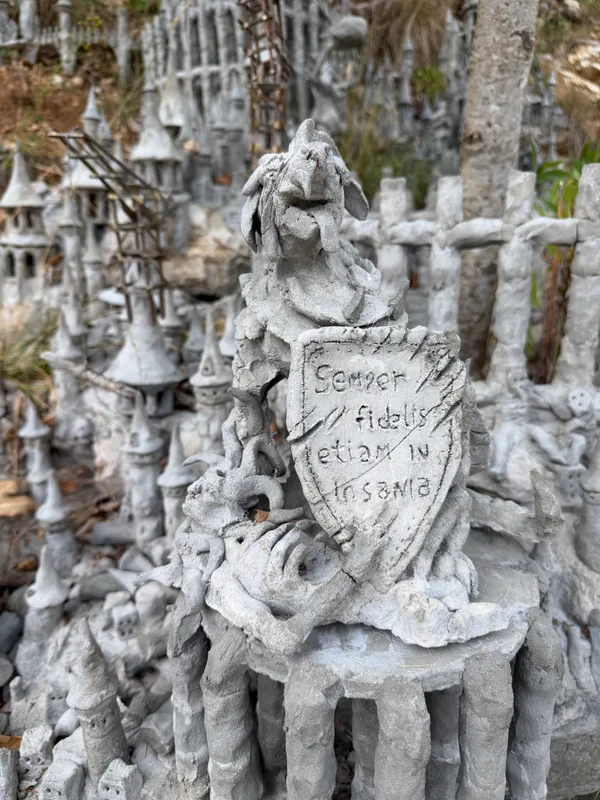
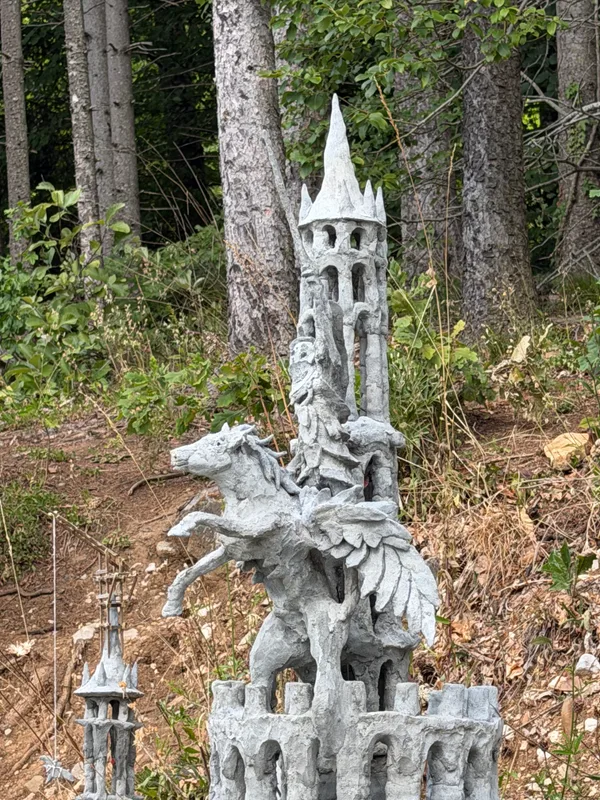
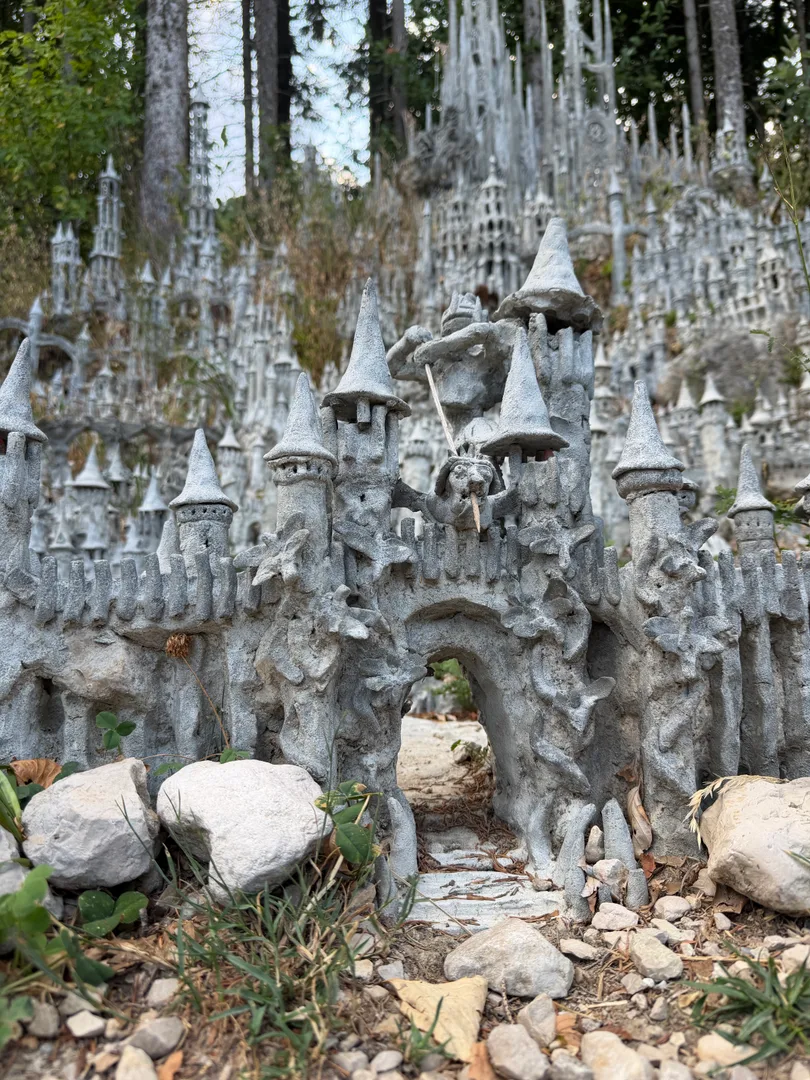
What stands there is a sprawling miniature capital: gothic towers, cathedrals, bridges, arches, houses and hundreds of small details. In art-historical terms it can be classed as monumental sculpture in a natural setting, or land art, though the artist himself sees it first and foremost as the material embodiment of his own imagined world.
How it came about
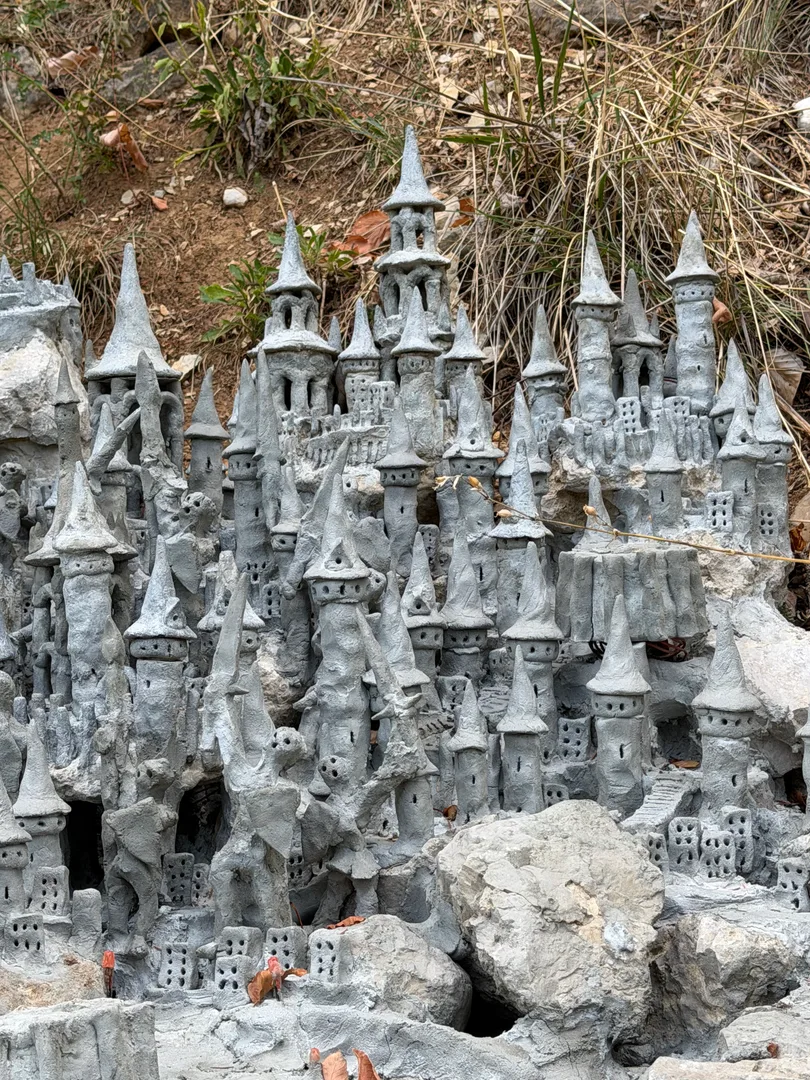
The story begins in the summer of 2022. A severe drought had dropped the level of the river Toleure, and Monthoux began modelling a city on its bank using clay taken straight from the riverbed. There was no master plan. He started with a small staircase on a rock, then intuitively added towers, streets, bridges and fortifications, shaping that first citadel almost entirely by hand, without tools.
That version was deliberately ephemeral. When the rains returned, the water rose and gradually dissolved the city. For Monthoux this disappearance was part of the point: form given to matter was handed back to nature.
Even so, the first citadel travelled a long way before it melted. Local and national Swiss media picked up the story, and it was subsequently carried internationally by news agencies and broadcasters as far afield as China, the United States and Mexico — a good part of the reason the second, sturdier version exists at all.
Work on the current Grande Citadelle de la Création began on 5–6 May 2023, on a wooded slope above Bière. This time the clay is reinforced with cement, with internal armature and additional support materials in certain elements. The result survives rain, frost and several winters — though it is still nothing like a permanent building.
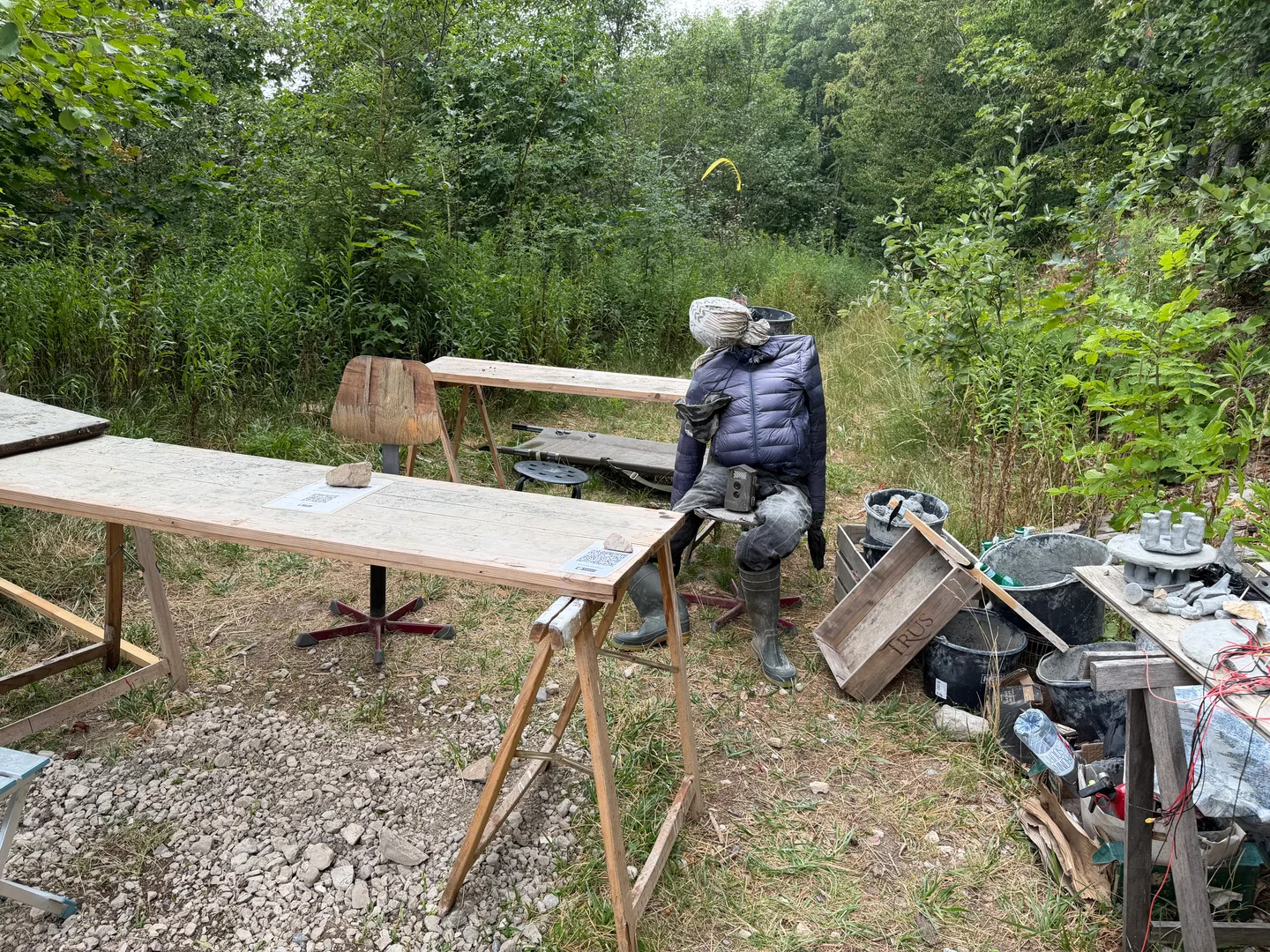
The citadel is built without a final master plan. Monthoux responds to the shape of the slope, the position of the trees and the vegetation: towers appear to grow out of the ground, structures curve around natural obstacles, and some cavities are deliberately left as habitat for lizards and mice. New buildings, figures and storylines are added continuously.
What the architecture means
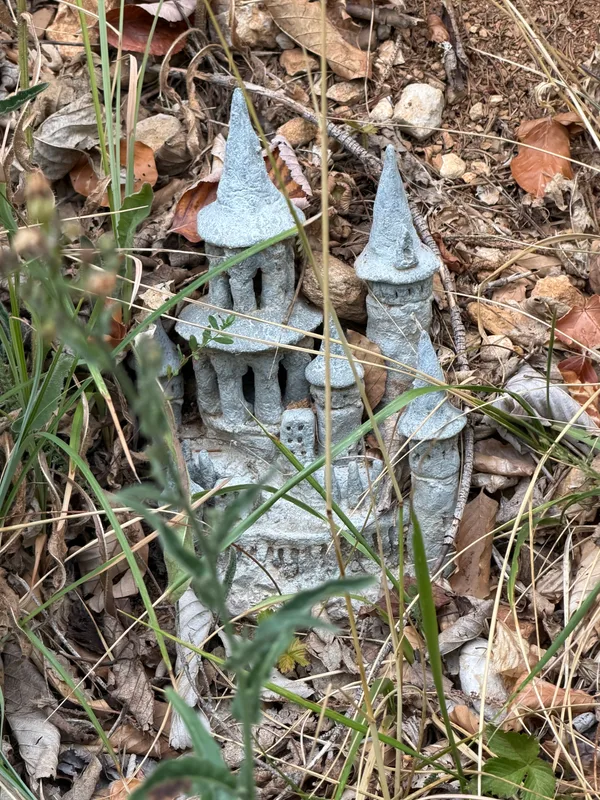
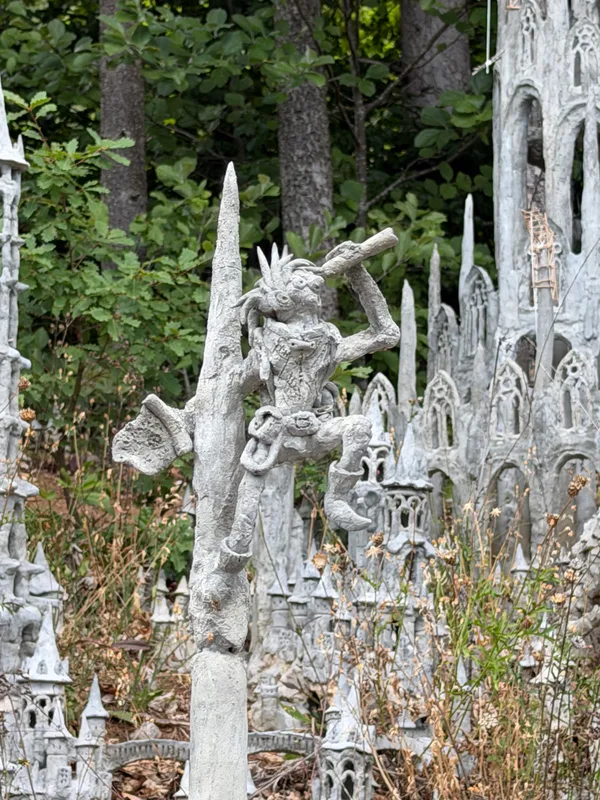
The dominant visual source is gothic cathedrals and medieval iconography. The artist compares his upward-straining towers to trees: both reach for the light. The central mass therefore reads simultaneously as a cathedral, a stalactite cave, a termite mound and a fairy-tale megacity.
But the details are not decorative filler. They amount to a personal philosophical mythology:
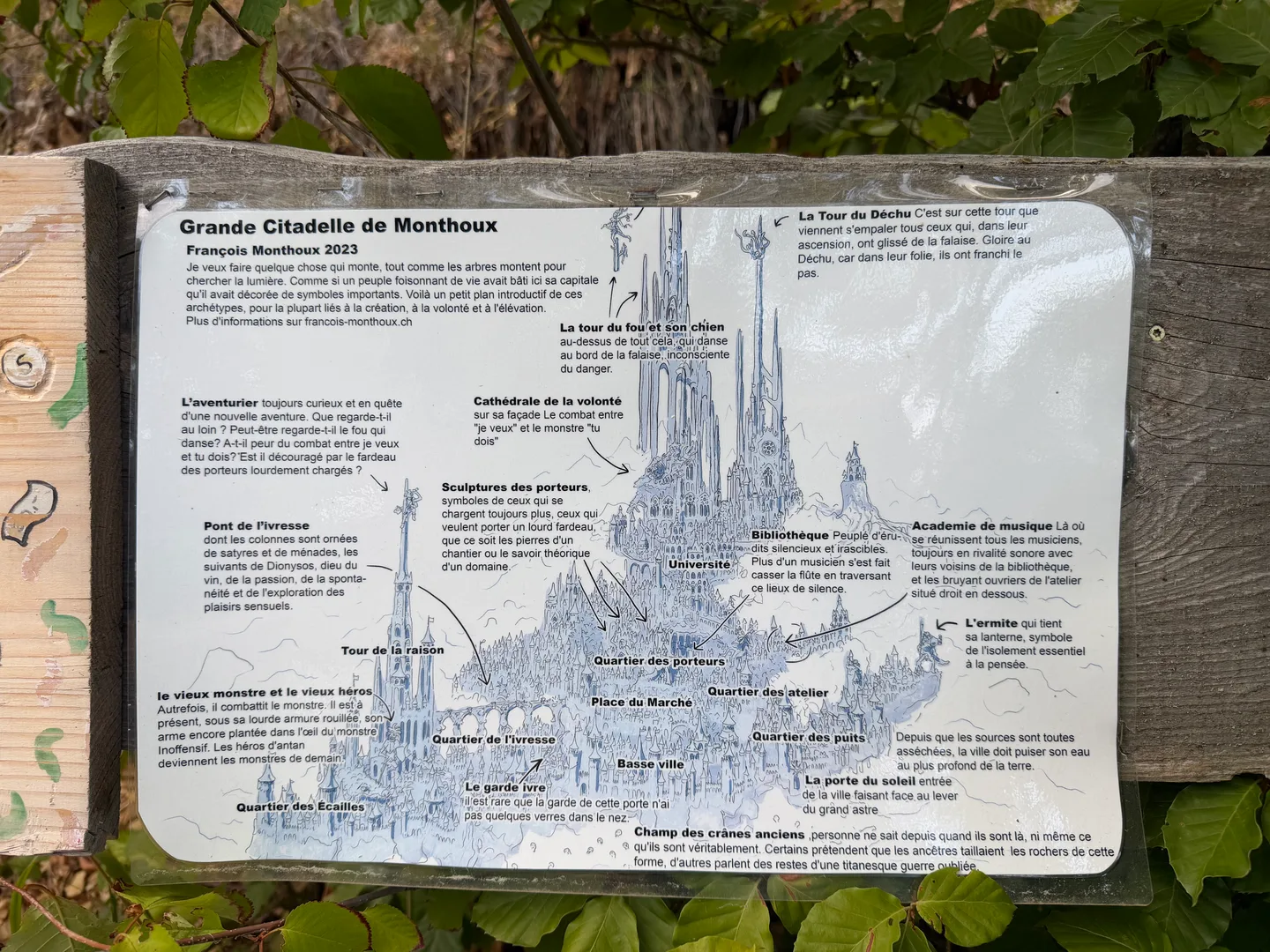
the hermit with his lantern stands for the solitude thought requires;
the bearers carry the weight of accumulated knowledge and culture;
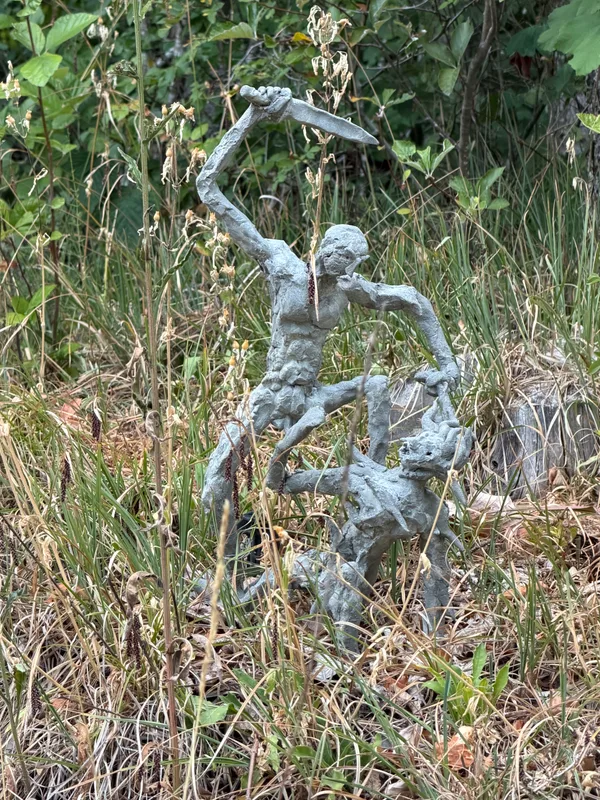
the confrontation between "I want" and the monster "You must" points to the internal conflict between freedom and imposed rules;
the Fool's tower shows a figure dancing at the edge of the abyss, oblivious to the danger;
elsewhere in the city there are emperors, dragons, fallen creatures, scholars and musicians.
Orientation matters too. In the first riverbed citadel the artist aligned certain figures with places in his own life — the fool turned towards the mountain, the hermit towards his native village, the professor towards Lausanne, where he studied. The habit of loading geography with meaning carried over into the forest version.
The citadel is therefore best understood not as a model of any particular medieval town but as a spatial self-portrait: the architecture maps the artist's thoughts, contradictions, myths and fantasies.
Who François Monthoux is
François Monthoux is a Swiss artist and sculptor from Bière, born in the mid-1990s and raised in the village where the citadel now stands. He is largely self-taught and works across several media at once — painting, drawing, sculpture, video, figurine-making and computer game worlds — drawing on an interest in history, biology, philosophy and psychology.
He describes his imagined worlds as populated by medieval, esoteric and fantastical beings. Among his reference points he names gothic architecture, Tolkien and Gaudí; the organisation of his city he links to observations of ants and other living systems. Insects, by his own account, are a lasting fascination.
The interest in miniature civilisations long predates the citadel. As a teenager he produced thousands of tiny figures from Fimo polymer clay, inventing peoples, religions, armies and political histories for them. The Grande Citadelle is that decades-old fictional world scaled up and transplanted into a real landscape.
The result is at once sculpture, architectural fantasy, personal mythology and ongoing artistic process — a work that was never finished so much as it keeps growing alongside the forest. Social media has taken notice: clips of the citadel have racked up hundreds of millions of views, though the artist has been candid in the Swiss press that viral attention has not translated straightforwardly into income.
The citadel is also not his only structure of this kind — a second fantastical construction, the Forteresse des Ancolies, occupies him in parallel.
The book: La Citadelle du chien fou
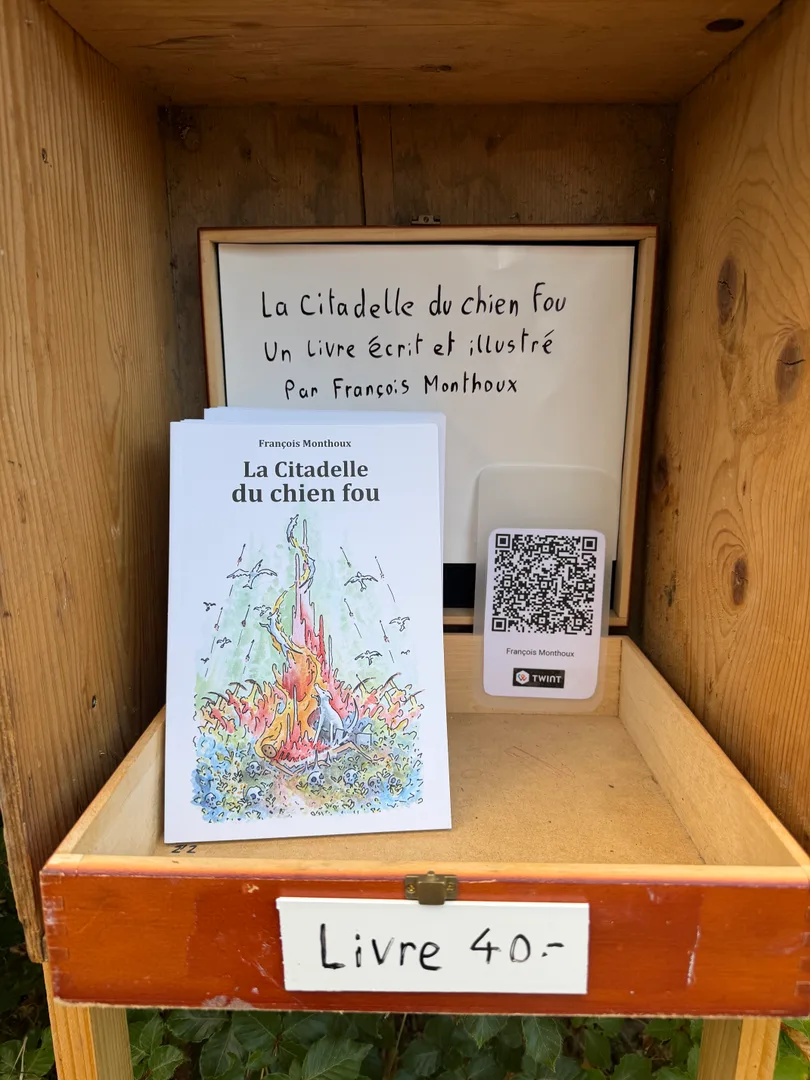
The book is titled La Citadelle du chien fou — roughly "The Citadel of the Mad Dog". It is self-published by François Monthoux, who wrote the text and drew the illustrations. It runs to around 190 pages. He sells it directly on site next to the Grande Citadelle for 40 Swiss francs; the online shop lists it at €43.
What kind of book it is
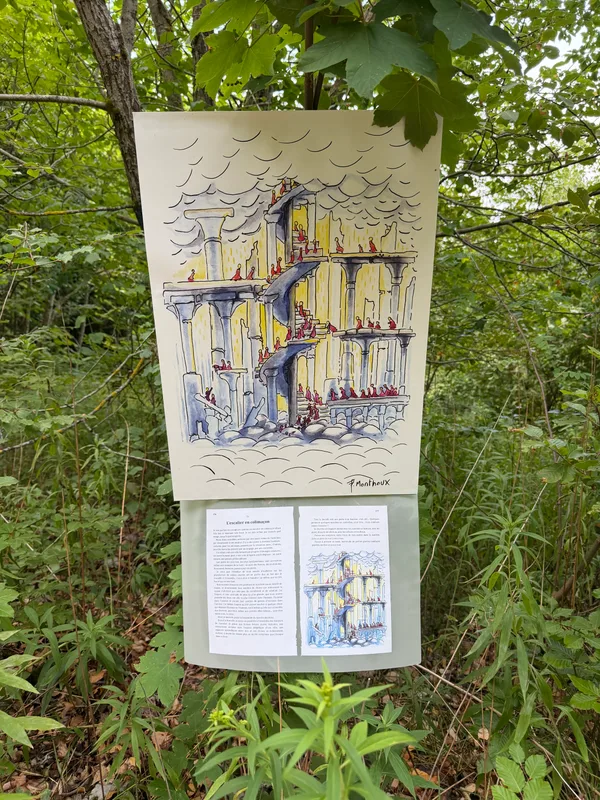
It is neither a guidebook nor a conventional photo album of the sculpture. The most accurate description is an illustrated artist's book — a blend of philosophical reflection, fantastical literature, personal mythology, writing on creativity, dreams and the structure of society, and drawings tied to Monthoux's imagined world.
In the preface the author states plainly that the book is meant to help readers understand individual elements of the sculpture, and his way of thinking more generally. Among the central themes he names the interplay of order and chaos, the many creatures that together form a single organism, the mutability of forms and meanings, language, art, solitude, and life among a multitude of other people.
How the book relates to the citadel
The book and the sculpture are two forms of a single artistic world.
In the sculpture, Monthoux's ideas are expressed materially: through towers, passageways and characters — the Hermit, the bearers, the Fool, the monster "You must", the creatures and scenes of struggle. He builds intuitively, with no architectural plan drawn up in advance, then interprets the resulting forms as symbols of will, creativity, knowledge and inner conflict.
In the book, the same ideas receive verbal and graphic explanation. Monthoux himself notes on the publication page that the book has a great deal to say about his Grande Citadelle, and that reading it makes more sense after visiting the structure. The book is best treated as an internal guide to the author's mind rather than a technical account of where each tower stands.
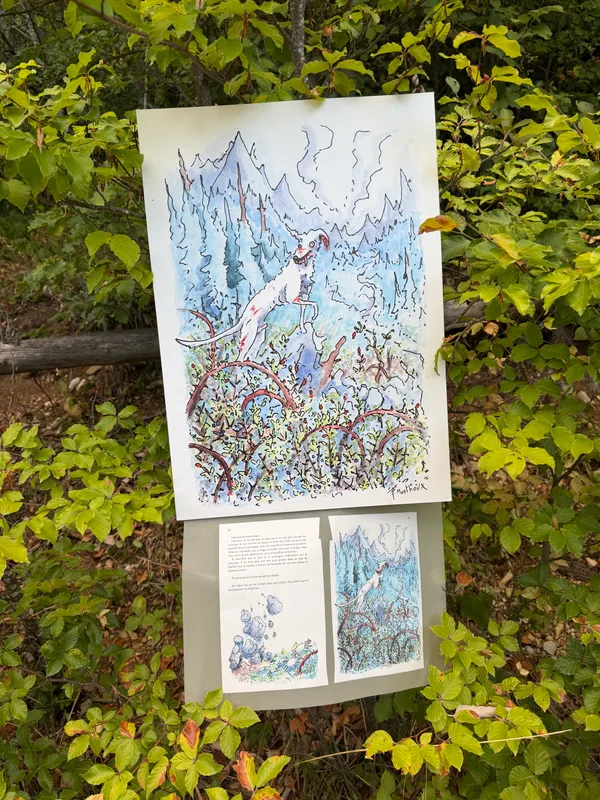
The illustrations were produced in 2025, alongside work on the Grande Citadelle and the Forteresse des Ancolies. They follow the manner of his "dream drawings": a light pencil sketch, black felt-tip pen, and water-thinned gouache.
What "chien fou" refers to
An important clarification: La Citadelle du chien fou is not the official name of the forest sculpture. The outdoor work is called the Grande Citadelle de Monthoux; the artist also uses Grande Citadelle de la Création — "Great Citadel of Creation".
The phrase chien fou, "mad dog", belongs rather to the literary and personal mythology of the book. At the end of the published preface, Monthoux writes that the text represents the thought of a man who had to act "after the death of his friends — dogs". That suggests a personal, possibly memorial dimension to the title. In the publicly available description, however, he does not explain which dogs are meant, or whether the "Mad Dog" is a distinct character.
So the sculpture shows the world from outside, while the book opens it from within: read it not for a chronological construction history, but for the symbols, mood and philosophy the citadel grows out of.
Practical information
Name | Grande Citadelle de Monthoux |
Artist | François Monthoux |
Coordinates | 46.55482, 6.31948 |
Artist's shop address | Route des Montagnes 2, 1145 Bière |
Website | |
Admission | Free |
Open | Year-round, no fixed hours |
Getting there
By car. From Morges, head towards Bière, then in the village follow the Route du Marchairuz in the direction of the pass. Bière is about 17 km and roughly 18 minutes from Morges; allowing for the climb up to the site, budget around 25–30 minutes door to door. In a navigation app, searching for "Grande Citadelle de Monthoux" or entering Route du Marchairuz, 1145 Bière works best. The turn-off is only a couple of bends above the village.
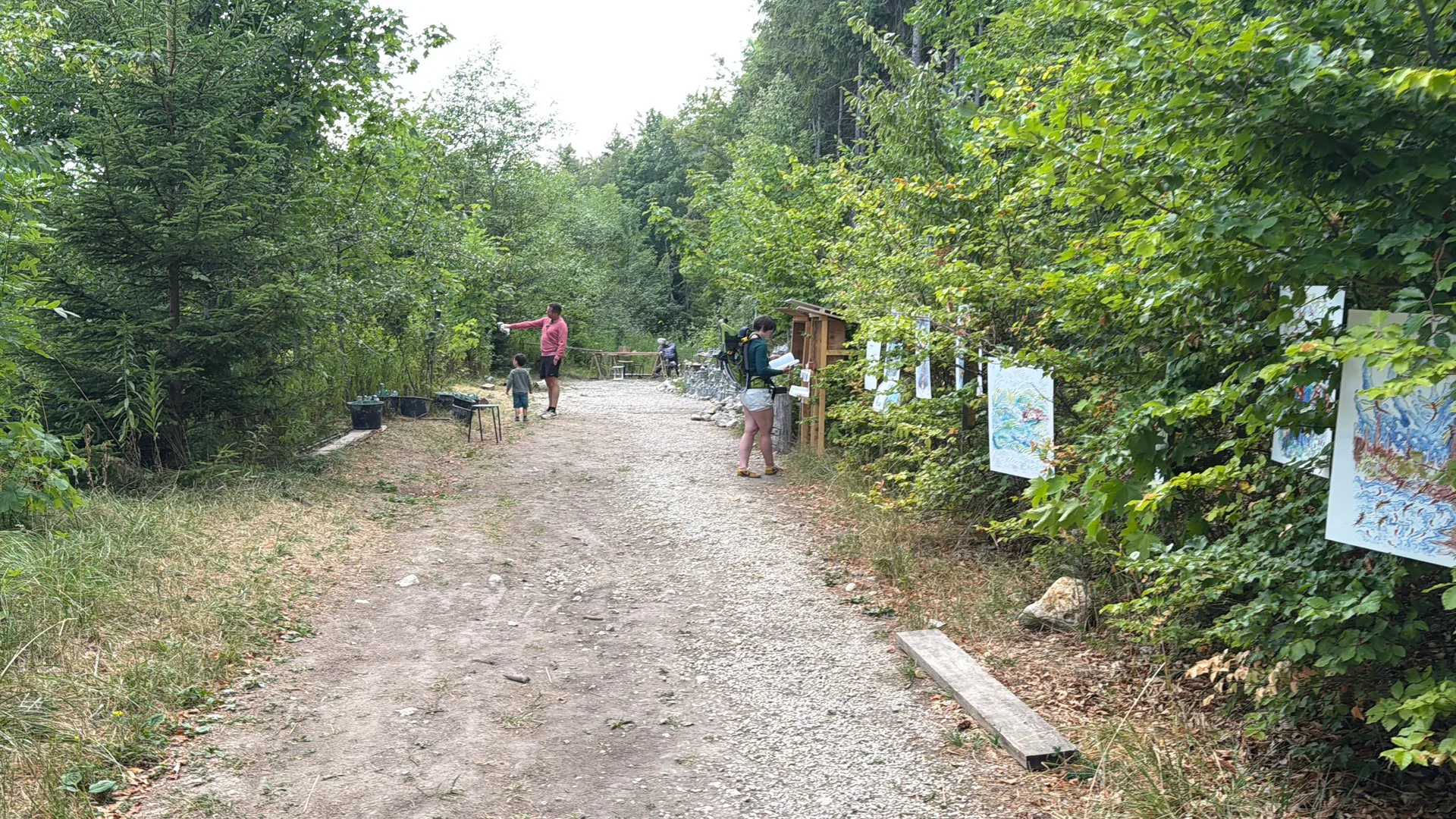
There is no proper car park at the sculpture itself. A handful of small pull-ins along the Route du Marchairuz leave about a five-minute walk to the citadel. Visitor numbers rarely peak all at once, so a space almost always turns up. The artist's own vehicle is often parked there too — which means a real chance of meeting him and asking questions directly.
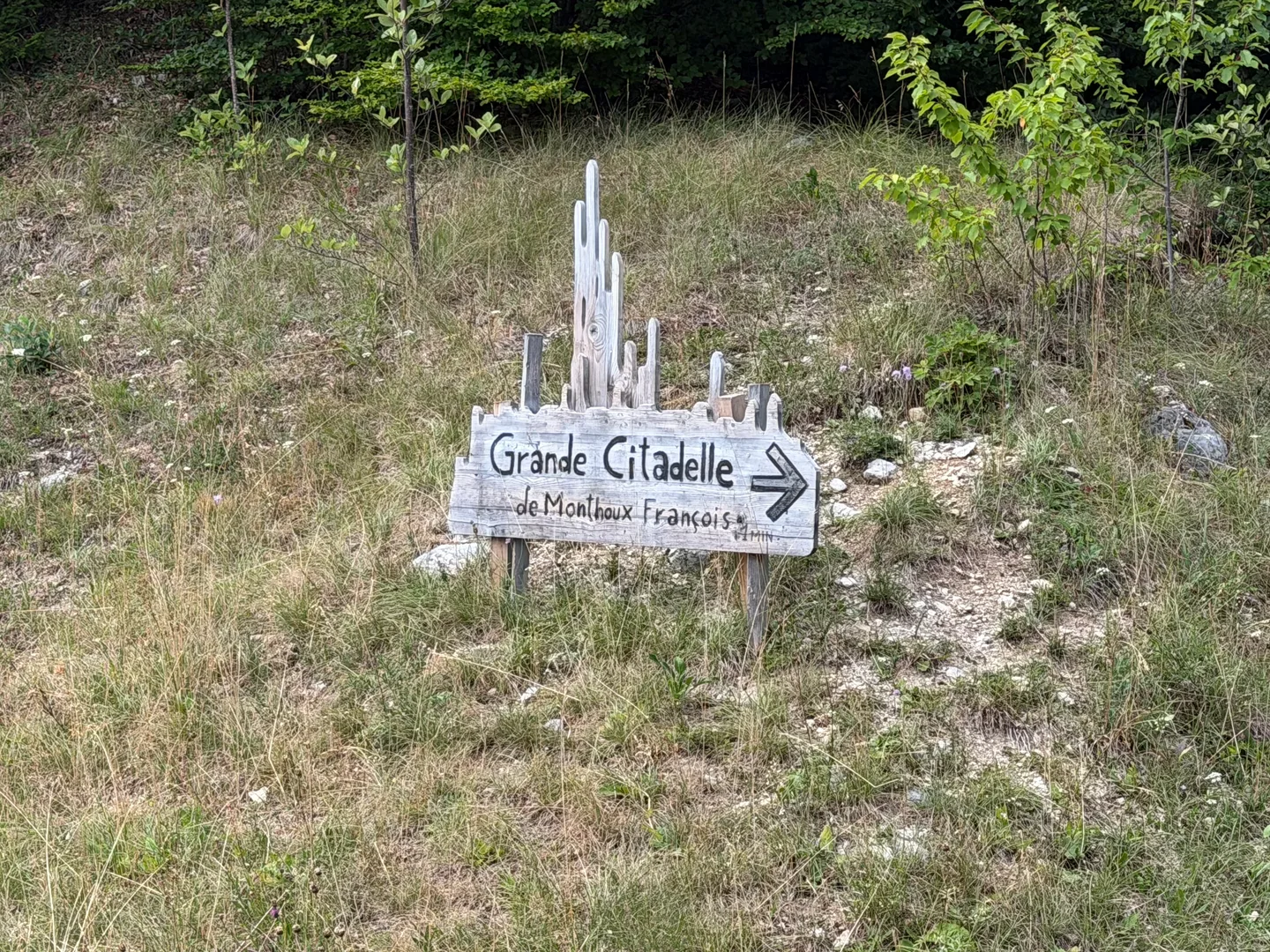
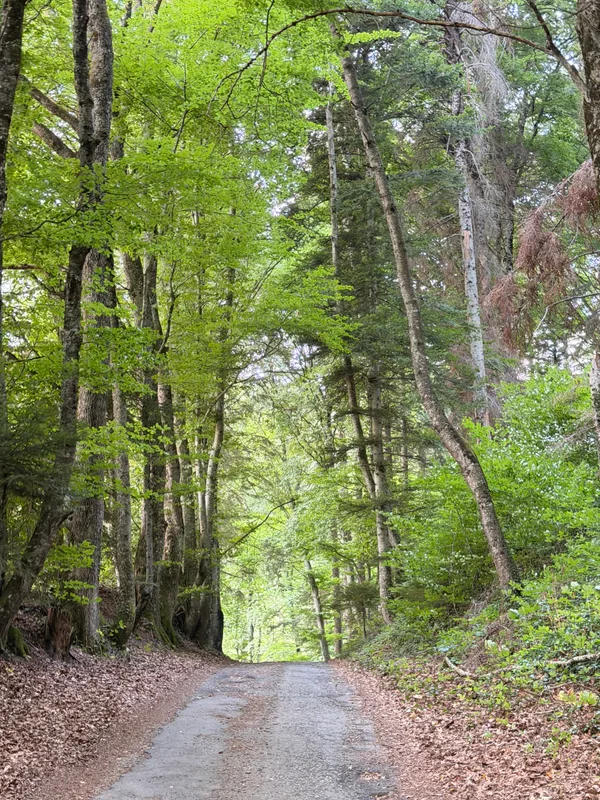
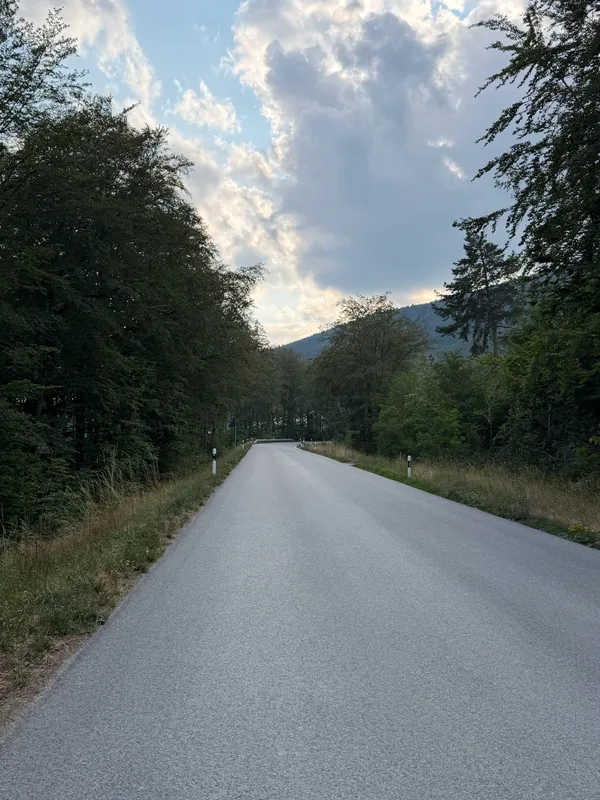
Without a car. The MBC train runs from Morges station to Bière in about 31 minutes; Morges tourist office recommends exactly this connection. From Bière station it is a further 30–45 minutes on foot, with the last stretch climbing towards the Route du Marchairuz. That final section is not especially pedestrian-friendly: there is no pavement or separated path, part of the route follows the road itself through bends with poor visibility, so walk carefully and in daylight.
What can be bought on site
Anyone lucky enough to catch François Monthoux there can buy work connected to the citadel — the book La Citadelle du chien fou, his own Tarot deck, drawings and small sculptures. There is no permanent souvenir shop at the fortress, so the selection is best treated as changeable. Recent seasons have also seen an exhibition of his illustrations shown near the site.
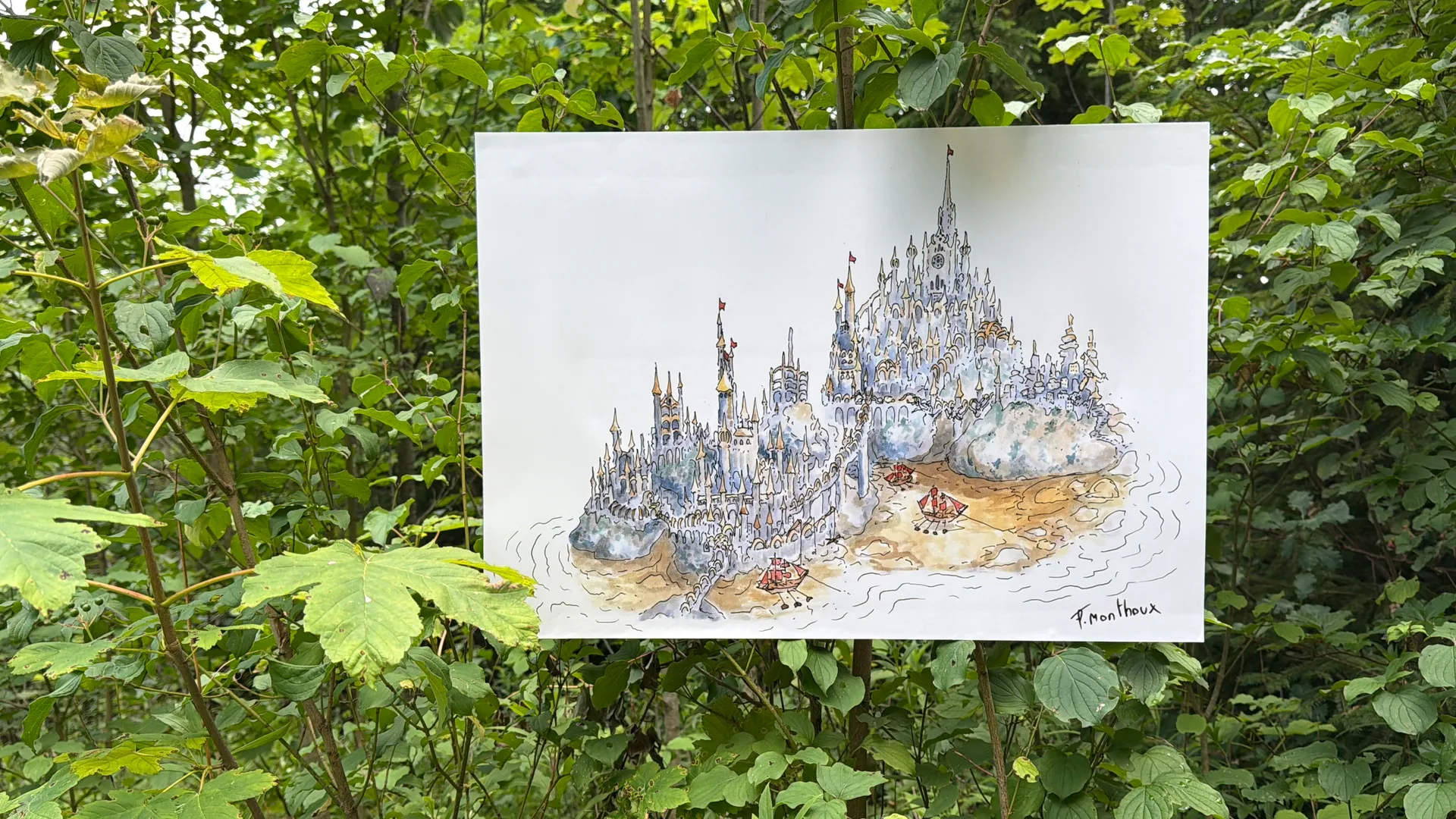
Beyond buying something, the project can simply be supported by donation — the official shop takes contributions from €10, which go towards continued construction of the citadel.

Visiting the Grande Citadelle de Monthoux works better with a few things in mind — this is a forest art site rather than a conventional tourist attraction.
Allow at least 45–60 minutes. The citadel itself can be circled quickly, but the point is the detail: the figurines, towers, bridges and small scenes. With photography and a proper look at the symbolism, an hour and a half goes easily. The artist has deliberately created a large number of individual characters and meaningful elements.
In summer, come towards evening. This is Monthoux's own advice: the site is fairly open and the midday sun can be harsh. In winter he suggests early afternoon, before the sun disappears behind the trees and the mountain.
After rain, expect mud. A short stretch of gravel forest track leads from the road to the citadel, so closed, comfortable shoes beat city footwear. From the small parking spots it is about five minutes on foot.
Parking is very limited. This is not a visitor car park — just a few spaces along the Route du Marchairuz. On a weekend it pays to arrive early or be prepared to hunt a little.
Entry is free and the site is always open. As of 2026, visits are unticketed with no fixed schedule.
Children are welcome. For events on site, the location is listed as suitable from age three and accessible with prams, though not with wheelchairs. It is natural terrain all the same, so uneven ground is worth factoring in with small children.
Resist photographing the overall view straight away. Walk around the citadel first. It looks completely different from different levels, and many characters and scenes only become visible up close. That matters especially here, because the artist builds intuitively and then links individual parts to archetypes — the Hermit, the Bearers, the Fool, the standoff between "I want" and "You must".
If François Monthoux is there, talk to him. The project is still developing and he often works on site; visitors regularly report such encounters. There is no guarantee, of course.
Do not count on night-time illumination. The internet is full of dramatic night shots. Lighting evenings have genuinely been held — announced, for instance, for Fridays and Saturdays in specific months — but they are scheduled, not permanent. Check the artist's current announcements before making a special trip after dark.
Above all, do not treat it as a finished museum piece. Monthoux has been building since May 2023. Photographs taken even a few months apart can differ: new sections, characters and structures keep appearing.
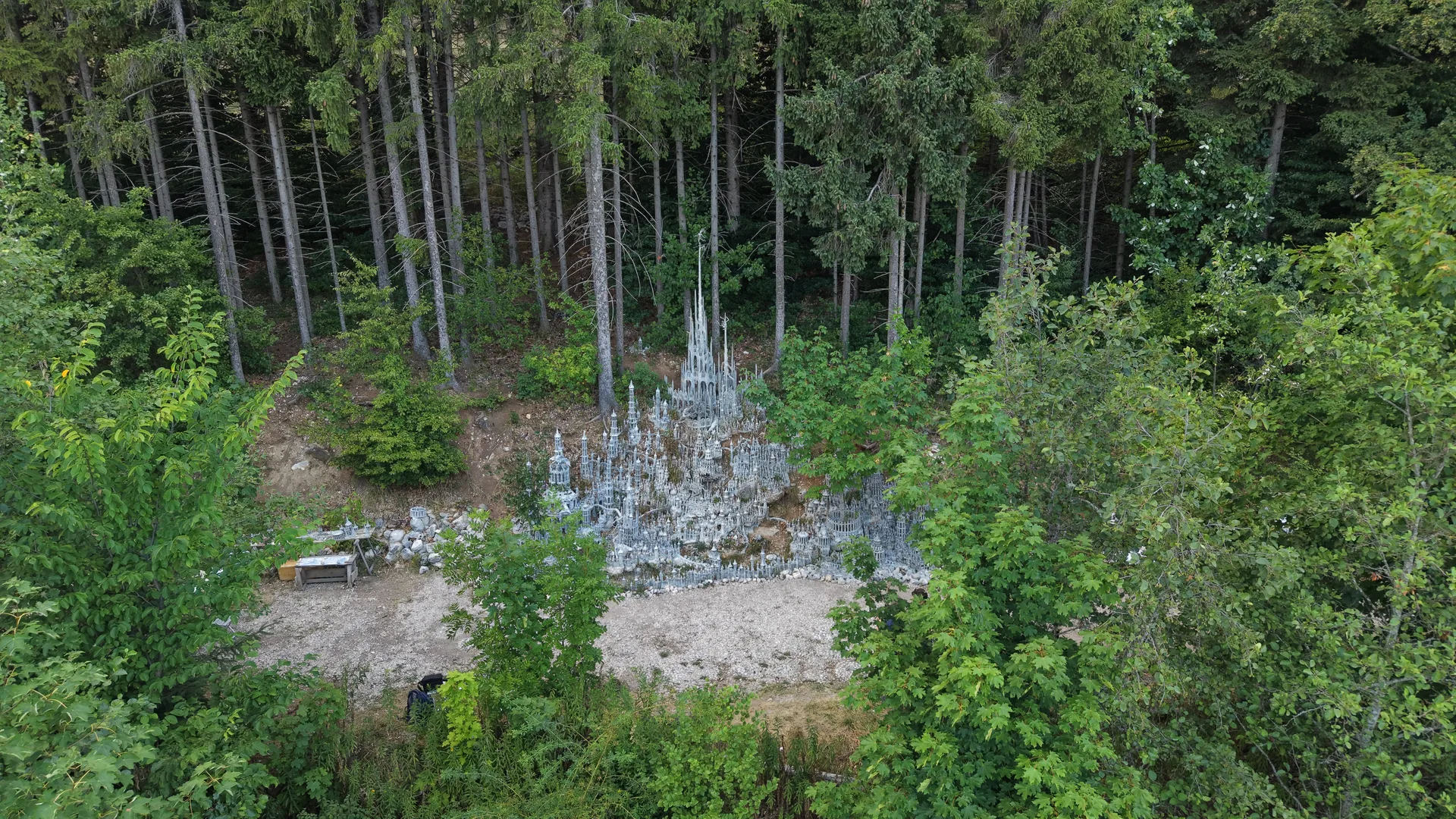

For photography, the end of the day is the best time to visit, when the low sun beautifully highlights the Citadel’s numerous towers and intricate details. The artist himself recommends this time in summer. If you want to see the place with as few visitors as possible, choose a weekday and avoid weekend afternoons. In winter, it is better to arrive in the early afternoon, before the sun disappears behind the forest and the mountain slope.
Coming here purely for "a castle to photograph" misses the point. The overall view is impressive, but the real interest starts when the dozens of small stories inside the structure come into focus. That is precisely why the citadel makes such a different impression in person than in pictures. Often there are no other visitors at all, leaving space to wander, sit, and study the Grande Citadelle de Monthoux from every angle.
The trip, the walk and the visit all leave a strongly positive impression. The obvious question is what the place will look like in a few years' time.
Also available in
Tags
Jojo is Joyful Journeys!