The Day Rolle Winds Back a Century: The Barrel Organ Festival on Lake Geneva
Event schedule:
A town that goes back a hundred years for a day
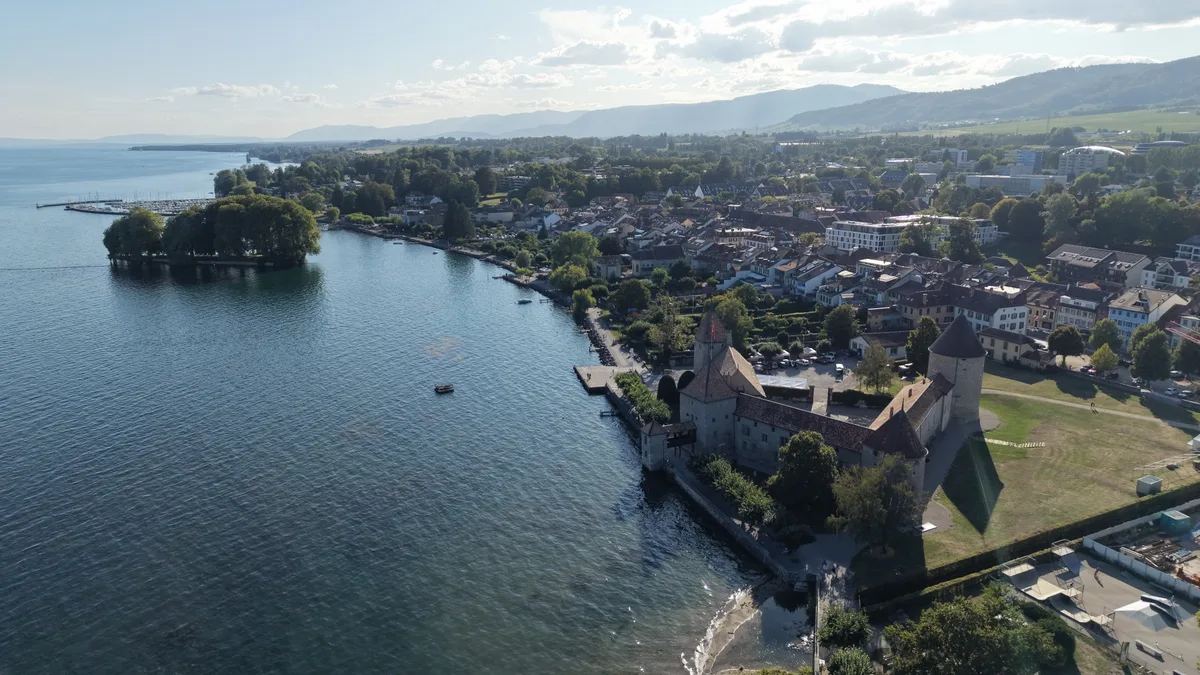
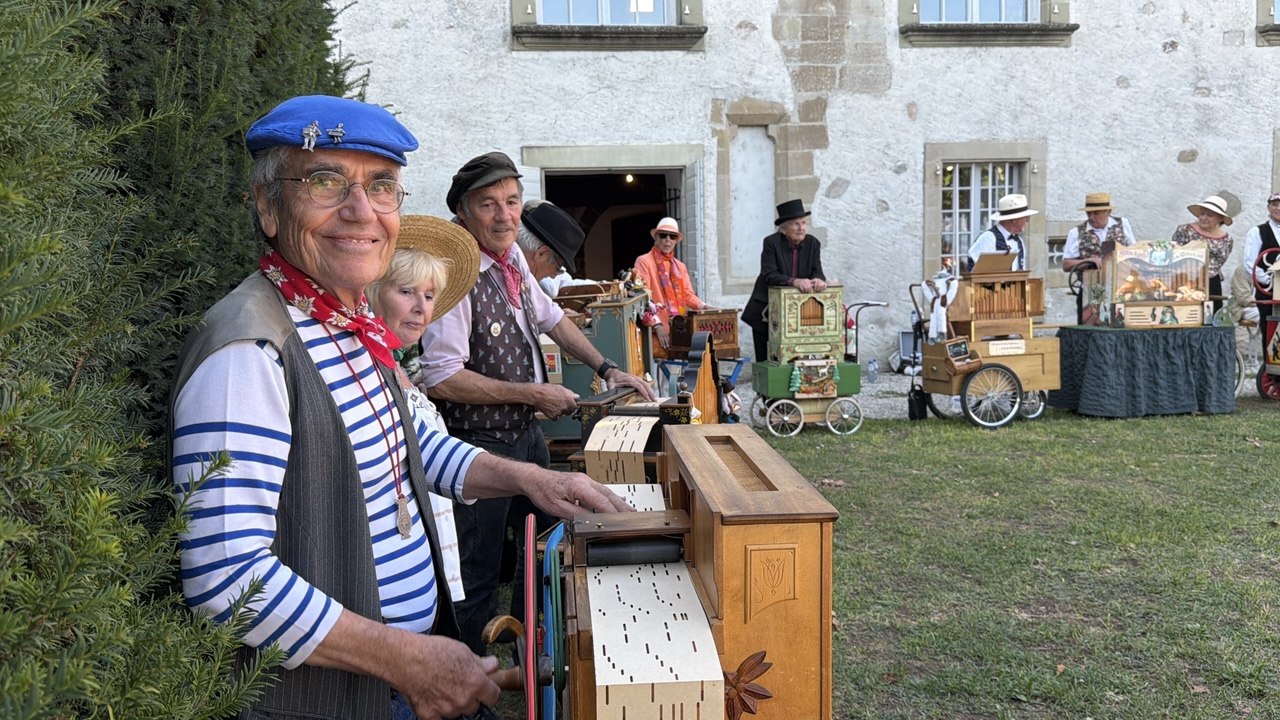
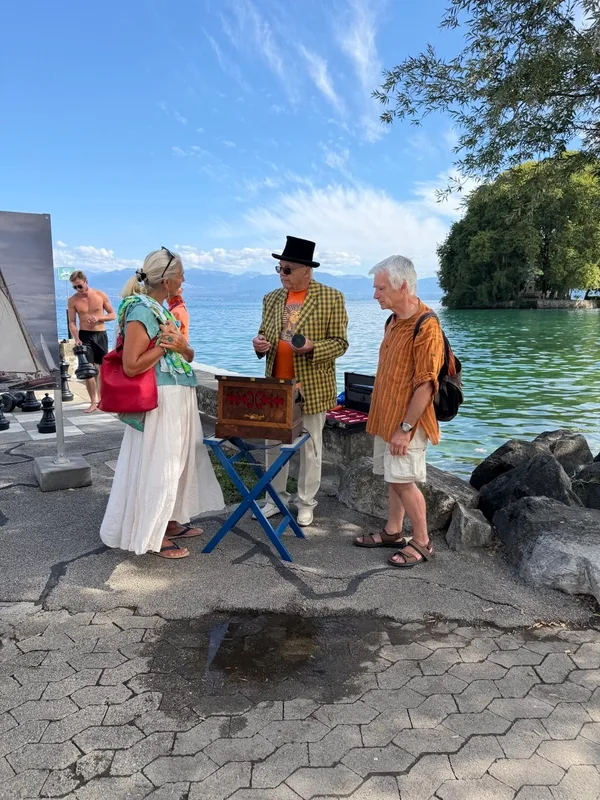
Once a year in August, quiet Rolle turns into a town of barrel organ players. Musicians in old-fashioned costumes set up along the waterfront and near the castle, and it feels as if the town briefly goes back a hundred years. There is no single large stage where the music is played. The musicians are spread out along the promenade by the lake, and you come across them in different places as you walk.
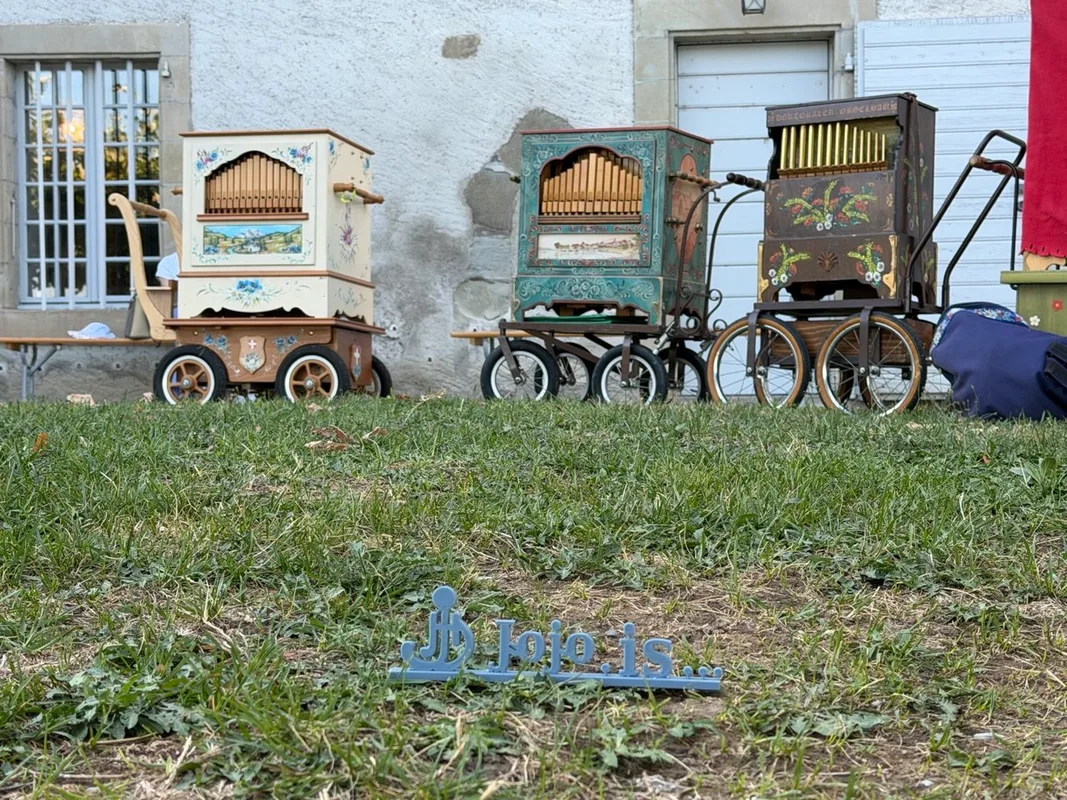
For some reason, the sound of a barrel organ had always seemed annoying and monotonous — the same sound heard at squares and fairs, and rather hard on the ears. But this festival makes you see the barrel organ differently.
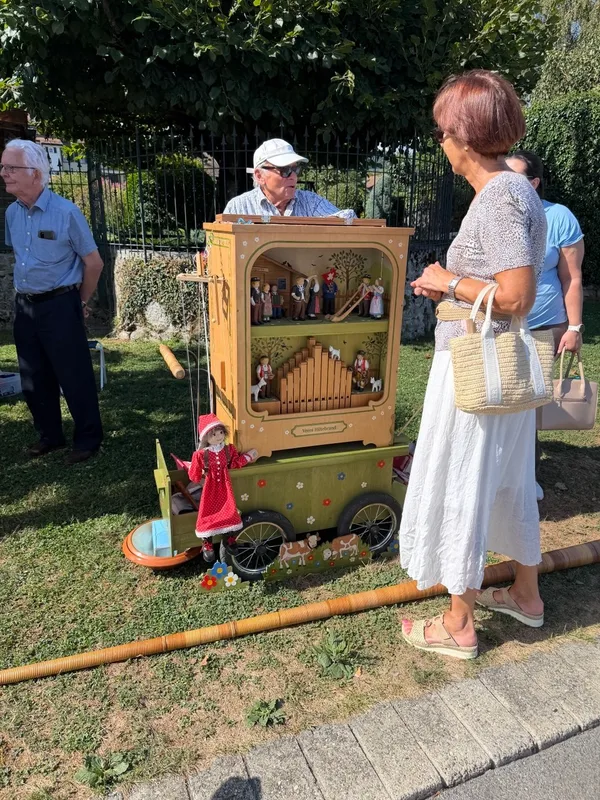
Each barrel organ is a real work of art, and no two are alike. The barrel organ players are not only happy to show their instruments, but also sing along with the melodies they play. Some join other musicians in singing well-known old French songs, others dance, and some put on entire shows to the music of the barrel organ.
It seems as if the sounds of the festival are coming from all directions, and you want to make sure you get to every barrel organ player. But as soon as you walk away from one, they start playing a more cheerful tune, and you have to go back again.
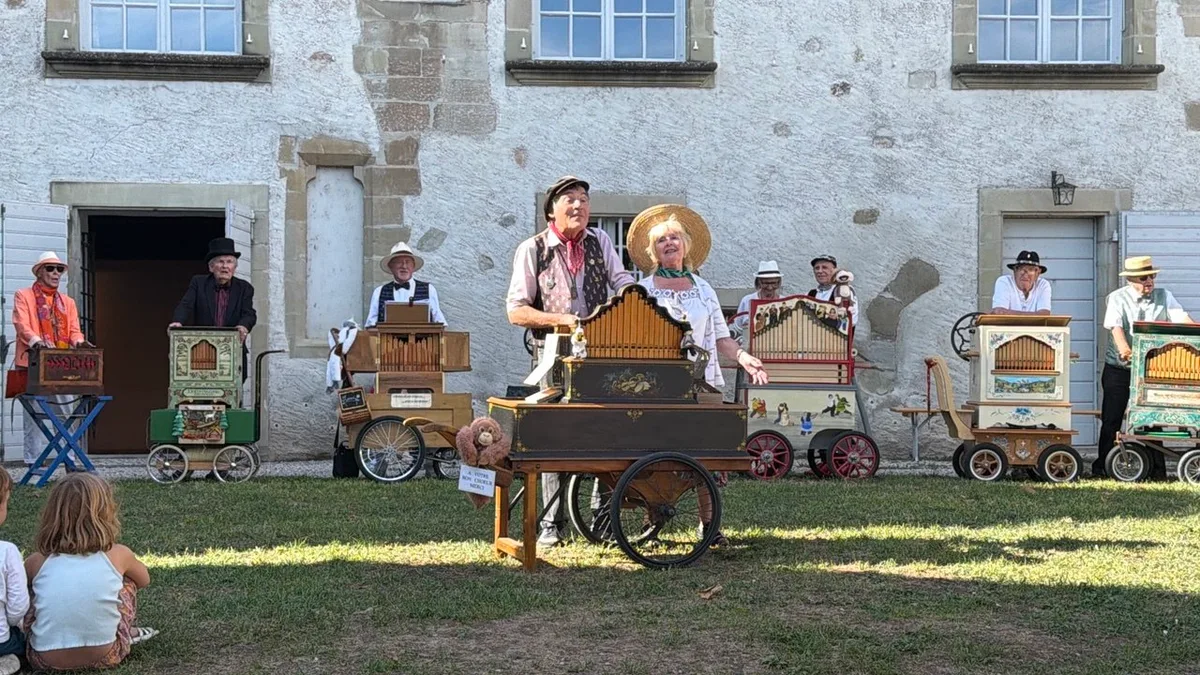
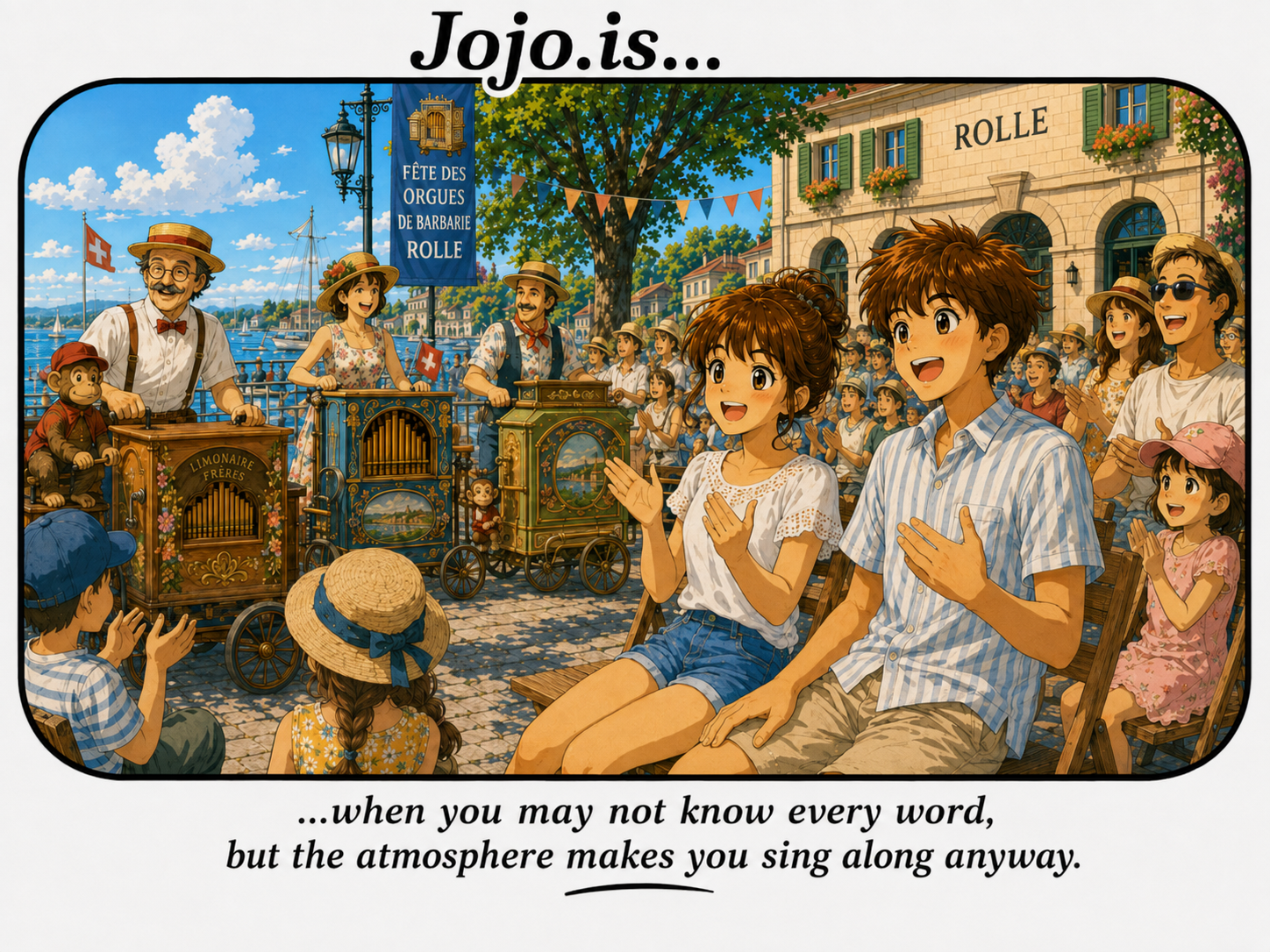
The whole event ends with a joint concert in the courtyard of Château de Rolle. Local families come with their children and enjoy the music, singing along and applauding the performers. And even without knowing all the songs, you really want to sing along with everyone and become a small part of the celebration.
The festival itself
The Festival des Orgues de Barbarie was launched in Rolle in 2000, at the request of the municipality and with support from the local traders' association in its first editions. Jean-Robert Probst, a Rolle resident, has been among its long-standing organisers. The 2026 festival was the 26th edition.
Its history is more eventful than a small-town music day has any right to be. From around 2010 the festival was run alternately with the tourist office in neighbouring Morges. In 2018 the organisers announced they were giving up: with communal budgets tightening, neither Rolle nor Morges would fund it any longer. Within days the festival was rescued by the Comptoir de Morges, whose committee folded it into their own programme — so the organs played on among the tulips of the Parc de l'Indépendance instead. After roughly a decade in Morges, the festival came home to the Rolle quays in 2024.
That episode explains a piece of local feeling that still surfaces in conversation: Rolle regarded the festival as part of its own cultural identity, not merely as an entertainment, and losing it to Morges stung.
What makes it distinctive
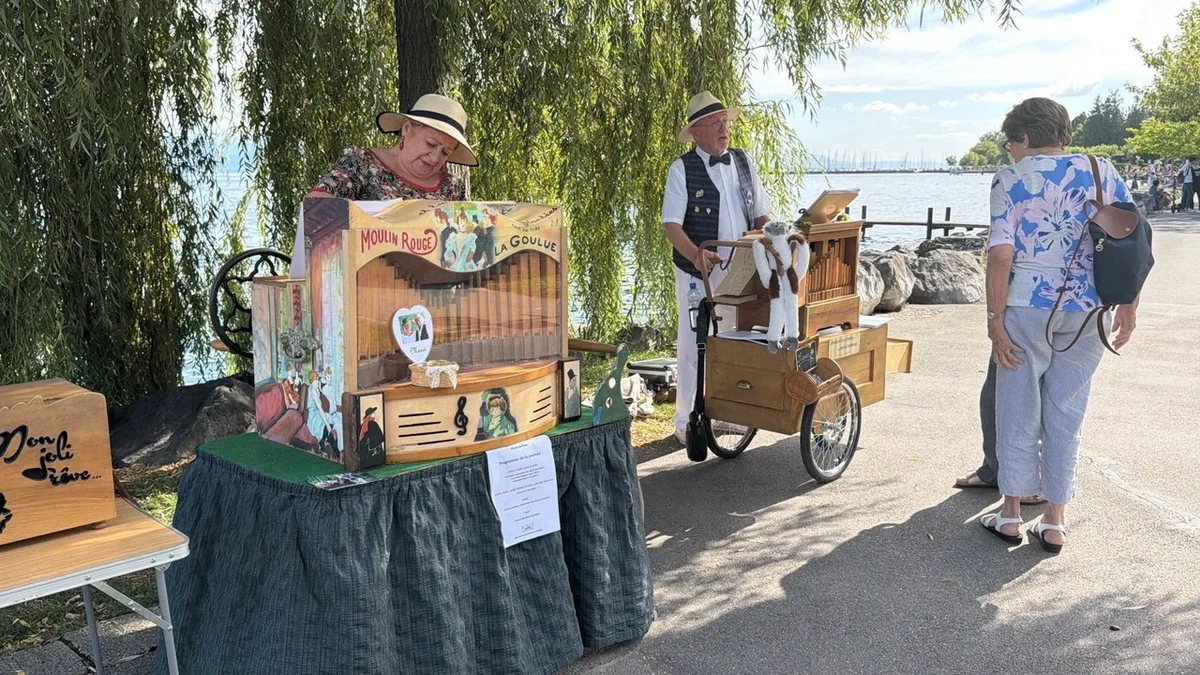
The main thing is that it is built into the town rather than staged in front of it. The organ grinders are scattered across the quays, around the Château de Rolle and through the centre, so the music accompanies a walk rather than demanding that you sit still for it.
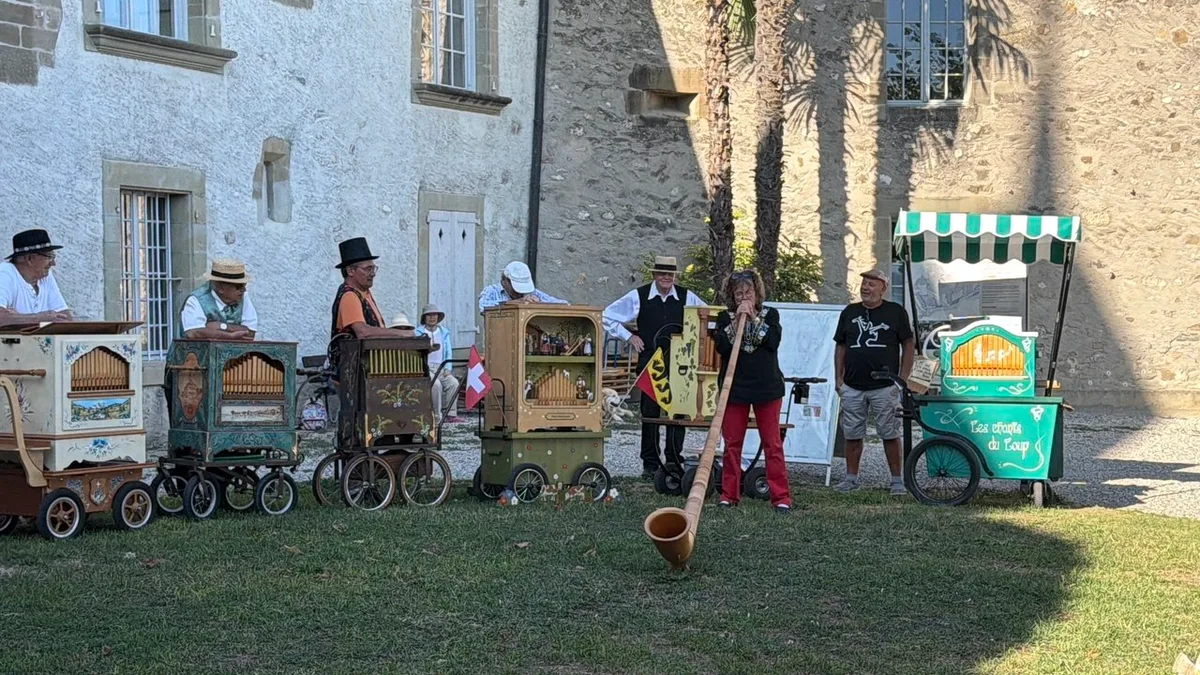
It has also been more theatrical in the past. Earlier editions drew larger numbers of instruments and around fifty costumed performers from across Switzerland and beyond, and at one point there was even a parade of decorated boats out on the lake before the closing concert.
The costumes matter more than they might seem to. The barrel organ belongs to the street culture of the nineteenth and early twentieth centuries, so players often dress the part — and against the backdrop of the old castle, the Grand-Rue and Lake Geneva, that turns Rolle into something close to a working historical set.
The other appeal is the scale. This is not a big commercial festival with fences and ticket booths. Around twenty organs play from 10:00 to 16:00 on the quays and the Place du Marché, and the final concert in the castle courtyard is free. The modest size is exactly what makes it fit Rolle.
When: usually the last Saturday of August — 24 August in 2024, 23 August in 2025, 22 August in 2026.
Where: the quays, the Place du Marché and the courtyard of the Château de Rolle.
Admission: free.
Where the barrel organ came from
The barrel organ arrived in Europe as a portable mechanical organ — an instrument that could play a tune without a keyboard and without the constant involvement of a musician.
Its ancestors appeared roughly in the seventeenth and eighteenth centuries in Central and Western Europe. There is no single birthplace, but its development is usually associated with Germany, France and Italy, where small mechanical organs were built for churches, palaces and fairs.
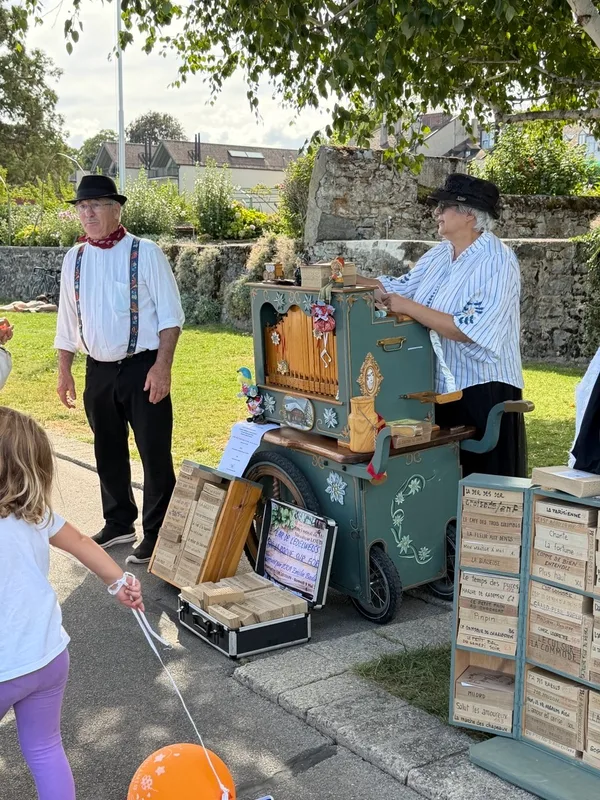
The principle is straightforward. Inside sits a pinned barrel, or, in later instruments, a perforated roll or a folding cardboard book. When the player turns the crank, the mechanism simultaneously works the bellows to feed air to the pipes and "reads" the melody. The performer is therefore not so much playing the music as setting the instrument in motion — which is why French calls them tourneurs de manivelle, crank-turners, rather than musicians.
The instrument's great age was the nineteenth century, when it moved out onto the streets. Organ grinders worked squares, fairs and courtyards with popular songs and dance tunes, and many of them were itinerant musicians from Italy, Germany, France and Switzerland. That is how the barrel organ became part of the image of the old European street.
In French the instrument is called an orgue de Barbarie, and nobody is quite sure why. It sounds like "barbarian organ," and one theory does connect it to the idea of crude or foreign-sounding music. Another traces it to a distorted craftsman's name — the Italian builder Giovanni Barberi is the usual candidate. A third links it to a mangled place name. No single explanation is secure.
By the turn of the twentieth century the barrel organ was fading, displaced by the gramophone, the radio and other ways of reproducing music. It never disappeared entirely, though. It shifted category instead, becoming a piece of cultural heritage and a symbol of old European street life — which is why organ grinders' societies and festivals like Rolle's still exist.

Things worth knowing about the instrument
The player doesn't "play" the melody in the ordinary sense. The crank drives the bellows and the mechanism; the sequence of notes is already encoded on the barrel or the perforated strip.
It is one of the ancestors of the jukebox. In effect, the barrel organ is an early form of automatic music playback, long before the gramophone.
The repertoire came on swappable media. Older instruments used interchangeable cylinders; later ones used perforated paper rolls, and then folding cardboard "books" — a system credited to Anselme Gavioli in 1892, which allowed far longer and more complex arrangements.
It was central to nineteenth-century street culture, heard at fairs, in squares, in courtyards and outside taverns — roughly the portable speaker of its day.
Italians did much of the spreading. A great many street players came from Italy and travelled through France, Switzerland, Germany, England and beyond.
The music was often only half the act. Dancers, acrobats, puppets and trained animals could be part of the performance — the monkey on the organ grinder's shoulder is not a cartoon invention — which made each appearance a small piece of street theatre.
Some instruments are extraordinarily elaborate. Large fairground models could carry dozens of pipes plus percussion and reproduce something close to a full orchestral arrangement. Names like Gavioli, Limonaire and Ruth became so well known that in French limonaire turned into a generic word for the things.
It was a cheap alternative to a live band. For a fair or a small celebration, one person could carry in an instrument and supply music for hours.
It didn't die of inferiority, but of convenience. Player pianos and gramophones came first, then radio.
Today it is valued precisely for its imperfections. The hiss of the bellows, the mechanical pulse, the slightly uneven timbre and the sight of the working mechanism produce something a recording can't fully reproduce.
It might be called the ancestor of the playlist. The performer chose not individual notes but a prepared musical programme fixed on a cylinder or a strip.
And there's a nice paradox in it. The barrel organ looks like the most alive of street instruments, yet it is fundamentally one of the earliest attempts to automate music.
A Swiss habit, not a one-off
Rolle belongs to a small group of Swiss towns where the organ grinders' festival is a living tradition rather than a revival. Comparable gatherings run in Einsiedeln, Bad Zurzach, Lucerne (attached to the LUGA fair), Lichtensteig, Laufenburg and Lachen, and several have been going for decades — the Bad Zurzach meeting reached its thirty-seventh edition in 2026. There is a Swiss barrel organ club and an active network of collectors and players, so this is a genuine contemporary community rather than a scattering of one-off folklore events. What distinguishes Rolle is how naturally the festival sits in the fabric of the old town: the musicians play on the quays, by the castle and among the historic streets.
There is a deeper Swiss connection too. Canton Vaud, where Rolle sits, was once the world centre of mechanical music: the workshops of Sainte-Croix and the surrounding Jura villages supplied music boxes to the entire globe from the nineteenth century onward. Anyone who catches the bug at Rolle can follow it up at the CIMA museum in Sainte-Croix, the Musée Baud in L'Auberson, or the national Museum für Musikautomaten at Seewen.

Come early. That way there's time not only for the closing concert but also for a proper walk through old Rolle, a look at its history and a feel for the town itself before the music starts.
The waterfront is the best place to spend the day, since that's where the players are stationed. It's worth doing more than listening: talk to the organ grinders, look closely at the instruments, and let the whole thing settle into the atmosphere of the old European street that makes the trip worthwhile in the first place.
One more thing: bring small change or cash. Most players set out a small box or tin beside them, and it's the accepted way of thanking them for the music and the mood they create. Many of them travel and perform as volunteers, and several sell recordings of their instruments as well.
Rolle is a short train ride from both Geneva and Lausanne on the Lake Geneva line, and the quays are a few minutes' walk from the station — which makes this an easy day out, and an unusually charming one.
This festival shows other sides of the simple barrel organ and of the people who play it. It lifts your mood and helps you relax, singing along to cheerful little songs and letting yourself be carried away by the atmosphere. It makes you want to say a huge thank you to all the people who put their heart into it!
Events
Region: Vaud
- Morges Tulip Festival — Switzerland's Free Answer to KeukenhofApril - May
- Caves Ouvertes Vaudoises — The Swiss Wine Weekend That Lets You Into Local LifeMay
Country: Switzerland
- Medieval Spectacle Hinwil — Switzerland's Biggest Knight TournamentMay
- Swiss National Day — The Complete Guide to August 1st (2026 Edition)August 1
- Tractors, Confetti and New Wine: Harvest Festivals in SwitzerlandSeptember - October
- When the Bells Come Down the Mountain: Switzerland’s Living Alpabzug TraditionSeptember - October
- The light show “Rendez-vous Bundesplatz” in Bern: it’s worth seeingOctober
Also available in
Tags
Jojo is Joyful Journeys!