Rolle: the Lake Geneva Town Everyone Passes Through
You usually end up in Rolle by chance. It's a small, almost unremarkable town on the Vaud shore of Lake Geneva, the kind where only some regional trains stop. Something brings you here — an event, a festival — and you assume you'll stay an hour. Then, for reasons that are hard to explain, you keep remembering it.
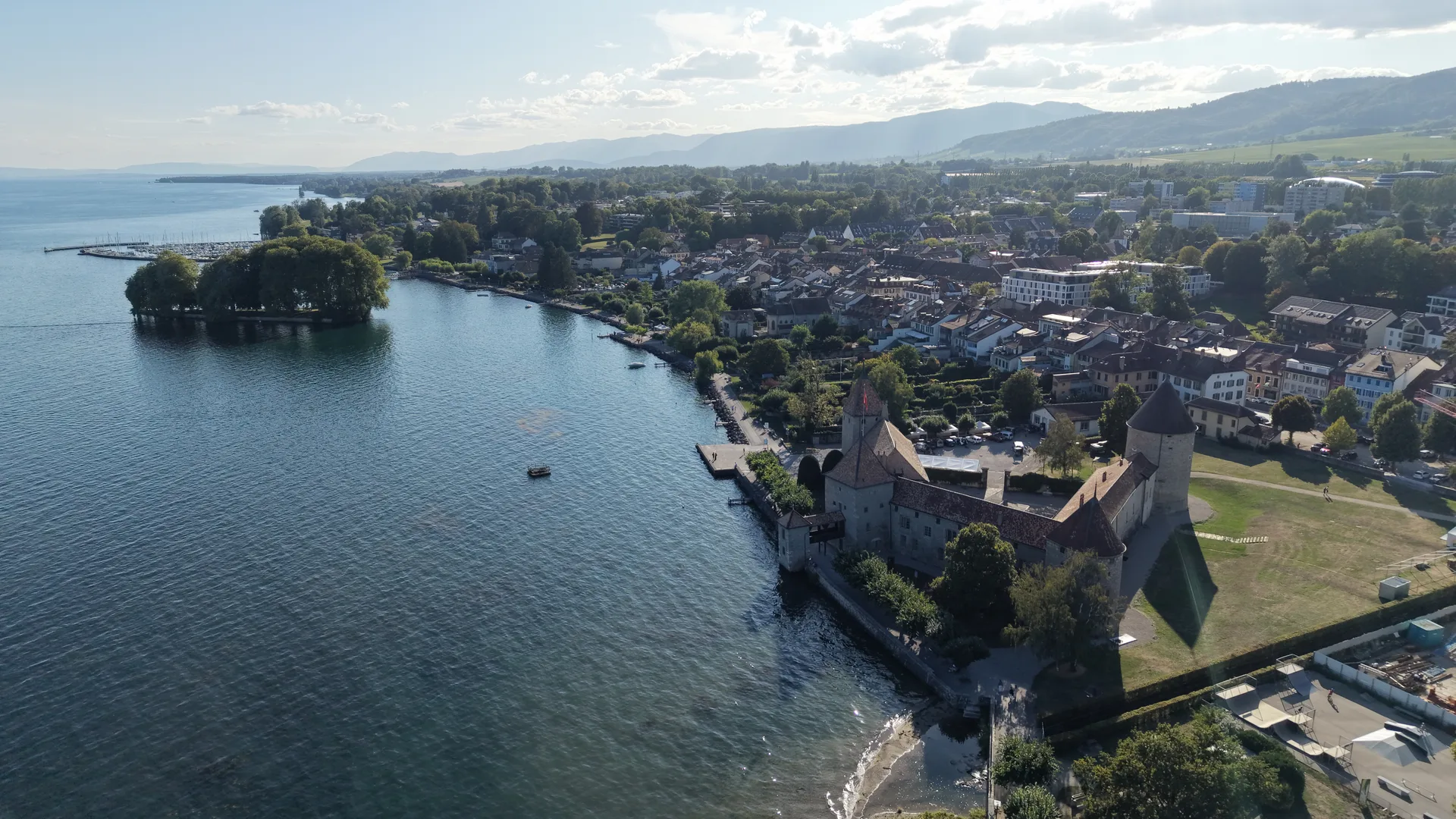
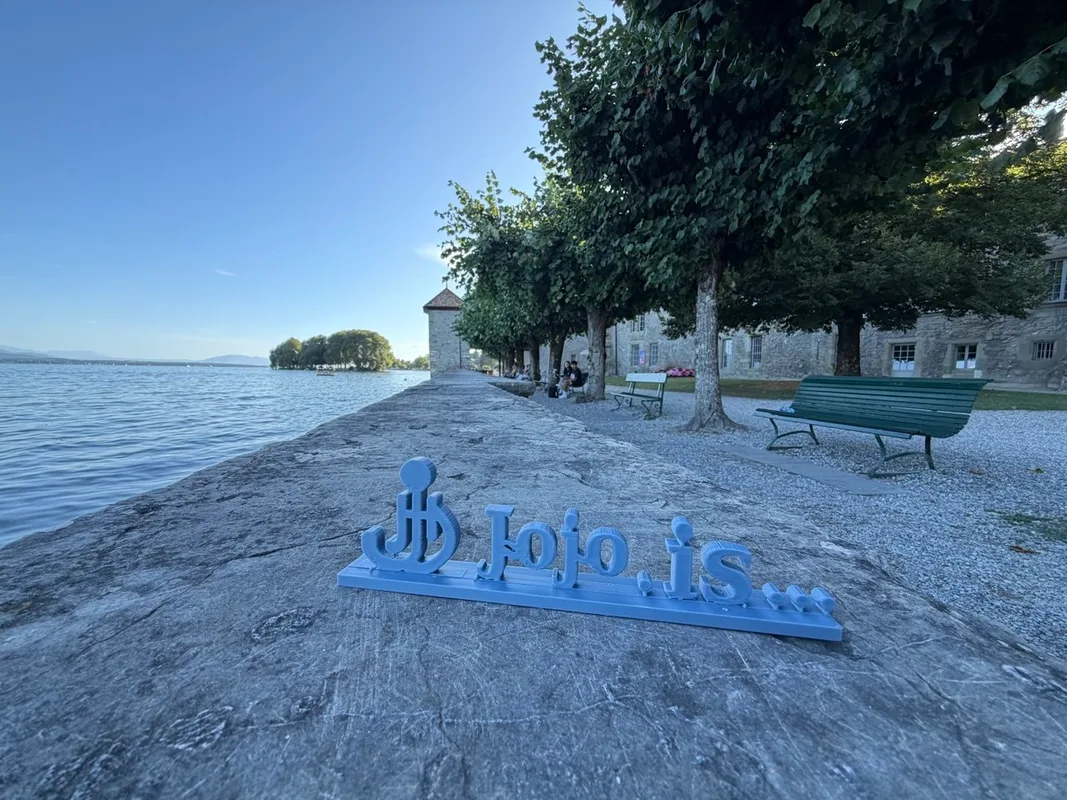
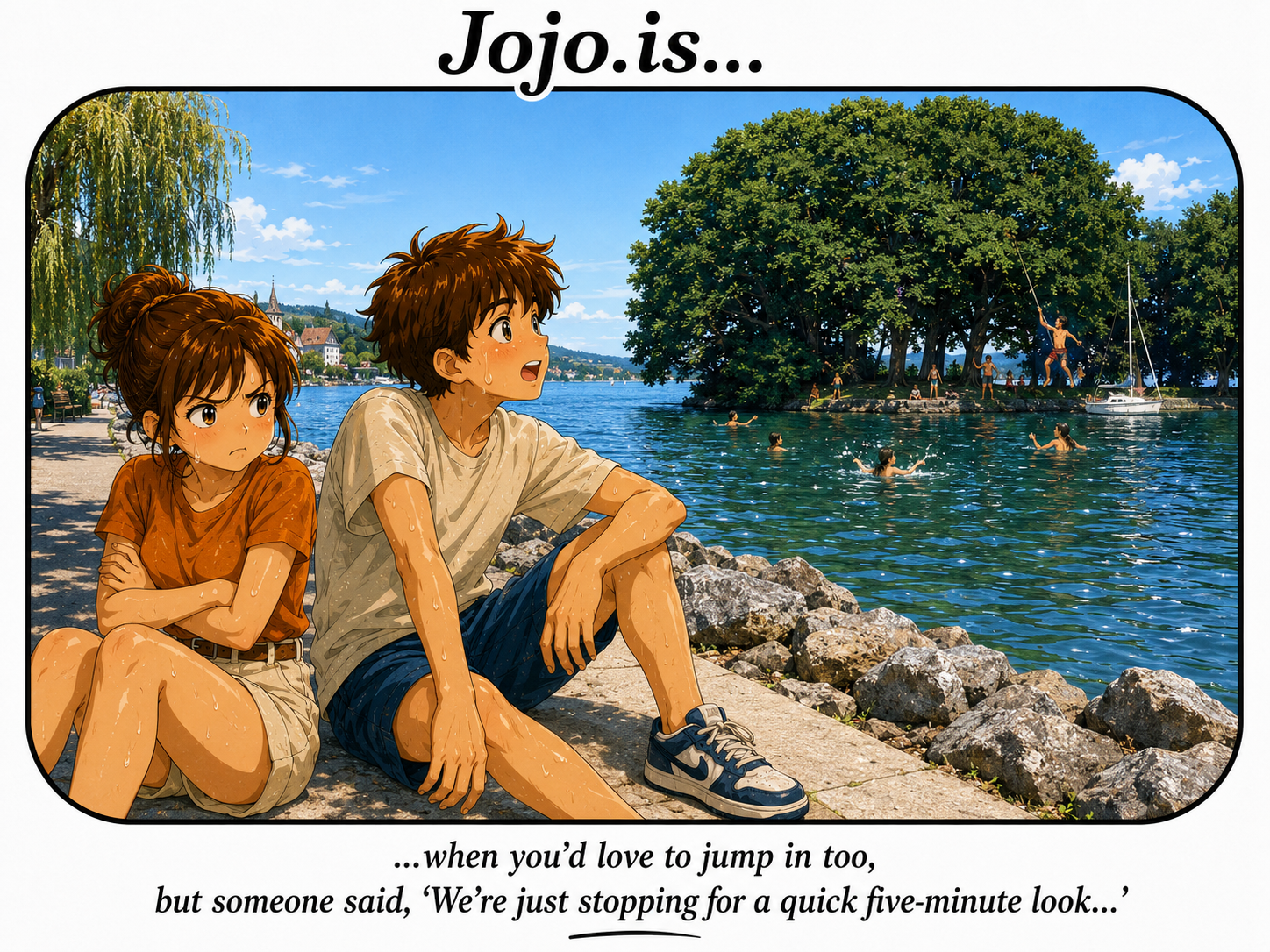
You remember the quiet promenade along the lake, where there are always birds of every kind right at the water's edge. The old castle by the water. The small island opposite, which children swim out to in summer so they can take a running jump back into the lake.
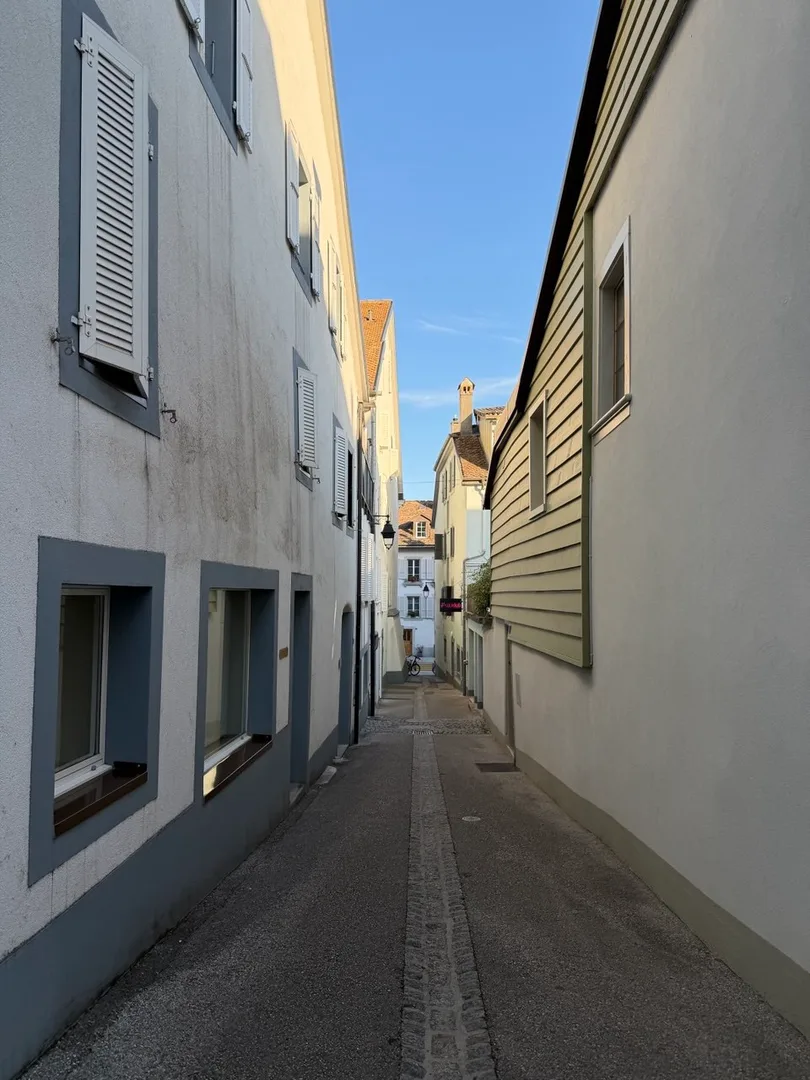
And on the other side of the promenade, almost without meaning to, you find yourself on a beautiful old street that seems to belong to another century.
Walking Rolle
The walk takes very little time. The town, for some reason, stays with you much longer.
Rolle is a place to simply wander. It's small, and you can see the essentials comfortably in 1.5–2 hours.
Start at the Château de Rolle
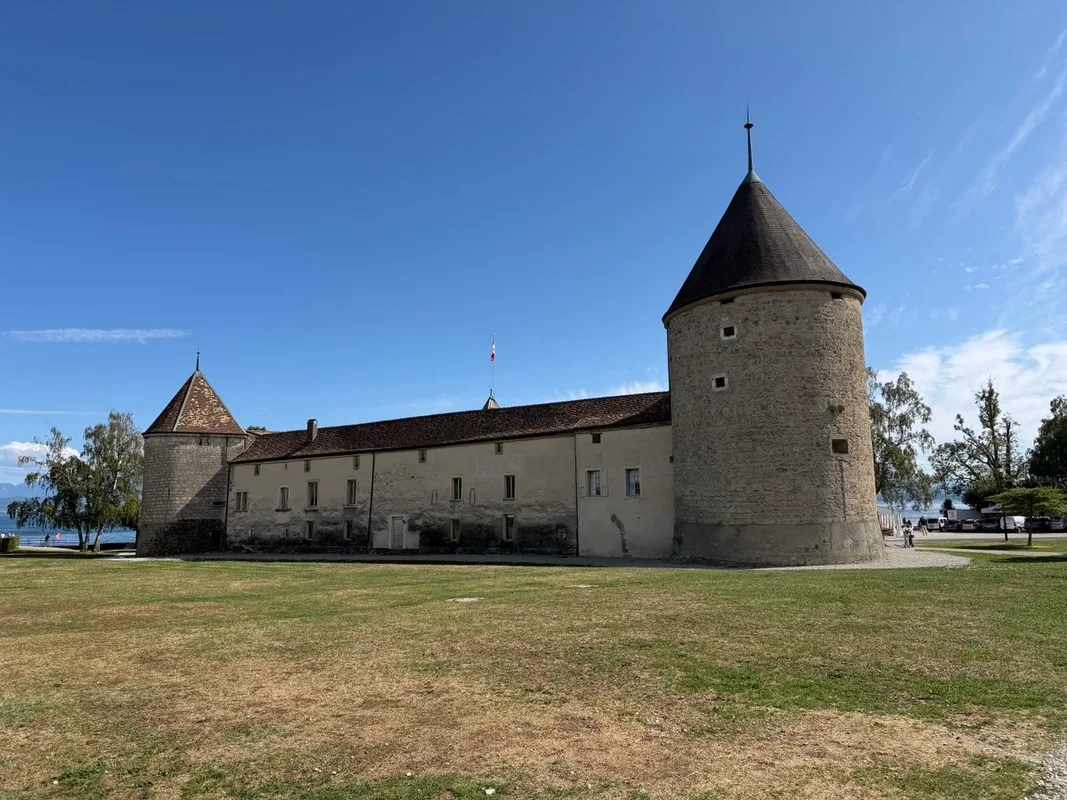
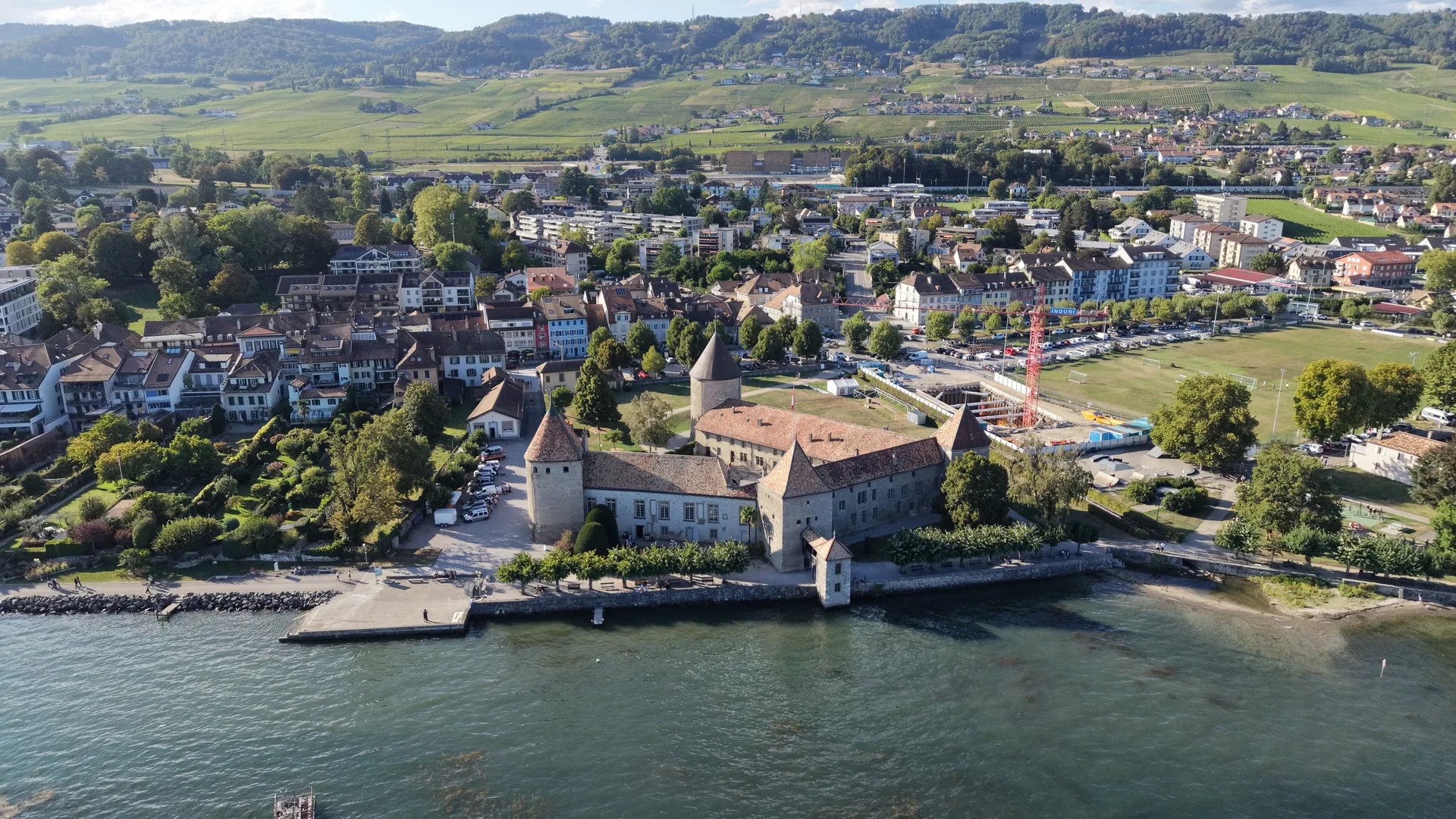
A 13th-century castle right on the lake, with its four round towers — the classic Savoyard square plan. Dendrochronology puts construction work underway in 1264, when Count Peter II of Savoy, "the little Charlemagne," fortified this spot to protect a boat-loading point on the road between Lausanne and Geneva.
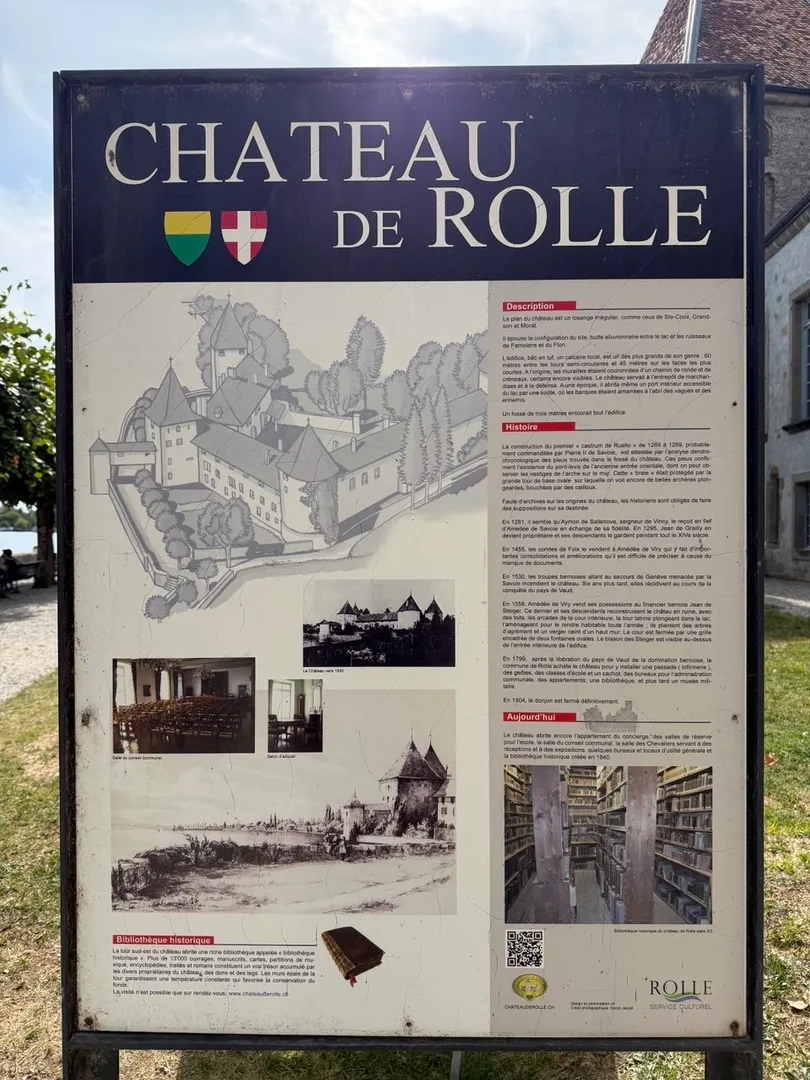
The interiors aren't a museum: since 1799 the castle has belonged to the commune and today houses the communal council chamber, the wedding hall, a medico-social centre, the military appeal court and a remarkable historic library. The courtyard, the walls and the views over the Léman and the Alps are what you come for — and if a public event or guided visit happens to be on, take it.
Around 15 minutes.
Walk the Promenade du Port
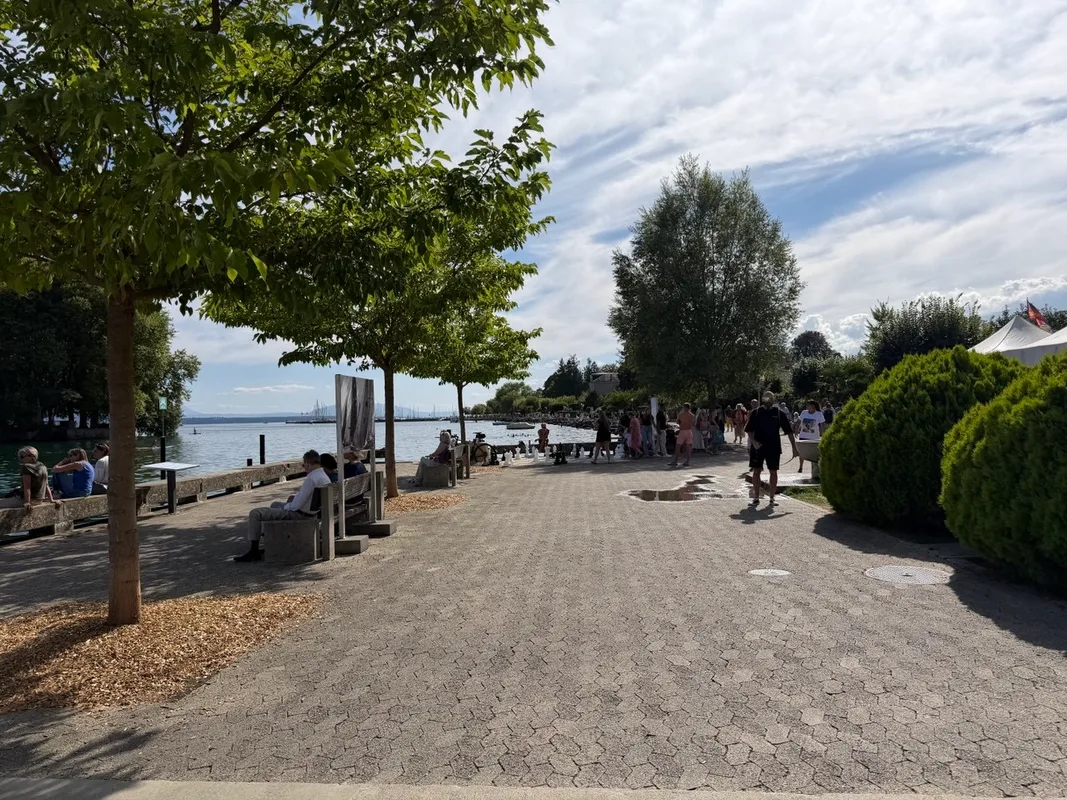
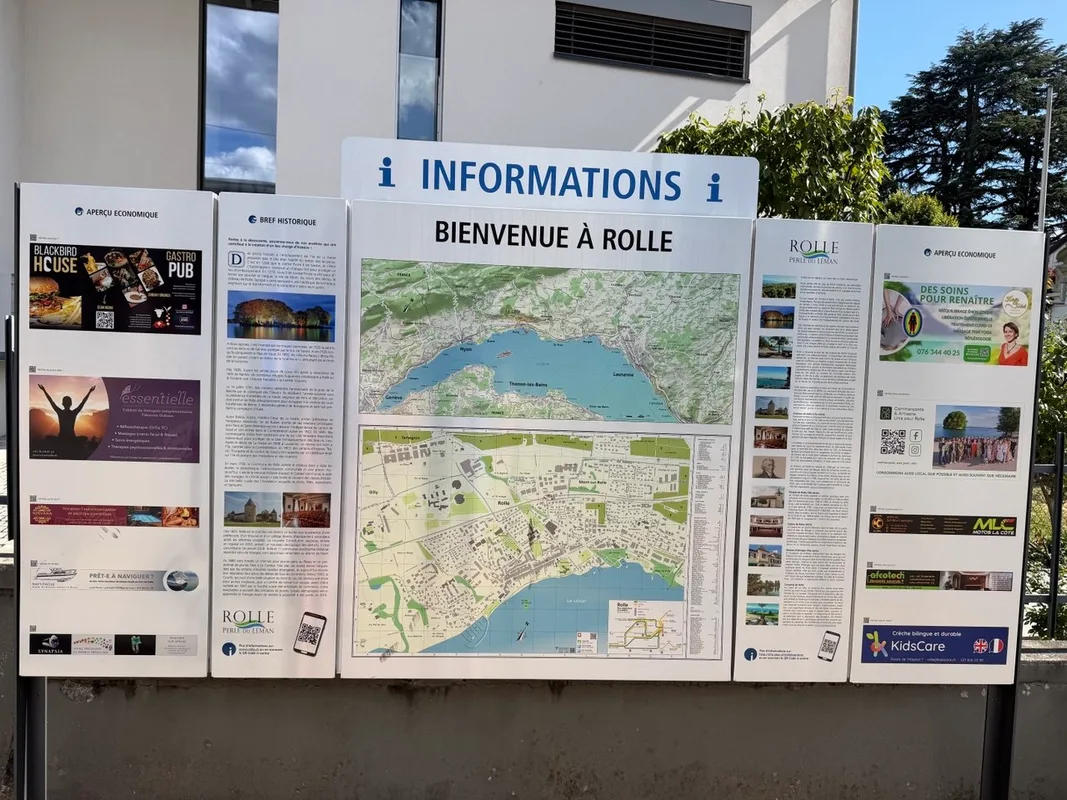
Circle the castle and come out onto the quay. The Promenade du Port de Rolle along the lake is arguably the best part of town: flowers, moored yachts, views towards the Alps and out to the Île de La Harpe.
Around 30–40 minutes with stops.
Look out at the Île de La Harpe
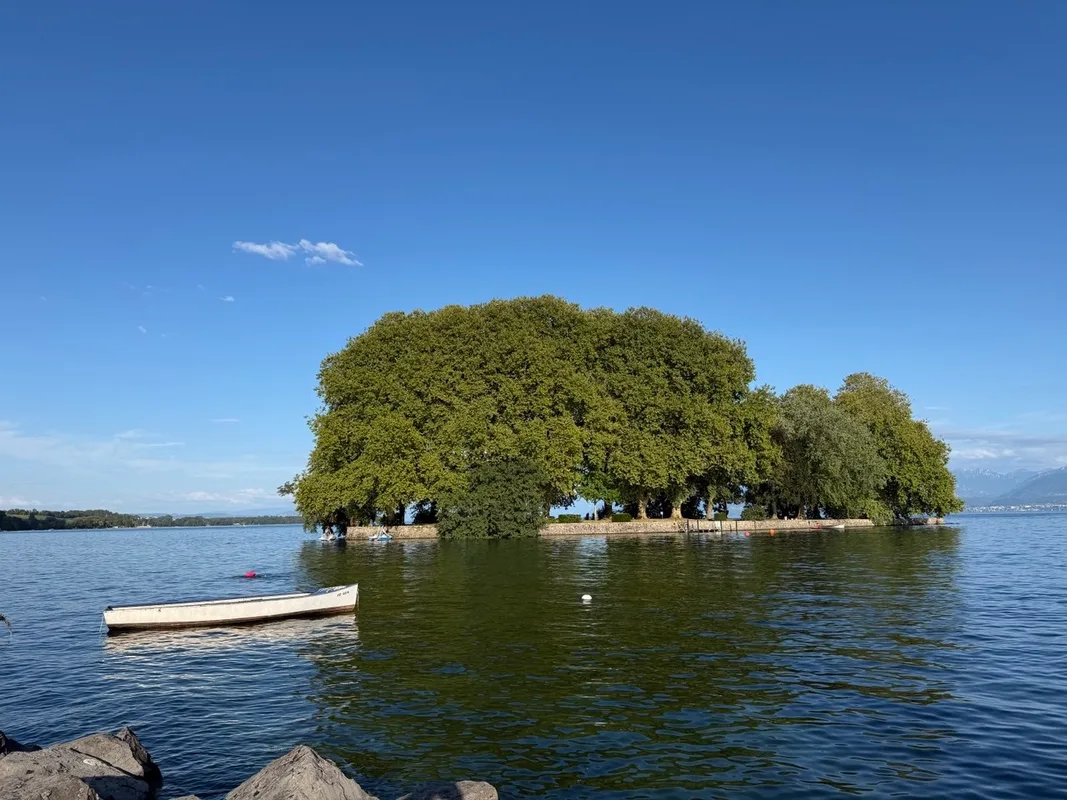
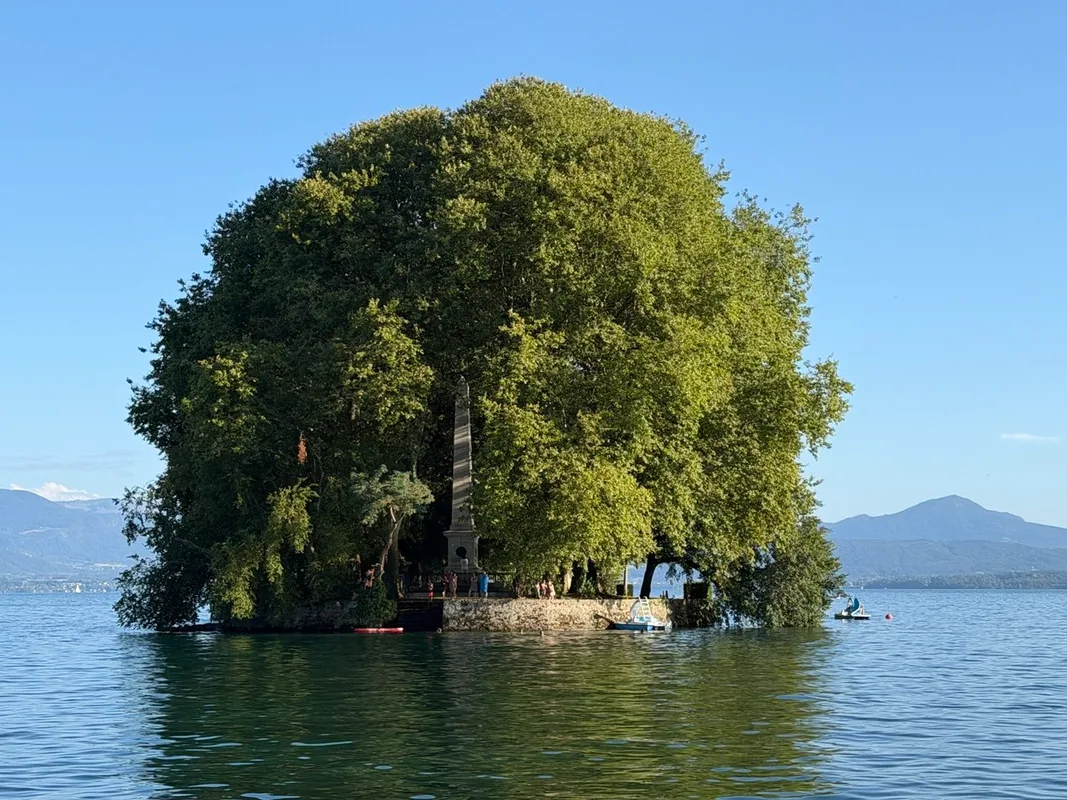
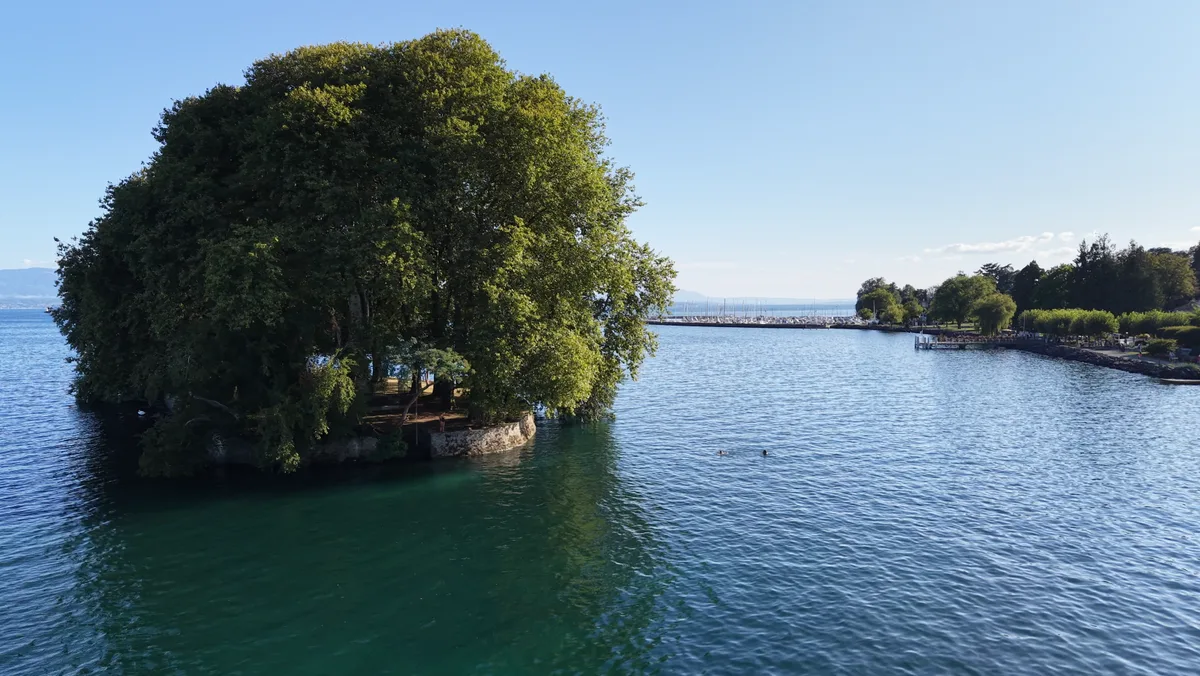
A green island roughly 80 metres offshore, with a tall obelisk. It's entirely man-made: in about 1835, a group of local merchants built it up on a sandbank (a ténevière) to shelter the harbour from the bise, the cold north wind, at the point where timber floated down from the Jura was loaded onto boats for Geneva.
It's about 110 metres long, 30 metres at its widest, roughly 2,368 m² in all — the largest island in Lake Geneva. There's no bridge, and that's the point: the pleasure here is the view of it from the shore. Locals swim out and sail over in summer; the trees are lit at night, which is worth timing your return train for.
Stop at the port and the Casino Théâtre
There's a terrace at the Restaurant du Casino looking straight out at the island. If you want something genuinely local, order filets de perche — perch fillets, the classic dish of the whole lake. You'll also find féra and brochet (pike) on menus here. With fish, take a glass of white Chasselas from La Côte; ideally a Mont-sur-Rolle, grown on the slope directly behind the town.
Around 15 minutes for the port; 20–50 for a meal or a glass.
Climb up to the Grand-Rue
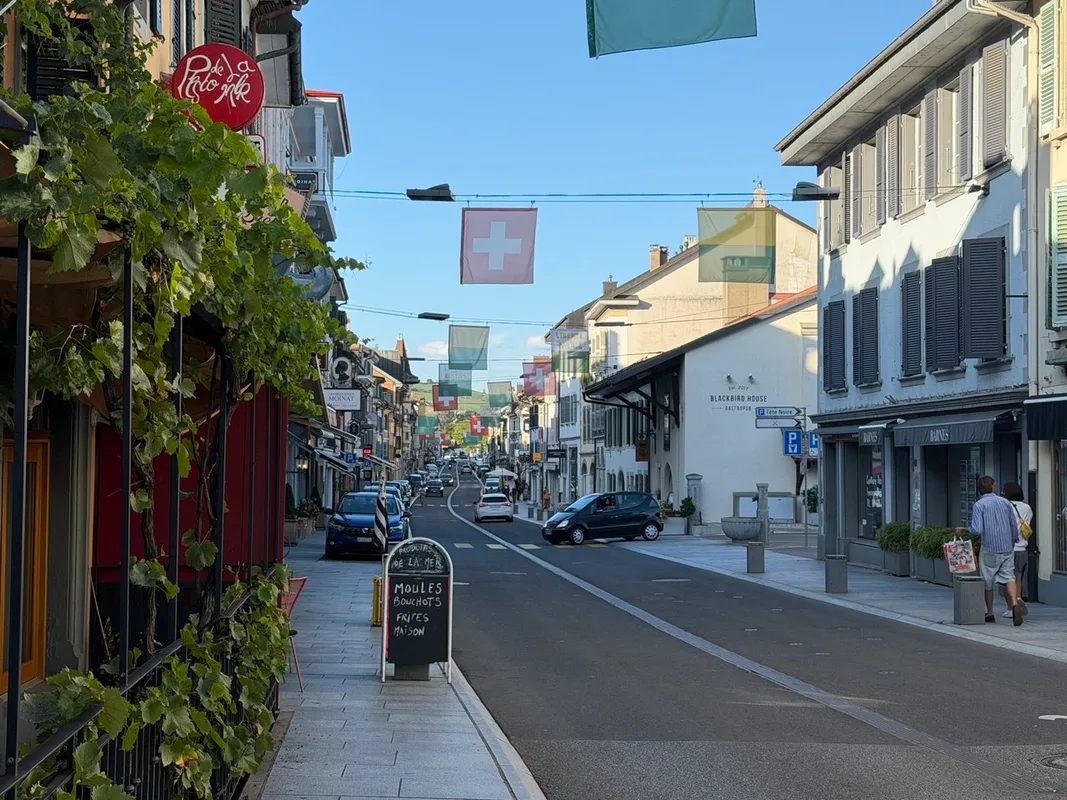
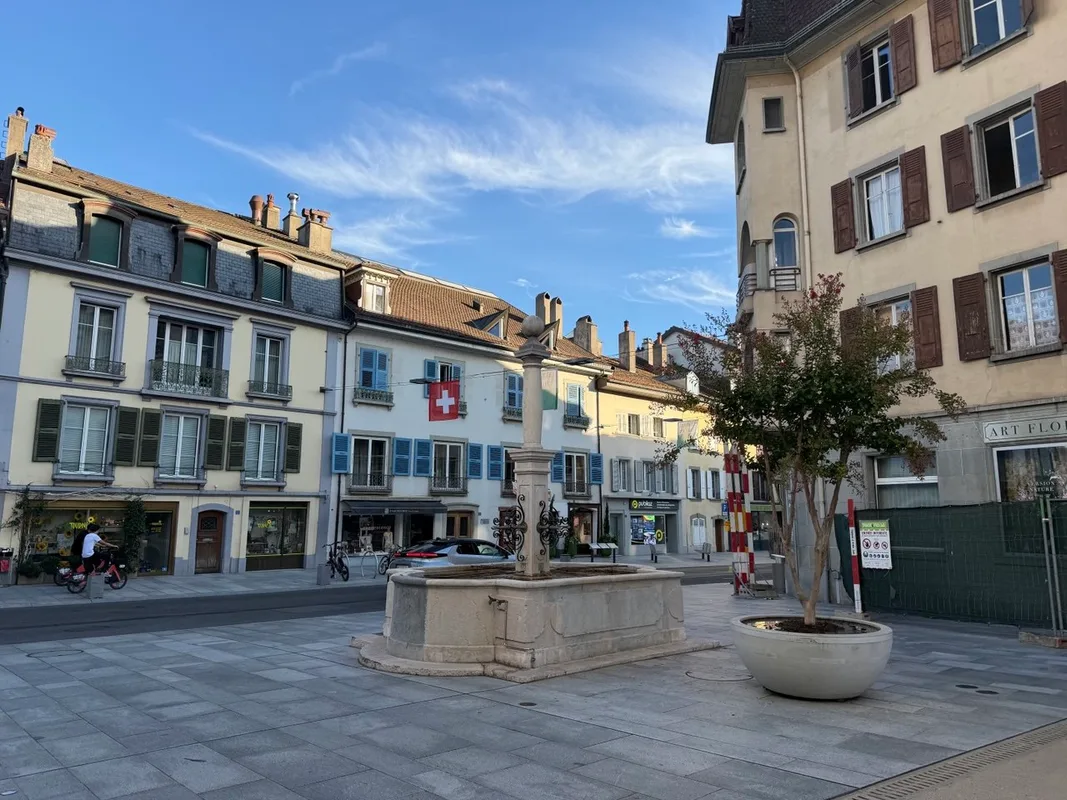
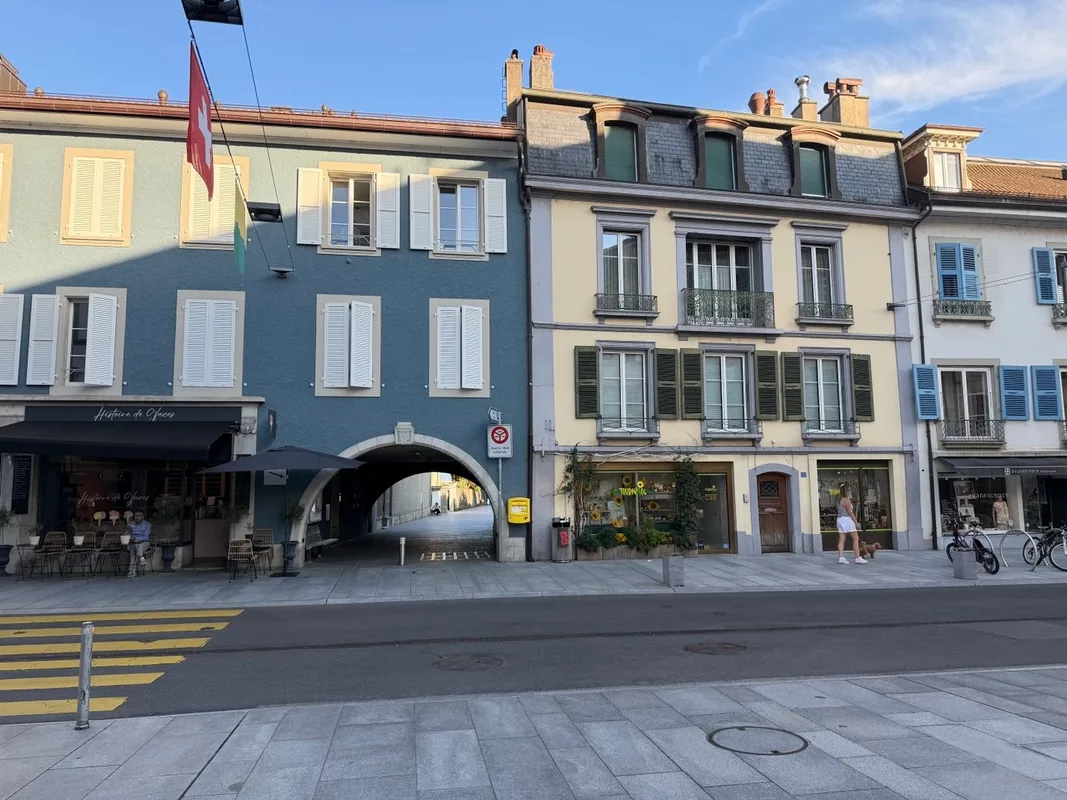
The old main street, with historic façades, small shops and cafés. Look at the stonework, and — more importantly — look into the narrow passages leading down towards the water. Behind the fairly austere fronts of the Grand-Rue there are inner courtyards and gardens, because the town was built in long strips running from the main street down to the shore. That contrast is Rolle's real signature.
Note the Maison de la Couronne and the other 17th–18th-century town houses. This was the period when Rolle grew wealthy on wine, timber and goods moving across the Léman.
Around 20 minutes.
Detour: the Temple de Rolle
Five to ten minutes off the route. There's no lavish interior — the interest is the history. The building has medieval roots and began as a Catholic church; after Bern conquered Vaud and imposed the Reformation in 1536, it became a Protestant temple. If it's open, step in; if not, the façades are worth the walk.
Total: castle 15 min → promenade and island 30–40 min → port 15 min → Grand-Rue 20 min → food and a glass of wine 20–50 min. That's 1 hour 40 to 2 hours without rushing.
A little history
Rolle is a small lakeside town with a distinctly medieval biography. It grew up around the castle built by Savoyard lords in the 1260s to control the lake road and the trade between Lausanne and Geneva. In 1319 the town itself was formally founded under the House of Savoy — sources credit either Louis II of Savoy-Vaud or Count Amédée V, and local accounts enjoy the detail that the founding was partly a snub to the neighbouring lord of Mont.
The military outpost gradually became a quiet trading town with a harbour, vineyards and workshops. In the 18th and 19th centuries it acquired a political reputation out of all proportion to its size. Its most famous son, Frédéric-César de La Harpe, was born here in 1754, tutored the future Emperor Alexander I of Russia, and played a decisive part in the creation of the modern canton of Vaud.
Today the historic core is remarkably compact: castle, Grand-Rue, old houses, promenade. And the island opposite is named after La Harpe — so even a walk along the water turns into a small history lesson.

Eight facts that make Rolle more than a pretty lakeside town
The town grew out of a fortress. Work on the castle was underway by 1264, built to protect a boat-loading point, and the town was chartered in 1319. Rolle was a strategic point on the lake road before it was anything else.
The castle burned twice, both times thanks to Bern. Bernese troops set fire to it in 1530, on their way to relieve Geneva, and again in 1536 during the conquest of the Pays de Vaud. Savoyard influence ended there, and the region spent 260 years under Bernese rule. The castle was rebuilt from ruins after 1556 by its new Bernese owner.
There's a direct link to Napoleon. Amédée de Laharpe, born in Rolle and a cousin of the more famous Frédéric-César, became a general in the French army and served in the Italian campaign under the young Bonaparte, who rated him highly. He was killed in 1796 by friendly fire — French soldiers shot at his group in the dark by mistake.
The other La Harpe educated a Russian emperor. Frédéric-César de La Harpe was invited to Russia by Catherine the Great and spent over a decade as tutor to her grandsons Alexander and Constantine, teaching the future Alexander I the ideas of the Enlightenment, justice and more liberal government. His later connections in Saint Petersburg and Paris helped Vaud win independence from Bern and enter the Swiss Confederation in 1803 — and, in 1815, helped keep it there.
The island is artificial, and younger than you'd think. The Île de La Harpe was raised on a sandbank from about 1835, using boulders barged over from the Meillerie quarries on the French shore. La Harpe died in 1838 and the island was named for him; the obelisk, designed by the Lausanne architect Veyrassat with medallions by the sculptor Pradier, was inaugurated on 26 September 1844. It commemorates the entry of Vaud and several other cantons into the Confederation in 1803.
There's a Bronze Age village underneath it. Wooden piles found on the site show prehistoric lake-dwellers lived here; the 1835–37 construction work buried — and partly destroyed — a late Bronze Age settlement under the rubble. A second one was found nearby at Fleur d'Eau.
Rolle celebrated the French Revolution before Vaud existed. On 14 July 1790, locals held a banquet to mark the first anniversary of the storming of the Bastille — a fairly bold political gesture in territory ruled by Bern. A century earlier, from 1685, the town had taken in Huguenot refugees fleeing Louis XIV after the revocation of the Edict of Nantes. And in 1802 the Bourla-Papey ("paper-burners") destroyed the barony's feudal archives in the castle, convinced they were burning their way out of tyranny.
The castle keeps a secret library. Founded in 1840 by local benefactors and preserved almost exactly as it was, it holds close to 13,000 volumes — including original editions of Diderot and Voltaire — kept stable by the thick stone walls. The castle's cells, meanwhile, held prisoners until the dungeon closed for good in 1904.
What else is worth knowing
The "School of Kings" is right here. Institut Le Rosey, founded in 1880 on the site of the 14th-century Château du Rosey, is one of the oldest and most expensive boarding schools in the world, and the only one that reportedly moves campus with the seasons — Rolle in spring and autumn, Gstaad from January to March. Its 900-seat Rosey Concert Hall hosts a public programme, which is an unexpectedly good reason to come back to a town of under 6,000 people in the evening.
Friday is market day. The weekly market runs on the Place du Marché every Friday morning, roughly 7:30 to 13:00, year-round. If you can choose your day, choose this one.
Ask for the petits pains de Rolle. The town's own bakery speciality, small rolls with a long and slightly disputed history — local legend credits the Duc de Noailles, who stayed in Rolle until 1824, with handing the recipe to a Rolle baker. Old-timers have been arguing about whether the recipe has been lost ever since. There's even a song about them.
Go up into the vineyards. Mont-sur-Rolle sits on the slope directly above town: around 250 hectares, roughly 12% of the La Côte AOC, which at over 1,900 hectares is the largest wine region in Vaud. Chasselas accounts for about 70% of the plantings, on slopes first cleared by Burgundian monks in the 12th century. The Maison des Vins de La Côte and the village caveau let you taste your way across the appellations, and the free 6 km Parcours des Cépages walking loop through the vines has one of the best views in the canton.
Arrive by boat. Rolle has a CGN pier. Coming in across the water — ideally on one of the Belle Époque paddle steamers — is a completely different first impression of the castle than arriving by train.
Nearby, if you have half a day more. Nyon (Roman museum, castle, lakefront) and Morges (castle, spring tulip festival) are both a short train ride along the shore; Aubonne, Perroy and the vineyard villages behind Rolle are worth a detour by bike or car.
Practical notes
Getting there: Rolle is on the Lausanne–Geneva line, about 20 minutes from Lausanne and around half an hour from Geneva by regional train. Intercity trains don't stop — check that yours does. It's a five-minute downhill walk from the station to the lake.
How long you need: 1.5–2 hours for the town itself; half a day if you add lunch, the market or the vineyards.
Best time: Late spring through early autumn for the promenade and swimming. The town is quietest, and prettiest, out of season.
Cost: The walk itself is free. Budget for lunch — this is Switzerland, and lakeside terraces price accordingly.
Accessibility: The promenade and quay are flat and easy; the Grand-Rue involves a modest climb from the water.

If you come in summer, choose the morning or the later afternoon. At midday the open promenade gets genuinely hot, and towards evening the light over the Léman is far better. In clear weather, the views across to the far shore and the Alps are one of the main reasons to come at all.
Don't rush the Grand-Rue. Keep looking into the side passages towards the water. The old houses of the main street and their gardens run almost all the way down to the lakeside promenade, and that contrast is what makes the walk unusual.
Don't treat the Île de La Harpe as a sight you can visit — there's no bridge, and the pleasure is the view of it from the shore. Locals swim and sail out in summer, but for a normal walk the promenade is more than enough.
And if you can, stay until dusk. The lights in the island's trees come on, the lake goes flat and silver, and the reason you'll keep thinking about Rolle suddenly makes a lot more sense.
Events
Locality: Rolle
Region: Vaud
- Morges Tulip Festival — Switzerland's Free Answer to KeukenhofApril - May
- Caves Ouvertes Vaudoises — The Swiss Wine Weekend That Lets You Into Local LifeMay
Country: Switzerland
- Medieval Spectacle Hinwil — Switzerland's Biggest Knight TournamentMay
- Swiss National Day — The Complete Guide to August 1st (2026 Edition)August 1
- Tractors, Confetti and New Wine: Harvest Festivals in SwitzerlandSeptember - October
- When the Bells Come Down the Mountain: Switzerland’s Living Alpabzug TraditionSeptember - October
- The light show “Rendez-vous Bundesplatz” in Bern: it’s worth seeingOctober
Also available in
Tags
Jojo is Joyful Journeys!