When the Bells Come Down the Mountain: Switzerland’s Living Alpabzug Tradition
Event schedule:
When an invitation arrives to a festival built around cows walking home, a certain amount of scepticism is understandable. Cows leave a pasture and return to the valley—what could possibly turn that into one of the most memorable celebrations in the Alps?
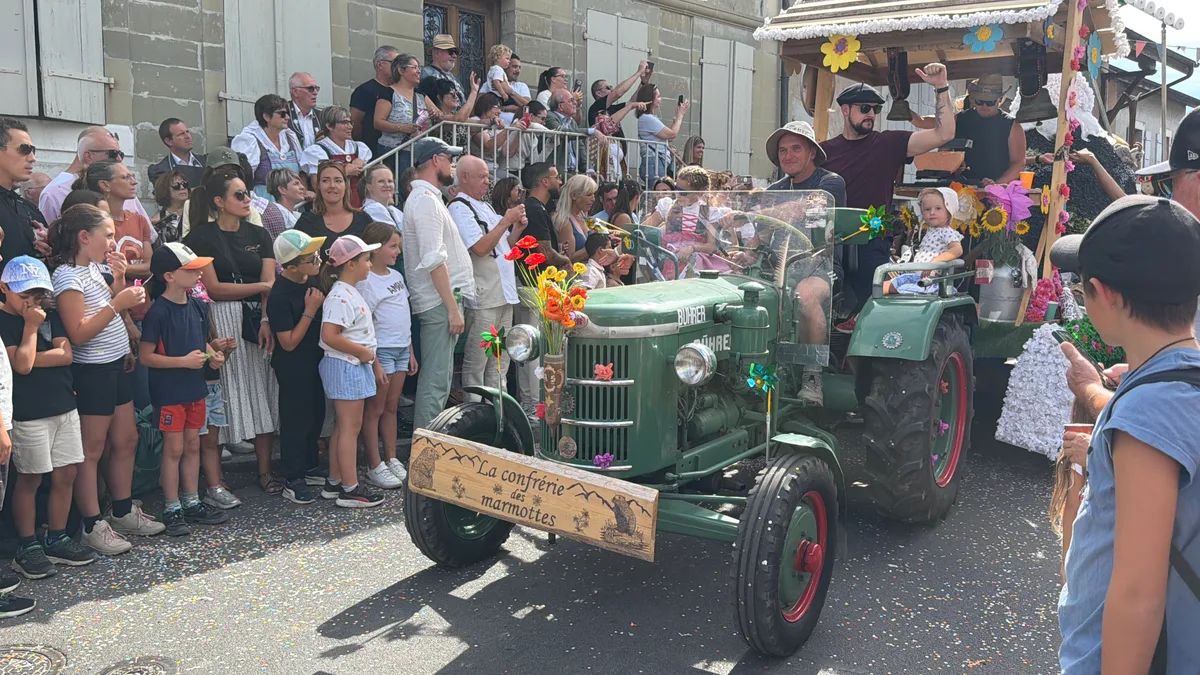
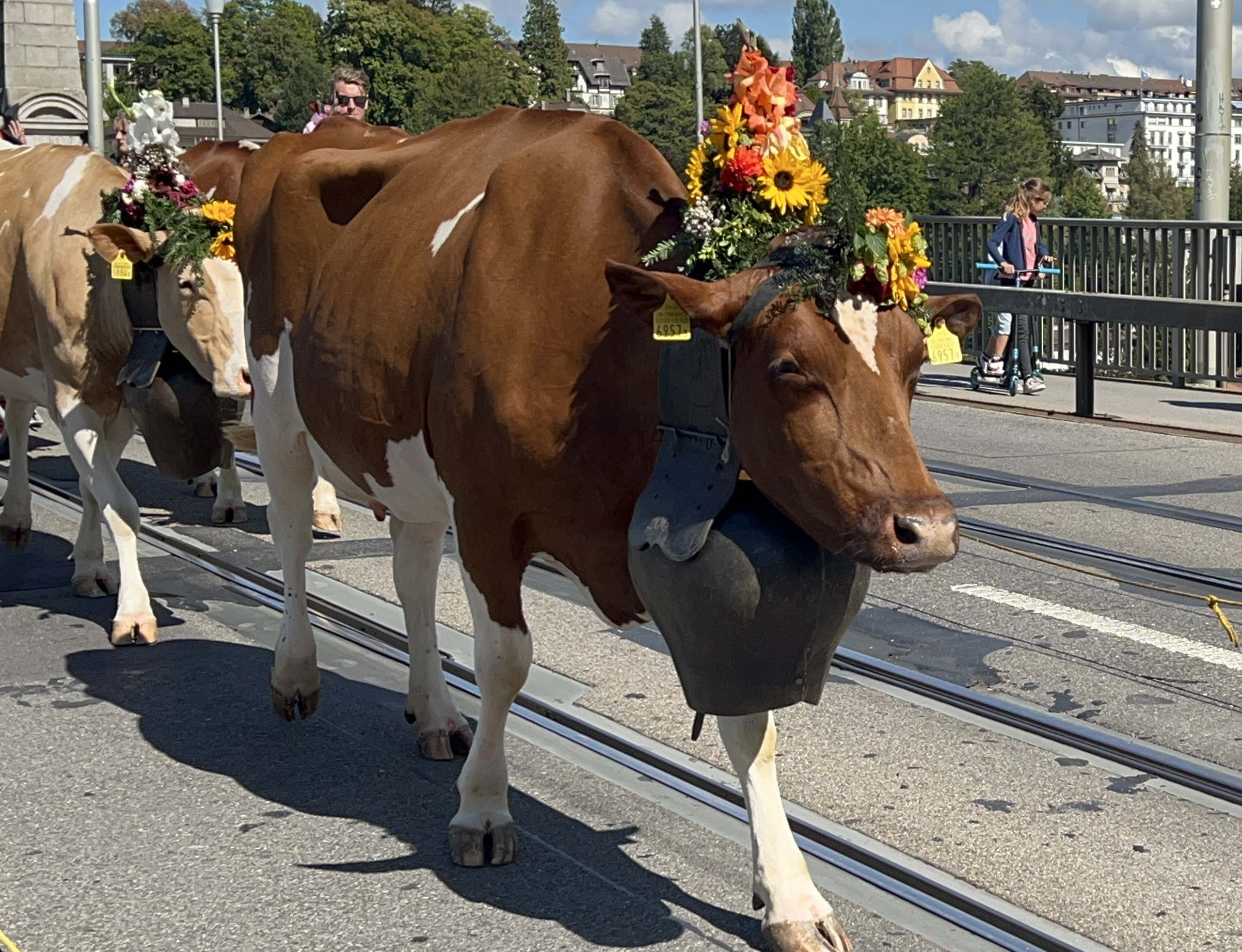
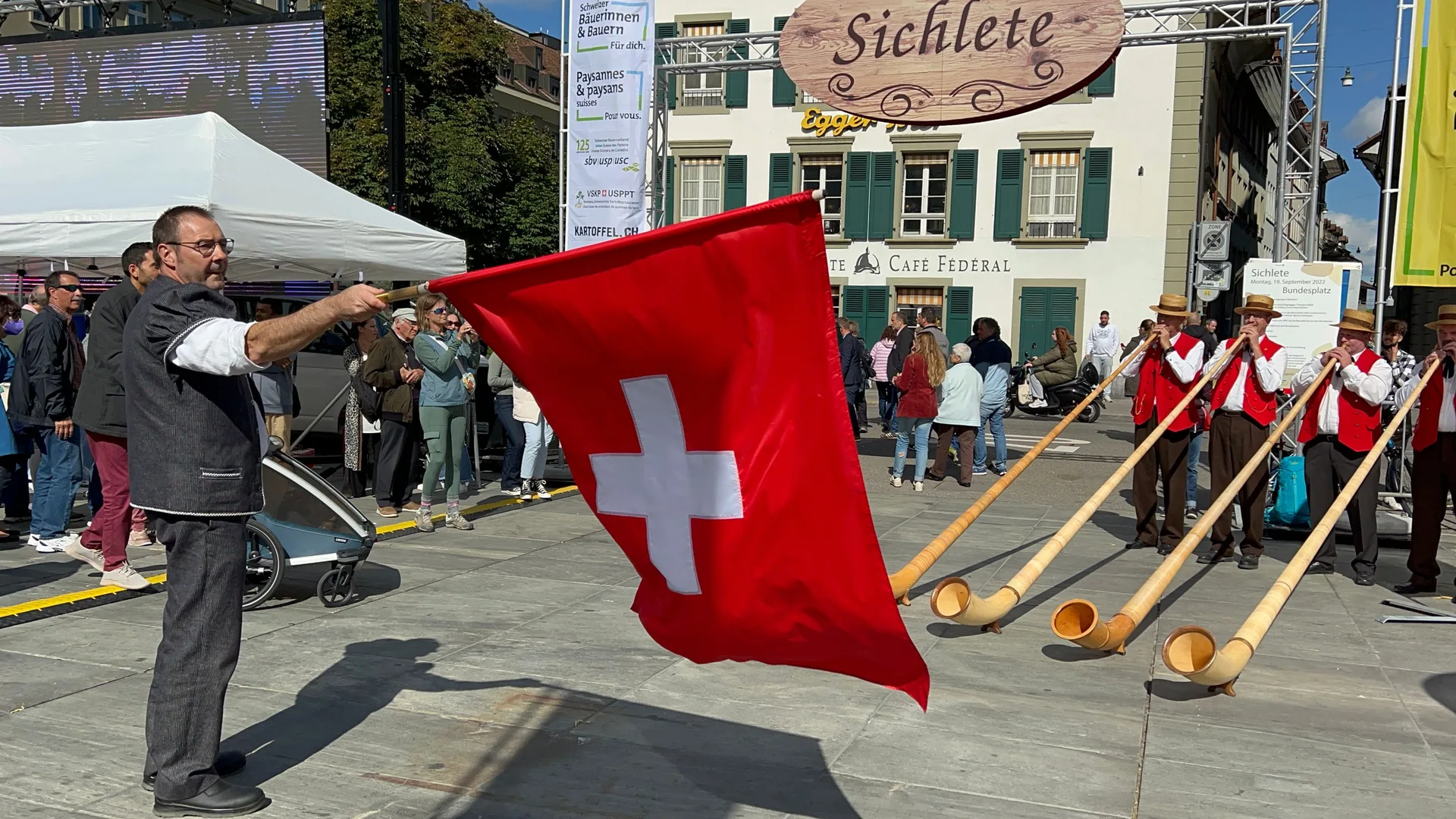
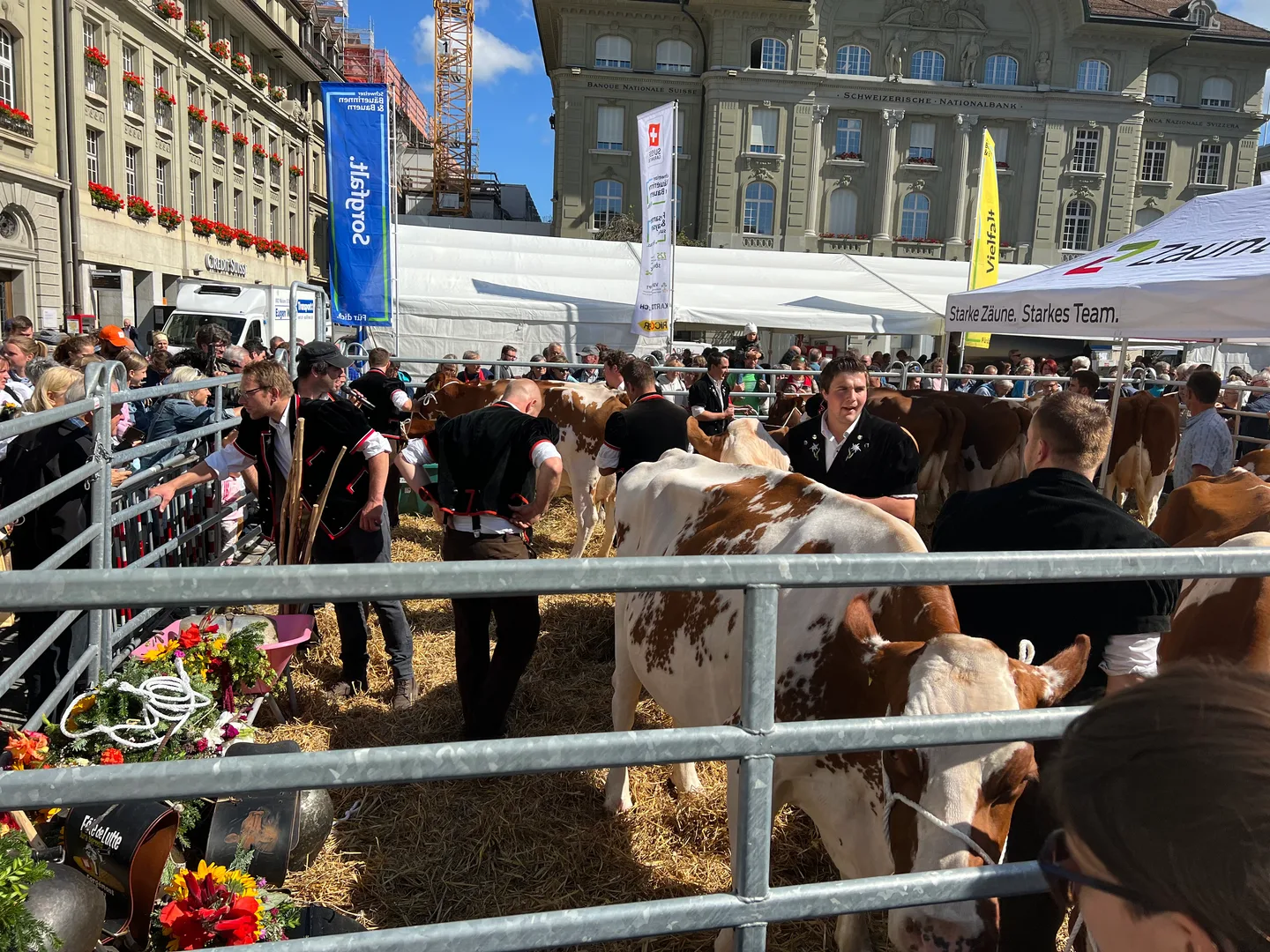
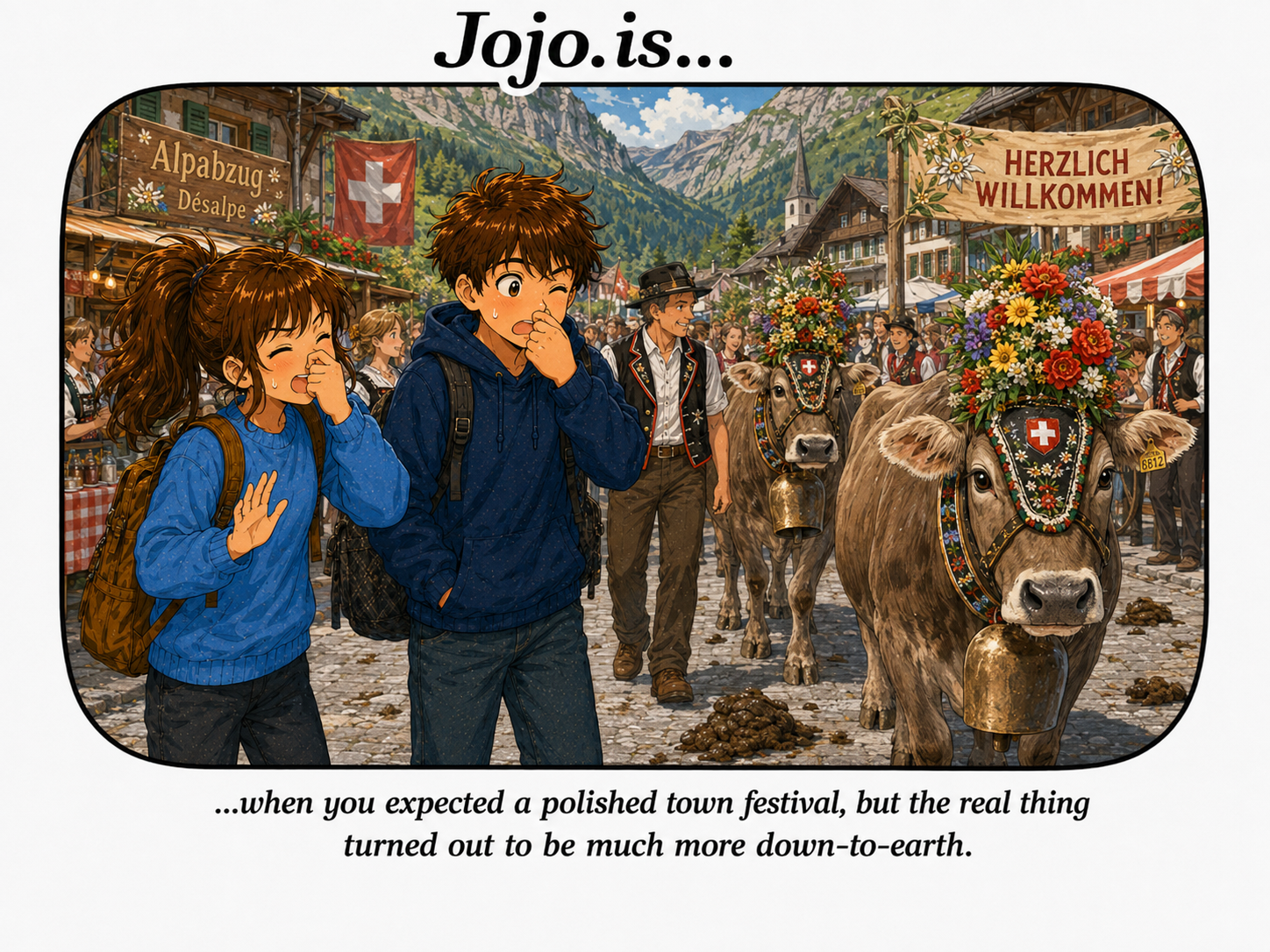
The answer usually begins before the procession can be seen. At first there is only the sound of bells somewhere beyond a bend in the road. Then the ringing grows louder, overlaps and fills the narrow valley. A herd appears, led by animals wearing enormous bells and elaborate crowns of flowers, fir branches, ribbons or coloured paper. Herders and farming families follow in regional dress; children walk beside goats; musicians, flag throwers and decorated wagons complete the procession. Village streets fill with people, while market stalls offer Alpine cheese, sausages, pastries and locally made crafts.
At that moment, the event stops looking like “cows coming down a mountain.” It becomes a homecoming: the public conclusion of a summer’s work, a sign that people and animals have returned safely, and a reminder that the Alpine farming calendar is still a living part of Swiss culture.
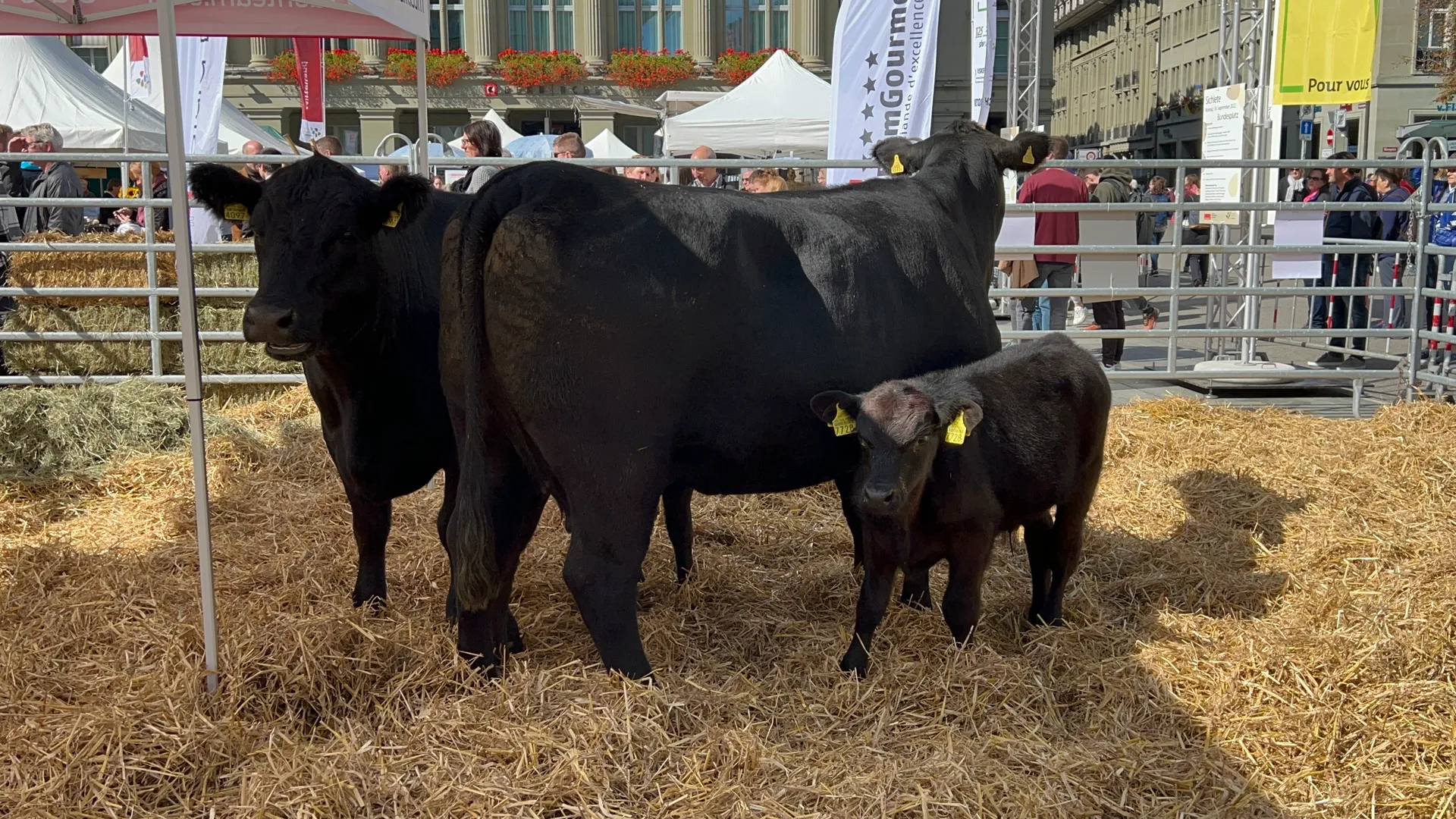
What Is an Alpabzug?
In German-speaking Switzerland, the descent is usually called Alpabzug or Alpabfahrt. In French-speaking regions it is known as Désalpe. Romansh-speaking communities use names such as Scargada or S-chargiada d’alp, while in Austria the related tradition is generally called Almabtrieb.
An Alp is not simply a mountain. In Swiss usage, it is a high-altitude pasture where cattle, goats or sheep spend part of the summer. During the Alpine pasture season, herders care for the animals, maintain fences and buildings, manage the grassland and, on many dairy alps, turn fresh milk into cheese, butter and other products. When the weather cools and the high pastures can no longer provide enough forage, the animals return to lower farms and winter quarters.
There is no single national Alpabzug. Each descent belongs to a particular farm, cooperative, alp or village, and its timing follows the condition of the pastures, the altitude and the weather rather than one fixed calendar. Some returns remain quiet family affairs. Others have developed into large village festivals with music, markets and several herds arriving one after another.
The wider Alpine pasture season—including its farming knowledge, cheesemaking, rituals, costumes and seasonal celebrations - was added to UNESCO’s Representative List of the Intangible Cultural Heritage of Humanity in 2023. The recognition is important because the descent cannot be separated from the months that precede it. The procession is only the visible finale of an entire seasonal way of life.
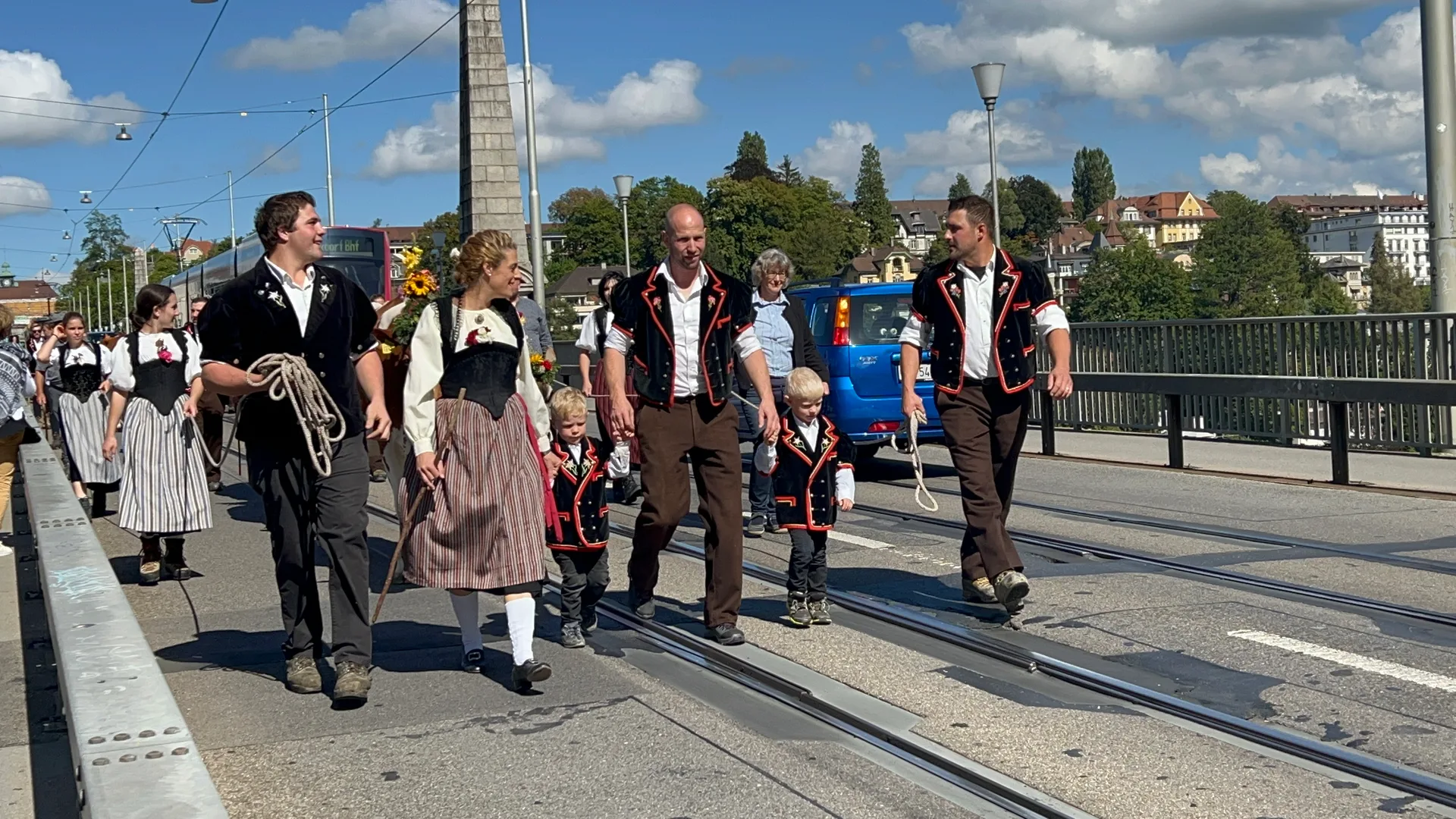
Why the Return Became a Celebration
The earliest purpose of the descent was practical: animals had to be moved from summer grazing grounds back to farms in the valley. The festive meaning grew around that necessary journey.
Traditionally, an especially colourful return expressed gratitude for an Alpine summer that had passed without serious accident or loss. Elaborate decorations therefore carried more than ornamental value. They quietly announced that the herd and the people responsible for it had come home safely. In places where a season had ended in tragedy, the return could be subdued and the animals might be brought down without flowers or ceremonial display.
The celebration also marked reunion. Farmers regained animals that had spent weeks or months under the care of Alpine herders. Families and neighbours gathered in the village. Cheese made in the mountains was brought down, tasted, sold or divided among those entitled to a share. The end of the grazing season could lead into harvest festivals, thanksgiving services, cattle shows or communal meals.
This is why the most convincing descents rarely feel like staged folklore. The procession may be carefully organised, but the people are not pretending to be farmers and the animals are not props. The herd has genuinely spent the summer on high pasture. The bells, tools, clothes and wagons belong to a working culture, even when tourism has added a larger audience and a more elaborate public programme.
Flowers, Fir Trees and Crowns
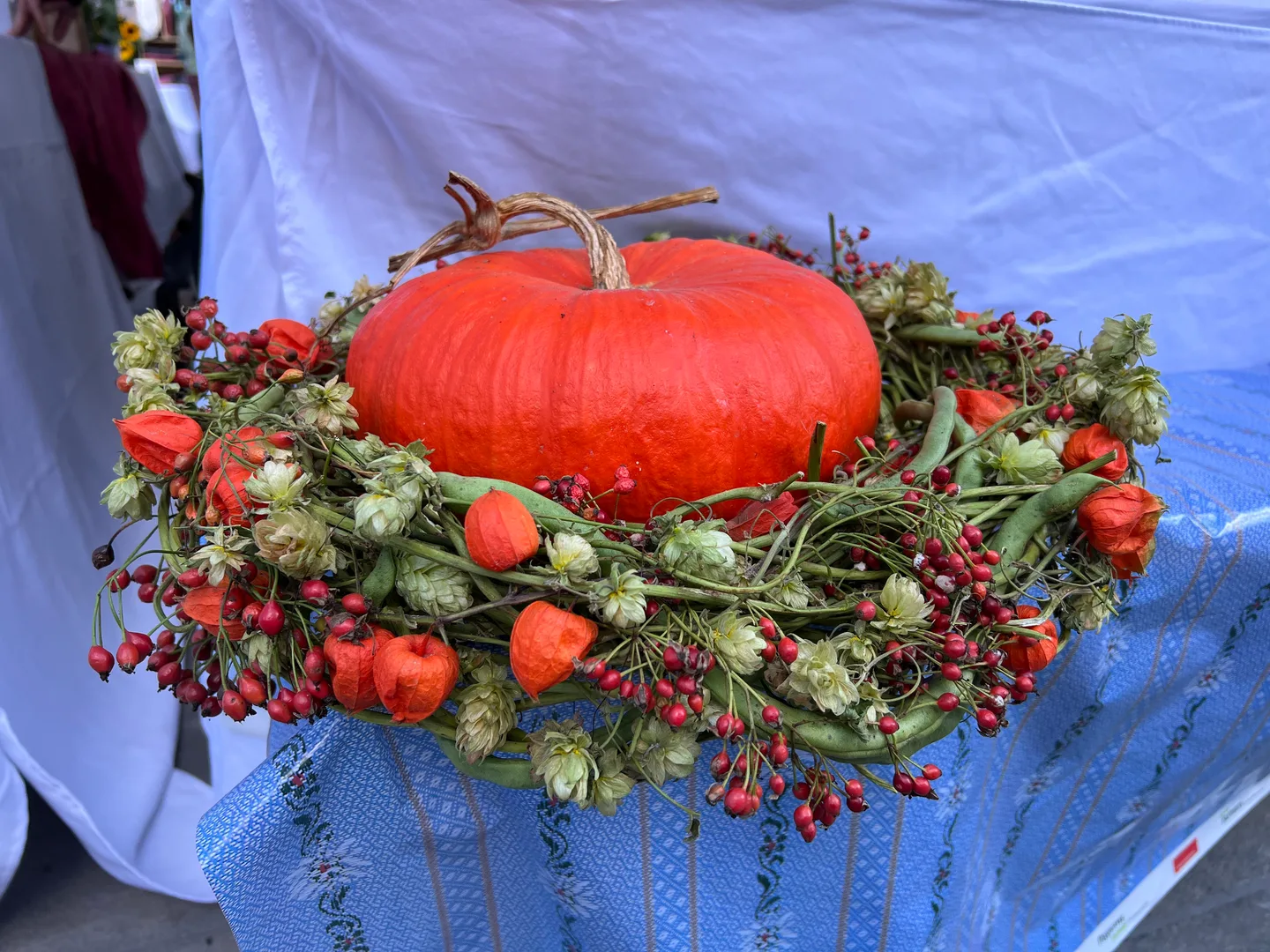
The decorated cattle are the visual centre of many descents. Depending on the region, the headpieces may be made from fir branches, seasonal flowers, ribbons, coloured paper, fabric flowers or lightweight frames. Dahlias, chrysanthemums and sunflowers are common late-summer choices. In some Swiss-German areas, these crowns are called Tschäppl.
Not every cow receives the same decoration. The leading animals are often given the most impressive crowns and bells. A particularly productive dairy cow may be honoured, as may an animal known for confidently leading the herd. In the canton of Valais, a dominant Hérens cow can return as the recognised “queen” of the Alpine herd.
There is no universal Swiss code in which every flower or colour has one fixed meaning. Some arrangements follow local conventions, but many floral and plant motifs are chosen for beauty, availability and regional style. The meaning lies less in decoding each blossom than in the care invested in preparing the animal and in the status of the cow selected to wear the decoration.
In Fribourg, one characteristic form is a small fir tree or fir-shaped arrangement decorated with coloured paper. Elsewhere, flowers may be attached to the horns, a wooden panel, a frame or even an upturned milking stool. The result can look extravagant, but the materials and construction vary from one alp to another.
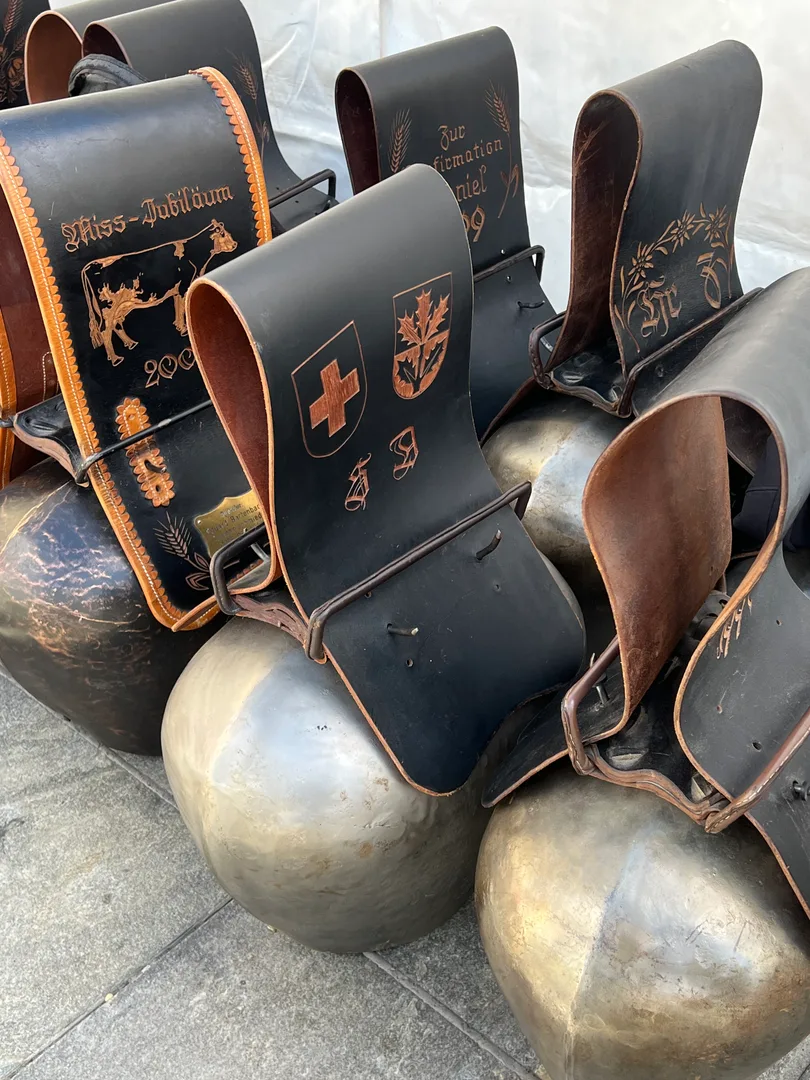
Cowbells: From Working Tool to Ceremonial Symbol
Cowbells originally served a practical purpose. On broad or broken Alpine terrain, sound helped a herder locate an animal hidden by fog, darkness, forest or folds in the landscape. Experienced farmers could recognise individual animals—or at least groups of animals—by the tone of their bells.
In Switzerland, cast bronze livestock bells began to be used in the eighteenth century and became widespread around 1820. They are not the only kind. A round, cast bell is generally called a Glocke, while a Treichel or Trychel is usually made from forged sheet metal and has a broader, rougher sound. Regional vocabulary and construction differ, but both types have become powerful symbols of Alpine life.
The enormous bells seen in a ceremonial procession are status objects as well as musical instruments. They may identify the lead cows, display the prosperity and pride of a farm, and transform the movement of the herd into a rolling soundscape. In Appenzell, the three principal bells are traditionally matched so that their tones form a harmonious accompaniment to the herders’ natural yodel.
The straps deserve as much attention as the bells. Depending on the region, broad leather collars may be embroidered, tooled, painted or fitted with chased metal plaques. They can carry initials, dates, family or village emblems, cows, herders, flowers, scenes of cheesemaking or other images from Alpine life. A richly worked strap may be a prize, a gift, a family heirloom or the recognisable work of a particular craftsperson.
As with the flower crowns, not every rosette or leaf is a secret symbol. Some motifs identify a family, place or special occasion; others belong to a decorative vocabulary passed down by local saddlers, embroiderers and metalworkers.
The spectacular festival bell should also be distinguished from the smaller bell used for everyday grazing. The largest ceremonial bells are heavy and are generally associated with processions, shows and formal occasions. Research has found that heavy bells can alter cattle behaviour over short periods, which makes weight, sound and duration relevant animal-welfare considerations. Traditional practice can reflect that awareness: on steep sections in Appenzell, herders may remove the largest bells and carry them themselves.
Music, Markets and the Village Festival
The procession is the central event, but it is rarely the whole celebration. Depending on the region, the return may be accompanied by natural yodelling, alphorns, brass bands, folk ensembles, flag throwing, dancing or church bells. Some places include a blessing, sermon or thanksgiving element; others emphasise the agricultural market and communal meal.
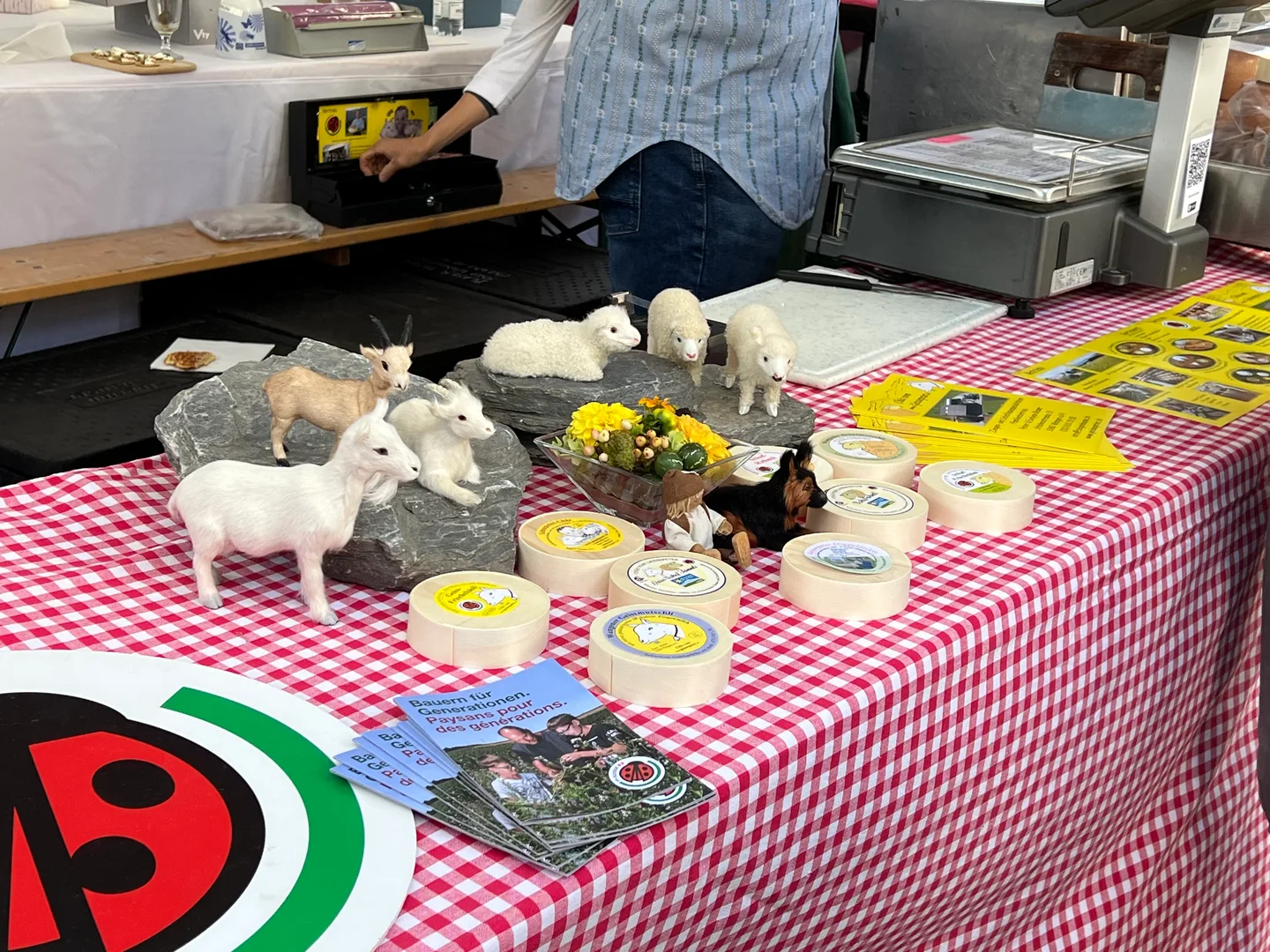
Food is not an incidental attraction. Alpine cheese is part of the reason the summer pasture system exists, and the descent brings that production back into the village. Stalls commonly sell cheese, cured meats, bread, pastries, preserves and regional specialities. In some areas, a Chästeilet follows the Alpine season: the cheese produced collectively on the alp is divided according to agreed shares.
Craft markets make visible another layer of the tradition. Bell founders, leather workers, woodcarvers, embroiderers and makers of regional clothing all contribute to the material culture surrounding the descent. The festival is therefore not only a parade of animals, but also a meeting point for food production, music, dress and rural craftsmanship.
How the Tradition Changes from Region to Region
There is no standard Swiss procession. The shared idea—a herd returning from summer pasture—takes a markedly different form from one region to another.
Appenzell and Toggenburg
Around the Säntis, the classic Alpine procession follows an unusually precise choreography. White Appenzell goats, often led by children in traditional dress, open the procession. A herder follows in festive clothing, carrying a richly painted wooden milking pail known as a Fahreimer over the shoulder.
Three leading cows wear a matched set of large bells. They are followed by other herders and then by the main herd—cows, young cattle and sometimes a bull. The owner commonly walks near the rear with an Appenzell cattle dog, the Bläss. A traditional Lediwagen, loaded with wooden dairy utensils and equipment associated with Alpine cheesemaking, may complete the procession.
The sound is as carefully shaped as the order. Herders perform Rugguussele, a wordless form of natural yodelling; the individual melodic calls are also known as Rugguusseli. The tuned bells provide a drone-like foundation, so animals and people together create the music of the procession.
The tradition remains closely tied to individual farming families. In parts of Appenzell, each family chooses its own descent according to grass, weather and the availability of helpers, rather than participating in one single mass event.
Fribourg and La Gruyère
In the Fribourg Pre-Alps, the descent is called Désalpe. The local patois word Rindya carries the idea of restitution: after the Alpine summer, the animals are returned to their owners.
The herders, or armaillis, wear the regional bredzon, while women may wear the dzaquillon. Cows carry large bells on decorated leather collars and may wear small fir-tree arrangements covered with coloured paper and flowers. Behind the herd, an old wagon can display wooden dairy tools; another characteristic image is a decorated blue cart carrying the copper cauldron in which milk was heated for cheesemaking during the summer.
Markets, folk music and regional food surround the procession. The return also belongs to a broader autumn culture that includes the Fribourg Bénichon, a harvest and reunion feast whose Alpine form is associated with the end of the mountain season.
Not every descent in the region centres on cattle. In Jaun, a sheep fair and seasonal return has been held for more than four centuries. Hundreds of sheep and goats come back to the village, where the animals are sorted by owner, sold or transported onward. It is a reminder that the Alpine pasture tradition belongs to several species, not only to cows.
Valais
In Valais, the black or dark-brown Hérens cattle give the descent a distinctive character. These powerful animals naturally establish a hierarchy when herds from different farms meet on the Alpine pasture. The strongest cow becomes the queen of the herd.
At the end of the summer, the queen may be crowned and given a place of honour during the descent. The custom is connected to the wider Valais tradition of Combats des Reines, but the hierarchy itself begins as natural herd behaviour rather than a staged spectacle. Folk music, local wine and raclette often form part of the surrounding celebration.
Graubünden and the Engadin
In Romansh-speaking areas, the descent may be called Scargada or S-chargiada d’alp. A characteristic feature is the arrival of several herds from different alps, one after another, so that the village welcomes a sequence of separate farming communities rather than one single procession.
In places such as Brigels, animals return from several surrounding pastures and gather on a common meadow. In Müstair, the homecoming takes place in the cultural landscape around the village and the Monastery of St John. Music, food and a village gathering accompany the arrival, while the Romansh terminology gives the same seasonal movement a visibly different regional identity.
Central Switzerland and the Entlebuch
Central Swiss descents are often marked by heavy Trycheln, alphorns, yodelling and the participation of entire farming families. In the Entlebuch, herds arrive in family groups, while the village celebration brings together Alpine cheese, sausages and other products from the region.
The descent is closely related to—but should not be confused with—the Älplerchilbi or Sennenchilbi, a shepherds’ fair and thanksgiving festival held after the summer grazing season in several Central Swiss communities. These celebrations may include a church service, a communal meal, satirical verses, processions and harvest symbolism. They show how the return of the animals fits into a wider cycle of religious and secular autumn customs.
The Jura
Seasonal pasturing is not limited to the highest Alps. In the Jura, cattle descents can resemble long rural processions, with wagons, folk groups, agricultural displays, craft stalls and local food.
At Le Boéchet, the canton’s Désalpe brings together groups and decorated vehicles in a festival intended not only for farming families but also as a meeting point between rural communities and visitors from towns. The landscape and architecture differ from the central Alps, yet the underlying idea remains the same: the summer grazing season ends with a public return to the village.
Why the Full Tradition Belongs to Mountain Villages
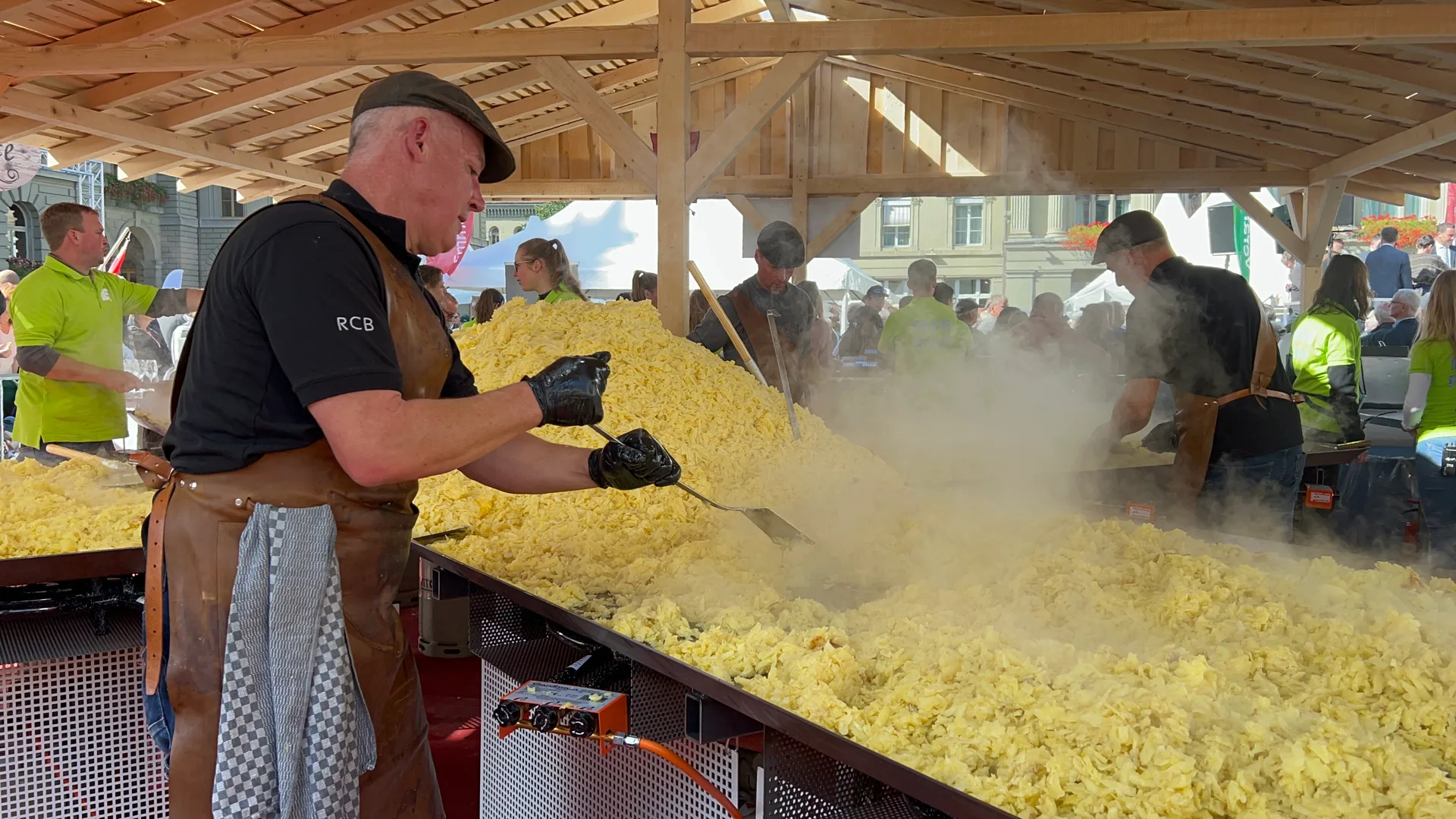
Urban versions and demonstration parades can introduce the custom to a wider audience, but they are adaptations. A real Alpabzug is tied to an actual route between a summer pasture and a home farm. The geography matters: the mountain track, the village entrance, the farm families waiting below and the animals returning to familiar ground are all part of the event.
This is why the most authentic celebrations are found in mountain villages and small regional centres. The market, music and crowds may be festive additions, but the procession still has a practical destination. Once the spectators leave, the cattle do not return to a display enclosure; they continue to the farms where they will spend the colder part of the year.
How Old Is the Tradition?
There is no identifiable “first Alpabzug.” Seasonal movement between lowland farms and high pastures developed in many Alpine valleys, and communities brought their animals home independently of one another. The Alpine pasture season is well documented from the late Middle Ages, but its practical roots are older than the surviving records.
Over time, blessings, thanksgiving rituals, formal clothing, bells and decorated animals became attached to the return. A related shepherds’ brotherhood in Schwyz held an Älplerchilbi in 1575, one of the earliest precisely dated examples of a Central Swiss herders’ festival. It should not, however, be presented as the first parade of flower-crowned cattle. It belongs to the same seasonal world, but it is a different form of celebration.
Decorative objects from the wider Alpine region also show how local symbolism developed before modern tourism. In Liechtenstein, for example, the carved Alpabfahrtsherz—a heart-shaped ornament attached to a cow’s forehead during the descent—is documented from 1830 and remains a specifically local custom.
The large public festivals familiar today are a newer layer. During the twentieth century, as agriculture mechanised and rural life changed, cultural organisations, tourism offices and local associations began presenting some descents as scheduled public events with markets, commentary, music and multiple herds. Charmey’s organised Rindya, first staged in 1980, is one documented example of a festival that was consciously developed to connect farmers, local residents and visitors.
That modern organisation does not automatically make the tradition artificial. It shows how a working custom can adapt. The practical descent is old; the public festival around it may be newer; both can coexist as long as the farming reality remains at the centre.
More Than a Photogenic Parade
Photographs capture the flowers, costumes and picturesque streets, but they rarely explain why the event is so affecting. The scale of the sound is missing. So is the slow approach of the herd, the vibration of the bells between village walls, the smell of animals and wood smoke, and the visible concentration of the herders guiding cattle through a crowd.
The strongest impression comes from the combination of beauty and purpose. The decorations are festive, yet the journey is real. The clothes are ceremonial, yet they belong to local culture. The cheese market is enjoyable, yet it is connected to months of work in the mountains. Even the bells are both practical objects and instruments of collective memory.
A cow descent is therefore difficult to understand from the phrase alone. It has to be heard as much as seen: dozens of bells sounding at once in a narrow valley, followed by yodelling, brass music and the noise of a village welcoming its animals home.
After that, the original question—“What is so special about cows walking down a mountain?”—usually disappears. A better question takes its place: how can one tradition look, sound and feel so different from one Alpine valley to the next?

Are you planning to experience this festival for yourself? Find out when and where the main events will take place in 2026, and check out the full programme in our article:
“Switzerland's Cattle Descent: The 2026 Programme and How to Plan Your Day”
Events

Country: Switzerland
- Morges Tulip Festival — Switzerland's Free Answer to KeukenhofApril - May
- Medieval Spectacle Hinwil — Switzerland's Biggest Knight TournamentMay
- Caves Ouvertes Vaudoises — The Swiss Wine Weekend That Lets You Into Local LifeMay
- Swiss National Day — The Complete Guide to August 1st (2026 Edition)August 1
- The Day Rolle Winds Back a Century: The Barrel Organ Festival on Lake GenevaAugust
- Tractors, Confetti and New Wine: Harvest Festivals in SwitzerlandSeptember - October
- The light show “Rendez-vous Bundesplatz” in Bern: it’s worth seeingOctober
Also available in
Tags
Jojo is Joyful Journeys!