Switzerland's Cattle Descent: The 2026 Programme and How to Plan Your Day
Event schedule: • 12:00 AM - 11:59 PM
The previous article "When the Bells Come Down the Mountain: Switzerland’s Living Alpabzug Tradition" covered what the Alpine cattle descent actually is and why it looks nothing like what you expect. This one is practical: where to go in 2026, how to choose between a dozen villages that look interchangeable on paper, and what to know in advance so the day doesn't come down to ten minutes in a crowd.
All dates below come from programmes published by organisers and regional tourist offices. An Alpabzug depends on weather and on the animals far more than any city festival does, so it's worth re-checking the programme two or three days before you travel.
The 2026 season in three points
There are two "big Saturdays." The 19th and the 26th of September carry the greatest concentration of major processions across several cantons at once. The 26th is especially crowded: Charmey, Plaffeien, Saint-Cergue, L'Étivaz, the Vallée de Joux and Schüpfheim all fall on the same day. Combining them isn't possible even in theory, so the choice has to be made in advance.
Some descents aren't following their usual pattern this year. Because of lumpy skin disease (dermatose nodulaire contagieuse), which appeared in France in summer 2025, the Federal Food Safety and Veterinary Office banned Swiss farms from summering cattle on French territory for the 2026 season — a decision taken on 17 February 2026. The measure affects around 260 farms and roughly 6,000 animals, mostly in western Switzerland, where herds traditionally went up onto the Salève and into the French Jura. No cases have been recorded in Switzerland at the time of writing, and in Valais livestock events have been permitted again across the whole canton since the start of 2026 (within the vaccination zone — Champéry, Finhaut, Ferret — only for animals vaccinated at least 28 days beforehand).
The practical takeaway is simple. In 2025, individual festivals were cancelled a week and a half before the date; that's what happened to Saint-Cergue. A repeat is unlikely, but this — not vague caution — is the actual reason to check the event page before setting off.
One descent won't take place in 2026. The Alpabzug in Wassen (canton Uri) has been cancelled because of construction work on the Meiental hydropower plant. It's one of the canton's largest, and it still appears in older round-ups, so it shouldn't be part of anyone's plan.
Calendar of descents and alpine festivals, 2026
September
Date | Place | Canton | What makes it interesting |
|---|---|---|---|
5 Sept | Gstaad Züglete, Saanenland | Bern | Classic Bernese descent with a ceremonial welcome for the herd in Gstaad |
5–6 Sept | Schäful, Belalp / Naters | Valais | Sheep festival above Naters: the flock comes down, plus a mass and music |
12 Sept | Désalpes in the Val d'Anniviers: St-Luc, Grimentz, Chandolin, Ayer | Valais | Four villages on one day, black Hérens cows, "queens" in flower crowns |
12 Sept | Scargada in Brigels (Breil/Brigels) | Graubünden | Around 600 animals from five alps, herds arriving in succession on the Plaun Rueun meadow |
12–13 Sept | Schäferfest Rosswald | Valais | Around 800 sheep and a Simplon panorama |
12 or 13 Sept | S-chargiada d'Alp, Müstair | Graubünden | The herd is met in front of the convent of St John; sources disagree on the date — confirm with the valley's own site |
18 Sept | Chästeilet in the Justistal | Bern | Not a procession but the division of the summer's alpine cheese between farms — the most workmanlike of these festivals |
19 Sept | Farmers' market and Alpabzug, Urnäsch | Appenzell Ausserrhoden | The strictest processional order: goats in front, huge Senntumsschellen |
19 Sept | Alpabzug Flimserstein: Bargis → Fidaz → Flims | Graubünden | Farmers' breakfast at the top, descent via the dramatic Scala Mola, a "cow fan mile" in Fidaz |
19 Sept | Alpabzug Klosters Monbiel | Graubünden | Cows, goats and sheep; free shuttle from the station, evening Älpler-Lusi festival |
19 Sept | Alpabzug Celerina | Graubünden | Herds from the Marguns and Laret alps, festival ground by the church of San Gian |
19 Sept | Alpabfahrt Belalp → Blatten | Valais | Market, music and dancing in the village |
19 Sept | "Rock ta désalpe" de Serin, Anzère | Valais | Parade of the queens, raclette from the Serin alp cheeses, live concert |
21 Sept (Mon) | Schafscheid / Foire aux moutons, Jaun | Fribourg | Sheep and goats from 9:00, sorting by owner, autumn fair with 50 stalls |
21 Sept (Mon) | Sichlete, Bern, Bundesplatz | Bern | The city version of the tradition (details below) |
24 Sept | Alpabfahrt Rämisgummen and Eggiwil market | Bern | Emmental descent paired with a village fair |
26 Sept | Désalpe de Charmey | Fribourg | The best known in Romandie: three markets, vintage farm machinery, folklore all day |
26 Sept | Alpabzug Plaffeien | Fribourg | Over 1,000 decorated animals — the largest by head count |
26 Sept | Désalpe de Saint-Cergue | Vaud | The closest major descent to Geneva, direct bus from Nyon station |
26 Sept | Désalpe de L'Étivaz | Vaud | Herds from 8:00, cheesemaking demonstration, evening meal under the marquee |
26 Sept | Fête du Vacherin Mont-d'Or, Les Charbonnières, Vallée de Joux | Vaud | Cows, sheep, horses and geese come down — plus the season's first vacherin |
26 Sept | Entlebucher Alpabfahrt, Schüpfheim | Lucerne | Seven families, over 300 animals, a large market and what locals call a "little yodelling festival" |
October
Date | Place | Canton | What makes it interesting |
|---|---|---|---|
2–4 Oct | Désalpe de Semsales | Fribourg | Over 700 head of cattle, Sunday mass in patois, chalet soup |
3 Oct | Tundeida, Savognin | Graubünden | Around 300 sheep, shearing on the spot, tastings, petting zoo |
3–4 Oct | Prättigauer Alp Spektakel, Küblis and Seewis | Graubünden | Large format: market, cheese tasting, cattle show |
3–4 Oct | Foire et désalpe d'Albeuve | Fribourg | First herd at 9:00, special trains from Bulle, free parking 300 m away |
4 Oct | Alpchäs- und Schabzigermärt, Elm | Glarus | Descent, breakfast and cheese market in one programme |
9–11 Oct | Les Sonnailles, Romainmôtier | Vaud | Autumn fair and cowbell exchange, three days, entry 6 CHF |
10–11 Oct | Älplerfest Lenk | Bern | The season's finale in the Simmental: descent, farmers' market, music |
18 Oct | Älplerchilbi Stans | Nidwalden | Not a descent but a herdsmen's fair: procession, satirical verses, dancing |
18 Oct | Alpchäsmarkt Flumserberg | St. Gallen | Cheese market on the Tannenboden alp, climaxing in a cow race |
Worth knowing separately
Wassen (Uri) — not taking place in 2026.
Crans-Montana and Les Haudères (Valais) — dates not announced at the time of writing; both should be checked directly with the local tourist offices.
Bodäfahrt on the Urnerboden (Uri) — around 1,000 cows, held in mid-August, well ahead of the rest of the season.
How to choose: five scenarios
For a first encounter — Urnäsch. This is where the Appenzell processional order survives most intact: white goats at the front, the herder with his painted milking pail, three lead cows whose bells are tuned to harmonising overtones, and the owner with his dog closing the column. Kronenplatz in the centre is the best vantage point and the farmers' market is right there; entry is free. One drawback: the exact timing of individual herds is announced only a day or two ahead.
For mountain scenery — Flimserstein. In the morning you can go up into the Bargis valley, watch the animals being gathered and join the farmers' breakfast (ticketed), meet the herds at the top around midday, and at 14:00 follow them down through Fidaz towards Flims. It's one of the few options where you see not the final stretch through a village but the beginning of a real crossing — down the rock path of the Scala Mola.
For a big organised festival — Schüpfheim or Charmey. In the Entlebuch the published schedule lets you catch several stages of the same descent; in Charmey you get the fullest single-day programme in Romandie. Both draw around ten thousand people and both are easy to reach by train.
For a trip from Geneva or Romandie — Saint-Cergue, Charmey, Plaffeien, L'Étivaz. Saint-Cergue is closest: a direct bus from Nyon station, under an hour from Geneva. The Fribourg Prealps are a little further, but the format there is the densest — procession, cheese market, craft stalls and music all running in parallel throughout the day.
For something unlike the rest — Jaun, Savognin, the Justistal. In Jaun it's sheep and goats rather than cows, and the main event is the sorting of animals by owner. In Savognin the sheep are also shorn on the spot. And the Chästeilet in the Justistal isn't a parade at all: the farms divide up the cheese made over the summer, which is arguably the most honest scene of the whole season.
The city option: Sichlete in Bern, 21 September
There are no real descents in the big cities — an Alpabzug is tied to an actual herd coming home from an actual pasture. The one regular exception is Bern's Sichlete on the Bundesplatz: a harvest thanksgiving festival organised by the cantonal farmers' association and timed to the opening of parliament's autumn session.
21 September 2026, 10:00–17:00, Bundesplatz.
The programme includes an opening rung in by a Treichler group, a procession of one farming family's decorated cows from the National Equestrian Centre across the Kornhausbrücke to the square in front of parliament, sheep shearing and milking demonstrations, alphorns, flag throwers, animals children can approach, and a market of regional produce. The exact timing of the herd is published closer to the date; the procession usually falls in the early afternoon.
The advantages are obvious: no early start, no hunting for parking in a mountain village, no dependence on the weather. But the difference matters. In Bern the tradition is demonstrated; in a mountain village it happens. Those are two different experiences, and the second can't be substituted by the first.
Zurich, Geneva and Lausanne have no comparable regular city procession. Zurich's characteristic autumn city festival is the Knabenschiessen, not an Alpabzug.
Can you walk with the procession?
Sometimes — but almost never on a "just join in" basis. The column consists of the herders, the owner's family and helpers arranged in advance. Spectators are asked to stay at the roadside and not to insert themselves between the animals; in Appenzell this is written explicitly into the visitor guidance.
The reason isn't bureaucratic. Cows can stop suddenly, turn or speed up, and the herders need free space to hold the herd together. Official guidance requires giving way to moving livestock and following the organisers' instructions.
The realistic options:
By private arrangement with a farm. The most authentic format: the guest becomes a pre-agreed helper for a specific family. You approach the owner of the alp, the local tourist office or the organiser several weeks ahead. Expect to need mountain boots, decent fitness and a willingness to follow the herder's instructions without discussion.
An organised excursion. These appear irregularly and are aimed at small groups. Places inside the column are generally not sold openly: official programmes offer viewing from the roadside, at the start, or at the arrival point.
Moving parallel to the route. The most accessible compromise — watch the herd being gathered at the top, then take a separate marked path or drive to the next point and meet the animals lower down. Walking the same narrow road directly behind the cows is only acceptable with the organisers' permission.
Where this works best
Flimserstein, 19 September. There's a separate marked trail between Bargis and Fidaz — that is the intended way to walk part of the route without getting in the herd's way. Bus services between Bargis and Flims are suspended while the animals are moving, which needs building into the day. The official programme grants no automatic right to walk inside the column; that has to be arranged in advance with Flims Laax Falera Tourism.
Entlebuch, 26 September. Here the whole route is published: the families set off from the Sörenberg area at roughly 07:30–09:00, pass through Flühli approximately between 09:00 and 11:00, and start entering Schüpfheim from about 11:15. The centre of Schüpfheim is closed to traffic from 10:00 to 18:00. That makes it possible to see the preparations at the top, drive to an intermediate point, and then meet the same families below — three different views of one day. For the families themselves it's work: the walk home reaches 25 kilometres.
Appenzell, second half of August to late September. Family descents run without any large festival apparatus, and the date is often announced only one to five days ahead. The most authentic option and the hardest to plan; visitors are officially asked to watch from the roadside.
How to spend the day so it actually registers
Arrive earlier than the announced procession time. An hour or two beforehand the village comes to life: stalls open, musicians gather, farming families appear, the first bells become audible. That's when the atmosphere is easiest to catch and a good spot is easiest to claim.
Don't restrict yourself to the main square. If the route is known, find a point slightly higher up the road, where the herd is still moving as it would on a real crossing. The centre is busier, but the costumes and decorations are easier to see there. With enough time you can watch the procession twice — on the approach to the village, then again on the square.
Don't leave as soon as the cows have passed. Often the best part of the day begins afterwards: music, food, markets, farmers talking to each other. This is also when you can examine the enormous bells and embroidered leather straps close up — many have belonged to the same families for decades and carry their own history.
Remember this is the end of a farming season, not a parade. The herders and animals spend the whole summer high in the mountains and return to the valley in autumn. Half a day in the village gives you incomparably more than fifteen minutes at the kerb.
Practical details nobody writes about
Transport. Villages close their main street for the whole day, parking is scarce, and leaving before the procession ends is often physically impossible. In Charmey the organisers explicitly ask drivers to arrive before 9:00 and not to leave before 15:00. Public transport is easier almost everywhere: extra trains run to Albeuve from Bulle, a free shuttle links Klosters station with Monbiel, and a direct bus connects Nyon with Saint-Cergue.
Dogs. Better left at home. Cows react sharply to unfamiliar dogs, and the herding dogs are working. If yours is with you, keep it on a short lead and well away from the route. On sheep descents, large livestock-guarding dogs often walk alongside the flock — don't approach them.
Drones. Effectively prohibited everywhere while the herd is moving; the noise frightens the animals.
Cash. Many craft and cheese market stalls don't take cards.
Children and pushchairs. Watch from the side of the road that has a set-back. The bells are genuinely loud at close range — ear protection is sometimes worth having for small children.
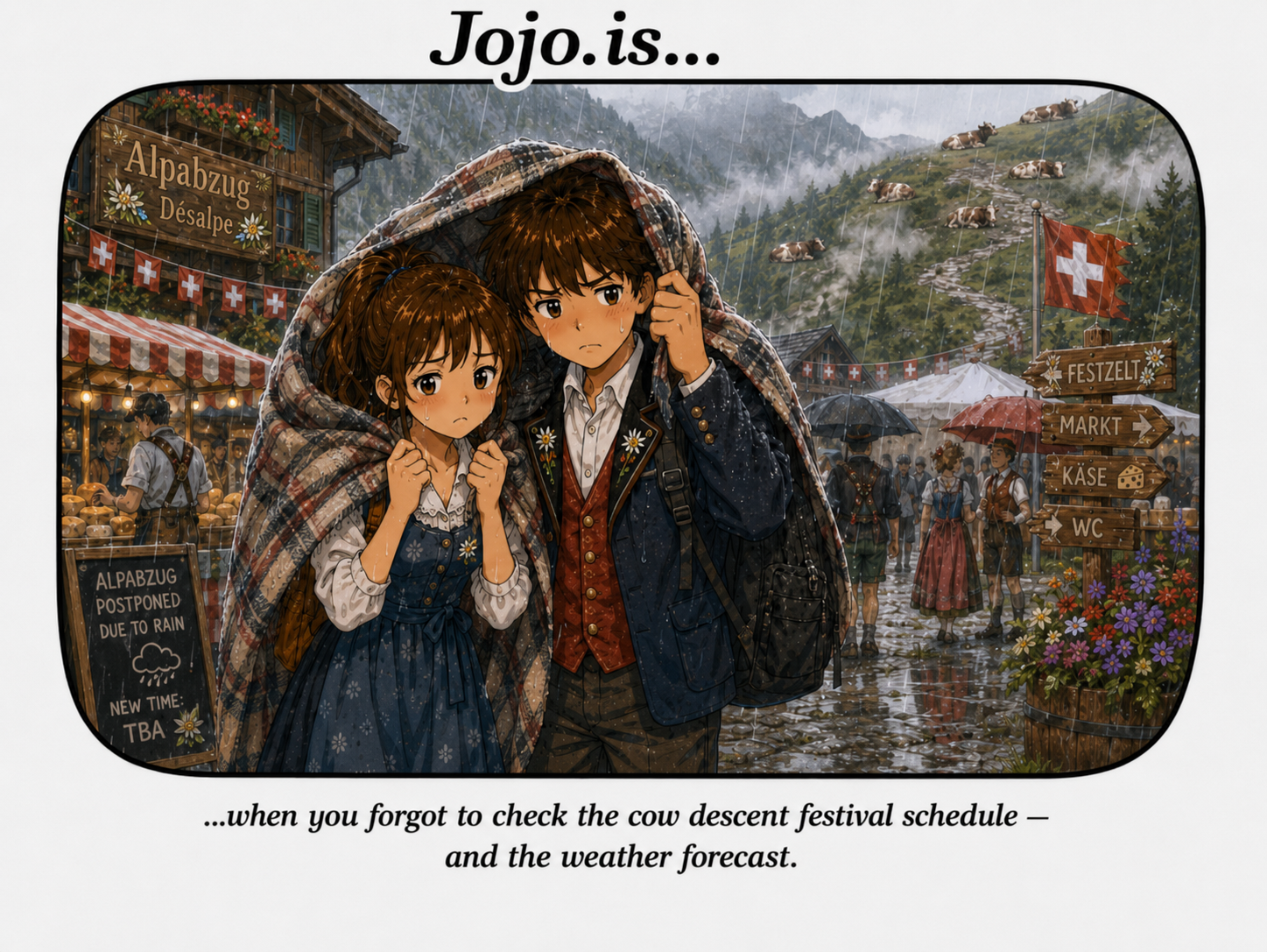
Weather. Descents go ahead in the rain, though poor weather can mean less decoration, and really bad weather can mean the herd comes down early and without ceremony.
Accommodation. In small villages, rooms for a descent weekend go long in advance. If you're staying overnight, book well ahead.

What to check two or three days before
The event's own page — date, programme and expected timing of the herds.
Public transport schedules and road closures.
The mountain forecast, not the one for the nearest city.
For Appenzell, the announcement of the exact date of a family descent.
And the short version: for maximum convenience, Bern works. For a big, colourful festival — Charmey, Plaffeien, Saint-Cergue or Schüpfheim. And if what matters most is the feeling of an old alpine tradition, look to Urnäsch and the small family descents of Appenzell.
Events
Country: Switzerland
- Morges Tulip Festival — Switzerland's Free Answer to KeukenhofApril - May
- Medieval Spectacle Hinwil — Switzerland's Biggest Knight TournamentMay
- Caves Ouvertes Vaudoises — The Swiss Wine Weekend That Lets You Into Local LifeMay
- Swiss National Day — The Complete Guide to August 1st (2026 Edition)August 1
- The Day Rolle Winds Back a Century: The Barrel Organ Festival on Lake GenevaAugust
- Tractors, Confetti and New Wine: Harvest Festivals in SwitzerlandSeptember - October
- When the Bells Come Down the Mountain: Switzerland’s Living Alpabzug TraditionSeptember - October
- The light show “Rendez-vous Bundesplatz” in Bern: it’s worth seeingOctober
Also available in
Tags
Jojo is Joyful Journeys!