Trubschachen and the Kambly Experience: a day in the old Emmental
If city life has become tiring and what's needed is quiet, clean air, handsome architecture, hospitable people — and a very tasty finish to the day — the village of Trubschachen in the Emmental (canton of Bern) is worth the trip. It has a genuinely interesting history, but it became famous thanks to the Kambly Experience. First things first, though.
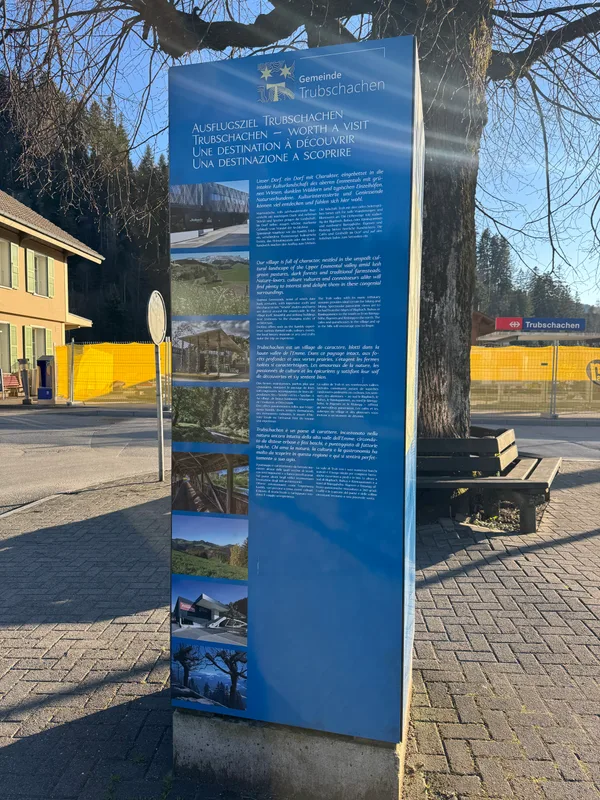
Trubschachen is not a place to visit for a checklist of "sights". It is a place to visit for the old Emmental: timber houses, crafts, rural history and landscape. The village sits at 731 m, where the Trub flows into the Ilfis, on the old road between Bern, the Emmental and Lucerne.
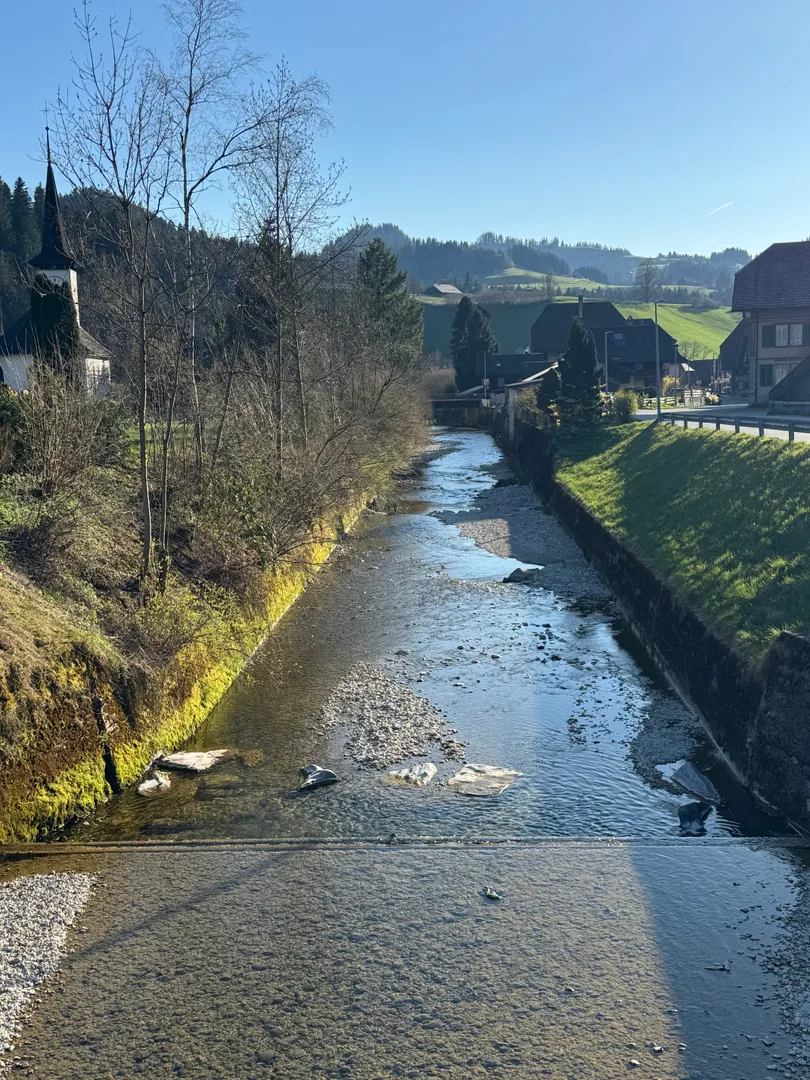
The historical village walk (Dorfrundgang)
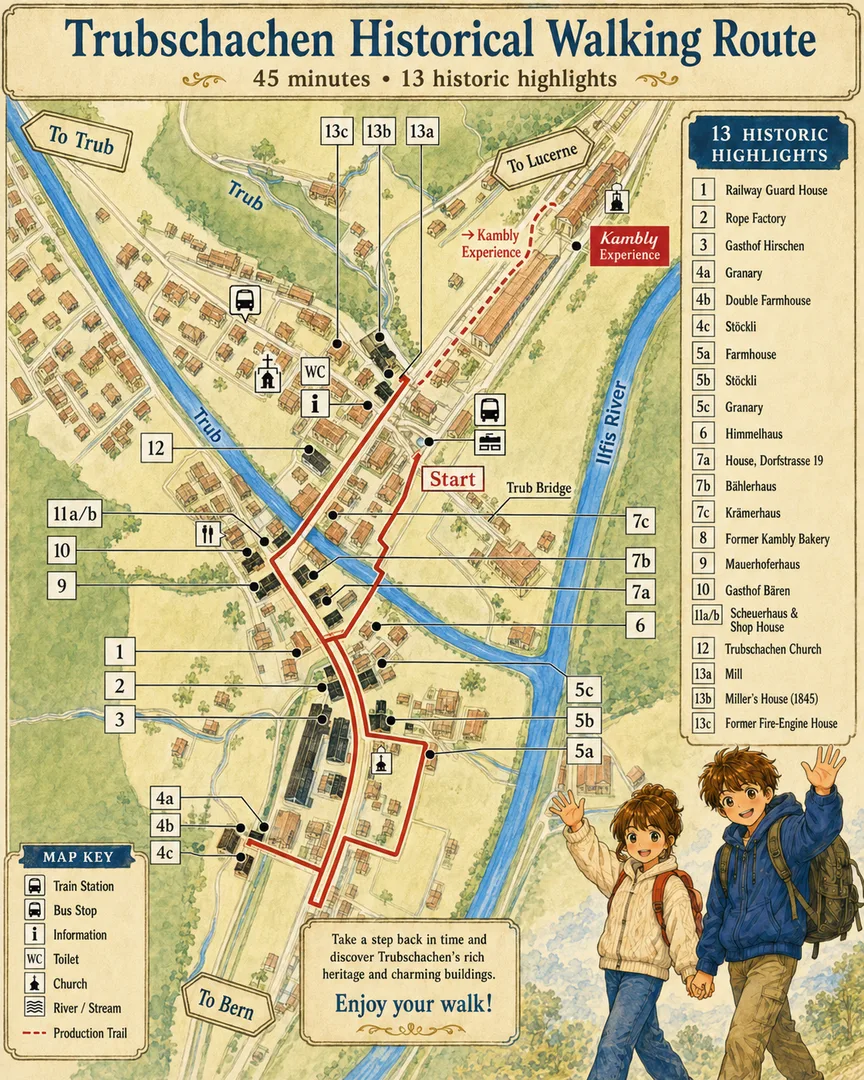
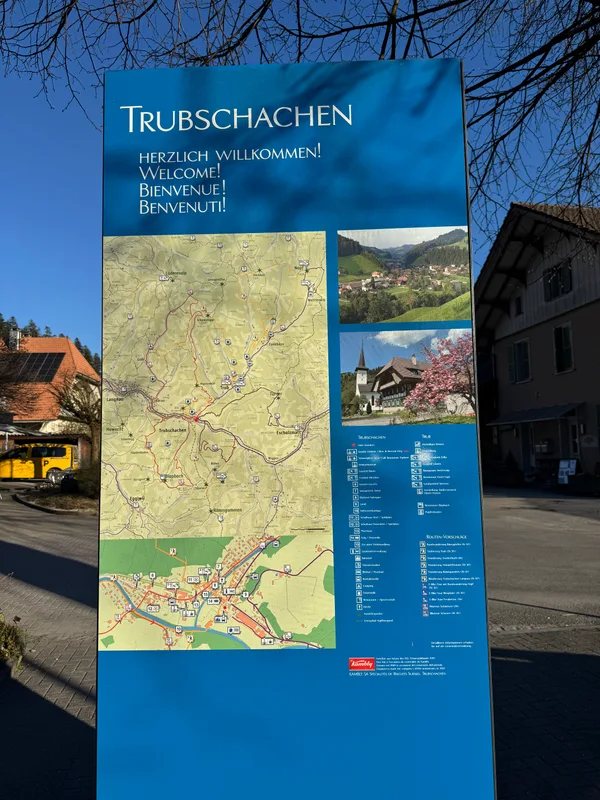
For the history, the thing to do is the official Dorfrundgang through the village centre. It takes about 45 minutes and passes 13 buildings or groups of buildings — a good way to see classic Emmental architecture without a museum or a guided tour.
The accompanying brochure is available from the municipal office (Gemeindeverwaltung, Dorfstrasse 2) and at the Kambly Experience, and as a free PDF on the municipal website (trubschachen.ch → Freizeit → Erleben und geniessen → Dorfrundgang). The route begins at the station and ends at the mill on Mühlestrasse — a few steps from the Kambly Experience, which makes the sequence of the day almost self-arranging.
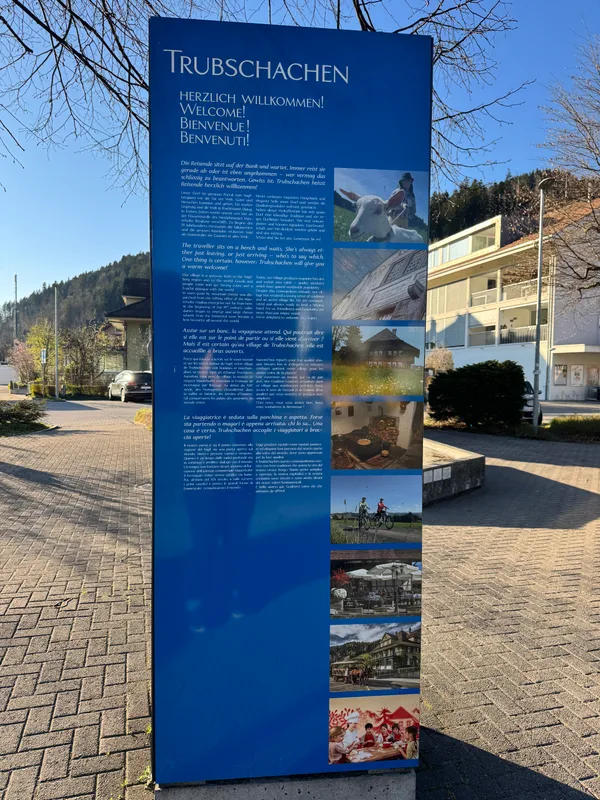
A small bonus right at the start: Die Reisende ("The Traveller"), a female figure by the Chur sculptor Robert Indermaur, has stood at the station since 1997.
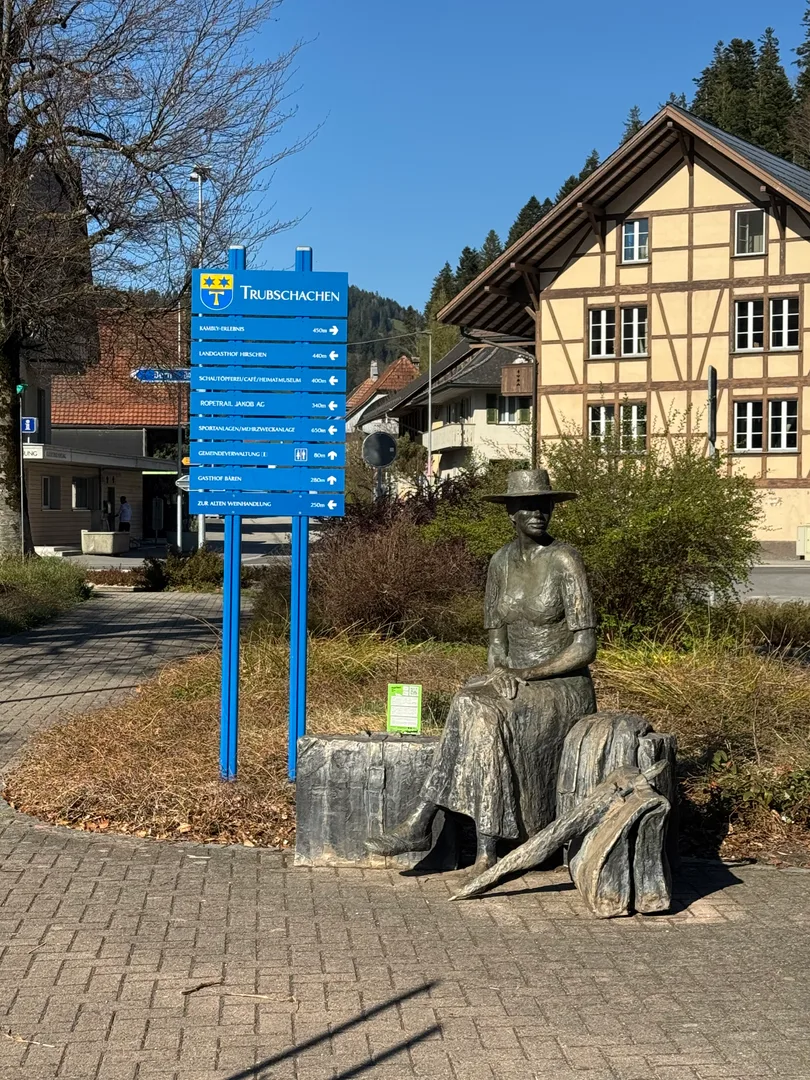
The 13 stops, in order
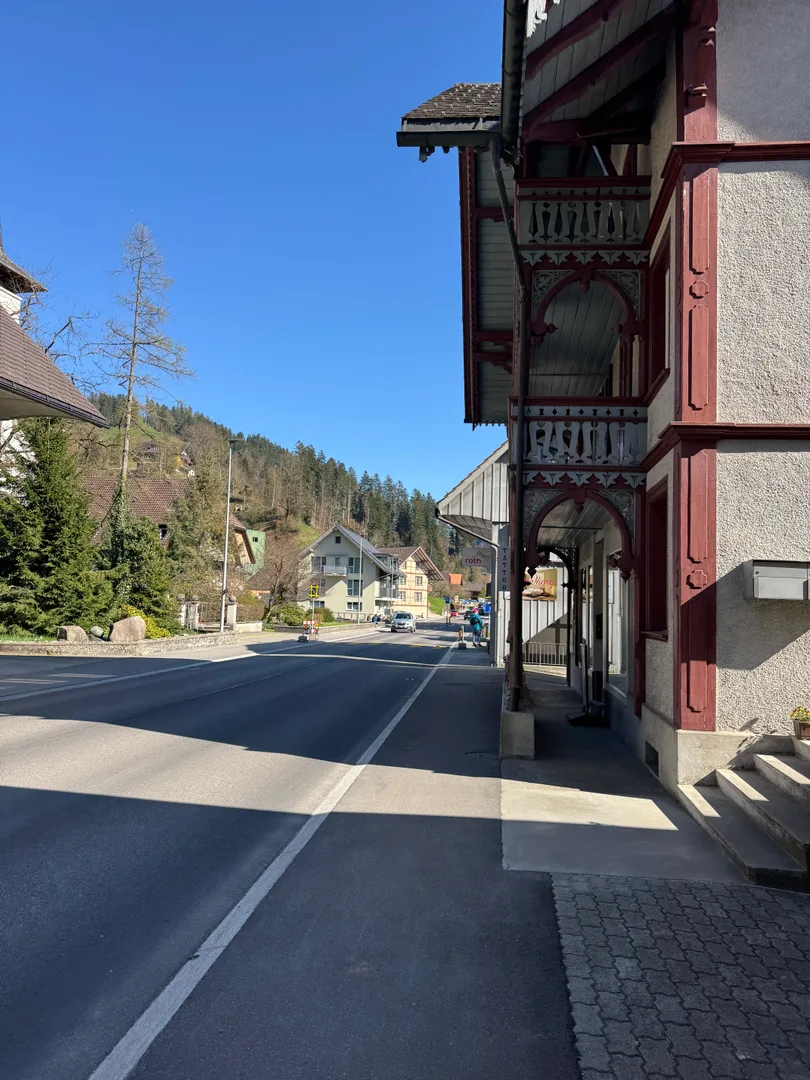
1. Bahnwärterhäuschen — the railway keeper's cottage, Dorfstrasse 26, c. 1875. A narrow shingle-clad post-and-beam house (Ständerbau) by the tracks, with a slightly projecting upper floor; renovated in 2011/12 in consultation with the cantonal heritage office. It dates from the years when the Bern–Lucerne line reached the village (1875).
2. Seilerei Jakob AG, Dorfstrasse 28, c. 1908. A two-and-a-half-storey Ständerbau with a shallow half-hipped roof and a wrought-iron balcony rail. Hans Jakob founded the ropeworks in 1904 and produced mainly hemp and jute rope for farmers until 1953, when steel cable took over; in the 1920s a rope walk almost 140 m long ran alongside the railway. The firm is now Jakob Rope Systems, selling worldwide. In front of the building stands the Jakob Tensegrity Torus sculpture, installed in 2009 — hard to miss from the road.
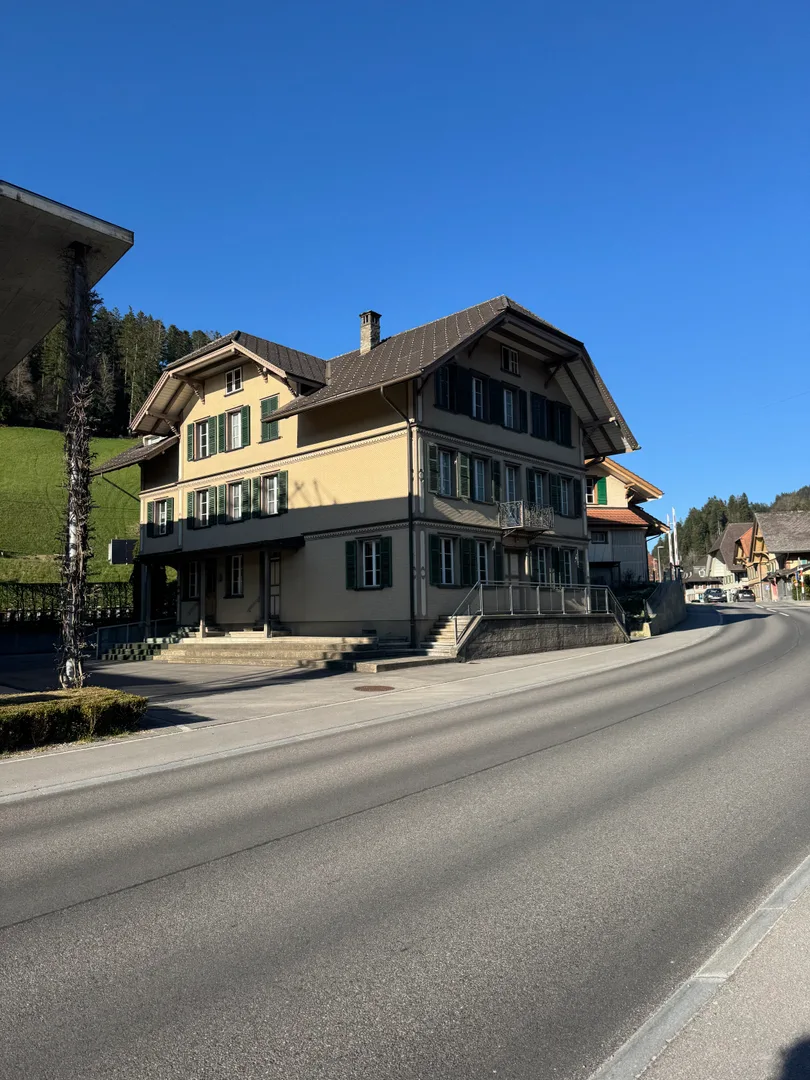
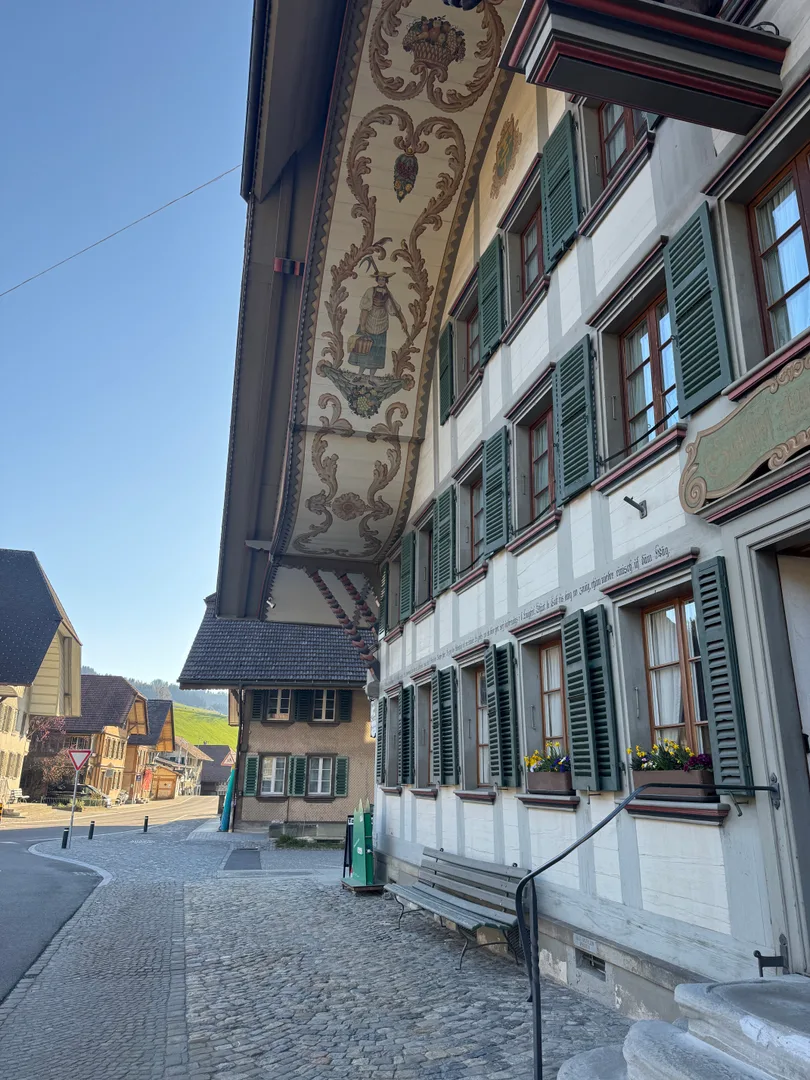
3. Gasthof Hirschen, Dorfstrasse 36, c. 1872. A handsomely decorated inn: a four-bay plastered half-timbered structure with a painted gable soffit and eaves boarding, and richly ornamented cornices and balcony. Around 1870 the Langnau butcher Niklaus Blaser bought this plot intending to build the "Hotel Bahnhof" — but the station was built elsewhere, so the "Hirschen" appeared instead. The Soltermann family took it over in 1932 and still runs it.
4. Baugruppe Hasenlehn — a historic farm group and one of the finest ensembles of traditional Emmental architecture in the village.
4a — Speicher (granary/storehouse), Hasenlehn 91, c. 1683. Log-built, with a kinked gable roof, a recessed gallery, ogee-arched doorways and a richly decorated blind façade.
4b — Doppelbauernhaus, Hasenlehn 92, c. 1737, renewed in the 19th century. An unusually broad Ständerbau with a symmetrical eight-bay front.
4c — Stöckli, Hasenlehn 93, c. 1760 and 19th century. A plain, clear half-timbered building with pink-painted sandstone infill.
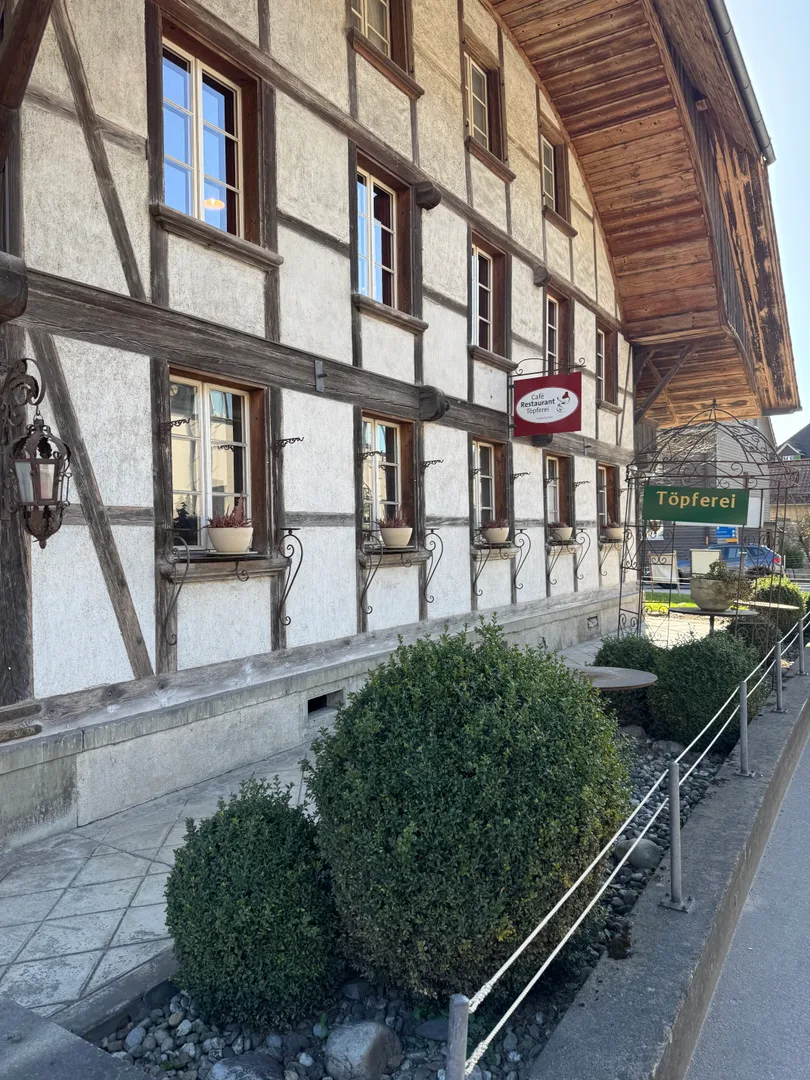
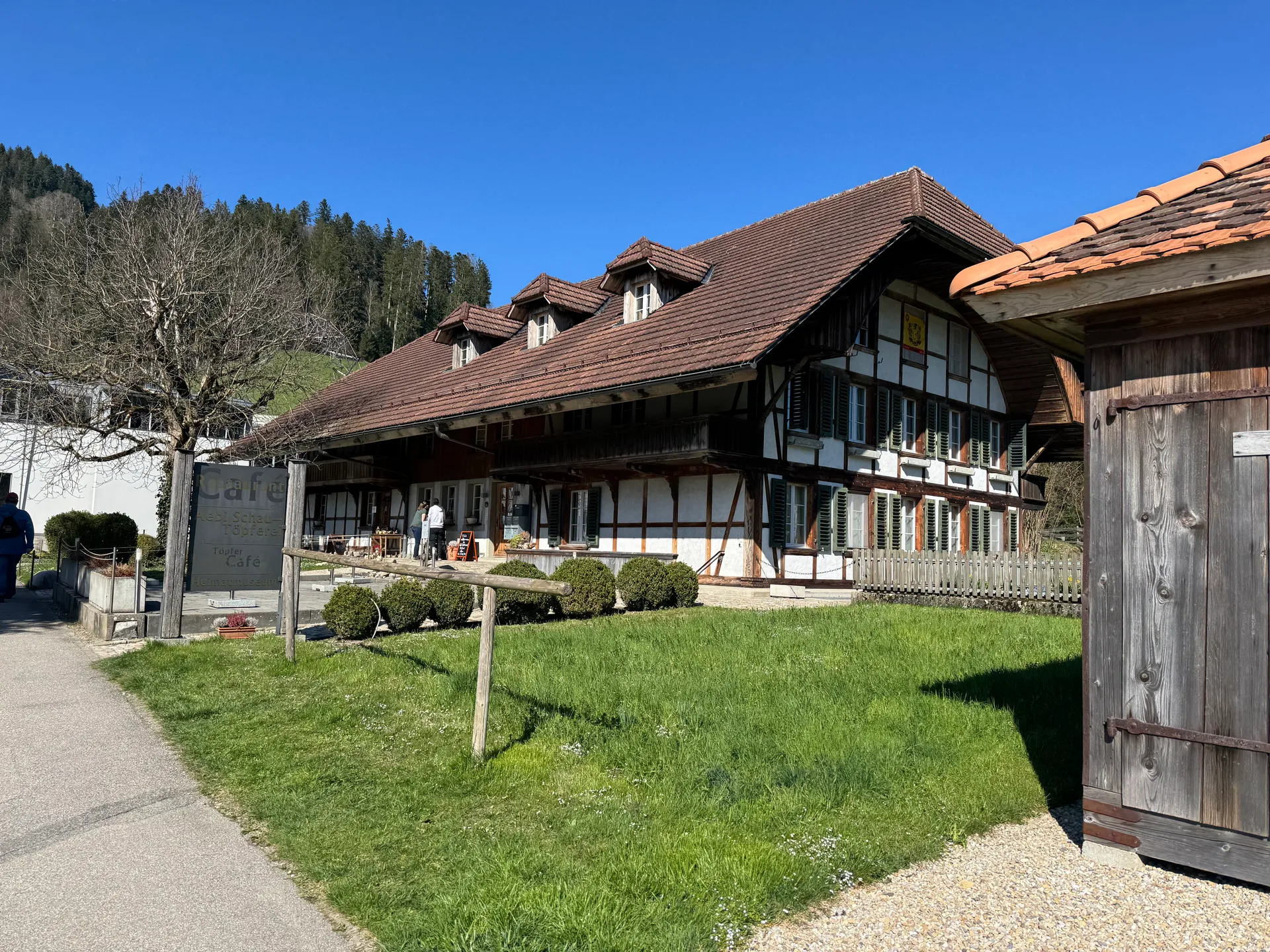
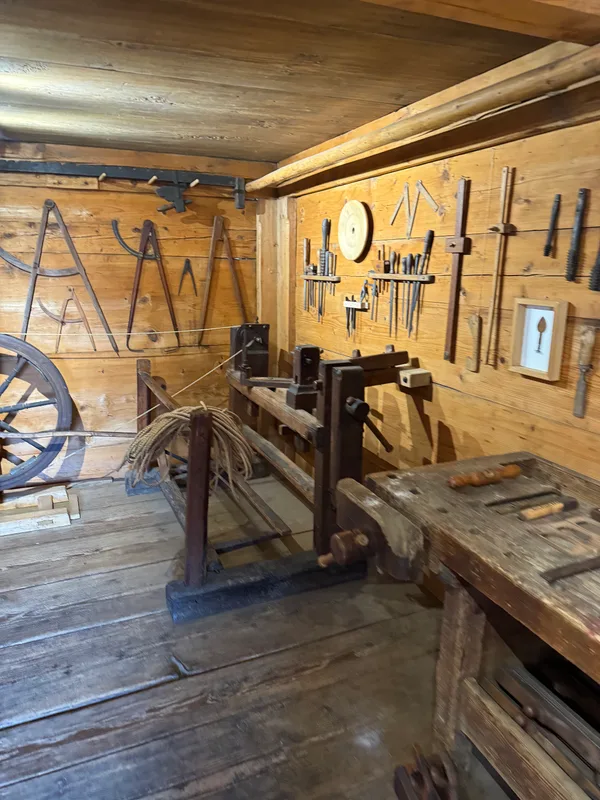
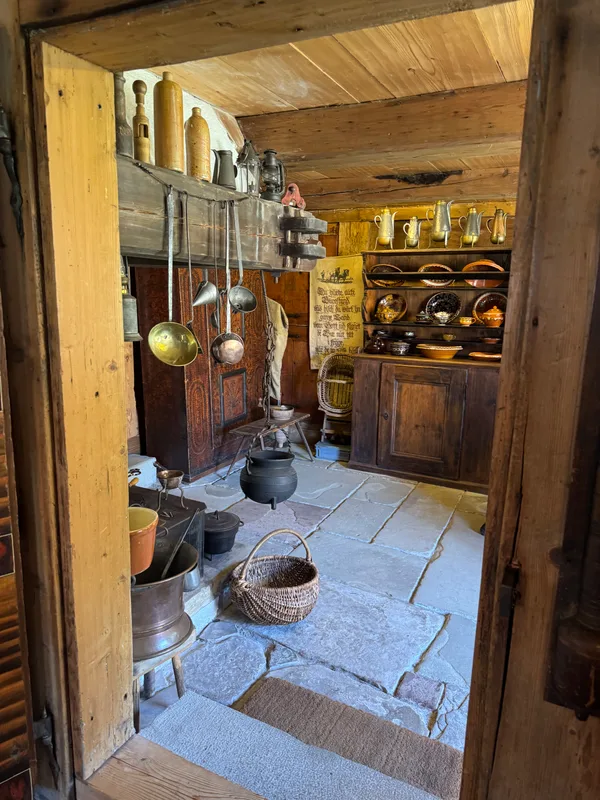
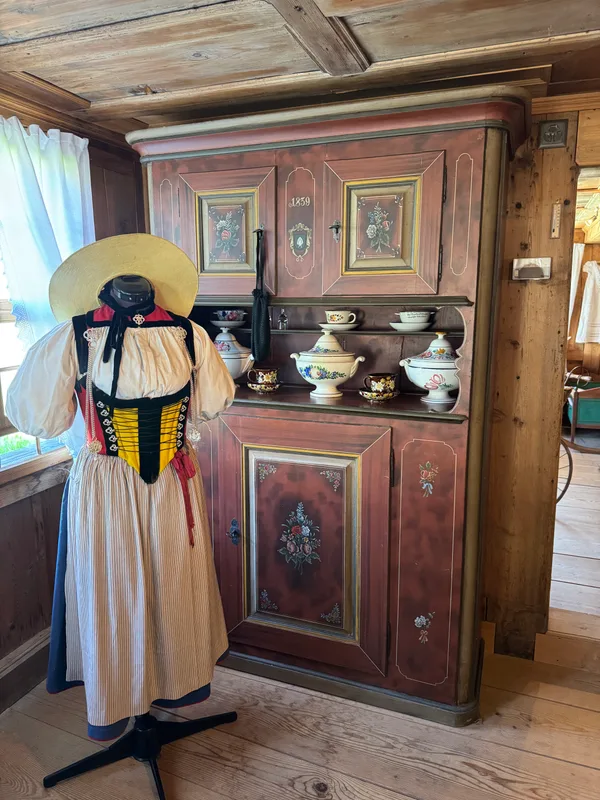
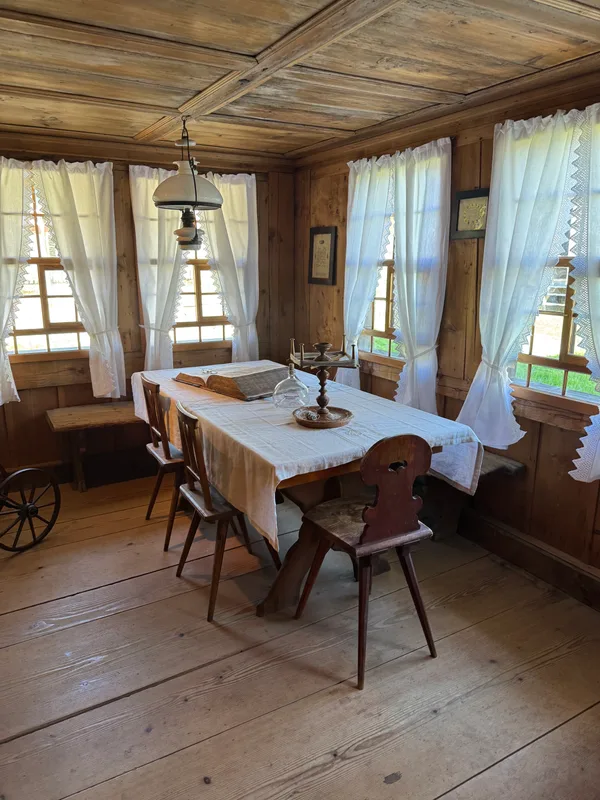
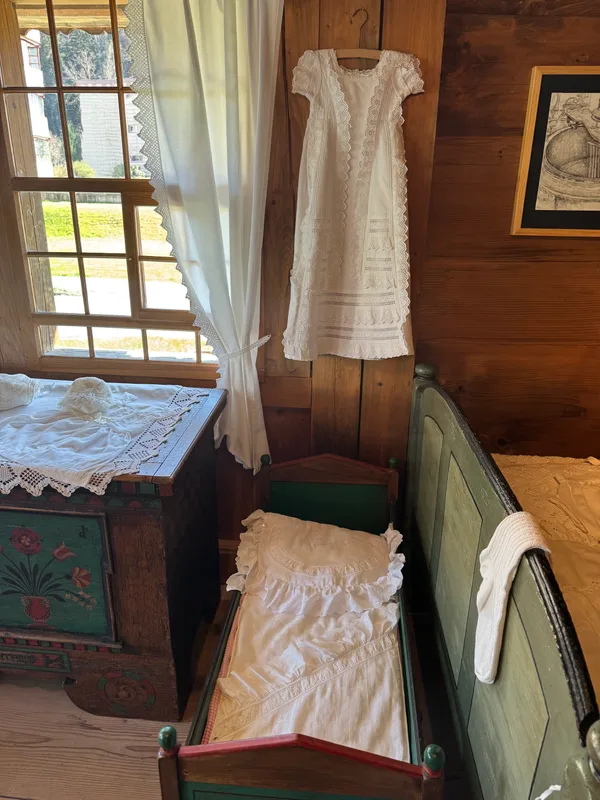
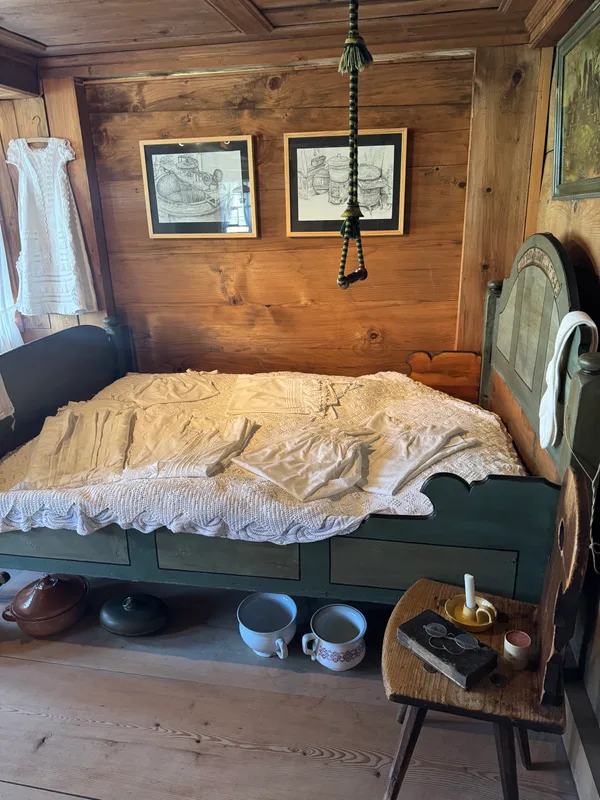
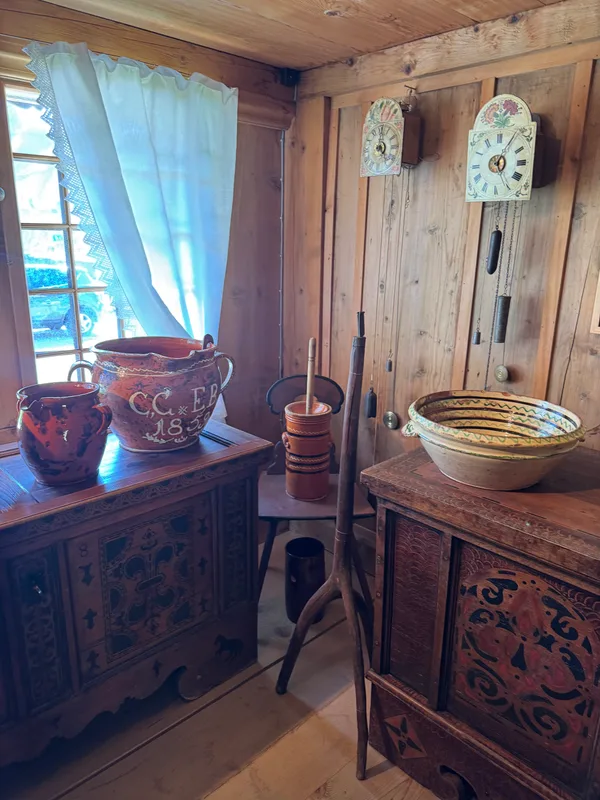
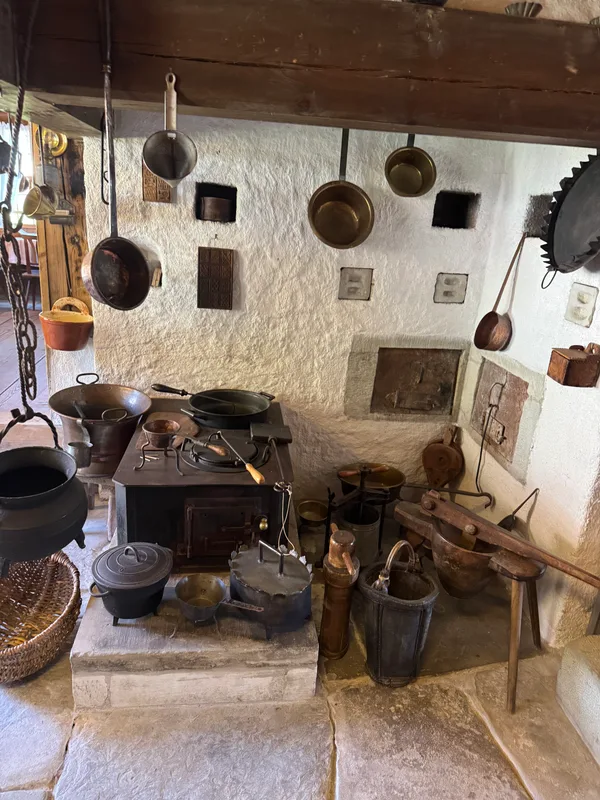
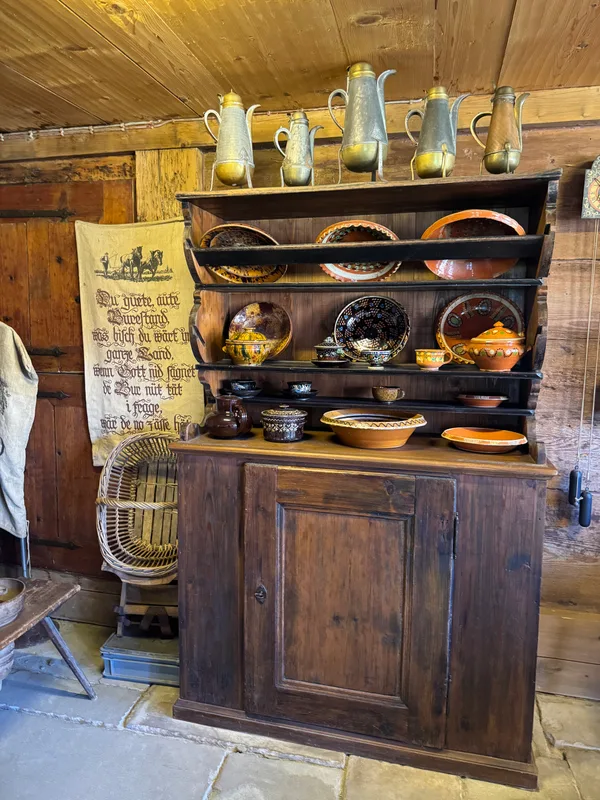
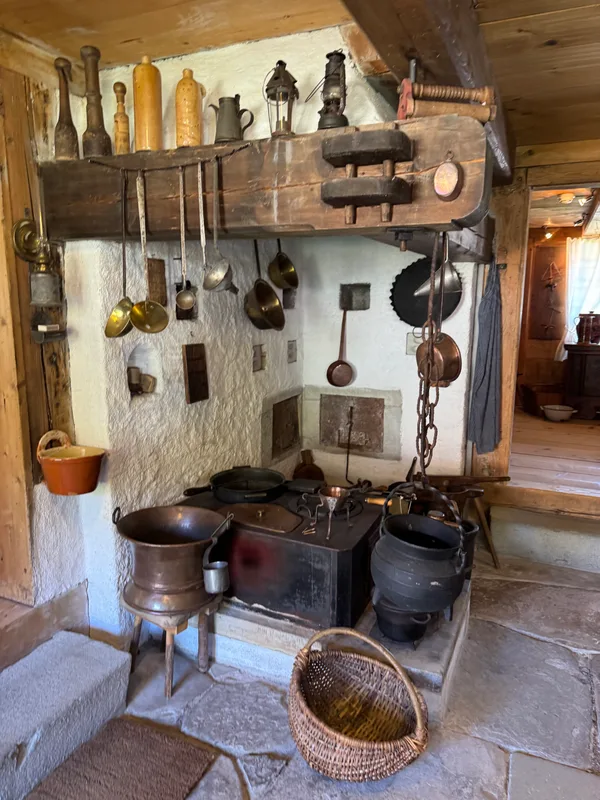
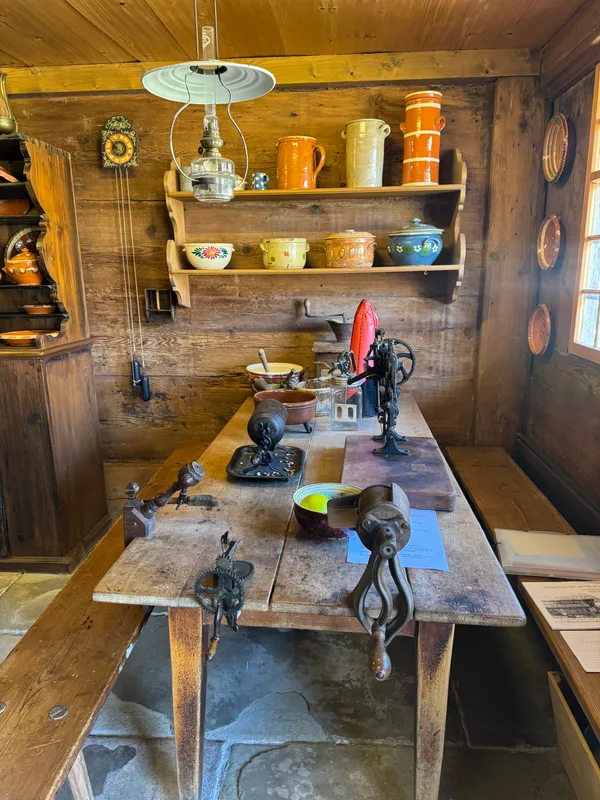
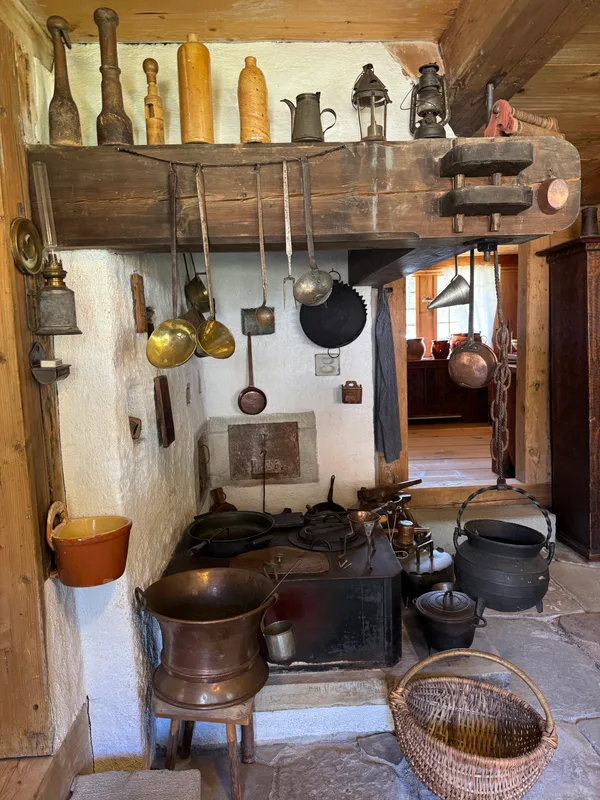
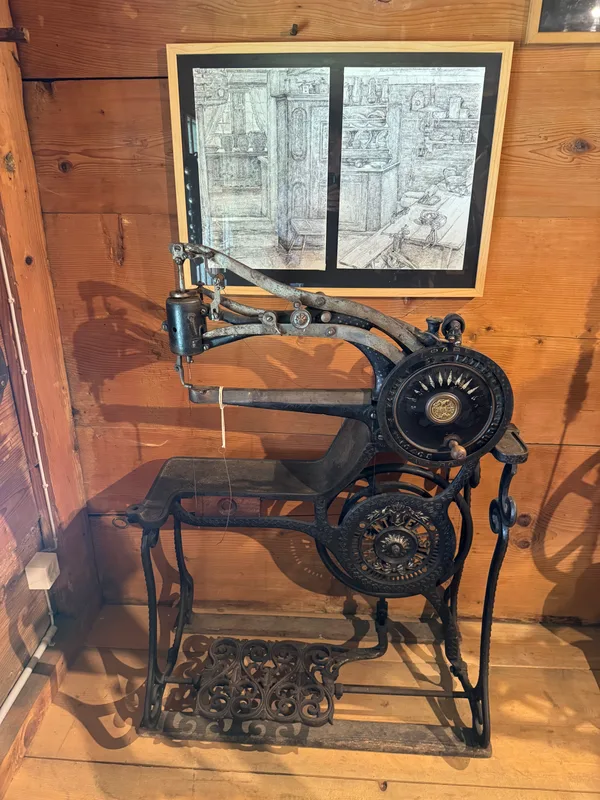
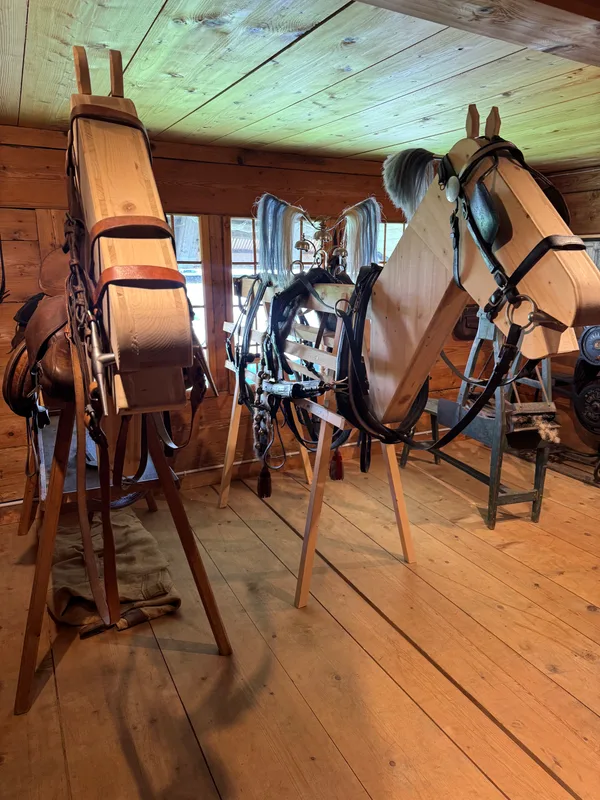
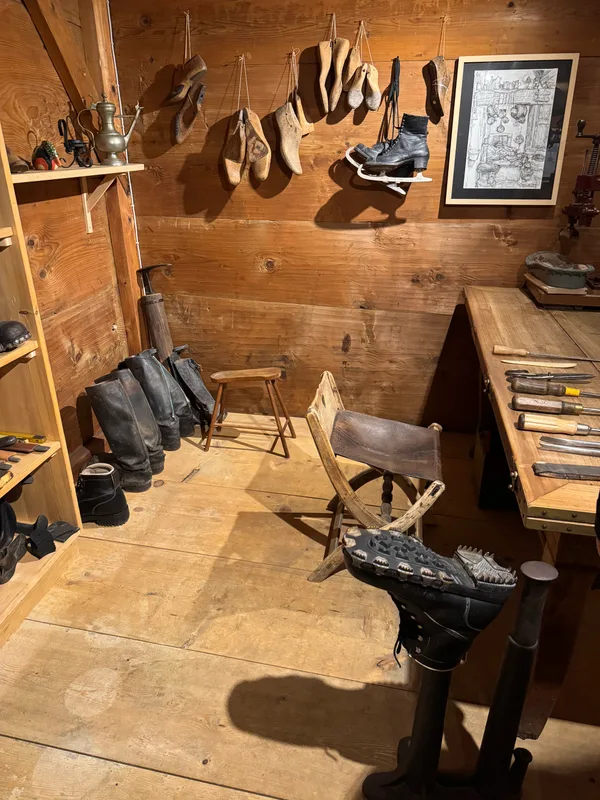
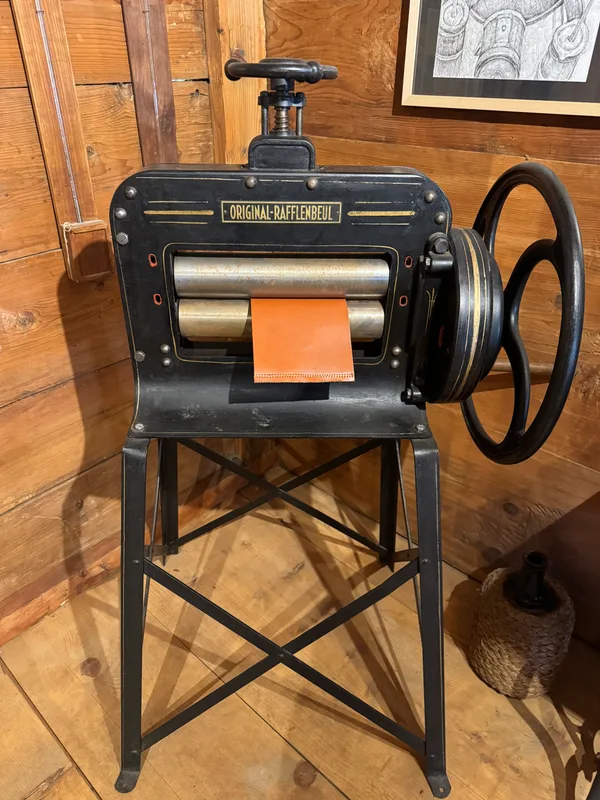
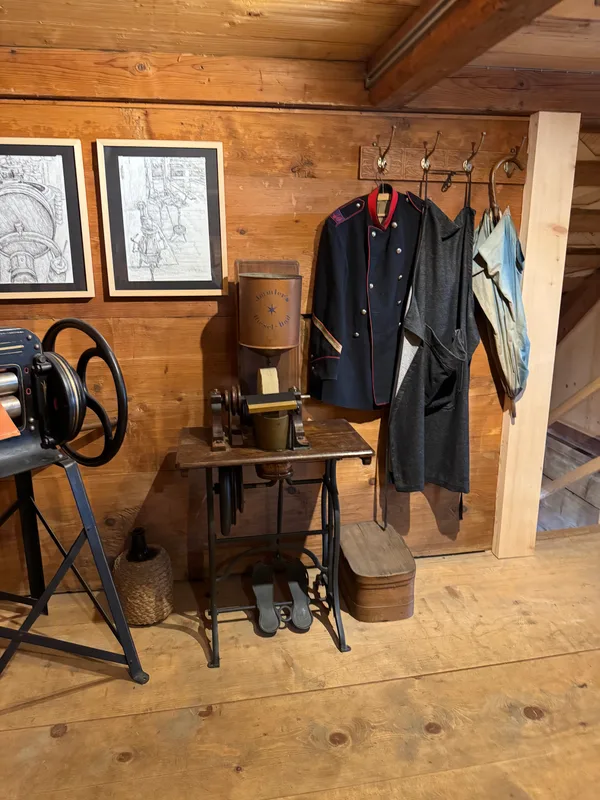
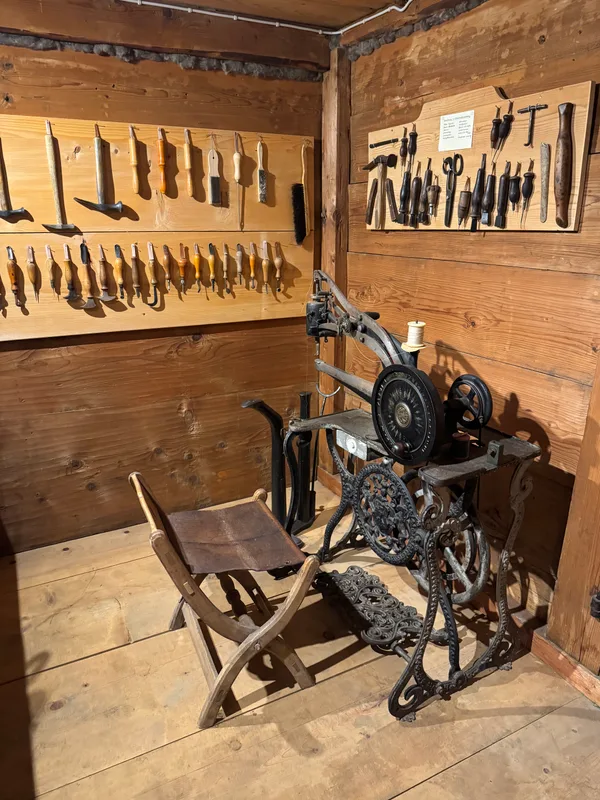
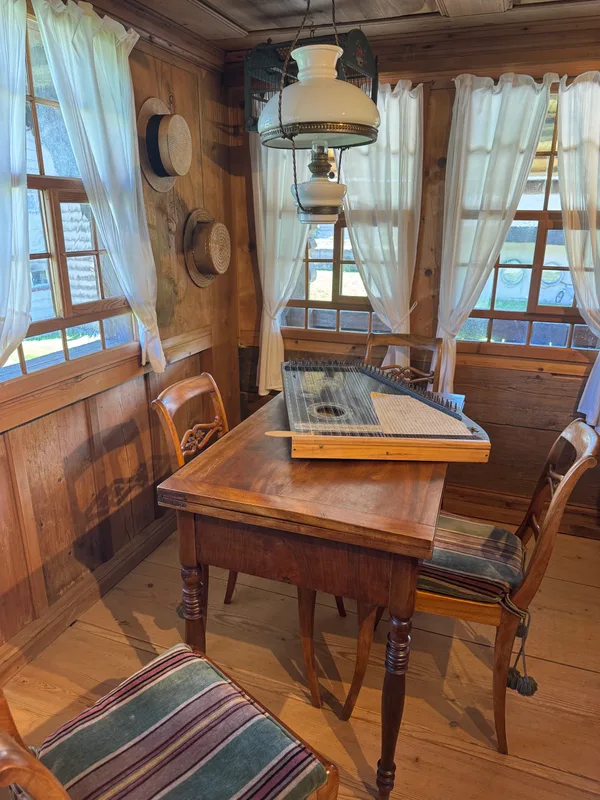
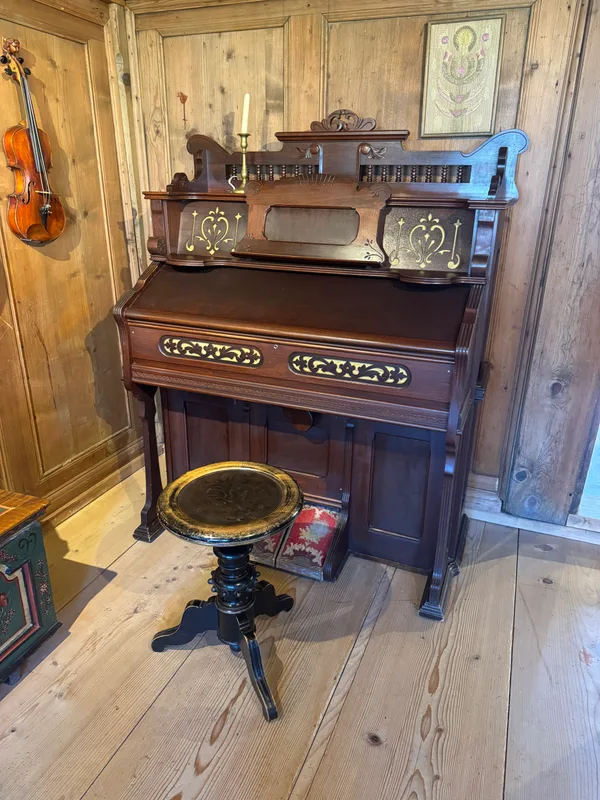
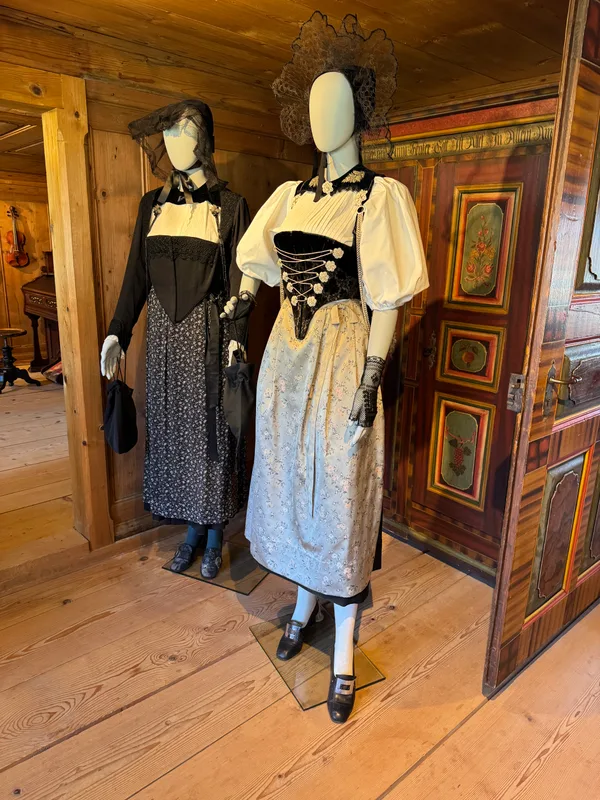
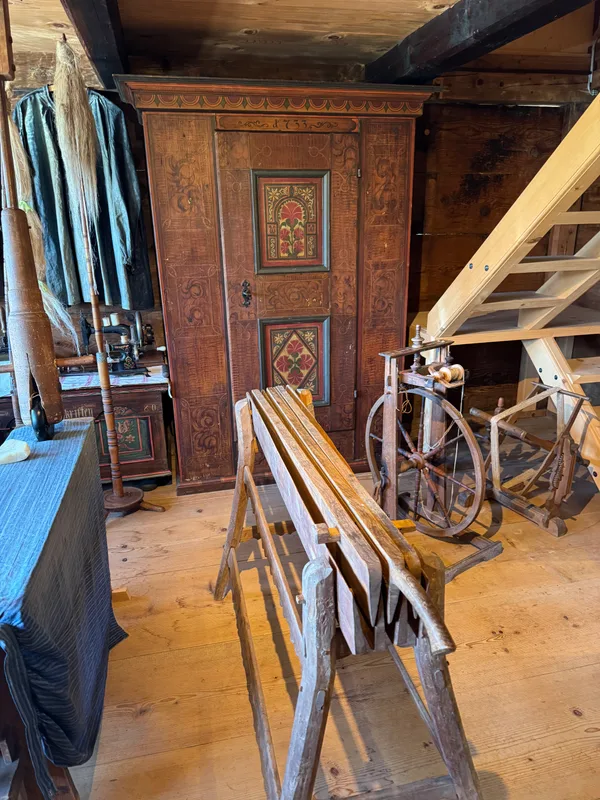
5. Häusergruppe Heimatmuseum, Hasenlehnmattestrasse 1, 3, 3A — the heritage-museum group, run by the Stiftung Hasenlehn (note: this is a separate stop from the Hasenlehn farm group at no. 4, even though the names are similar). It shows how Emmental farming families lived in the days of Jeremias Gotthelf, along with old trades: cheese-making, nail-smithing, saddlery and shoemaking.
5a — Bauernhaus, mid-19th century. Unusually, it has two front façades: during the 1981 conversion the original farm end on the south side was replaced by a second front, so that the group would read as a model farmyard. It now houses a show pottery and a café-restaurant.
5b — Stöckli, 1783. Moved here from the hamlet of Steinbach in 1978; a Ständerbau under a shingled half-hipped roof, with an excellent six-bay front and inscriptions on the upper floor and gable.
5c — Speicher, 1785. Moved here from Lauperswil in 1974, with a richly designed blind façade and gallery arcades; the building inscription of 1785 is still on the ground-floor lintel.
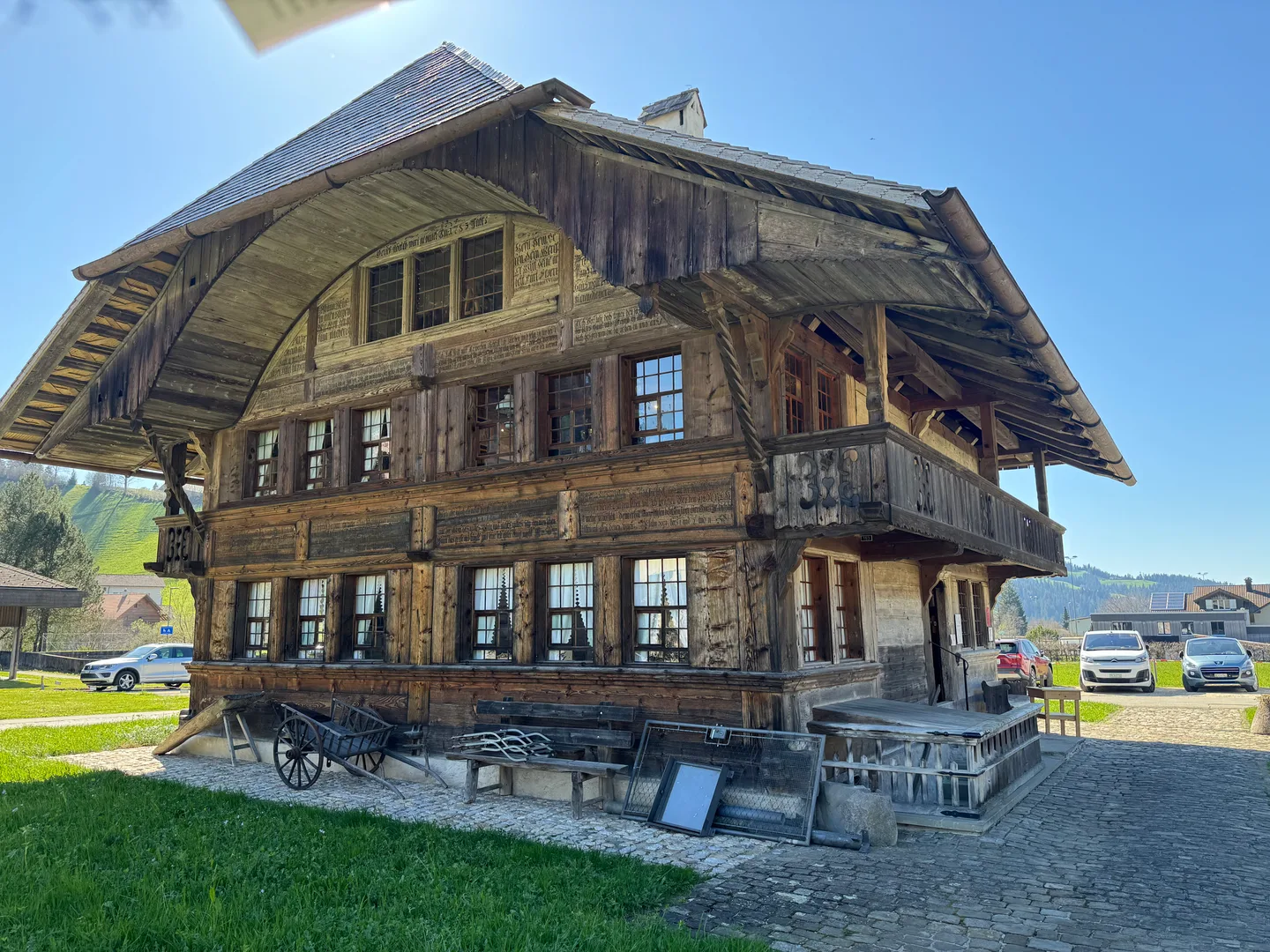
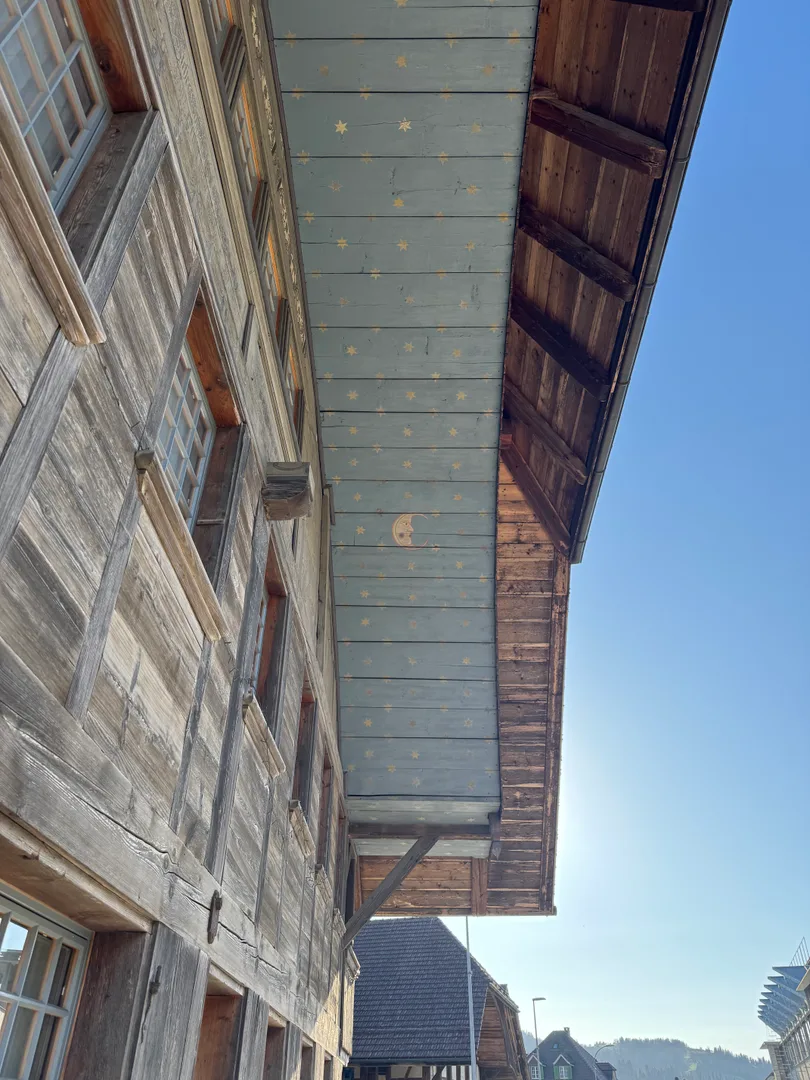
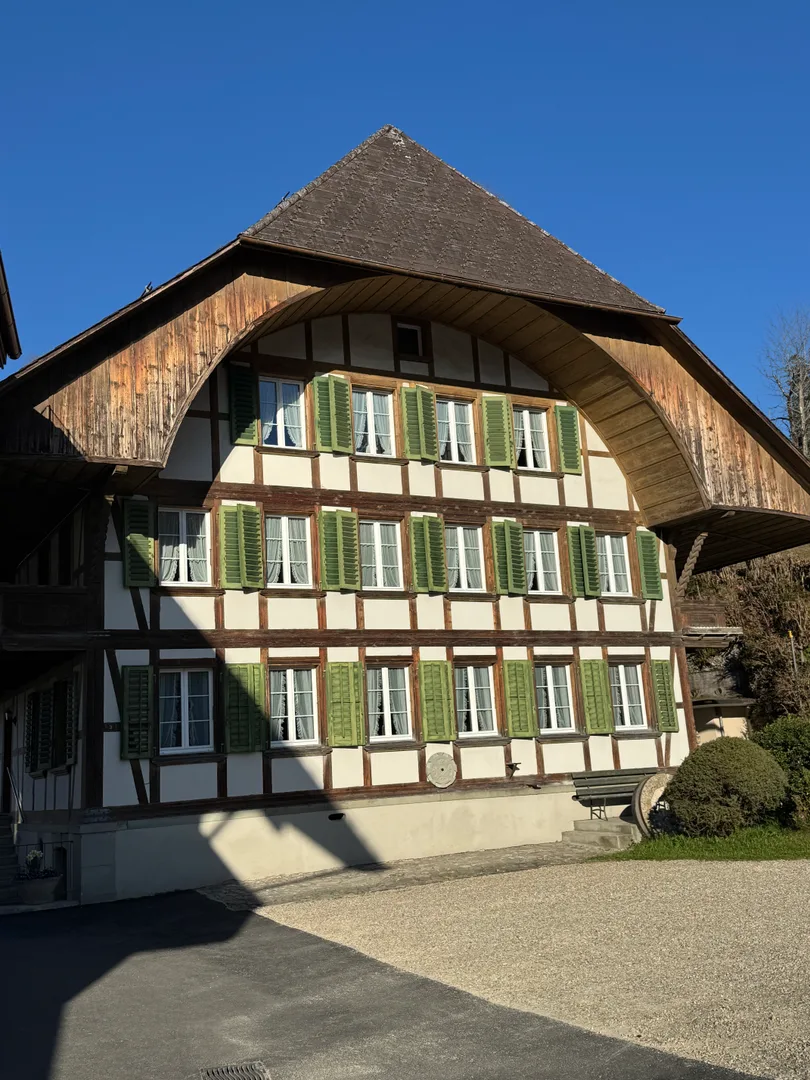
6. Himmelhaus, Dorfstrasse 37, c. 1738. The prettiest house on the route: under the eaves is a painted sky with sun, moon and stars — hence "the Sky House" — next to a lordly acanthus painting. It was built by the merchant Peter Jenni, passed to Johannes Mauerhofer in 1796 and to the Neuenschwander family in 1923; renovated in 1967 and 1984.
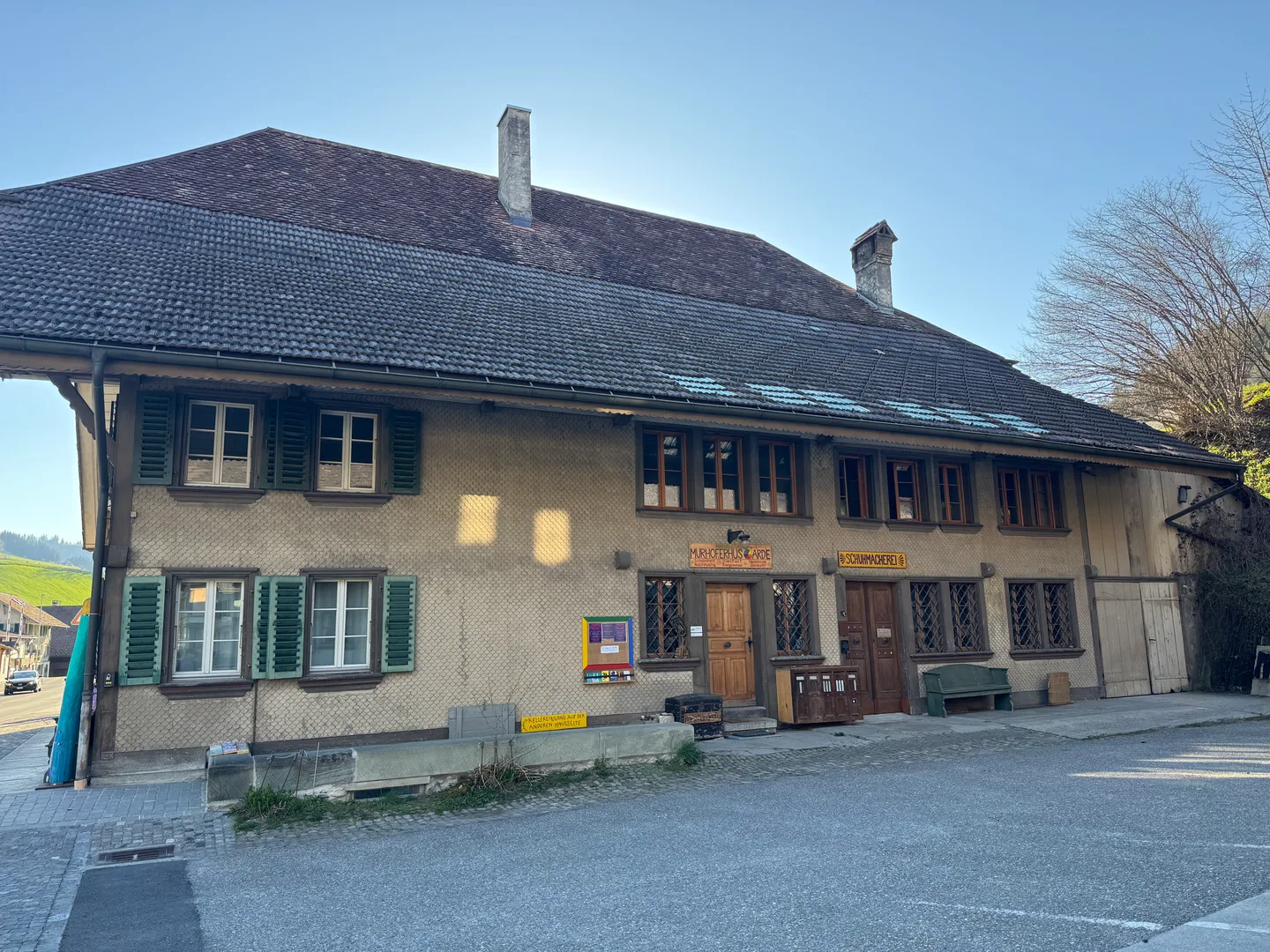
7. Three houses in the Swiss timber style (Schweizer Holzstil / "Laubsägelistil") — the fretwork style that spread from about 1850 to the First World War. Worth looking at the carved galleries, cornices and applied wooden ornament.
7a — Wohn- und Geschäftshaus, Dorfstrasse 19, c. 1880. A plastered Ständerbau with board lesenes, horizontal string courses, a rear gallery with a decorative balustrade and coloured etched-glass panes.
7b — Bählerhaus, Dorfstrasse 15, 1907. Built by master carpenter Friedrich Frei and largely preserved in its original state, with galleries on both the gable and eaves sides; the façades were restored in 1996. It once housed Christian Bähler-Jakob's shop.
7c — Krämerhaus, Dorfstrasse 7, 1890 (possibly 1898), east of the Trub bridge. A plastered Ständerbau under a cross-ridged gable roof, with a particularly lavish three-storey blind façade: arcaded galleries, double posts and decoratively cut balustrades. It served for many years as a shoe shop, and the official brochure calls it the finest building in the Swiss timber style in the village.
8. Wohn- und Geschäftshaus, Dorfstrasse 11, 1850. A striking clad Ständerbau at the fork of Trubstrasse and Dorfstrasse, with a Ründi (decorative gable arch) on both sides. Historically the most interesting address on the route: this is where the young Oscar Kambly ran his bakery before founding the Kambly company in 1910. The original oven now stands in the reconstructed bakery at the Kambly Experience.
9. Mauerhoferhaus, Dorfstrasse 16, c. 1750. The first owner was the textile and haberdashery merchant Peter Jenni; after a silk-ribbon venture failed he had to sell in 1775 to Johannes Mauerhofer and Bendicht Jenni. For roughly two hundred years the house was the seat of the Mauerhofer cheese-trading firm, and it was barely altered: cheeses were stored on wooden racks in the great vaulted cellar and brought up by hoist to the dispatch room on the ground floor. The two-storey barn housed the horses that carted the wheels of cheese, with the wooden tubs used to pack them made on the floor above. The wash-and-bake house of 1757 was beautifully restored in 2016.
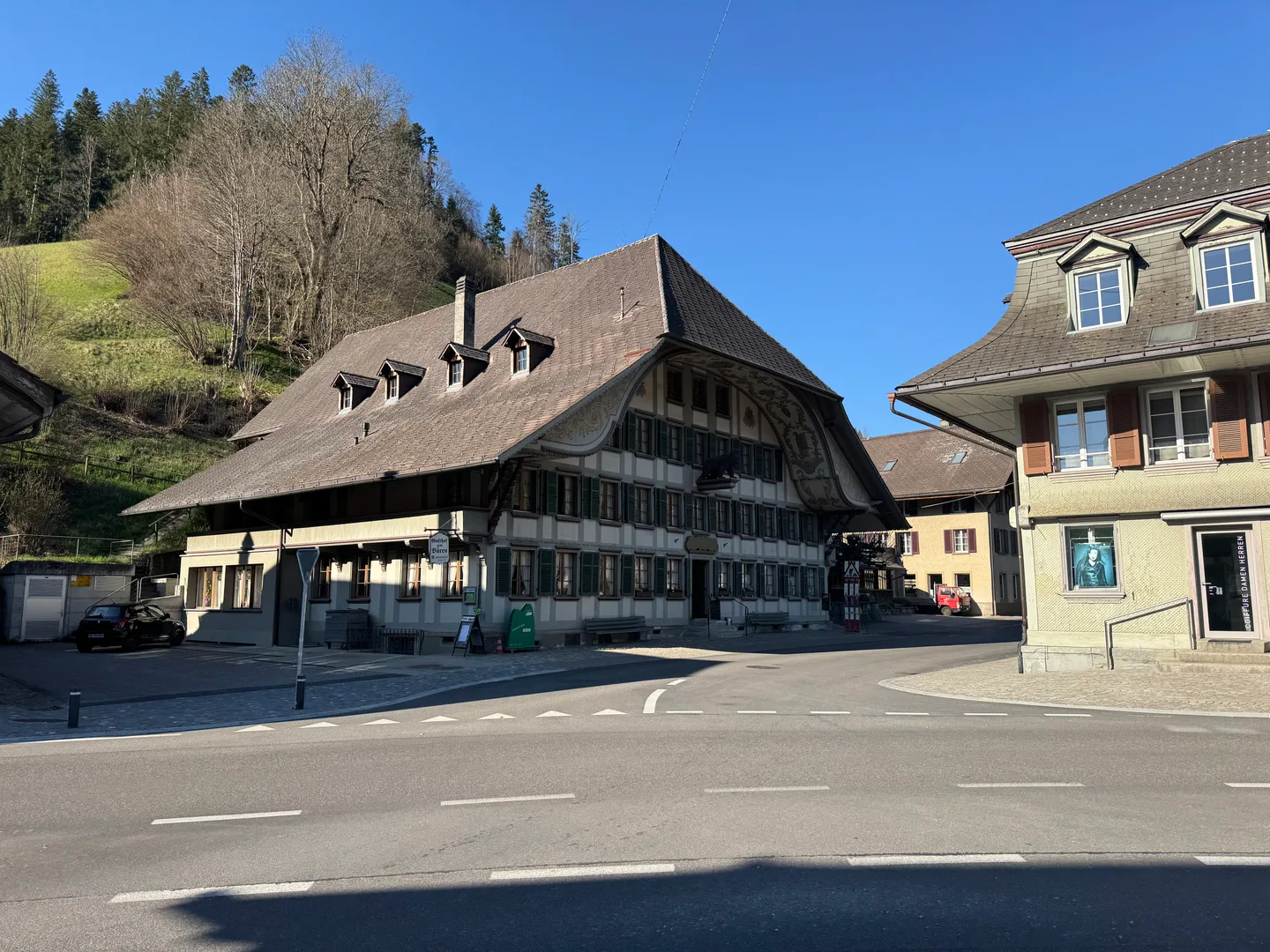
10. Gasthof Bären, Trubstrasse 1. The present building is essentially of 1800 but contains a core from 1698. An eleven-bay Ständerbau with a kinked half-hipped roof and a sweeping painted gable arch (painted in 1937, renewed in 1974 and restored in 2009), plus a large carved bear by the sculptor Huggler of Brienz. The inn is first documented in 1356 and received tavern rights in 1569; its predecessor burned down on 21 January 1697 and was rebuilt between 1698 and 1734. It has been called the Gasthof Bären since 1734, and the official brochure describes it as the oldest "Bären" in Switzerland.
11. Scheuerhaus + Wohn- und Geschäftshaus, Dorfstrasse 14 and 12 — two joined buildings, which is why the official map uses a single marker, 11a/b.
11a — Scheuerhaus, Dorfstrasse 14, c. 1830. Named after a barn that once adjoined it on the Trub side; it is the only building in Trubschachen with an elaborate mansard hipped roof.
11b — Wohn- und Geschäftshaus, Dorfstrasse 12, mid-18th century. An unusual three-storey Ständerbau clad in grey shingles, with corner lesenes, string courses, and a large loft door with a hoist. The well-known Bernese organ builder Mathias Schneider (1775–1838) lived and worked in this complex, or rather in its predecessors; in the early 19th century he was considered the most important organ maker in the canton of Bern and beyond.
12. Kirche Trubschachen, Dorfstrasse, 1891–92 (some sources give 1890–92), built under Rudolf Ischer. Quality problems forced repairs as early as 1922, when the tower had to be dismantled completely because of the risk of falling stone and rebuilt in its present form. The church was renovated again in 1968, with major changes inside (floor, ceiling, fittings, windows, organ), two new bells, and three new chancel windows by the artist Fred Stauffer. Worth remembering: Trubschachen only became a parish in its own right in 1874 — the church is younger than the village's independence.
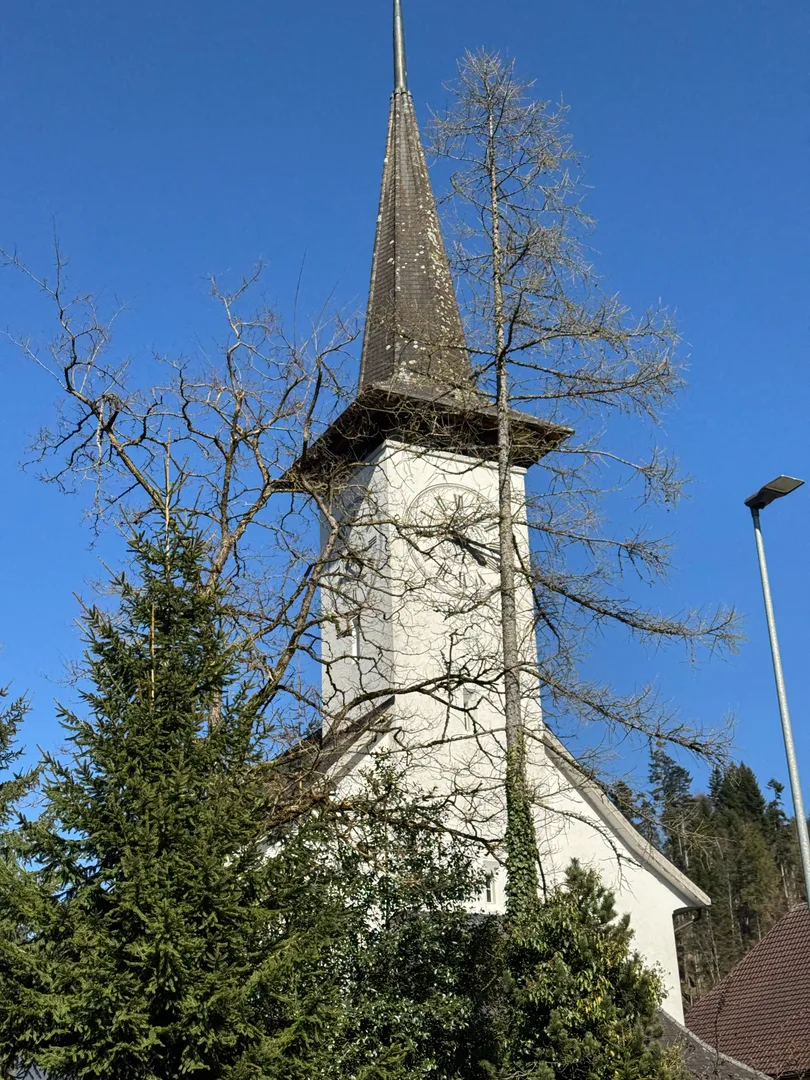
13. Baugruppe Mühle — the mill group, Mühlestrasse 3.
13a — Getreidemühle (grain mill), 1739. Two storeys of the original rendered building survive, with sandstone door and window surrounds; a half-timbered upper floor was added in the second half of the 19th century. Instead of the old mill wheel, water from the attached canal now drives an electric turbine, mostly for the mill's own use. The mill came into the Haldemann family's hands in 1860 and has ground the flour for the famous Kambly Bretzeli for generations.
13b — Wohnhaus (miller's house), 1845. A six-bay half-timbered house with a small farm section, a quarter-hipped roof and a Ründi.
13c — Spritzenhaus, 1857. The former fire-engine house, now a materials shed: a simple Ständerbau under a full hipped roof of plain tiles.
If time is short
Five stops give the best sense of the 18th- and 19th-century Emmental: no. 4 Hasenlehn → no. 5 Heimatmuseum → no. 6 Himmelhaus → no. 9 Mauerhoferhaus → no. 10 Gasthof Bären.
It is also worth seeing the old houses around the church and simply walking the length of Dorfstrasse — that is where the old character of the village is strongest.
The official route map
Legend, matching the numbering in the official brochure:
No. | Building | No. | Building | No. | Building |
|---|---|---|---|---|---|
1 | Railway keeper's cottage | 5b | Stöckli (1783) | 9 | Mauerhoferhaus |
2 | Jakob ropeworks | 5c | Granary (1785) | 10 | Gasthof Bären |
3 | Gasthof Hirschen | 6 | Himmelhaus | 11a/b | Scheuerhaus & shop house |
4a | Granary / Speicher (1683) | 7a | House, Dorfstrasse 19 | 12 | Trubschachen church |
4b | Double farmhouse | 7b | Bählerhaus | 13a | Grain mill (1739) |
4c | Stöckli | 7c | Krämerhaus (Dorfstrasse 7) | 13b | Miller's house (1845) |
5a | Farmhouse | 8 | Former Kambly bakery | 13c | Former fire-engine house (1857) |
Heimatmuseum Trubschachen
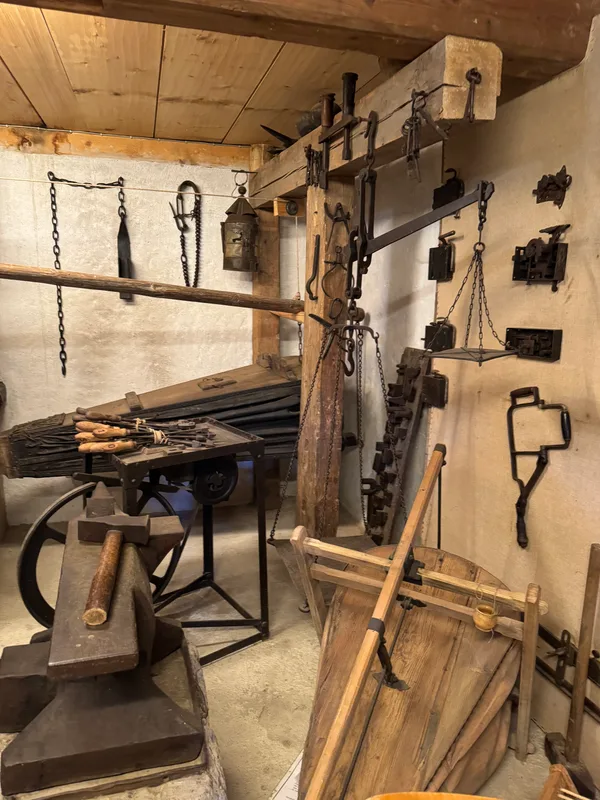
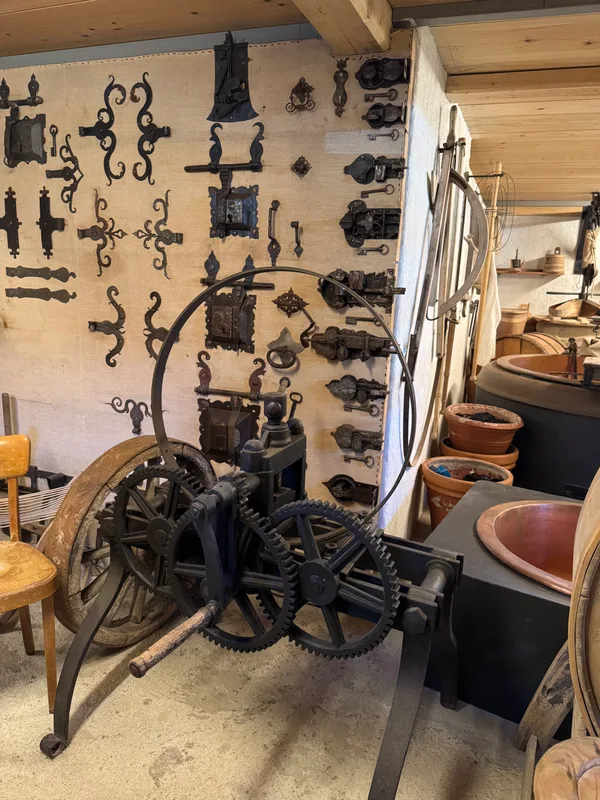
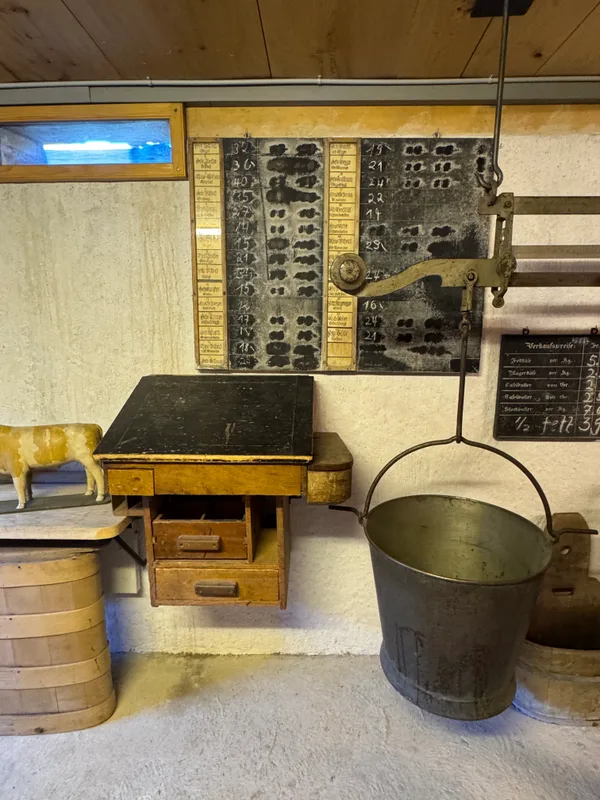
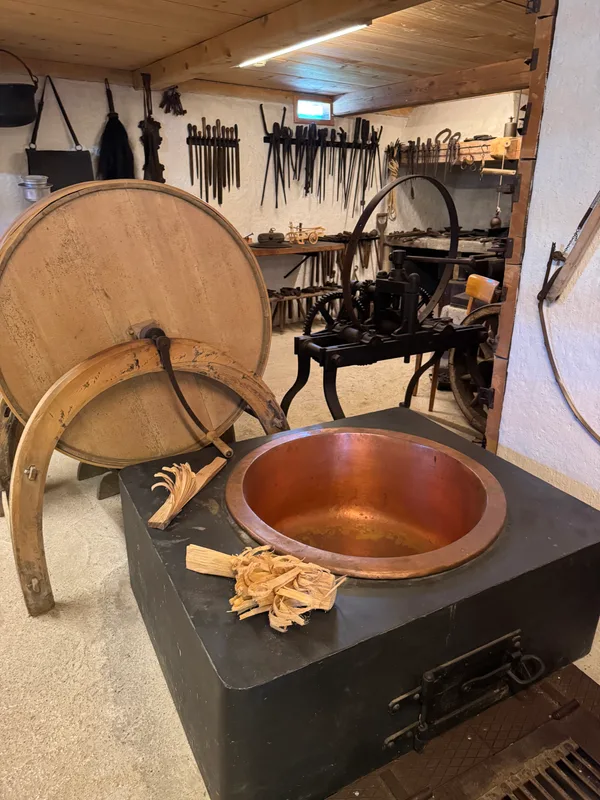
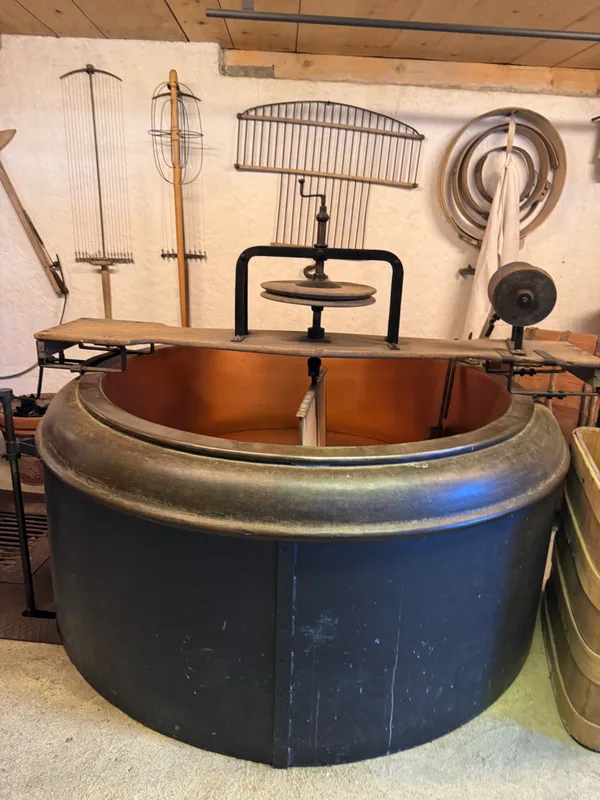
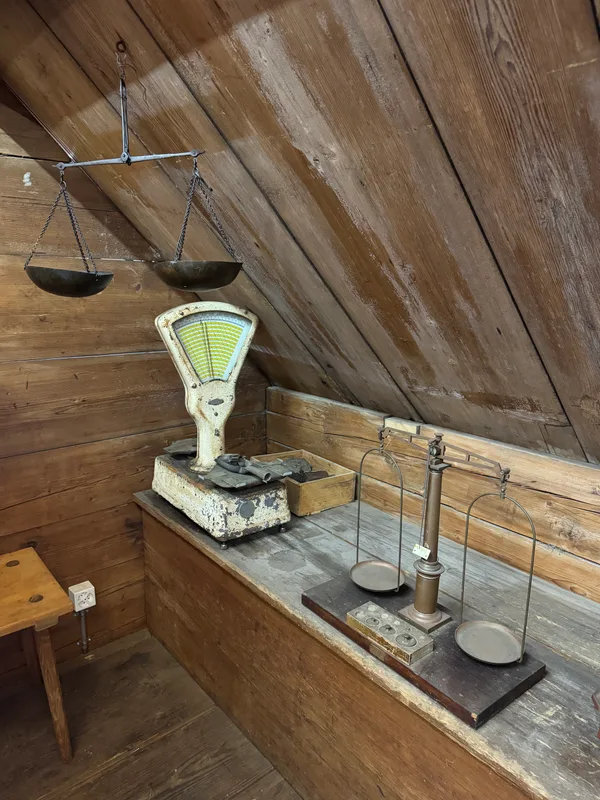
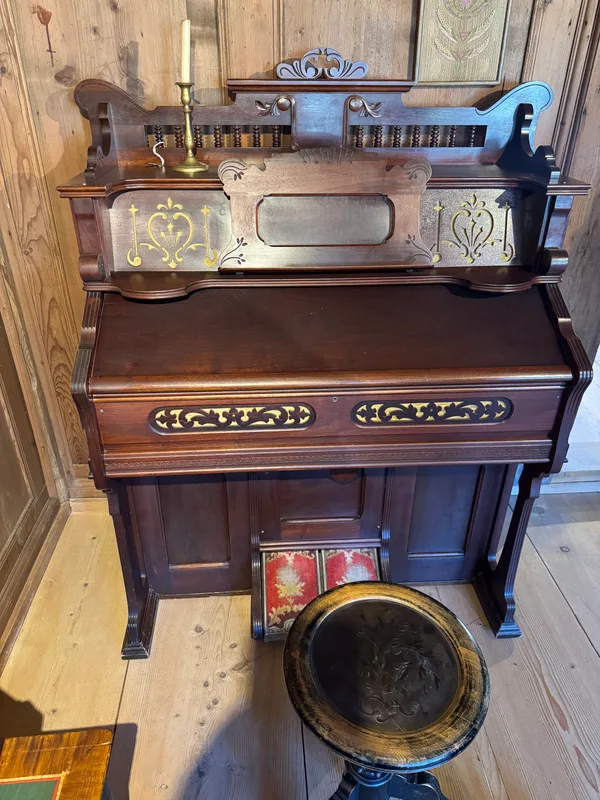
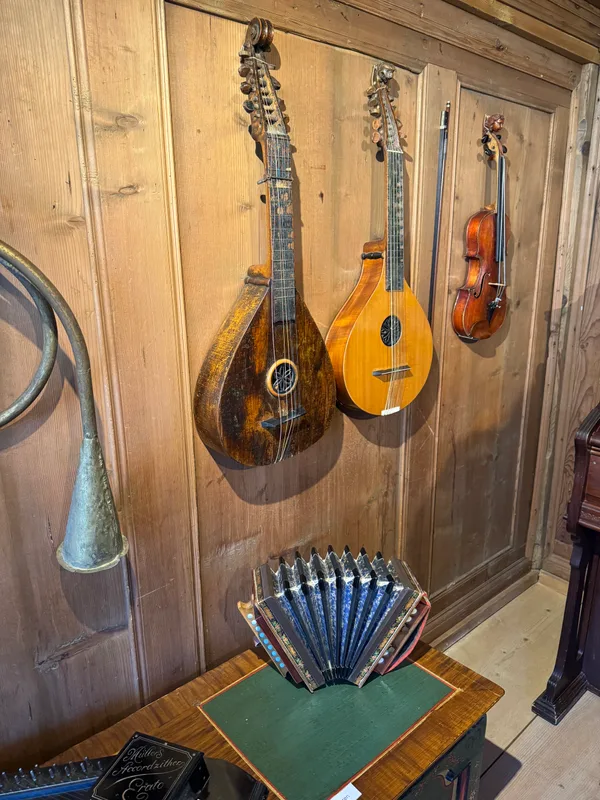
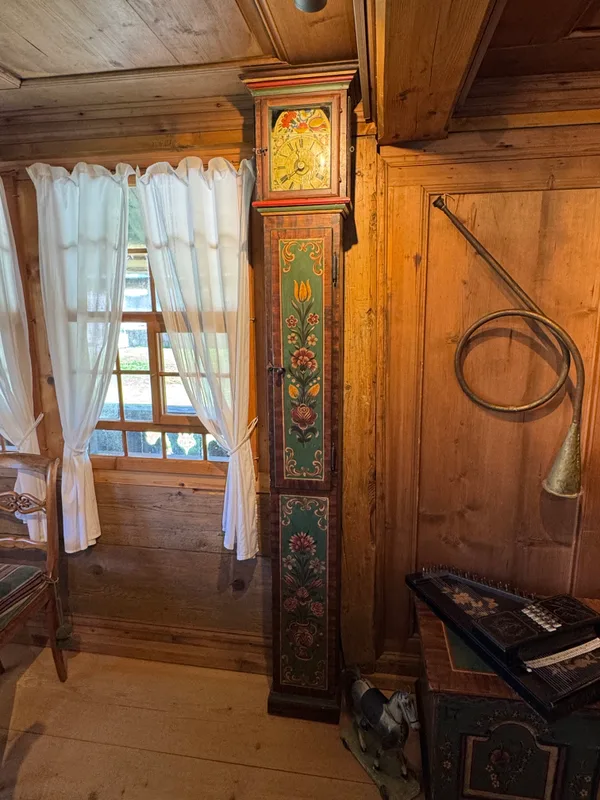
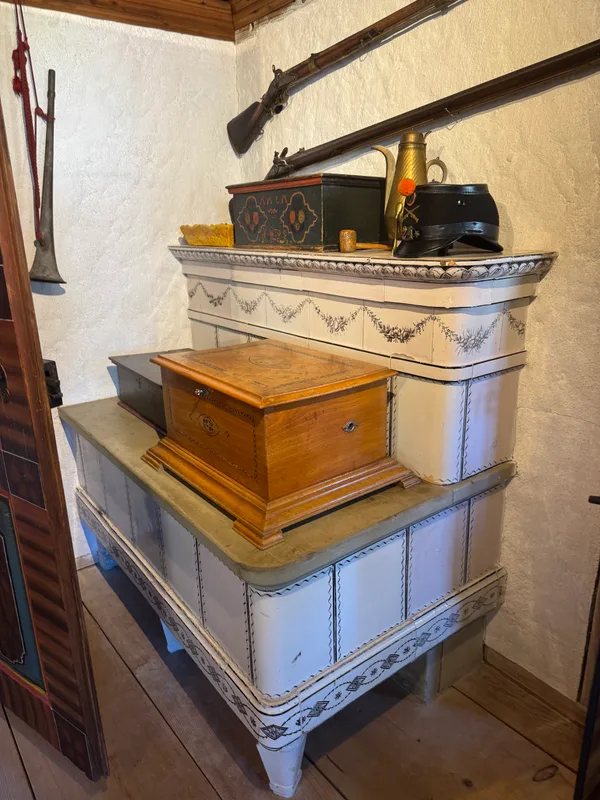
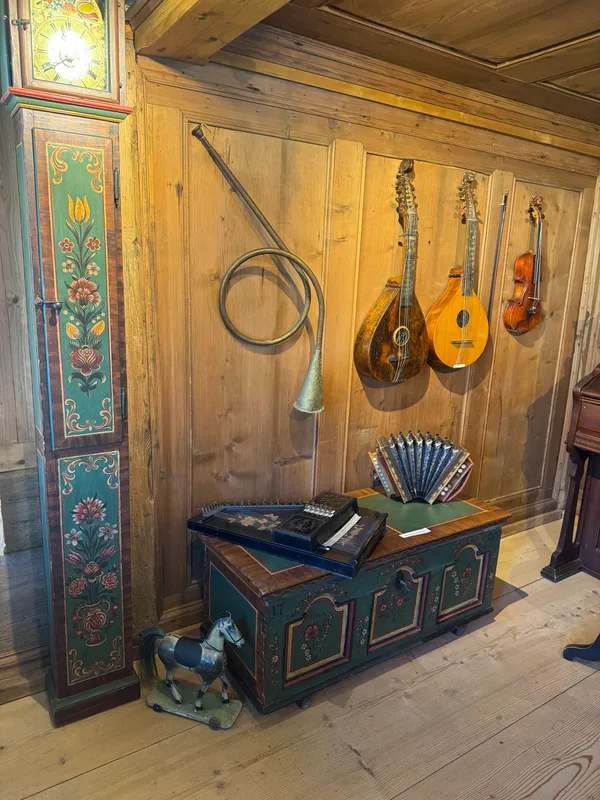
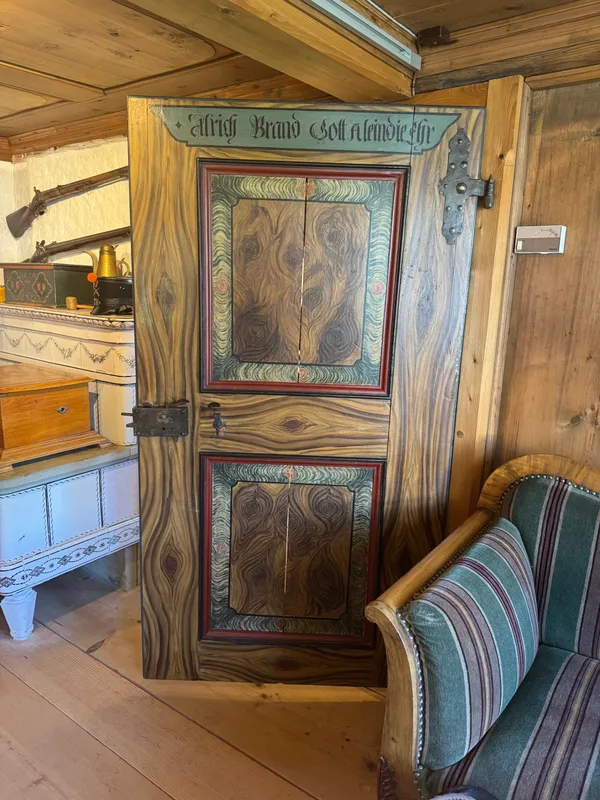
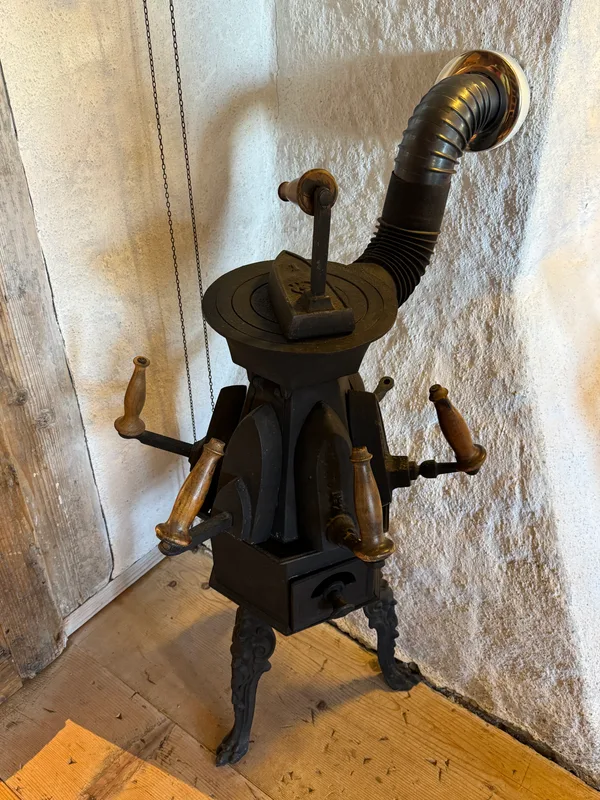
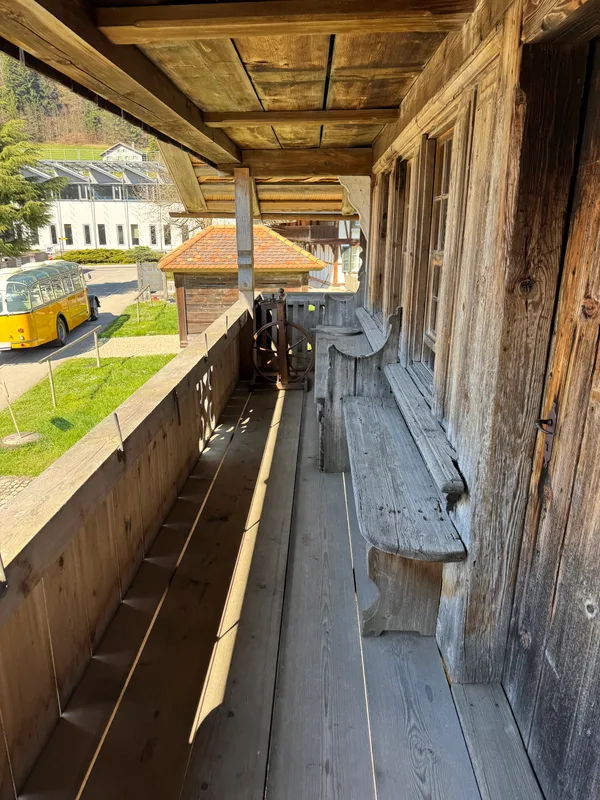
After the buildings on the route, Trubschachen has one more very interesting stop — the Heimatmuseum, stop no. 5 on the walk. It is run by the Stiftung Hasenlehn, founded in 1979 by the teacher Walter Berger and the entrepreneur Oscar J. Kambly, and opened to the public in 1982. Local history, domestic life and the trades of the region are all here: a completely furnished apartment in the Stöckli of 1783, a cheese dairy with its fire cart, a nail smithy, saddlery and shoemaking, and a collection of household, farming and workshop tools in the Speicher of 1785, which also hosts occasional temporary exhibitions.
The museum season runs from early April to the end of October (the exact opening and closing dates change from year to year — worth checking before travelling).
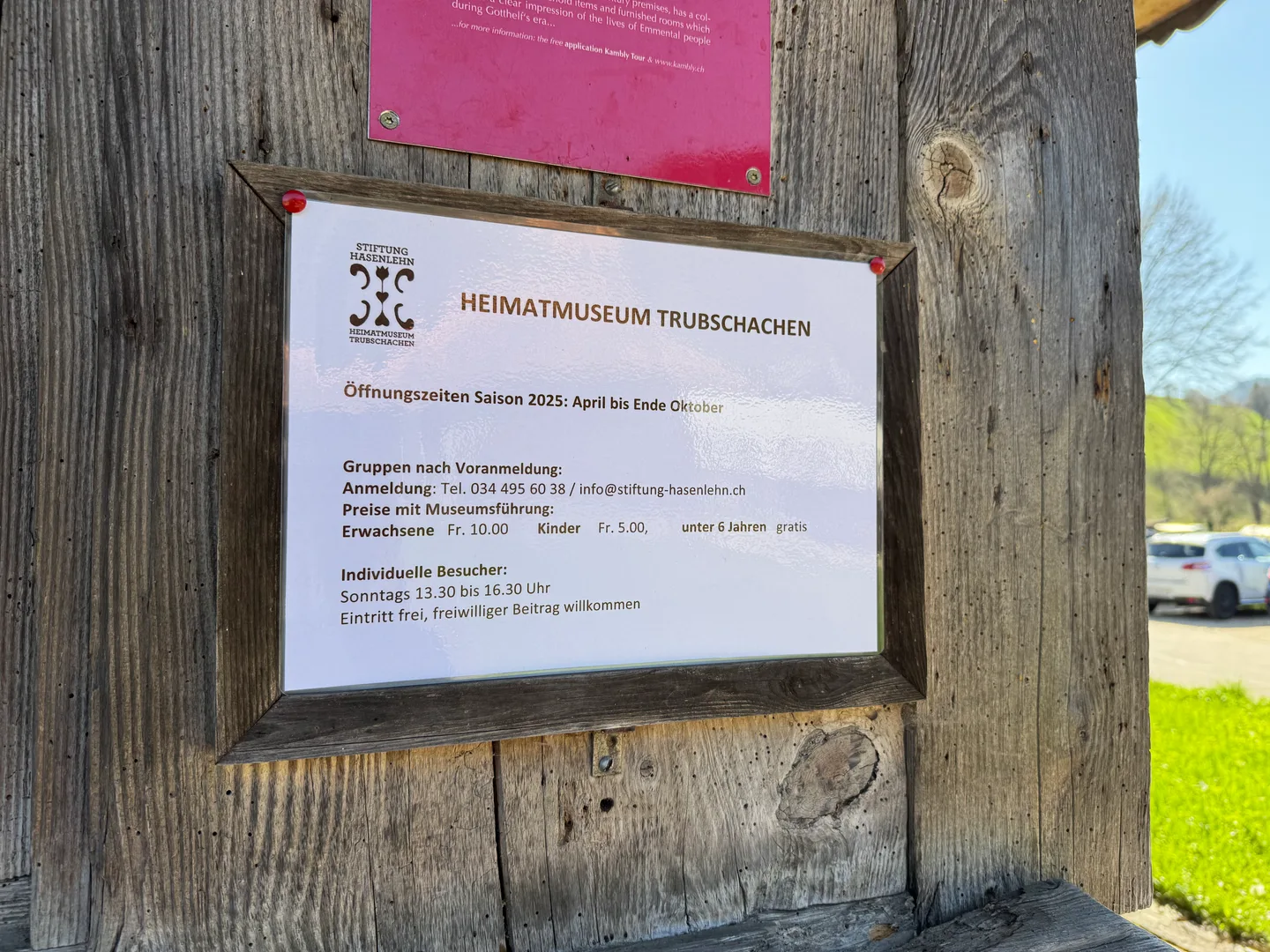
Regular hours: Sundays, 13:30–16:30.
Admission: free for individual visitors on Sundays; a voluntary contribution is welcome. Guided group visits at other times by arrangement (roughly CHF 10 per adult, CHF 5 per child).
Contact: +41 34 495 60 38, [email protected], https://stiftung-hasenlehn.ch/heimatmuseum/
A visit leaves a strong impression. The people working in the museum are ordinary residents of Trubschachen who enjoy explaining every exhibit, demonstrating the objects in action and talking about village life. So it is worth allowing a little more time than the exhibits alone would need — the point is as much the local culture and conversation as the collection.
One practical detail: the farmhouse in the same group holds the Aebi show pottery and the Café Restaurant Töpferei, which keep their own, much longer hours. So even on a non-Sunday there is something to see and somewhere to sit in this corner of the village.
The Kambly Experience
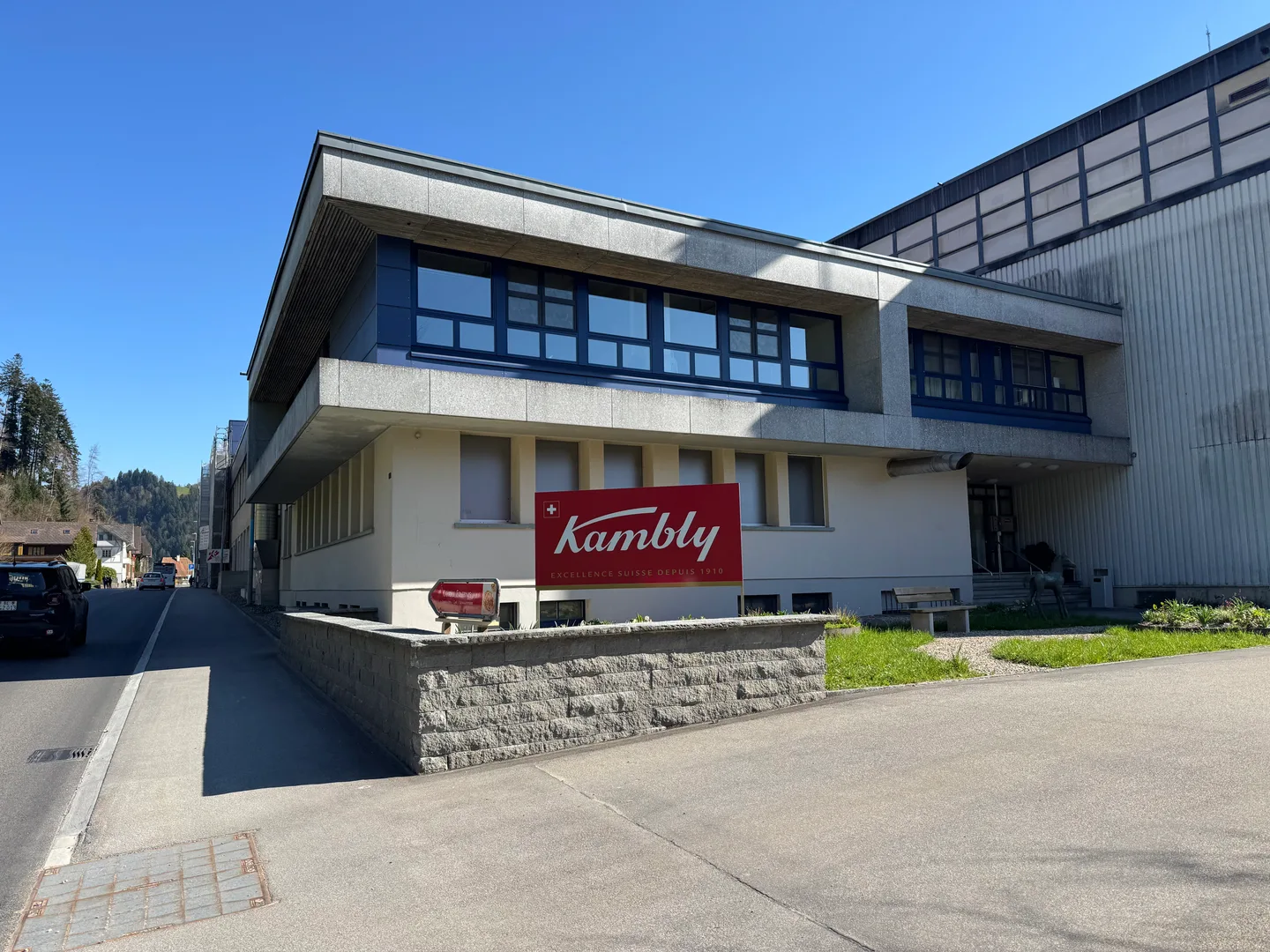
The Kambly Experience — Kambly Erlebnis in German, the name on the local signposts — is the village's modern calling card. Kambly is the famous local biscuit maker; the story here is industrial and gastronomic, 20th and 21st century rather than ancient, but the place matters for understanding the village. Kambly has been the largest employer since 1910, and the official tourist listings put it alongside the museum, the historic buildings and the walking routes in the surrounding hills.
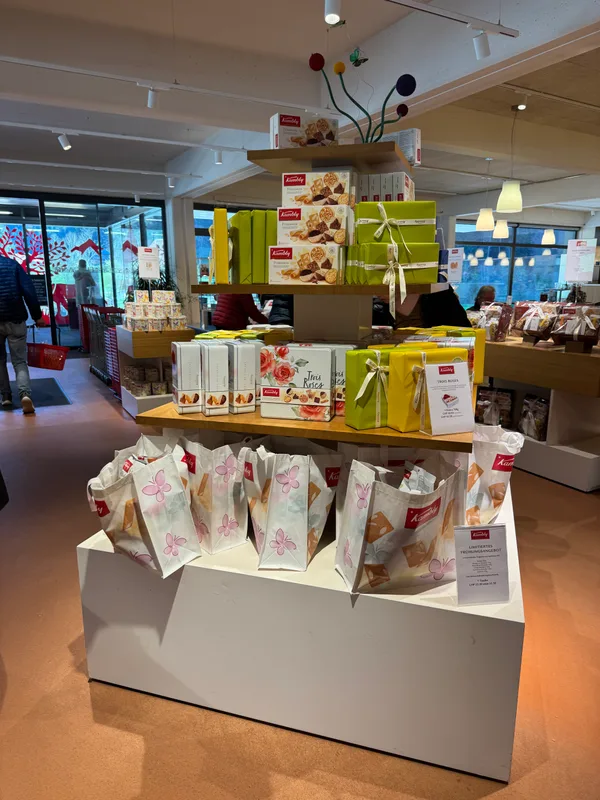
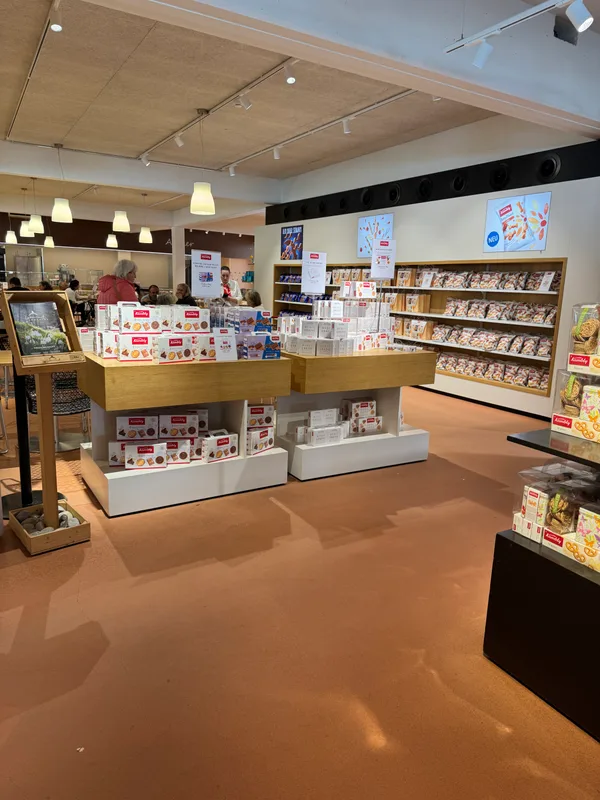
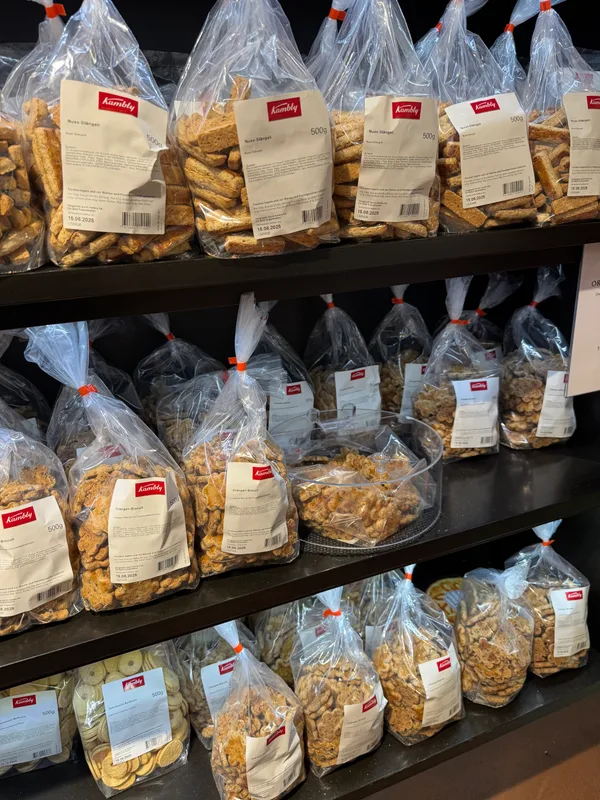
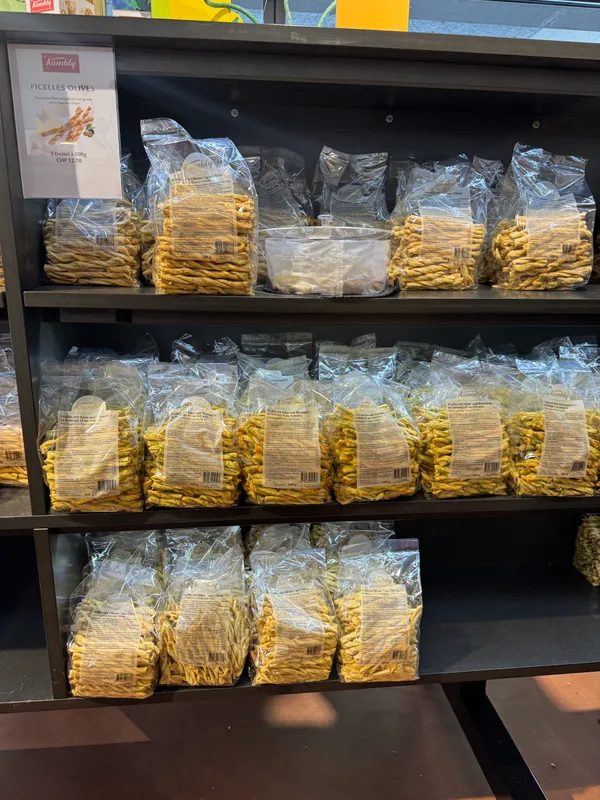
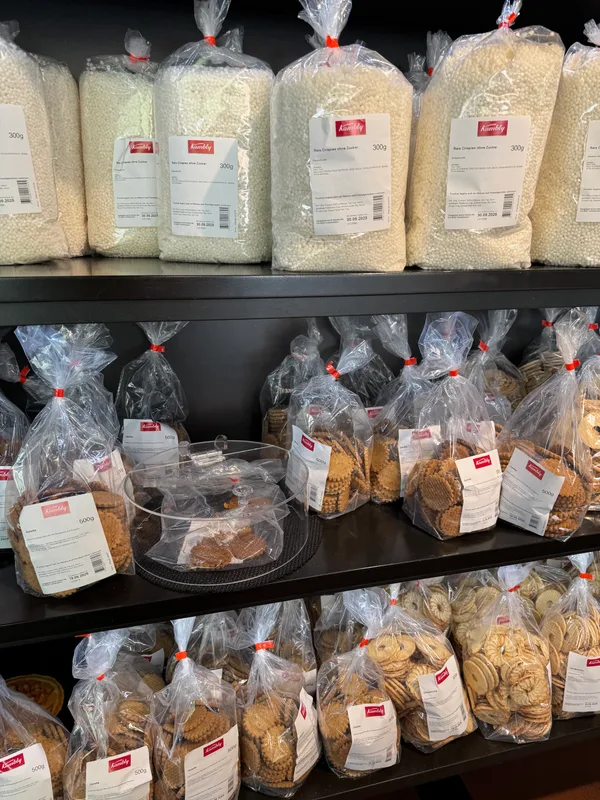
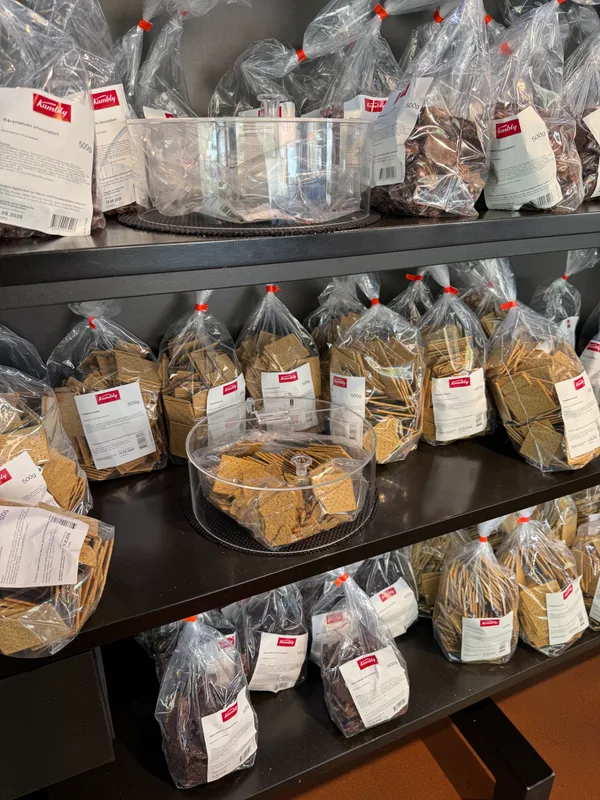
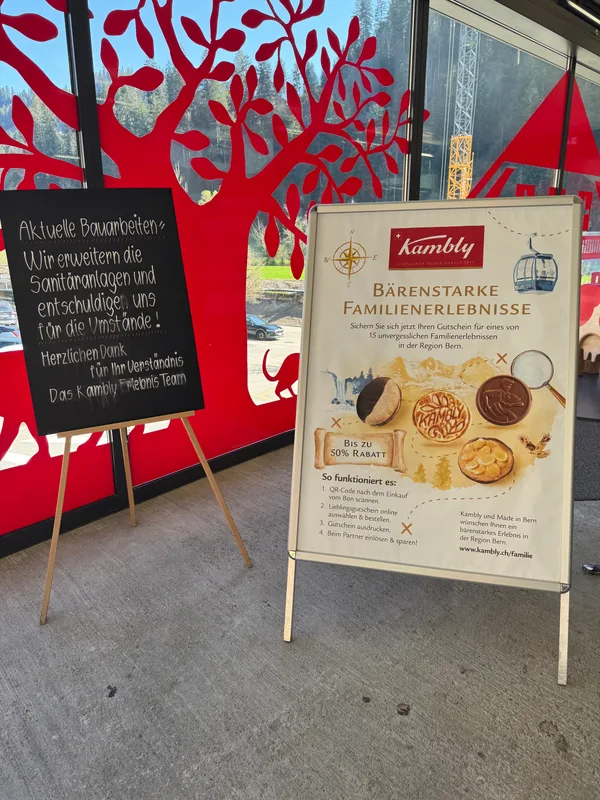
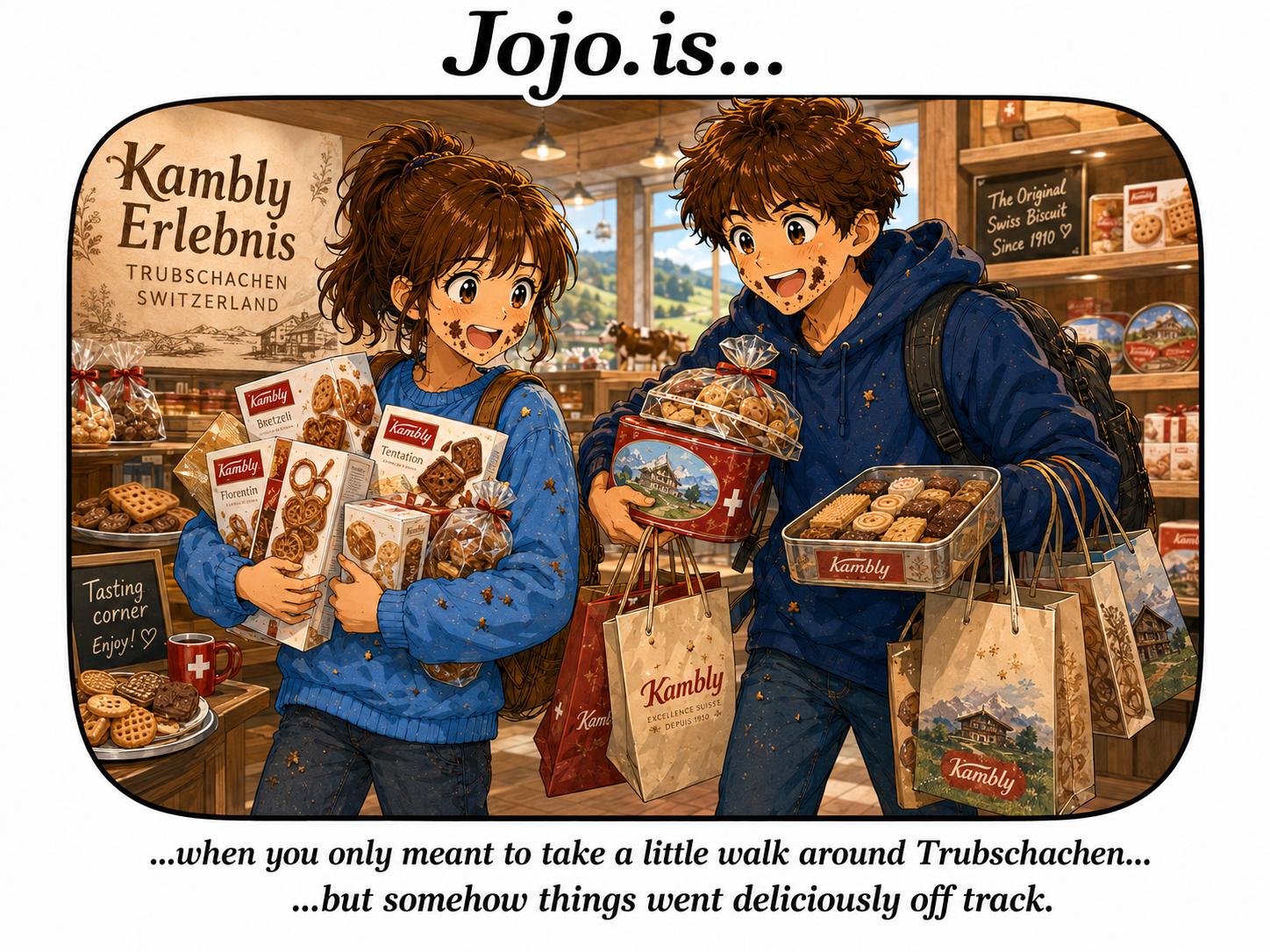
At the Kambly Experience it is possible to try every variety currently produced — around 100 of them. New products and the most popular lines can be tasted and bought in the factory shop, which often has discounts on particular biscuits or other products, as well as gift and souvenir sets sold nowhere else. There is also a café, a show confectionery where the maîtres confiseurs can be watched at work, and a baking atelier; "bake it yourself" sessions for children and for groups run by prior arrangement.
The tasting is completely free, which draws people in — but it is also a serious load on the digestion, so this particularly delicious sight is best approached with some caution. :)
Between the station and the Kambly Experience runs the production trail, explaining each step from mixing the dough to shipping the biscuits around the world — the natural way to walk in from the train.
Kambly Experience, Mühlestrasse 8, 3555 Trubschachen
Monday–Friday: 09:00–18:00
Saturday–Sunday: 09:00–17:00
Closed on Good Friday, Easter Sunday, Ascension Day, Whit Sunday, Christmas Day and Boxing Day, with reduced hours on several other holidays — worth checking the calendar at https://kambly.com/en/openinghours/ before planning a holiday visit.
Getting there: the Kambly train
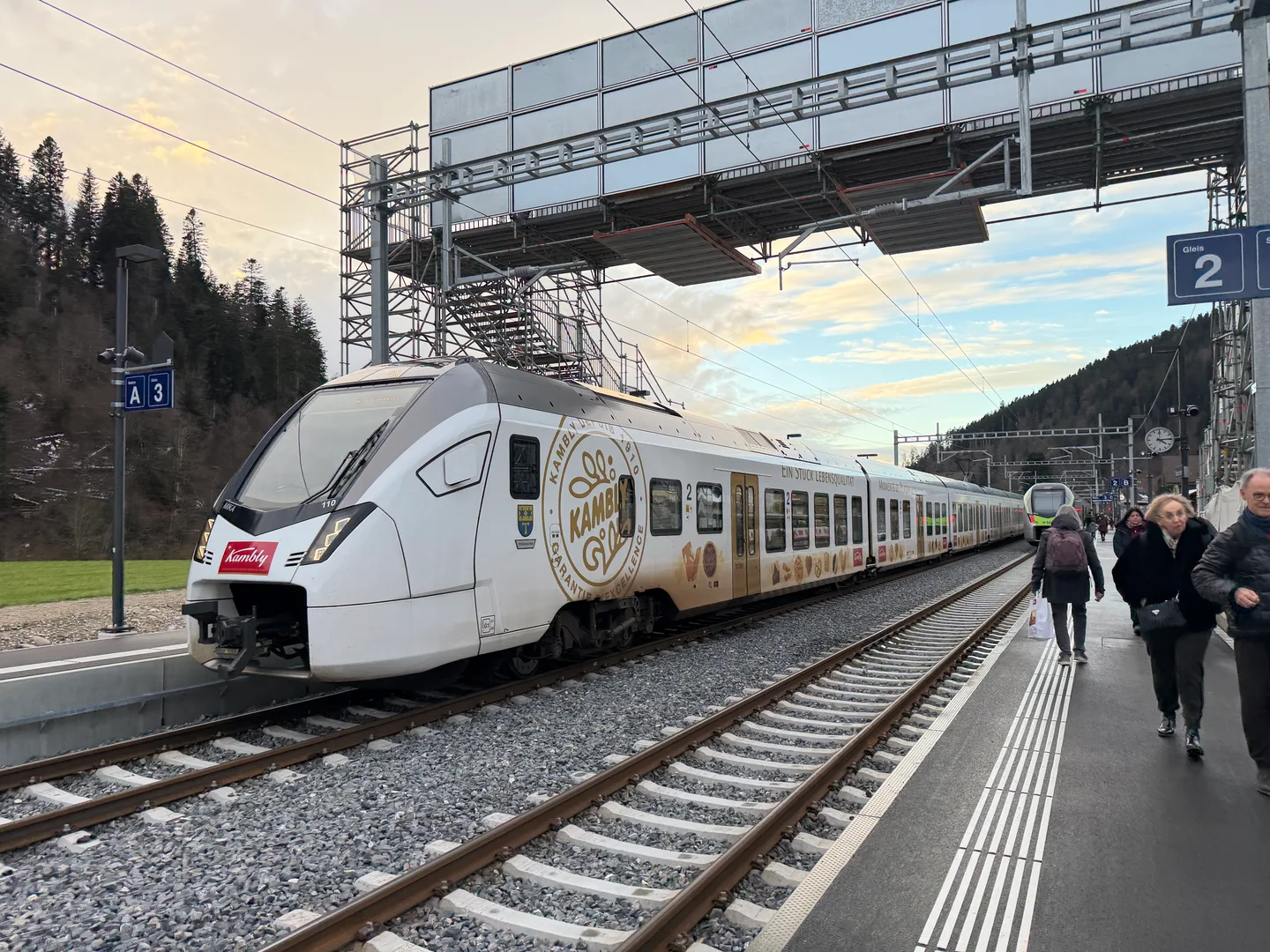
The atmosphere of the day can begin before the village does. BLS RegioExpress trains run hourly between Bern and Lucerne through the Emmental and the Entlebuch — about 35 minutes from Bern, about 47 from Lucerne, with no change — and several of them are the Kambly train (Kambly-Zug).
It appeared in 2010, when Switzerland's best-known biscuit maker celebrated its centenary, and it has been running between Bern, Trubschachen and Lucerne ever since, linking the excursion destinations along the line. The white train is decorated on the outside with pictures of Kambly biscuits, and inside there are large panoramic windows, power sockets, a family area laid out for travelling with children, and a bistro zone whose vending machines sell — inevitably — Kambly specialities alongside drinks, coffee, tea and soup. Since December 2024 the service has used modern MIKA rolling stock with low-floor entrances for wheelchairs and pushchairs.
The Kambly train runs Tuesday to Sunday; on Mondays the same route is served by ordinary MIKA trains. Recent departures have been from Lucerne at 07:57 and 13:57 and from Bern at 09:36 and 15:36 — worth confirming in the current timetable before setting out, since times shift with each schedule change.
One practical detail: this is a splitting train, with two portions going to different destinations. Boarding at Lucerne, Malters or Wolhusen, take the front section, marked for Trubschachen–Bern.
The station is roughly 200 m from the Kambly Experience, with the production trail running between the two — so a visitor stepping off the Kambly train is already, in a sense, inside the story.
For anyone with a full day and a taste for train journeys, there is also the Kambly Rundreise: Bern–Trubschachen–Lucerne–Brienz–Interlaken–Bern, about 200 km over the Brünig pass and along five lakes, with admission to the Kambly Experience included. It can be started at any point on the loop in either direction, and it is covered by the Swiss Travel Pass and the GA travelcard. From April to October the Brienz–Interlaken leg can be done by boat instead.
A short but nearly complete history of Trubschachen
Trubschachen is a small village in the Emmental whose history begins in the 12th century. Around 1130, when the monastery of Trub was founded, this area belonged — together with Marbach, Schangnau and Escholzmatt — to the district of the Benedictine abbey of Trub. The name comes from Schachen, meaning scrubland along a lake or river, and later grassland in such places. In the Middle Ages there were scattered farmsteads and a small settlement by the road and the river, on the route between Bern, the Emmental and Lucerne. For a long time the inhabitants depended administratively and ecclesiastically on the neighbouring communities of Lauperswil, Trub and Langnau.
Independence came gradually. Getting to church in Lauperswil meant a hard walk with no proper bridges over the Emme or the Ilfis, and only in 1531 were the inhabitants of the Lauperswil quarter allowed to attend the nearer churches of Trub and Langnau — a right they had to buy "with a measure of boiled butter from every house". (The Historical Dictionary of Switzerland dates a similar permission for the inner quarter to 1506.) In 1666 the farms of the quarter were divided between the two parishes: Wingei, Ortbach, Blapbach and Hegen went to Langnau, Steinbach, Grauenstein, Schwand and Schachenhaus to Trub. The two six-pointed stars on the modern coat of arms recall that division; the cross of St Anthony in the lower part of the shield is dedicated to the saint.
In 1727 an assistant pastorate (Helferei) was set up in Trubschachen for the upper Emmental, and from 1735 it included a school. In 1777 the bailiff of Trachselwald finally separated the Lauperswil quarter from its mother parish, and he encouraged the villagers — divided between three jurisdictions — to act as one community by drawing up "a fire regulation for the little village in the Trubschachen". The joint cheese dairy founded in 1827 had a similar unifying effect, across all the old boundaries.
In the 19th century the process accelerated. In 1809 the village received its first tax regulation. On 7 March 1838 the first full regulation of the residents' community was approved, and on 8 December 1840 the community of Lauperswilviertel was fully detached from the political communities of Langnau and Trub. Its autonomy was confirmed by the Bernese communal law of 1852. Until then the place was officially called Lauperswilviertel; following a cantonal decision of 23 December 1867, the name Trubschachen took effect on 1 January 1868. Only in 1923, after boundary changes with the neighbours, did the municipality reach roughly its present extent.
In the 19th and 20th centuries the village grew on agriculture, cheese-making, the valley road, the railway (the Bern–Lucerne line from 1875) and small industry. Kambly played a particularly important role, making Trubschachen known far beyond the Emmental as a place where Swiss biscuits are made; the ropeworks Jakob, timber processing and construction firms matter too. The art exhibitions held here periodically since 1964 are known well beyond the region. In short, the history of Trubschachen is the history of a small rural settlement that grew out of medieval farms, gradually won its administrative independence, and kept the character of a traditional Emmental village.

The ideal day for Trubschachen is a Sunday, because that is when the Heimatmuseum is open. With four or five hours available, the optimal route is:
station → old centre and the historical walk → Heimatmuseum → Kambly tasting and a stock of treats to take home.
If it isn't a Sunday, the museum can be replaced by a short walk out of the village into the hills — or by the show pottery and café in the same farmyard, which are open on other days.
For the full effect, arrive on the Kambly train rather than by car: a biscuit-painted RegioExpress rolling into a wooden Emmental village is the right opening note for the day, and it means the tasting at the end need not be measured against the drive home.
Two things to check before setting out: the Heimatmuseum only runs from April to October, and the Kambly Experience is closed on Easter Sunday and Whit Sunday, which are exactly the kind of Sunday a visitor might otherwise choose.
Events

Region: Bern
Country: Switzerland
- Morges Tulip Festival — Switzerland's Free Answer to KeukenhofApril - May
- Medieval Spectacle Hinwil — Switzerland's Biggest Knight TournamentMay
- Caves Ouvertes Vaudoises — The Swiss Wine Weekend That Lets You Into Local LifeMay
- Swiss National Day — The Complete Guide to August 1st (2026 Edition)August 1
- The Day Rolle Winds Back a Century: The Barrel Organ Festival on Lake GenevaAugust
- Tractors, Confetti and New Wine: Harvest Festivals in SwitzerlandSeptember - October
- When the Bells Come Down the Mountain: Switzerland’s Living Alpabzug TraditionSeptember - October
Also available in
Tags
Jojo is Joyful Journeys!