Kanderdelta: Thun's wild river mouth that most tourists never find
Just outside Thun — about an hour and a half of easy walking, half an hour by public transport or ten minutes by car — lies a place that is beautiful, unusual and largely ignored by tourists. Even many locals have never been there. This is the Kanderdelta.
The appeal isn't a single landmark. It's the combination: a wild alpine river, a lake, gravel banks and mountain views, all in one quiet spot with very few people, perfect for a slow afternoon and a swim.
The Kanderdelta is the delta of the river Kander where it flows into Lake Thun, in the canton of Bern, Switzerland. The name is literal: Kander is the river, Delta is the delta. Today it is a protected nature reserve with floodplain forest, gravel bars and habitat for rare birds, amphibians and plants. The delta only began to form in the early 18th century, after the Kander was artificially diverted into Lake Thun.
What to see
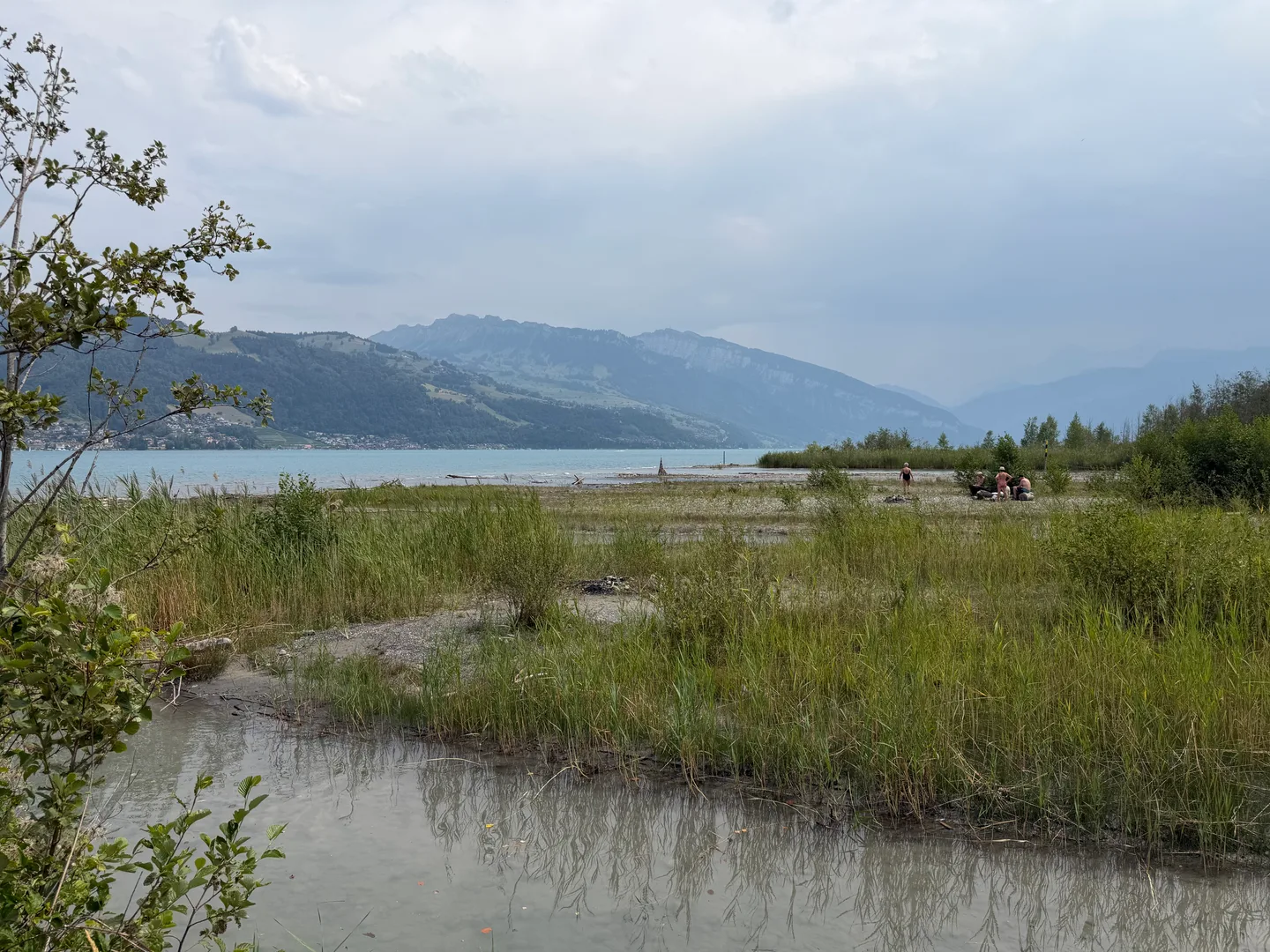
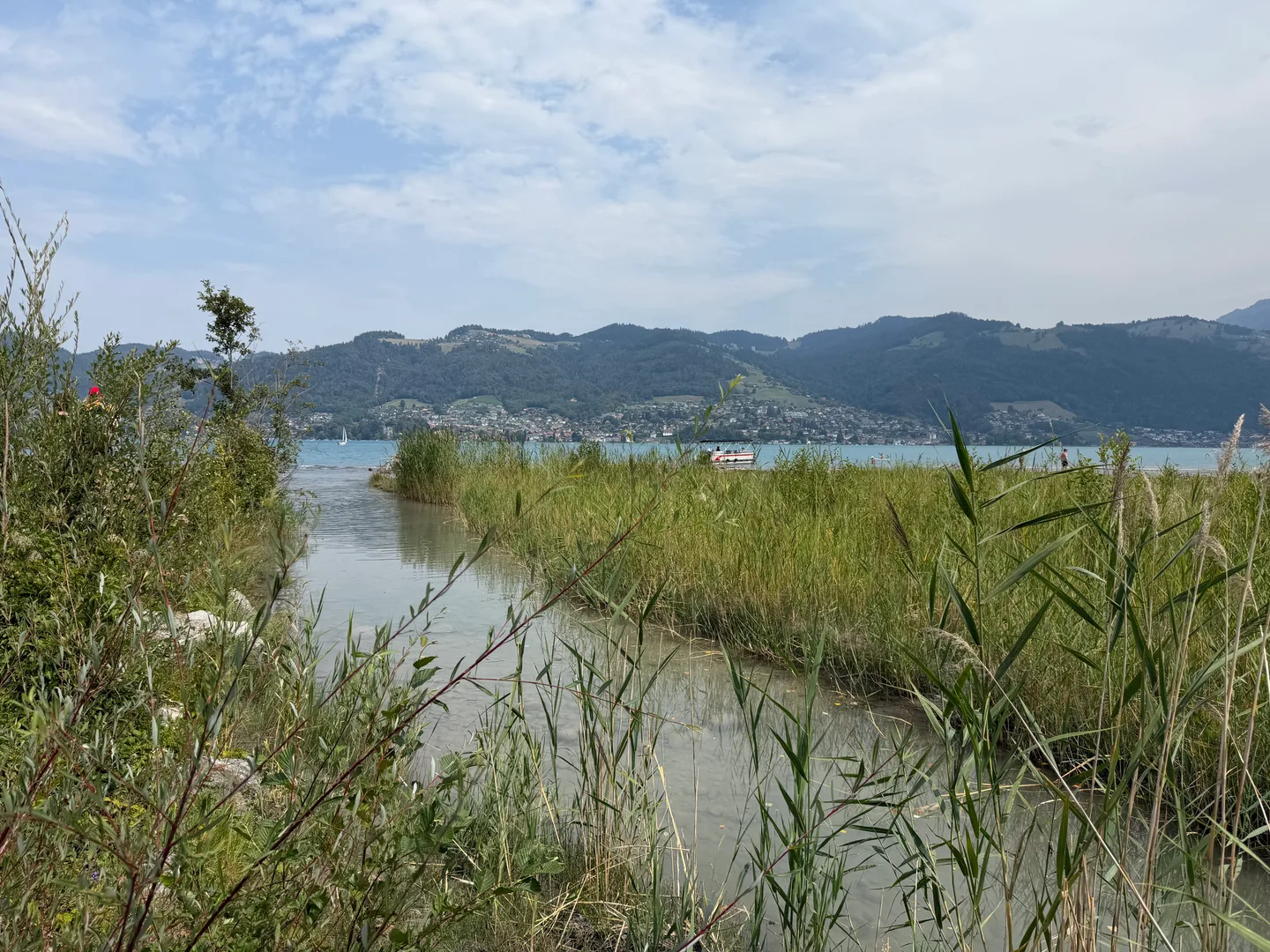
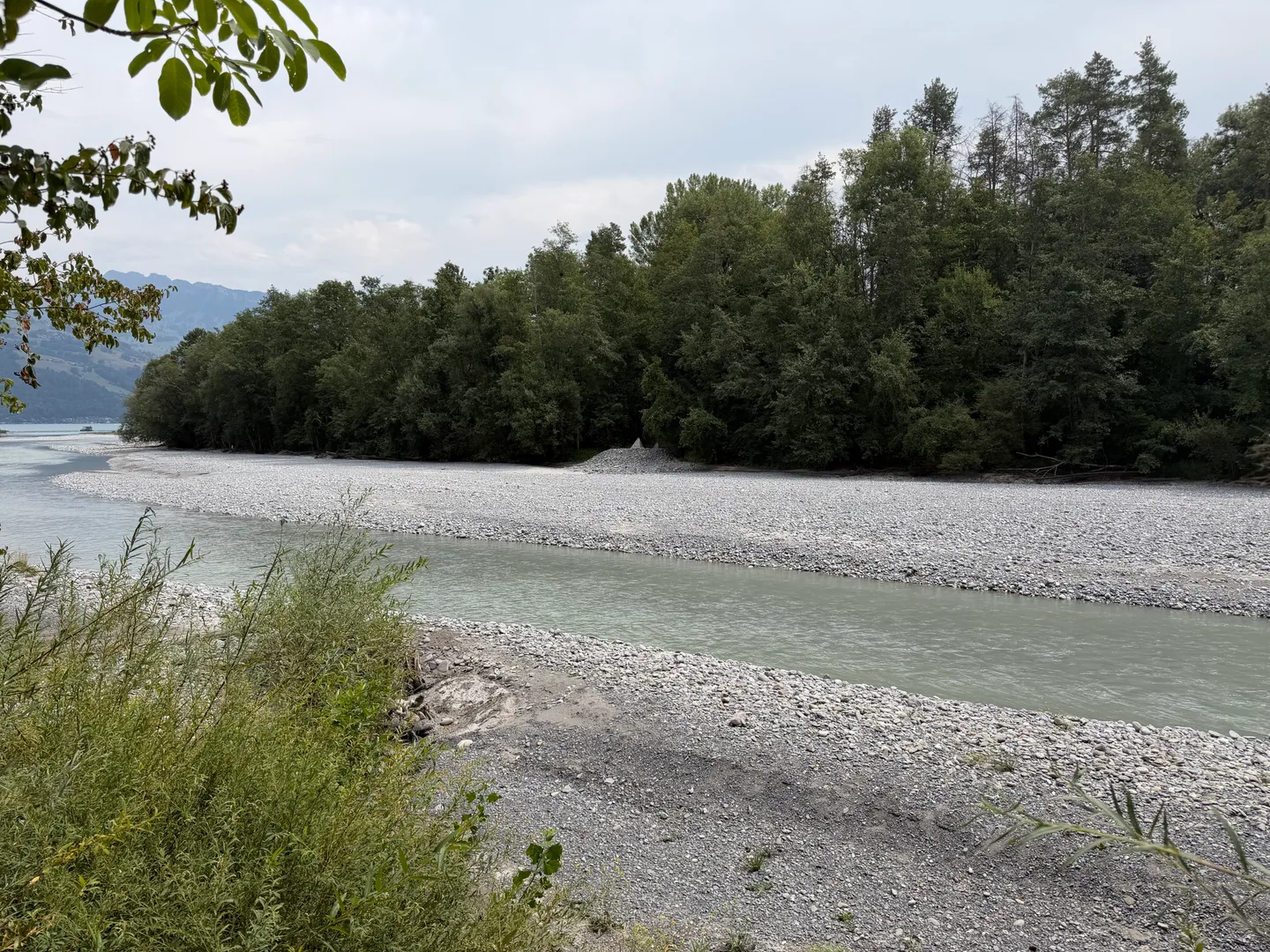
The main sight is the confluence itself. After heavy rain you can clearly see the cloudy grey-turquoise river water meeting the clearer lake water. The Kander carries stones, sand and fine sediment down from the mountains without pause, so the shoreline, side channels and gravel bars are constantly rearranged — the place is never quite the same twice.
Worth looking for:
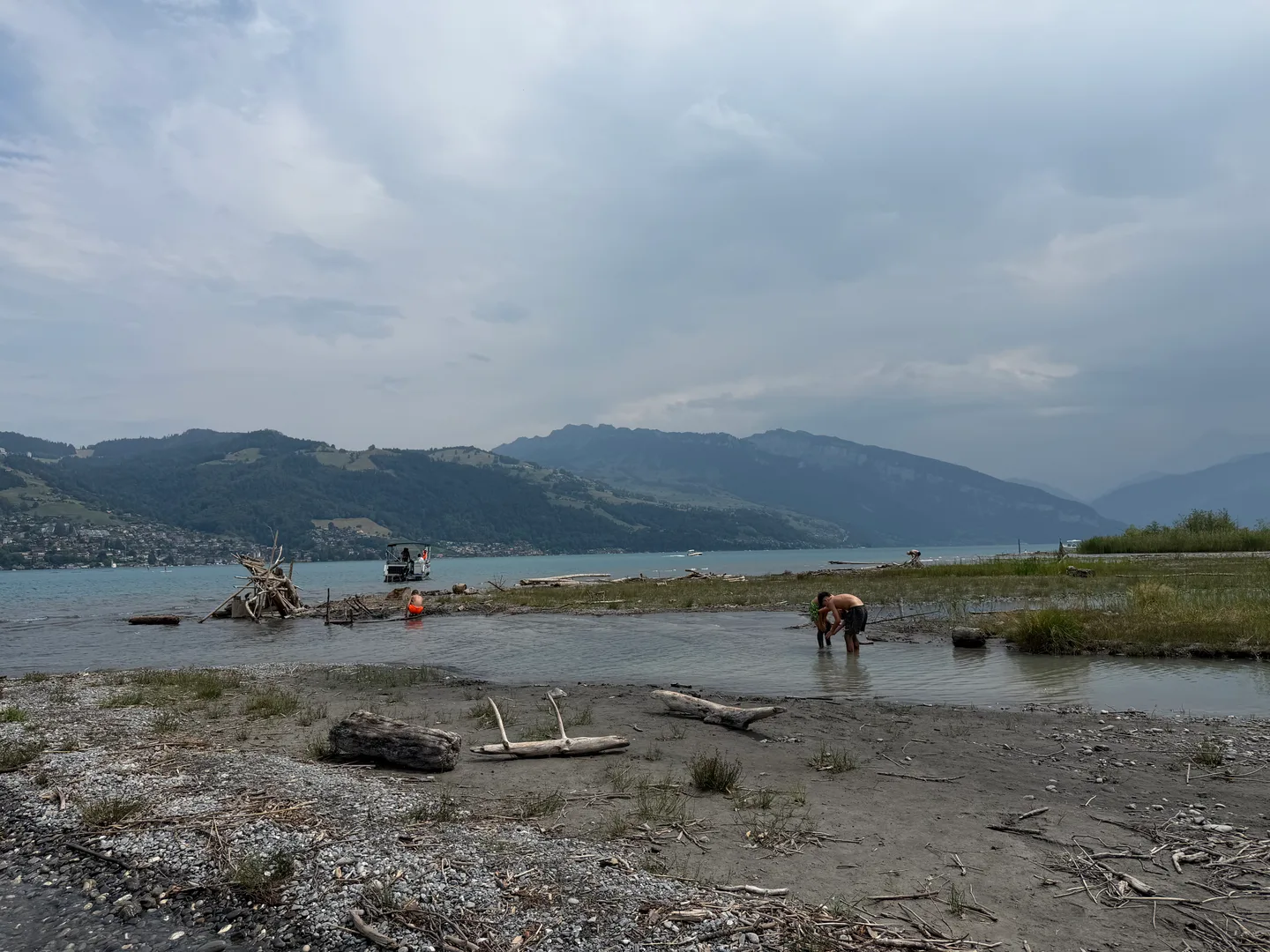
gravel and sand spits, driftwood tangles and small side channels;
floodplain forest and still backwaters;
birds — little ringed plover and common sandpiper breed here, and kingfishers turn up;
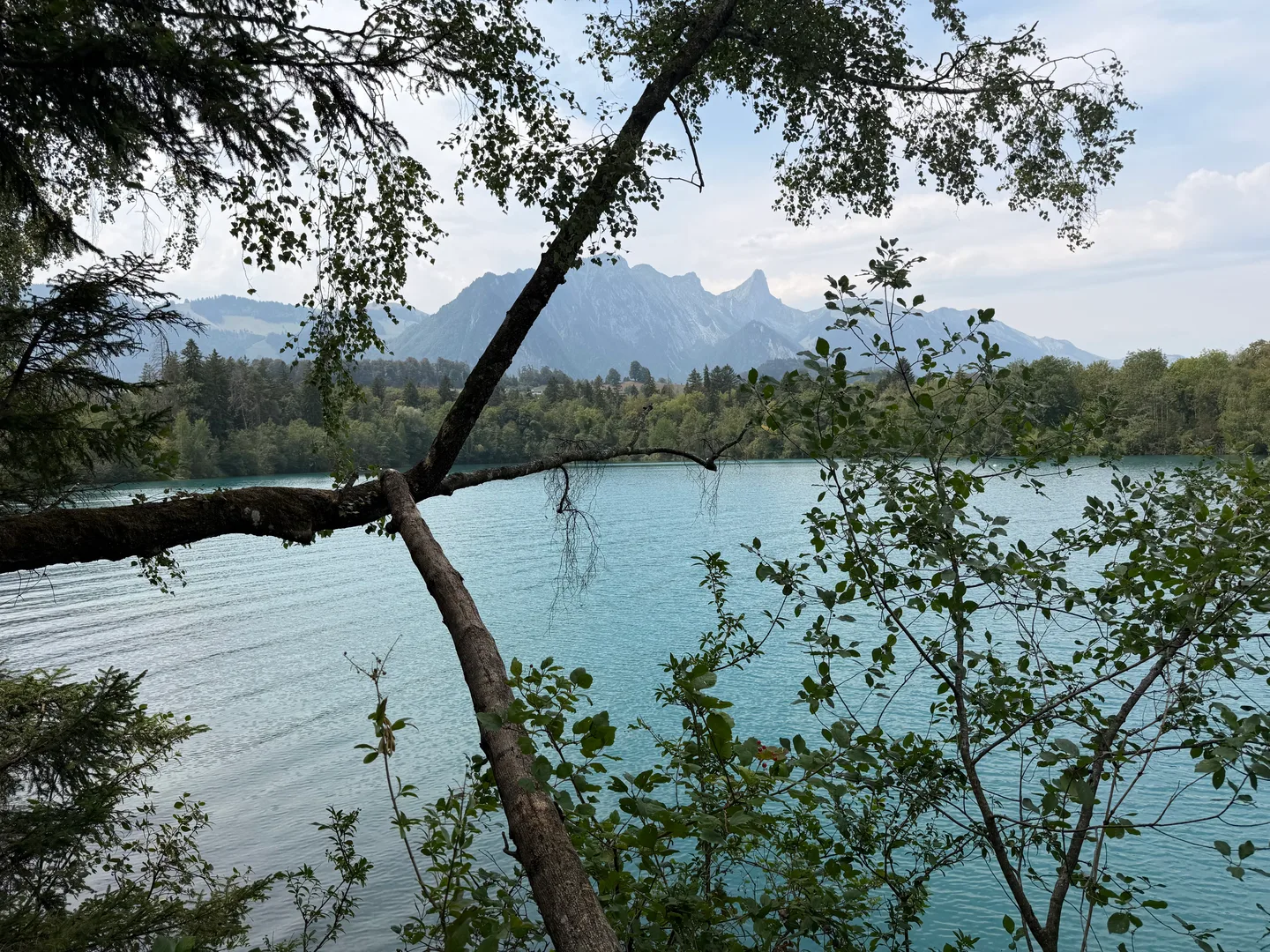
the view across the lake to the Bernese Oberland peaks;
the natural beach, where swimming and picnicking are allowed.
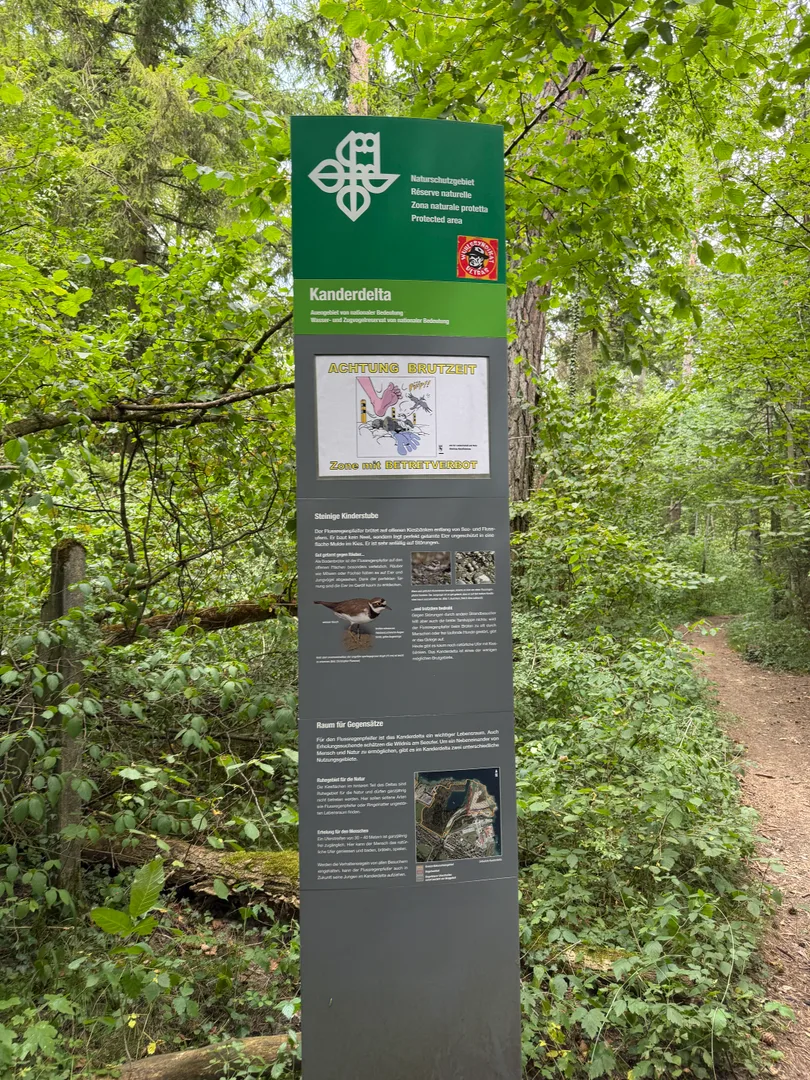
The gravel bars are also home to the yellow-bellied toad, one of the reasons the interior of the delta is off-limits.
A river that was moved on purpose
Before 1714 the Kander did not flow into Lake Thun at all. It ran across the plain north of Thun and joined the Aare downstream of the town, flooding villages like Uetendorf, Thierachern and Allmendingen again and again as it dumped gravel and shifted its bed. Since the river passed within a few hundred metres of the lake, the idea was obvious: cut through the Strättlig hill and let the lake swallow the sediment instead.
Work ran from 1711 to 1714 under Samuel Bodmer, with a 300-metre tunnel driven through the hill by Samuel Jenner. The rock could not take it. The tunnel widened under the pressure of the water, and on 16 July 1714 a section collapsed and killed five workers; by mid-August the tunnel was gone altogether, torn open by the river. The Kander had made its own gorge — the Kanderschlucht — and the riverbed dropped by roughly 40 metres within a few years.
The project worked, but it created a new problem. Lake Thun's catchment area almost doubled, the Aare could no longer drain it fast enough, and now Thun itself began to flood — from the lake. That triggered two centuries of follow-up engineering: a second Aare channel through the old town moat (which is why the Bälliz is an island), the Scherzlig lock, the Aare correction of the 1870s, and finally the flood relief tunnel opened in 2009. The Kander diversion is usually described as one of the first large-scale river engineering projects in Switzerland, and the mistakes made here informed the ones that came after.
Why people cover themselves in mud
At the river mouth you will almost always see people smearing themselves with the local grey mud and then rinsing off in the lake.
There is no official evidence that the Kanderdelta contains medicinal mud or any recognised natural spa source. What people are most likely using is soft grey silt as an improvised clay mask: it is cool, spreads easily, looks funny, and mildly exfoliates as it dries. The silt is glacial rock flour — extremely fine mineral particles ground out of the mountains and carried down by the Kander. Treat it as a local ritual and a bit of fun, not a treatment.
Better not to put it on your face, on broken skin, or anywhere near your eyes or mouth: natural sediment is not sanitised and may contain microorganisms, bird droppings or pollutants. Rinse thoroughly with clean water afterwards.
Birdwatching
The best times are spring and autumn migration. Mid-April to late May brings song, passage waders and woodland birds. Late August to October — September above all — is when birds stop over in the delta before moving on. The delta is part of a water- and migratory-bird reserve of national importance stretching from here to Hilterfingen, and is a well-known resting spot for songbirds and waterbirds. Birding platforms report that more than 200 species have been recorded in the area, though no official published checklist exists.
Time of day. Arrive at sunrise and stay for the first two or three hours: fewer people, birds feeding actively, woodland species easy to locate by voice. From late April to early June many species sing at once. The last one or two hours before sunset are the second-best option. Midday still gives you ducks and gulls, but in summer the heat and the swimmers push birds away from the accessible shore.
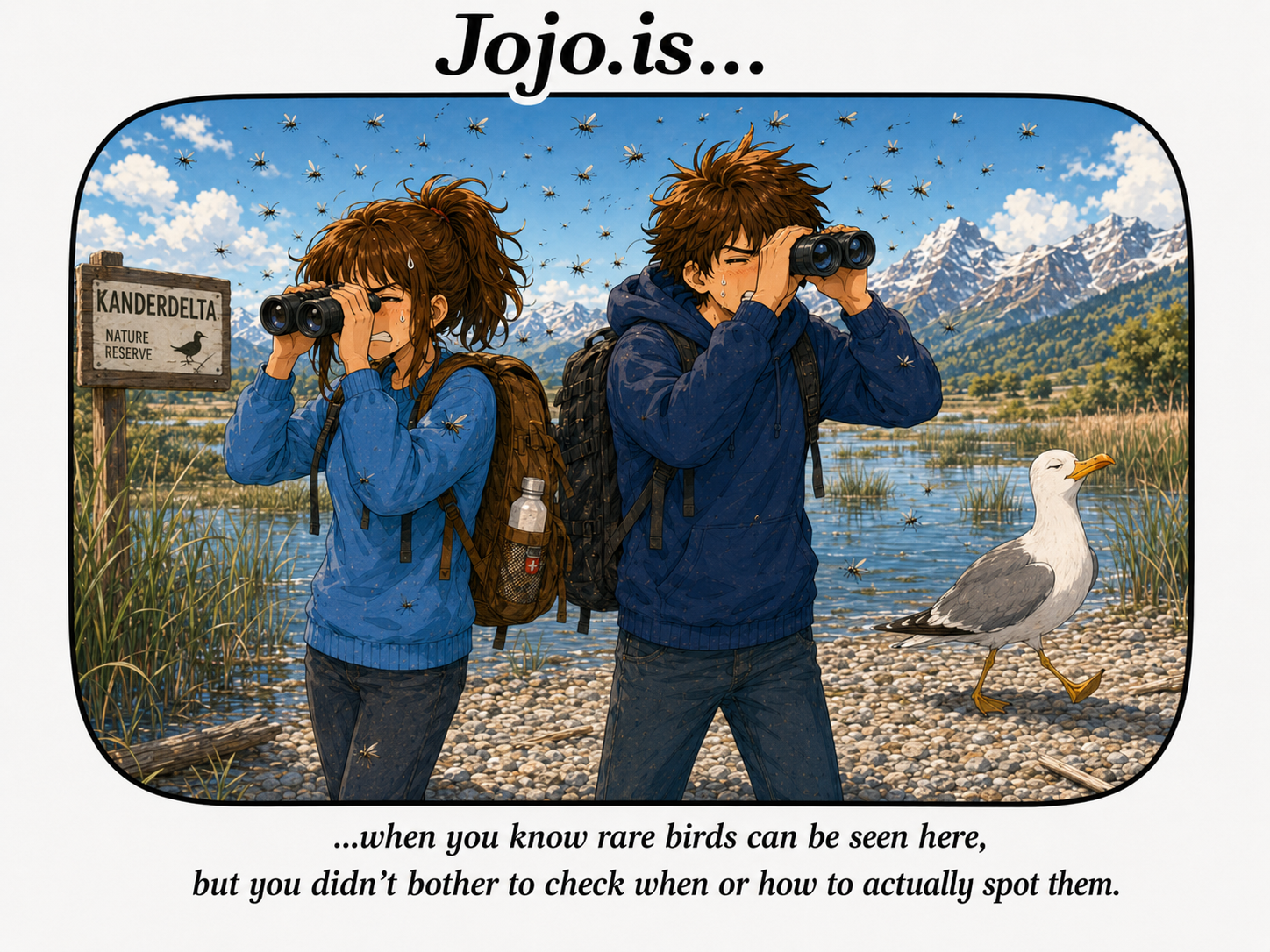
Where to look. Herons often stand around the quiet Unteres Kandergrien pool. In the shallows and at the river mouth, look for waders, ducks and gulls; on the open lake, great crested and little grebes, coots, mallards, mute swans and gulls. In the floodplain forest you may find kingfisher, lesser spotted woodpecker, wood warbler, grey wagtail and other songbirds; dipper along the river itself. A spotting scope helps for birds far out on the lake, but 8× or 10× binoculars are plenty for the delta.
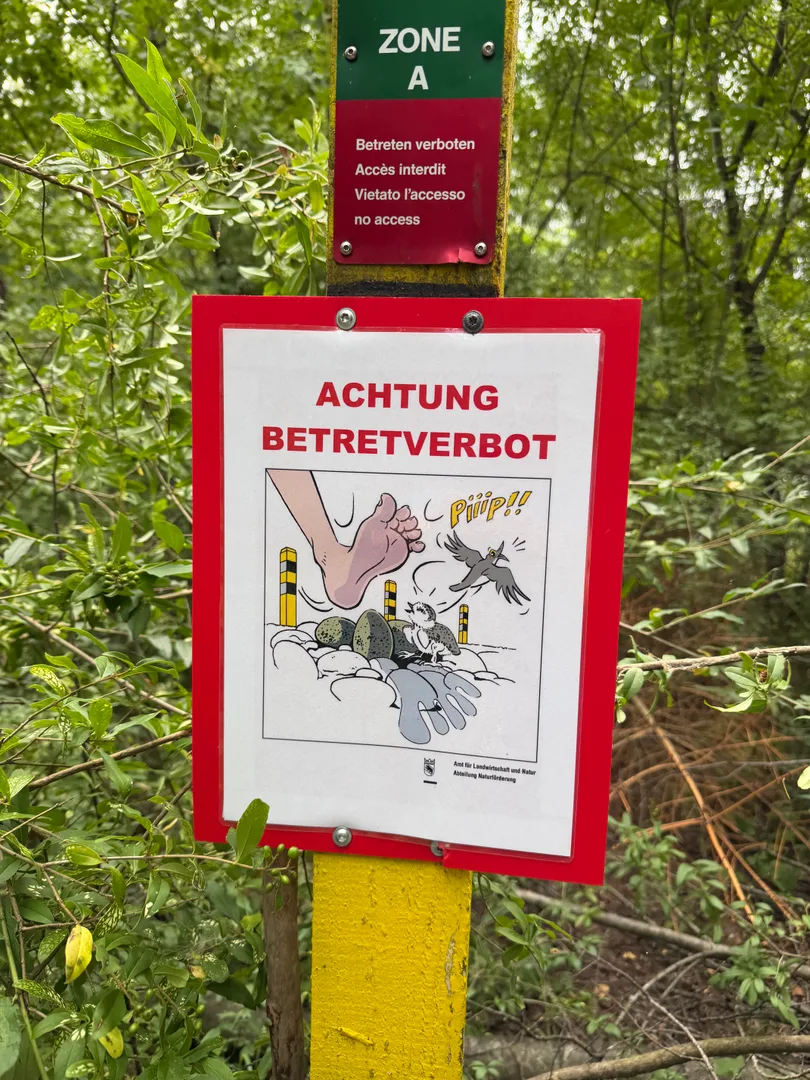

Don't walk out onto the gravel islands or approach the birds. Little ringed plovers nest there and their eggs are almost invisible among the stones. Watch from a distance through binoculars, especially in spring and early summer.
Rules on site
The Kanderdelta is a nature reserve, protected in its current form since 2008. In practice:
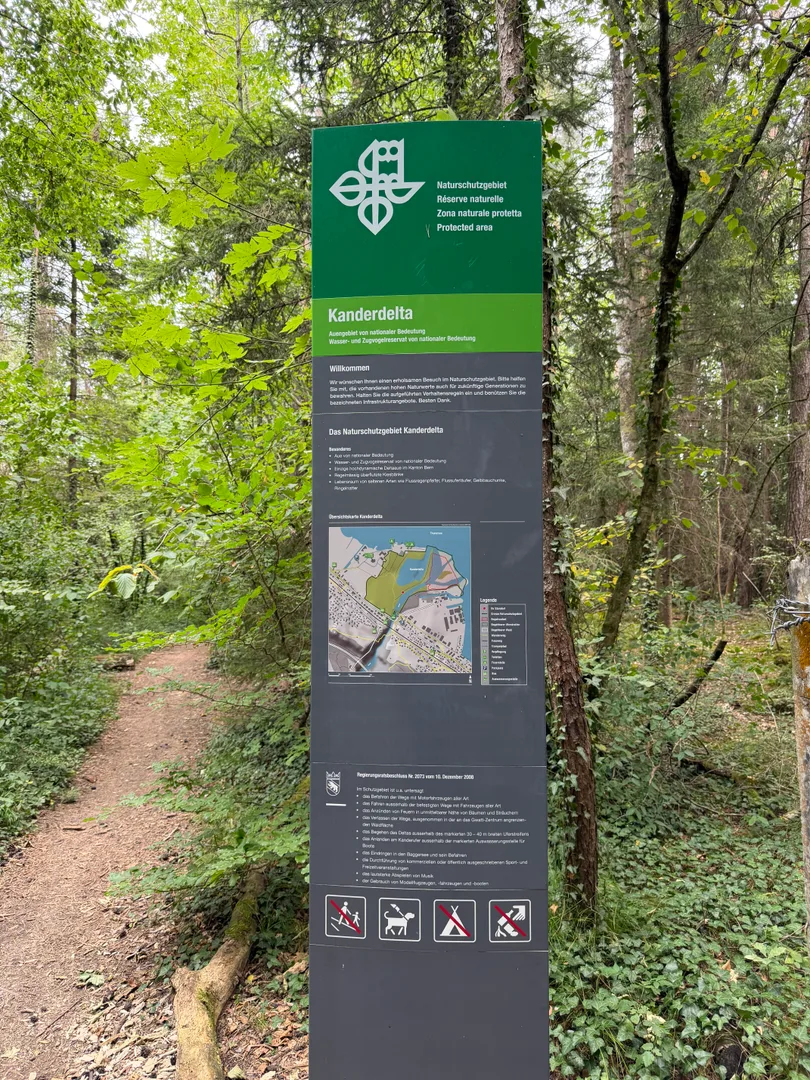
You may walk on the paths and along a marked shoreline strip roughly 30–40 metres wide. Everything behind it — the interior of the delta and the gravel islands — is closed year-round.
Swimming, picnicking and barbecuing are allowed on that shore strip. The footpath along the river is used at your own risk.
Swimming is not allowed in the Baggersee, the artificial gravel-pit lake; the Lake Thun shore is the place for that.
Dogs must be kept on a lead throughout the reserve.
Feeding, disturbing or luring wildlife is prohibited, as is flying drones.
No motor vehicles on the tracks; no driving off surfaced roads.
Take your rubbish home — litter and loud music are the reserve's two biggest recurring problems.
Rangers patrol the area at irregular intervals from spring to autumn and are happy to answer questions.
A calm visit usually takes one to two hours: a walk along the shore, some time watching the two waters mix, and in summer a swim. The delta is at its most dramatic after heavy rain — but that is also when the Kander runs fastest and coldest, so be careful near the mouth, where the current, the cold water and the shifting gravel bed make swimming genuinely risky. Parts of the shore can be inaccessible at high water.
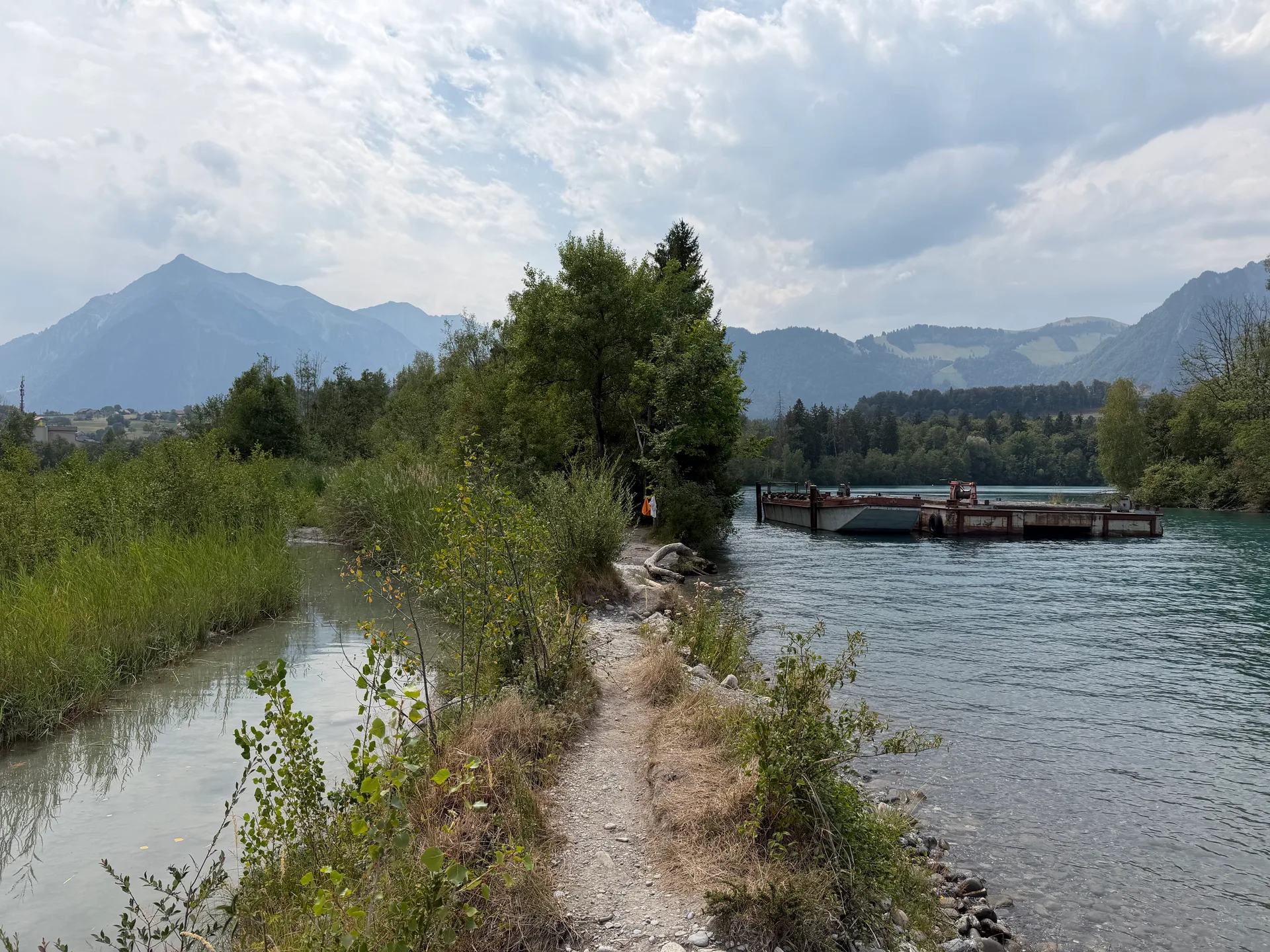
The two vessels
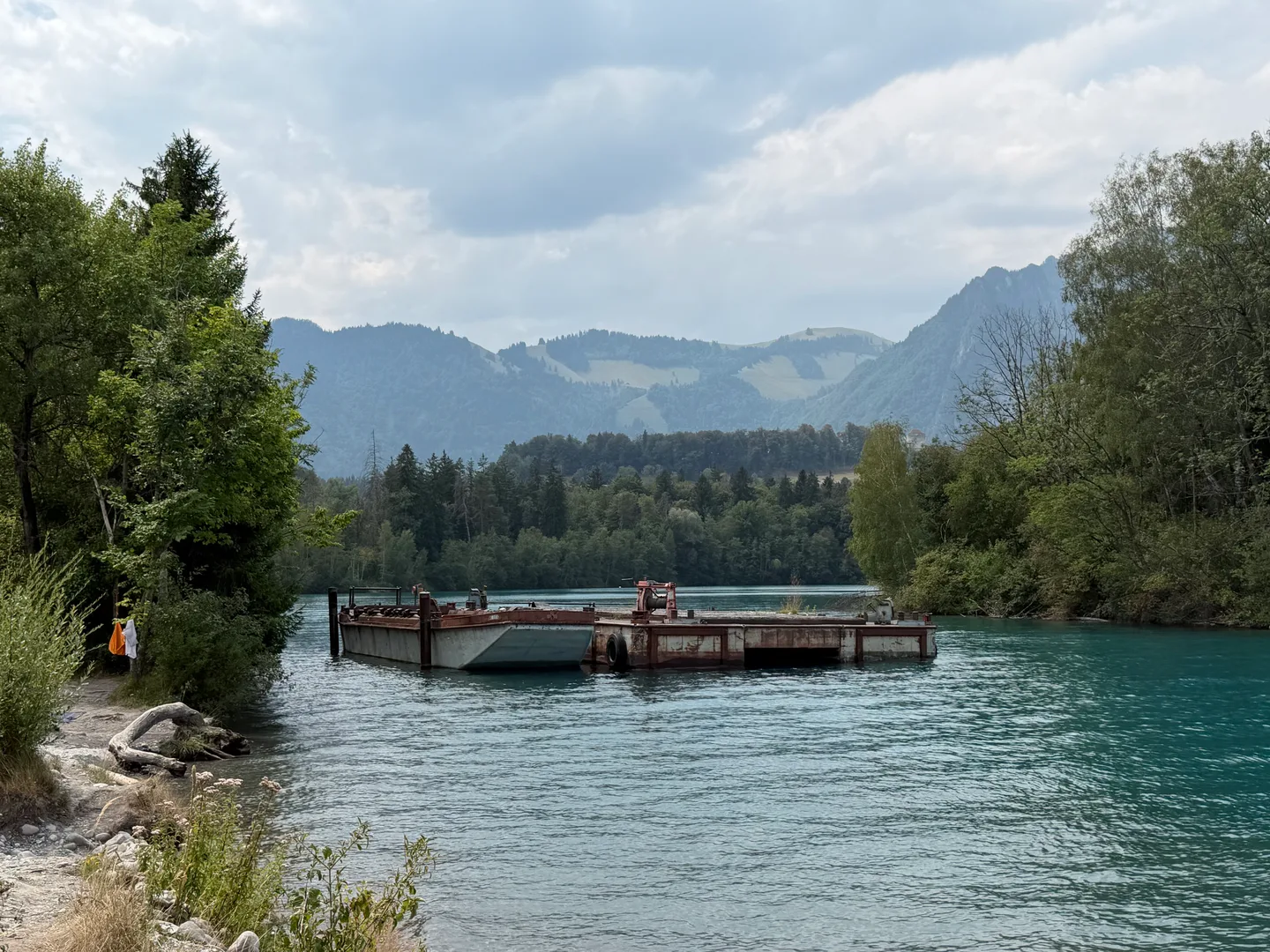
Two hulls sit at the water's edge, and at first glance they look old, rusted and abandoned. They are not ordinary boats but two non-self-propelled industrial pontoons left over from gravel extraction in the delta.
On the left: a hopper barge with an open hold and sloping walls, for sand and gravel.
On the right: a working pontoon with an opening in the deck and a winch or lifting frame. It could have carried loading, unloading or dredger-servicing equipment.
Neither has a wheelhouse or any obvious engine, so vessels like these are towed or hauled by cable. The vertical spuds let the pontoon be fixed in place while working.
This makes sense here: the harbour of a local gravel operation is right next door, and the sediment the Kander delivers has been extracted commercially in the delta under concession since 1913 (the current operator is Vigier Beton). The river keeps supplying stone and gravel to the lake, and part of it is removed industrially. Judging by the heavy corrosion and the absence of modern equipment, these two hulls are probably now spare or stationary pontoons, or already out of service.
Getting there
Public transport is easiest. From Thun Bahnhof take a bus towards Spiez and get off at Einigen, Chanderbrügg. The ride takes about 12 minutes and buses run roughly every 30 minutes. From Spiez Bahnhof the same stop is about 9–10 minutes in the direction of Thun. Check your specific departure in the SBB app — timetables change.
From the bus stop, walk towards the river and the lake. It's a few hundred metres to the entrance of the nature reserve, after which a narrow trail follows the river through floodplain forest and past the Unteres Kandergrien pool. The trail is poorly marked in places and may not show on standard maps. Allow 20–30 minutes on foot to reach the lakeshore.
By car: enter Einigen, Chanderbrügg into your navigation, not simply "Kanderdelta". There is parking near the approach to the reserve; from there you continue on foot. Forest and service roads are closed to traffic.
For navigation you can save the delta point 46.71677, 7.63045 — but don't drive straight to those coordinates; that is already inside the protected area.
Planning your visit
Two to three hours, early in the morning, is the sweet spot. The route is not a loop — you return along the same trail. Bring binoculars, water, insect repellent and shoes you don't mind ruining: the trail is often damp after rain, and the shore is gravel and soft silt. There are no shops or restaurants inside the reserve, so bring what you need.
A good order for the walk:
Chanderbrügg bus stop.
The trail along the Kander — listen for dipper and kingfisher.
The Unteres Kandergrien pool — look for herons.
The river mouth and the permitted shore strip — waders, ducks, and the view across the lake.
The meadow on the Gwatt side, where a kiosk sometimes operates in the warm season.
If you want more nature afterwards, the Gwattlischenmoos fen lies immediately adjacent and holds the largest reedbed on Lake Thun, with a nature centre at Gwatt — worth combining with the delta on a longer morning.
Also available in
Tags

Jojo is Joyful Journeys!